When someone uses the phrase 'bird in a cage,' they are almost always describing a situation of confinement, suppressed potential, or lost freedom, not an actual bird. The core message is this: something (or someone) that should be free, expressive, or fully alive is being held back by circumstances, rules, relationships, or systems. That is the short answer. Everything below breaks down why the image carries so much weight, how to tell which specific kind of 'trapped' the speaker means, and how to use that knowledge the next time you encounter it.
Bird in a Cage Meaning: Confinement vs Freedom Explained

Marcus Winters
21 Apr 2026

Where the phrase comes from
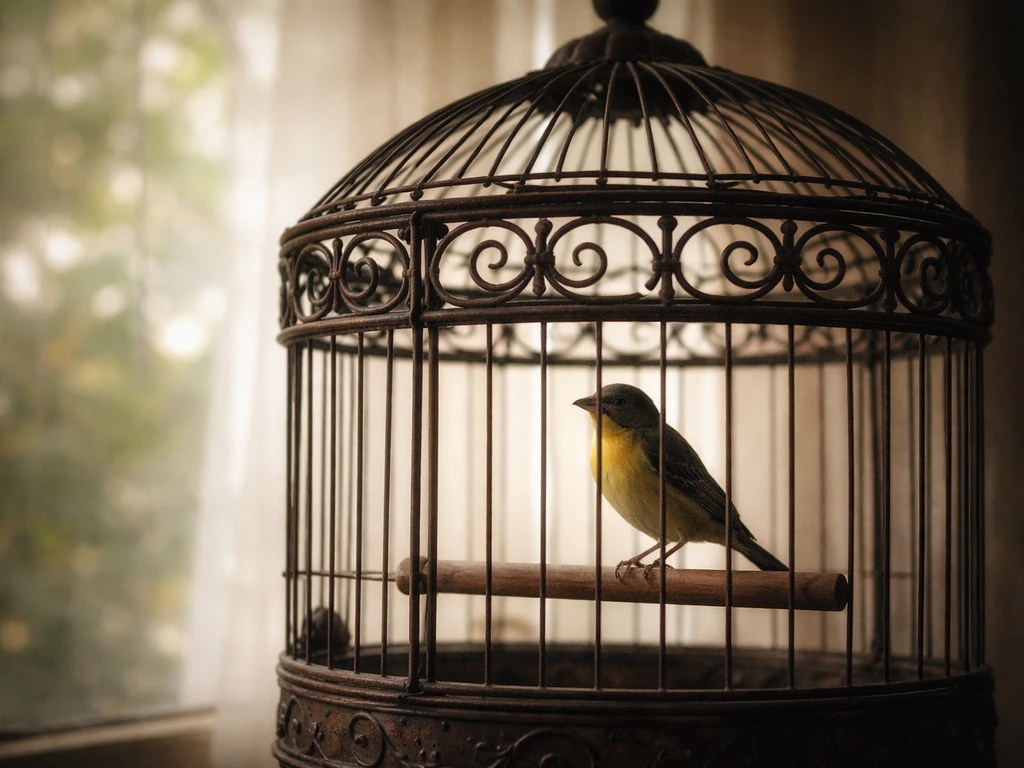
The image of a caged bird as a symbol of captivity is ancient. Across cultures going back centuries, birds were understood as creatures of the sky, naturally free, mobile, and beyond human control. Caging one was therefore a visible act of domination. In English literature, the metaphor solidified into its modern form largely through poetry. Paul Laurence Dunbar's 1899 poem 'Sympathy' is one of the earliest and most powerful examples: the poem's caged bird beats its wings against 'cruel bars,' and Dunbar uses that image deliberately as an allegory for the suffering of Black Americans under racial oppression. The phrase 'I know why the caged bird sings', which Maya Angelou later borrowed as both a poem title and a memoir title, draws directly from Dunbar's framework. In Angelou's poem 'Caged Bird,' the trapped bird is described as standing in a 'narrow cage' with clipped wings, unable even to reach the sky it can see. These two literary touchstones cemented the idiom in English as shorthand for any situation where someone with real capacity and desire is blocked from living fully.
Outside of literary tradition, the phrase appears in folk sayings, spiritual teachings, therapy language, and everyday conversation. It has been absorbed so thoroughly into common English that most people use it without consciously thinking of Dunbar or Angelou, the image just clicks intuitively. That intuitive pull is exactly what makes it worth understanding precisely.
Freedom vs confinement: the two sides of the image
The phrase only makes sense because birds represent freedom. A bird in flight is one of the most universal symbols of liberty, agency, and potential in human culture. So when you put that bird in a cage, you are not just describing a physical enclosure, you are describing the gap between what something could be and what it is allowed to be. That tension is the whole point.
In Angelou's 'Caged Bird,' this contrast is made structurally explicit: the poem alternates between describing a free bird that 'dares to claim the sky' and a caged bird that 'can seldom see through his bars of rage.' The caged bird still sings, but it sings out of longing and anguish, not joy. The freedom side of the image is always implied even when it is not stated, because without the possibility of freedom, confinement would not be meaningful. That is why the phrase carries emotional weight even in casual conversation: the listener instinctively supplies the contrast.
It is worth noting that the cage in this metaphor does not have to be visible or literal. It is worth noting that the phrase “like a bird on a wire meaning” is a related bird-image idea, comparing freedom with uncertainty rather than total caging. It can be a social role, a toxic relationship, a job that kills creativity, a cultural expectation, a mental health condition, or an economic situation. The 'bars' are whatever prevents full expression or movement. This flexibility is part of why the phrase has lasted so long and travels across so many different contexts.
What the image really means emotionally and in life situations
People reach for the 'bird in a cage' image when they want to describe a specific emotional texture: the feeling of having potential that goes unrealized, or freedom that exists in theory but not in practice. That is different from simply being oppressed or restricted. It includes the awareness of what is missing. The caged bird in Angelou's poem knows there is a sky. That knowledge, the longing, is part of what makes the cage so painful.
Here are the most common life situations where people apply the metaphor:
- A person in a controlling relationship who has gradually stopped pursuing their own interests, friendships, or goals
- Someone in a job or career that pays well but suppresses their creativity or authentic voice
- A child raised in an overly restrictive household who has learned not to express certain feelings or ideas
- A person living under a social, political, or cultural system that limits their freedom of movement, speech, or identity
- Someone dealing with anxiety, depression, or trauma that makes the world feel smaller than it actually is
- A highly capable person stuck in a role far below their actual ability — sometimes by choice, sometimes by circumstance
There is also a less obvious interpretation that comes up in spiritual and therapeutic contexts: the cage can represent safety that has become a prison. Sometimes people build their own cages out of fear, habit, or self-protection. The bird is 'safe' inside, but it has traded freedom for security, and at some point the safety starts to feel like its own kind of suffering. This reading shows up a lot in self-help writing and coaching language, where being 'a bird in a cage' is a diagnosis rather than an accusation. Sometimes people also use the phrase to hint at the jail bird meaning, where “cage” connects to punishment or being held back a bird in a cage.
How people actually use this phrase in conversation
The tone of 'bird in a cage' shifts quite a bit depending on who is saying it and why. Getting the tone right is often the key to understanding what the speaker actually means.
| Context | Tone | What the speaker usually means |
|---|---|---|
| Describing yourself | Lament or resignation | I feel trapped and I'm aware of it — I may not see a way out yet |
| Describing someone else | Concern or pity | I can see this person is being held back, possibly by someone or something specific |
| In a motivational or coaching context | Challenge or encouragement | You are limiting yourself — you have more freedom than you realize |
| In a political or social context | Protest or critique | This system, rule, or structure is unjust because it suppresses people's natural capacity |
| In a song, poem, or story | Emotional depth, often grief or longing | This character represents someone denied their full humanity or potential |
| In a spiritual context | Reflection or invitation | The ego, fear, or attachment is keeping you from your true nature |
One thing to listen for: when someone says 'she's like a bird in a cage' about another person, they are usually expressing sympathy mixed with frustration, sympathy for the person being caged, frustration at whatever or whoever is doing the caging. When someone says it about themselves, it often signals that they are starting to recognize their situation, which is frequently the first step toward changing it. The phrase rarely comes from someone who is completely at peace with their circumstances.
Related bird phrases and how they compare
The 'bird in a cage' image sits in a broader family of bird-related idioms in English, and knowing how they relate helps you understand what makes this one specific. 'Free as a bird' is the direct positive counterpart, it describes someone with no obligations, restrictions, or external pressures. If 'bird in a cage' is the problem, 'free as a bird' is the goal state. The contrast between those two phrases sums up the emotional arc the metaphor traces.
'A bird in the hand is worth two in the bush' is a completely different type of bird idiom, it is about risk management and practical decision-making, not about freedom or confinement. The bird there is a resource or opportunity, not a stand-in for a person's spirit or potential. Worth knowing so you do not mix them up when the phrase appears in conversation.
The closely related phrase 'bird in a gilded cage' adds an important layer: the cage is beautiful, even luxurious. The 'gilded' version is specifically about a kind of confinement that looks like privilege from the outside, wealth, status, a comfortable life, but still feels like captivity to the person inside it. If 'bird in a cage' is about being trapped, 'bird in a gilded cage' is about being trapped in a way that others cannot see or validate. That nuance matters a lot when the phrase appears in relationship or social class discussions.
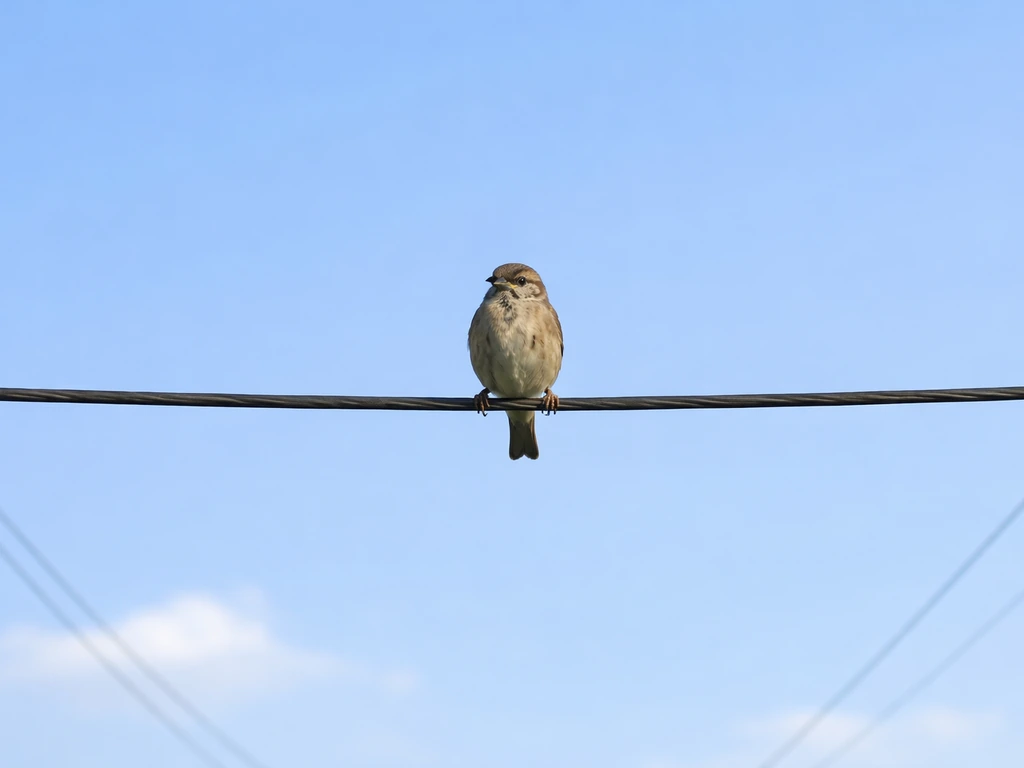
There is also the phrase 'bird on a wire,' which shares the tension between freedom and restriction but from a different angle, the bird is neither fully caged nor fully free, just perched in an uncertain, exposed position. And the less common but striking expression 'I am a cage in search of a bird,' which inverts the whole image: the emptiness itself is the subject, not the captive. Pet Reader notes that early variants of the “bird in a … cage” phrasing can appear in related historical usages, which is useful if you want a supplemental variant rather than strict etymology blank" rel="noopener noreferrer">I am a cage in search of a bird. The phrase “I am a cage in search of a bird” captures a similar theme by flipping the image so the emptiness and longing become the focus. These variations are worth knowing because they show how elastic the bird-cage framework is in English, each small change in the image shifts the emotional focus significantly.
How to figure out what it means in the moment
If you encounter 'bird in a cage' in a quote, song, conversation, or piece of writing and you want to pin down exactly what is meant, work through these questions:
- Who is the 'bird'? Is the speaker talking about themselves, another person, a group, or something abstract like creativity or a nation? The subject tells you what kind of freedom is at stake.
- What is the 'cage'? Is it a relationship, a job, a rule, a fear, a social system, or an internal belief? Naming the cage almost always clarifies the intended meaning.
- What is the emotional register? Is the speaker sad, angry, resigned, hopeful, critical? Lament usually signals personal experience. Critique usually signals political or social commentary. Hope usually signals a turning point or call to action.
- Is the cage mentioned as a permanent state or a temporary one? If the speaker seems to believe the cage can be opened, the phrase is more motivational. If escape seems impossible, it reads as tragedy or grief.
- Is 'freedom' mentioned anywhere nearby? The word 'freedom' (or its synonyms: escape, release, liberation, flying) nearby almost always confirms the confinement-vs-freedom reading.
- What is the source or context? A therapist using it is likely talking about self-limiting beliefs. A poet using it is likely making a social or spiritual point. A friend using it casually is probably describing a feeling of being stuck in a situation they did not choose.
Applying those six questions takes about thirty seconds, and in almost every case they will get you to the right interpretation. The phrase is almost never ambiguous once you look at the surrounding context, it just feels ambiguous until you know what to look for.
The bottom line: 'bird in a cage' means something or someone with real capacity for freedom is being held back, by outside forces, by other people, by a system, or sometimes by their own fear. A bird on a wire can mean feeling balanced but slightly tense, as if you are holding your position despite pressure bird on a wire meaning. The image is built on the contrast between what a bird naturally is (free, mobile, alive in the air) and what a cage makes it (stationary, restricted, watched). Every use of the phrase, whether in a centuries-old poem or a text message from a friend, is working from that same core tension. Once you see it, you cannot unsee it.
FAQ
Does “bird in a cage” always mean literal captivity?
No. The idiom is usually emotional shorthand for being blocked from self-expression or full agency. If someone is talking about a literal cage, they are typically using different language (for example, “kept,” “confined,” or “imprisoned”) and the context will point to an actual animal.
How can I tell if the “cage” is external or internal?
People often use it to describe two different patterns: (1) external control (rules, employers, abusive partners, institutions) and (2) internalized limitation (fear, trauma responses, avoidance, self-protection that has become habitual). A quick check is whether the speaker points to a “doer” (someone/something causing the cage) or to the speaker’s own mind habits.
What tone cues tell me whether the speaker sees hope or resignation?
If the cage feels like a “life sentence” and the person cannot see a way out, the tone is usually despair or resignation. If the speaker emphasizes awareness of the sky, they are more likely highlighting longing and potential, implying change is still possible. Watch for words that signal inevitability versus possibility.
Is “bird in a cage” just another way to say “I’m unhappy”?
The phrase is about more than “not getting your way.” It focuses on blocked capacity, not just disagreement or delay. If the conversation is simply about preference or taste, a different idiom is more likely. Ask yourself whether the person believes there is a real mismatch between what they want to do and what they are allowed to do.
Can the idiom describe a healthy but limiting situation?
Yes, it can be used non-abusively to talk about constraints that are legitimate, like caregiving duties, immigration bureaucracy, disability accommodations, or probation rules. The idiom does not automatically accuse someone of cruelty, so it depends on whether the speaker presents the cage as unjust control or as a difficult trade-off.
Does saying “bird in a cage” mean there’s an abuser behind it?
It’s easy to overread it as “the person is being controlled by someone evil.” Sometimes it’s about structural barriers (money, class, discrimination, lack of access) or about a system that limits everyone’s options. To clarify, look for whether the speaker names a specific person or instead describes a wider context.
Does the phrase require that the person still feels longing for freedom?
Not always. “Bird in a cage” often implies the person knows what freedom would look like, or at least can imagine it. If there is no reference to what’s missing, it may be a different meaning (for example, simply being trapped in a job without longing). Context decides whether it is longing-based or purely descriptive.
How does “bird in a cage” work in self-help or therapy contexts?
It can. When people use it in therapy or coaching, it may describe safety behaviors that are no longer serving the person, for example staying in familiar patterns that reduce anxiety while shrinking life options. In that usage, the “bars” are patterns to work with, not a villain to blame.
How can I use the phrase accurately when describing my own situation?
To avoid misunderstanding, match the metaphor to the mechanism: “What is doing the caging?” (laws, norms, a relationship dynamic, money constraints, mental health patterns). Then add one concrete detail, like “you’re stuck in a role that drains your creativity” or “you’re afraid to take risks.” That turns the image into something testable and actionable.
When should I think “gilded cage” instead of “bird in a cage”?
The related expression “bird in a gilded cage” is usually for confinement that looks privileged to outsiders, like a glamorous job, status, or wealth that still feels emotionally restrictive. If the speaker emphasizes appearances, social standing, or “people think you have it made,” they likely mean the gilded version rather than the plain one.
What’s the opposite idea, and what doesn’t count as the opposite?
If someone says they are “free as a bird,” they are usually claiming low obligation and high autonomy. If they say “bird in a cage” but then list responsibilities they chose, it may be more about feeling overburdened than about lack of freedom. That’s a good reason to ask what constraint truly feels like the bars.
Next Article
Bird on a Wire Meaning: Idiom Origin and Usage Guide
Get bird on a wire meaning, origin, and how to use it in conversation with examples and tone cues.