What 'bird on a wire' actually means
"Bird on a wire" means a state of precarious balance between freedom and constraint. The image captures something or someone who could go either way: free to fly, but also exposed, still, and vulnerable. Depending on tone and context, the phrase can signal calm detachment, quiet resilience, existential tension, or the kind of fragile peace that feels like it could shatter at any moment. It is not a rigid idiom with one fixed meaning, which is exactly why it shows up in poetry, conversation, song lyrics, and everyday speech in so many different emotional registers.
The literal image vs. what people actually mean
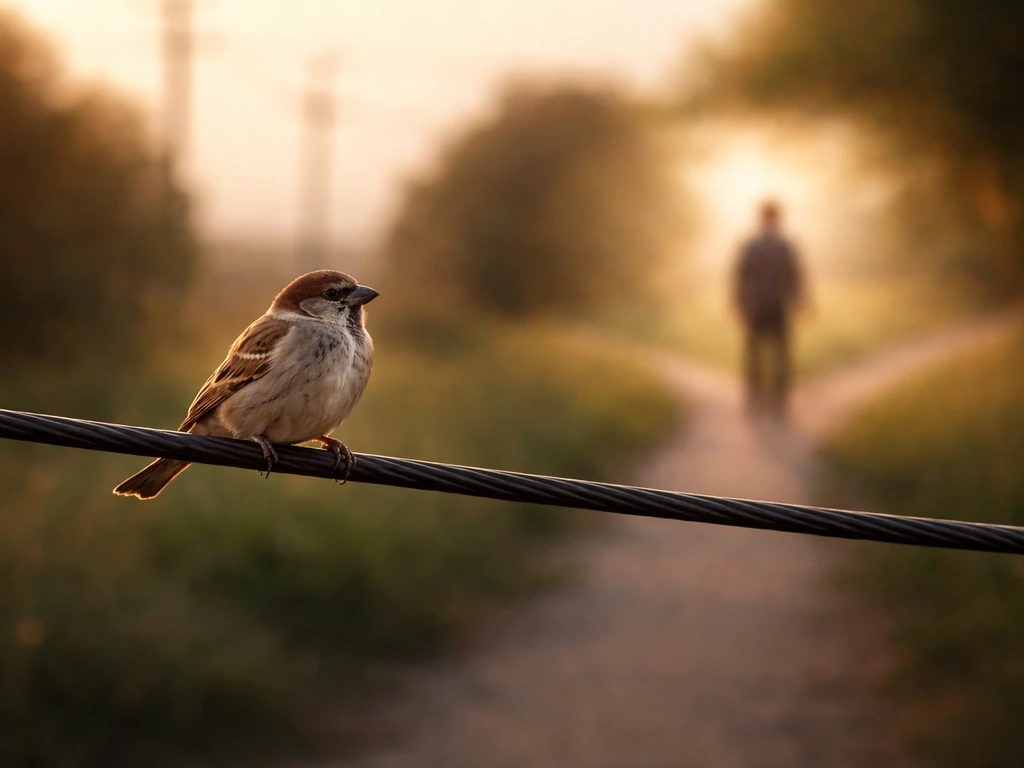
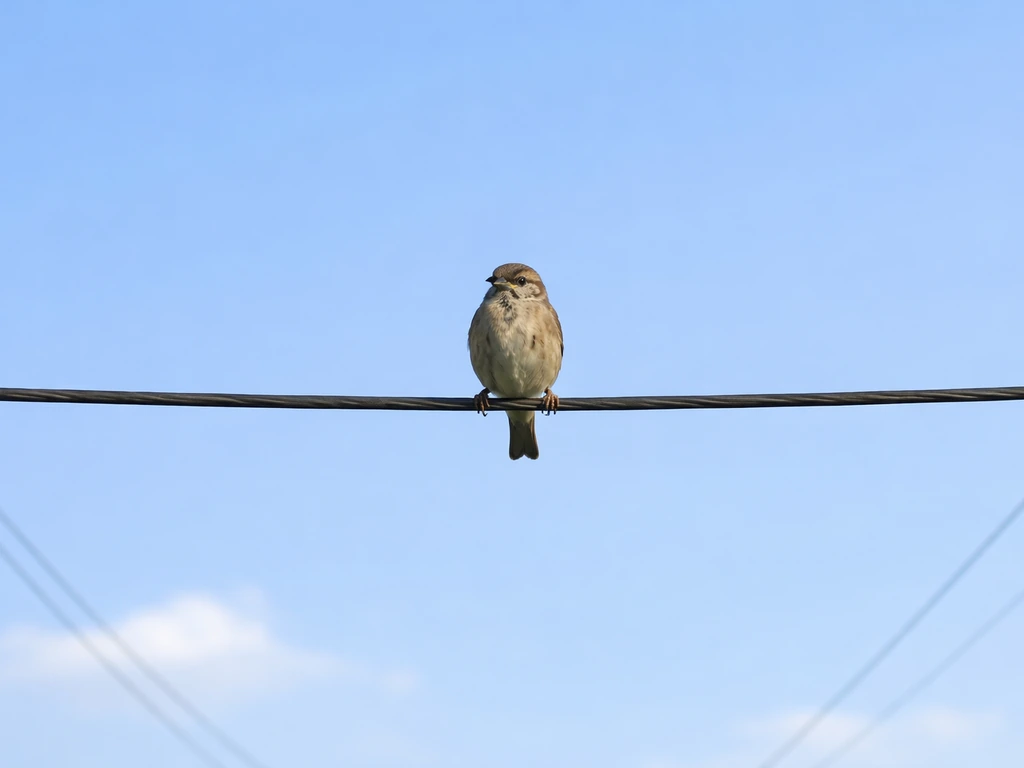
Literally, a bird on a wire is just what it sounds like: a bird perched on a telephone or power line, resting between two points. That image is remarkably ordinary, which is part of what gives it so much figurative power. The bird has not been caged. It is not trapped. But it is also not flying. It is paused, in between, belonging fully to neither the ground nor the sky. That middle-space quality is what makes the phrase so useful as a metaphor.
Figuratively, "bird on a wire" is almost always describing a person, a situation, or a feeling that exists in that same in-between state. Think of someone who has just left a bad relationship but has not yet started over. Or a person holding a fragile truce with a difficult family member. Or even a creative project stuck between conception and completion. The phrase fits all of those because the bird on the wire is not broken, not free, and not committed to either direction. It is suspended, and the question hanging in the air is: which way will it go?
Reading the tone: hopeful or ominous?
Here is where context really matters. The same phrase can read as peaceful or threatening depending entirely on the speaker's framing. When the tone is quiet and reflective, "bird on a wire" usually signals calm endurance. The person is simply existing in an uncertain moment, and there is a kind of dignity in that stillness. When the tone is tense or anxious, the same image shifts: the bird is exposed, a target, one gust of wind away from losing its footing. Pay attention to the words around the phrase. "Like a bird on a wire, I've been waiting" lands differently than "like a bird on a wire, one wrong move and it's over."
The phrase most often appears as a simile, introduced with "like" or "as." That construction signals the speaker is drawing a direct comparison between someone's situation and that perched, poised bird. But it also appears as a standalone noun phrase, especially in titles or captions, where the meaning is implied rather than spelled out. Here are a few examples with what each likely communicates:
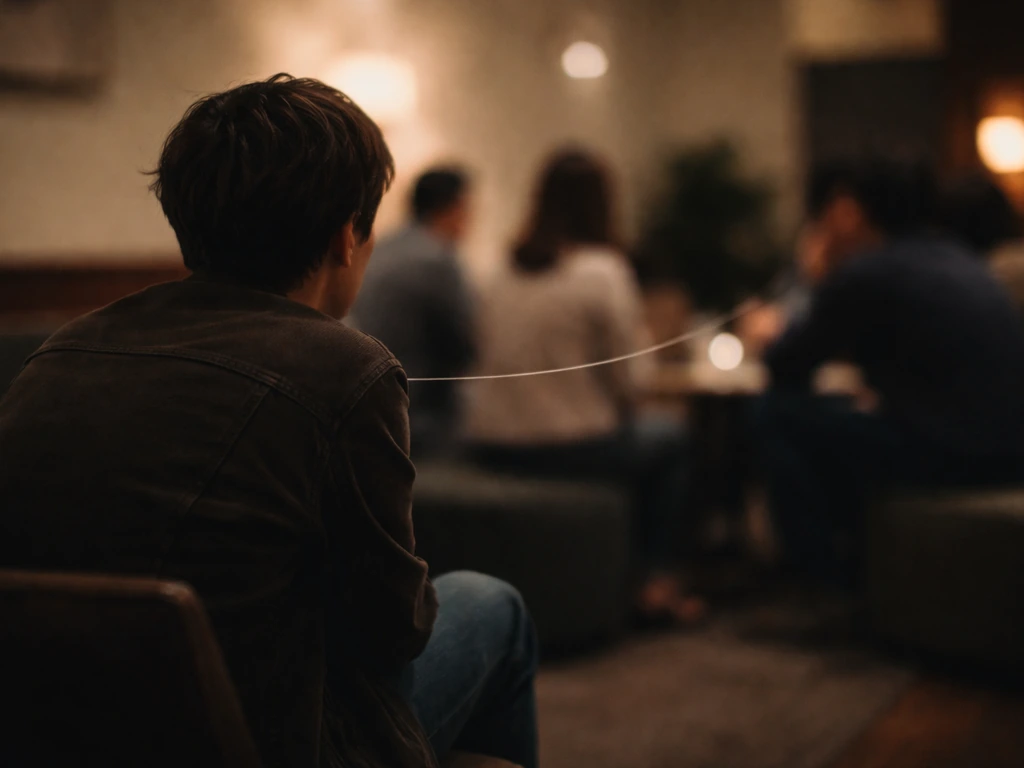
- "She sat at the edge of the conversation like a bird on a wire" — she was present but ready to leave at any moment, not fully committed to staying.
- "After the diagnosis, he lived like a bird on a wire for months" — he existed in a state of fragile uncertainty, not broken but not at ease either.
- "The peace talks feel like a bird on a wire right now" — the situation is delicate, functional for the moment, but one disruption could end it.
- "I've always been a bird on a wire" — a self-description of someone who lives between worlds, never fully settled, always slightly apart from the norm.
- "The company is sitting on a wire" — used without the bird, the wire image alone often borrows this idiom's meaning: precarious, exposed, in between.
In each case, the metaphor is doing the same core job: it is telling you someone or something is in a state of suspension where the next move is uncertain and possibly significant. The emotional weight of that suspension shifts based on everything else the speaker says around it.
Where the phrase comes from
The literal image long predates any specific idiom. Telephone and power lines became a fixture of Western landscapes in the late 19th century, and birds perching on them became an immediately recognizable visual. The image of a lone bird on a wire carries a natural visual weight: stillness against a wide open sky, a small creature on an industrial structure, freedom adjacent to the mundane. That contrast was doing symbolic work in folk art and visual culture before it crystallized into a phrase.
The phrase's deepest cultural roots in the English-speaking world, though, run through Leonard Cohen. His song "Bird on the Wire," included on his 1969 album blank" rel="noopener noreferrer">Songs from a Room, turned the image into one of the most recognized metaphors in modern music.
The Spanish Wikipedia article notes that “Like a Bird,” recorded in May 1968 and produced by David Crosby, was added to the 2007 remastered CD, along with confirming the song’s 1969 release on Songs from a Room Songs from a Room (1969) and the May 1968 “Like a Bird” recording.
Cohen described the song as a simple country song, but its opening lines, which compare the speaker's attempts at freedom to a bird on a wire and a drunk in a midnight choir, gave the image a specific emotional vocabulary: the tension between wanting freedom and failing to fully achieve it, between sincerity and imperfection.
Cohen's version of the phrase is self-implicating and honest rather than ominous, which is one reason "bird on a wire" carries both vulnerable and quietly hopeful tones today.
It is worth being clear that "bird on a wire" as a standalone idiom does not have a single traceable origin moment. Like many visual metaphors, it grew from a widely shared image rather than from one author coining it. Cohen popularized the emotional register, but the underlying metaphor was always available in the image itself. What Cohen gave people was permission to use it with nuance, to mean not just "trapped" or "free" but something more honest: both at once.
When and why people actually use it
People reach for this phrase when they want to describe a state of being that is harder to name directly. It is the go-to metaphor for situations defined by tension between freedom and vulnerability, where someone could "fly or fall" and the outcome is genuinely uncertain. That makes it useful in a surprisingly wide range of situations.
- Personal transitions: someone leaving a job, relationship, or city but not yet arrived somewhere new.
- Creative uncertainty: an artist or writer in the middle of a project, not sure if it will work.
- Political or diplomatic tension: a fragile agreement or ceasefire that feels one incident away from collapse.
- Recovery and resilience: someone who has been through something difficult and is functional but not yet stable.
- Existential reflection: describing a philosophy of life, a sense of never quite belonging, living on the margins by choice or circumstance.
The phrase is also popular in visual art and design for a reason: the image is immediately readable. A 2013 open call from Kolaj Magazine framed "Bird on a Wire" explicitly as representing the tension between freedom and vulnerability, which tells you how the phrase functions across creative contexts, not just in conversation. It gives people a shorthand for a complex emotional state without requiring an explanation.
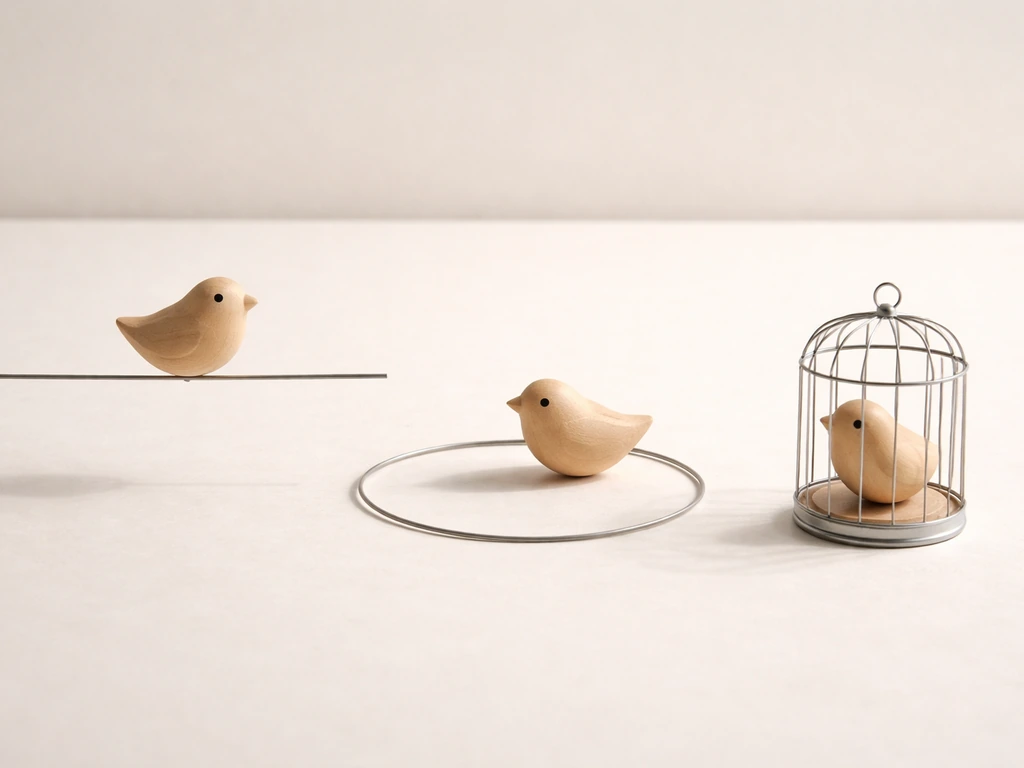
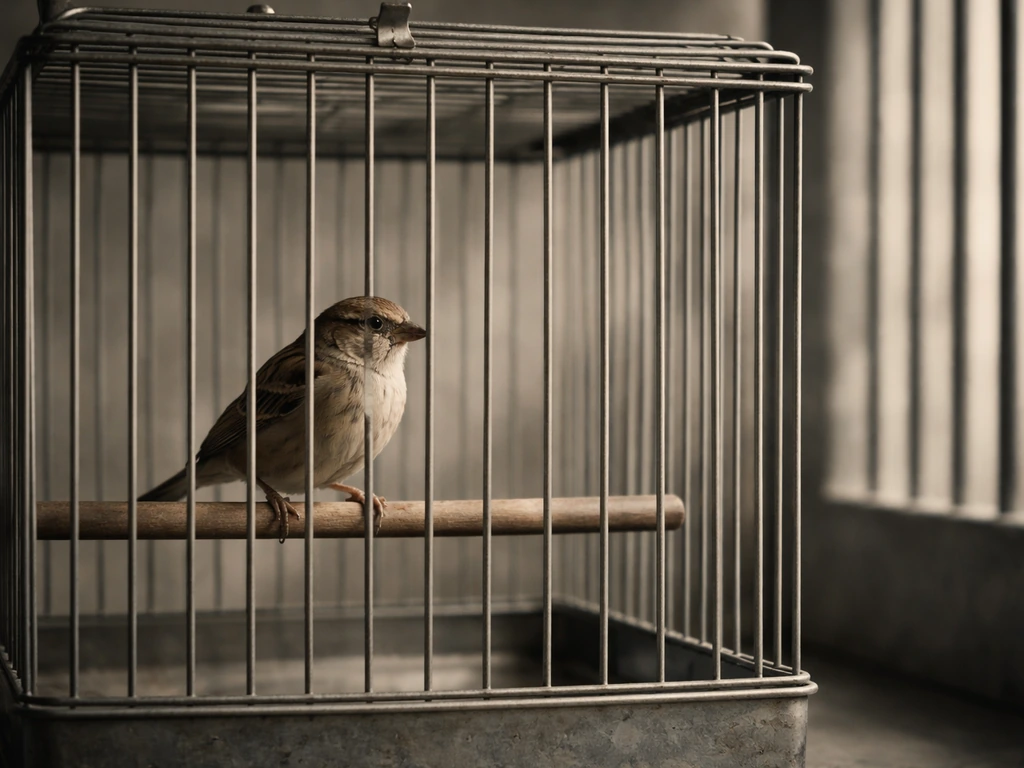
Understanding "bird on a wire" gets sharper when you place it next to the other bird idioms it travels with. The wire is not a cage, and that distinction matters. a bird in a cage implies capture and loss of freedom with no ambiguity. The bird on the wire, by contrast, is free to leave at any moment. The constraint is internal or situational, not physical. That is a meaningful difference in what the speaker is communicating about their state.
The idea gets even more layered when you bring in the concept of a bird in a gilded cage, which describes someone who appears to have everything but is still fundamentally unfree. Where the gilded cage adds the element of privilege masking constraint, the wire strips all that away. There is nothing ornamental about a wire. The bird on the wire is exposed and unadorned, which is part of its honesty as a metaphor.
The Kafka-derived phrase "I am a cage in search of a bird" flips the whole power dynamic entirely, making the structure itself the restless, searching entity. That is about as far from the bird-on-a-wire image as you can get: one phrase is about a passive, poised creature in a precarious world; the other is about an empty structure hungry for something to contain. They come from very different emotional places.
Then there is the closely related phrase "like a bird on a wire", which is essentially the simile form of the same metaphor. The "like" construction tends to appear more in song and poetry, while the noun-phrase version ("a bird on a wire" or just "bird on a wire") appears more in titles, captions, and conversational shorthand. Both carry the same core meaning, but the simile version often comes with more emotional elaboration around it.
It is also worth distinguishing "bird on a wire" from jailbird, which is a completely different kind of bird idiom. Where the wire idiom is about liminal freedom, "jailbird" is a direct slang term for someone who has been imprisoned. The two phrases exist in the same general territory of freedom and confinement, but jailbird is blunt and specific while bird on a wire is poetic and open-ended.
A quick comparison of the key bird-and-confinement idioms
| Phrase | Core meaning | Degree of freedom | Emotional tone |
|---|
| Bird on a wire | Precarious balance between freedom and vulnerability | Technically free, situationally suspended | Ambivalent: hopeful or tense depending on context |
| Bird in a cage | Captured, confined, freedom lost | None | Sad, oppressive, or resigned |
| Bird in a gilded cage | Privilege masking a lack of real freedom | Superficially free, structurally trapped | Ironic, melancholy, sometimes self-aware |
| Jailbird | A person who has been imprisoned | None (or recently restored) | Blunt, often stigmatizing |
| I am a cage in search of a bird | A structure seeking something to contain | Reversed: the cage is the active subject | Philosophical, existential, unsettling |
How to read it the next time you see it
When you encounter "bird on a wire" in the wild, run through three quick questions: Who or what is the bird? What is the wire representing (a relationship, a situation, a life stage)? And what is the tone telling you about which direction things might go? If the tone is wistful or reflective, the speaker is probably sitting with the uncertainty rather than dreading it. If the tone is tense or urgent, the precariousness is the point and something is about to shift. Most of the time, the phrase is doing exactly what a bird on a wire does in real life: sitting still in a wide open world, making you wonder what comes next.