
A "jailbird" is a person who has been in jail or prison, either currently or in the past. That's the short answer. Merriam-Webster defines it as "a person confined in jail; also: convict or ex-convict," and Dictionary.com labels it "casual and derogatory." The word has been in English since roughly 1595 to 1605, making it one of the older slang terms still floating around in everyday conversation. It's not a puzzle to decode, but there's real nuance in how people use it and what they mean by it depending on tone and context.
Jail Bird Meaning: Slang Definition, Origin, and Usage

Marcus Winters
17 Apr 2026
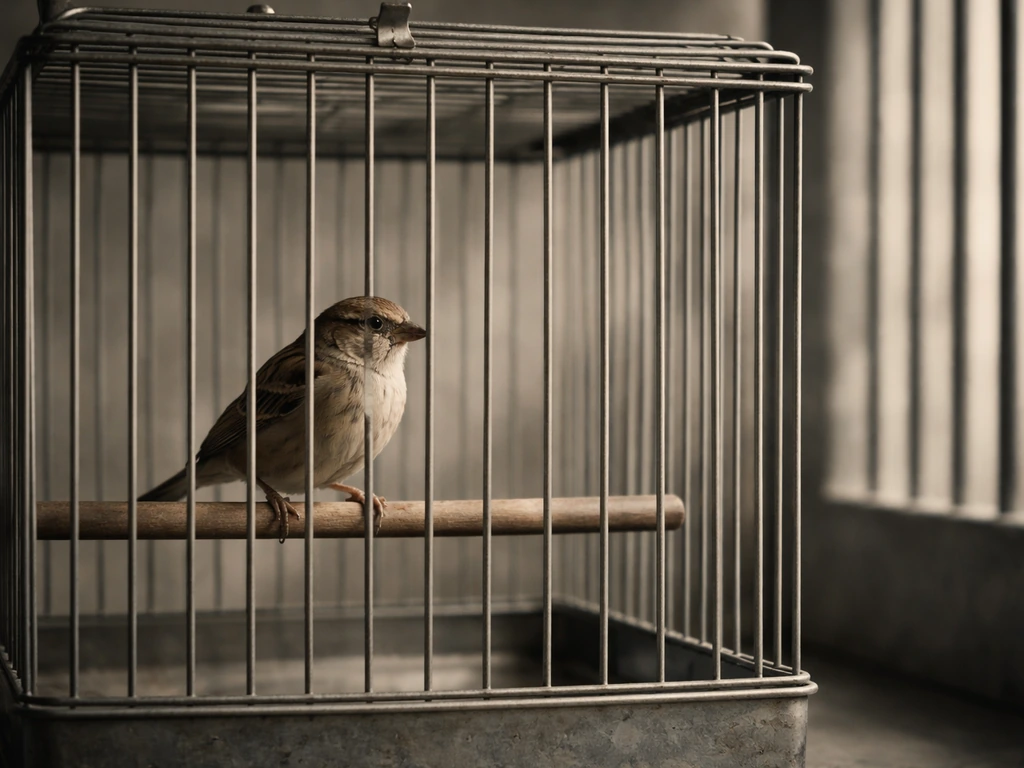
Where "jailbird" comes from and why "bird"?
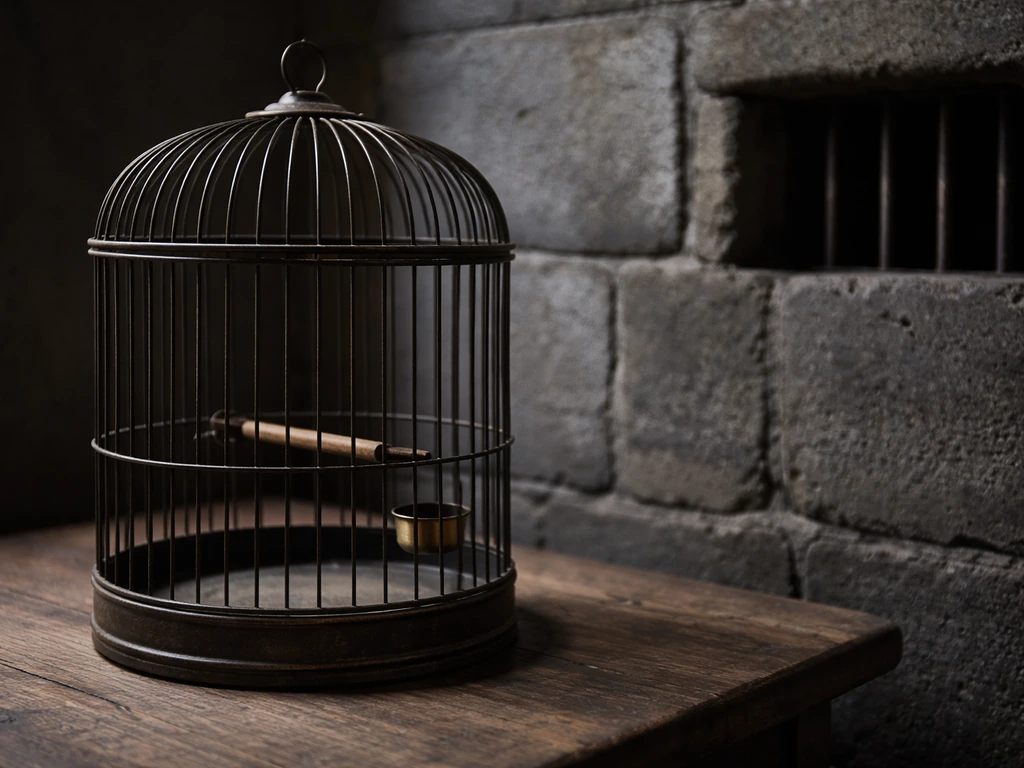
The origin is pretty literal when you break it down: jail + bird, coined around 1600. Dictionary.com explains the logic directly: the term "equates the image of a bird in a cage with a prisoner in jail." Think about it. A bird locked in a cage loses its defining freedom. It can't fly. It's contained, watched, controlled. Applied to a person, the metaphor captures exactly what imprisonment does: it takes away movement, agency, and freedom. That parallel was vivid enough to stick for over four centuries.
The "bird" metaphor shows up in English idioms constantly when the subject is confinement or entrapment. If you've ever wondered about the idea of a bird in a cage, you'll recognize the same symbolic logic at work: something free by nature, now restricted. "Jailbird" just takes that image and attaches it directly to a specific kind of human confinement.
"Jailbird" vs. a literal bird in jail: clearing up the confusion
This is where people occasionally trip up, especially when reading quickly or hearing the phrase out of context. "Jailbird" as one word (or hyphenated "jail-bird" in older texts) is always figurative slang for a person. It does not describe an actual bird. If someone says "he's a real jailbird," they're not talking about an animal that wandered into a courthouse. They're talking about a person with a history of incarceration.
The confusion is more understandable when people encounter adjacent expressions. Phrases like "like a bird on a wire" or the imagery behind a bird in a gilded cage use birds in figurative ways too, but those expressions carry entirely different meanings about freedom, constraint, and compromise. "Jailbird" is more blunt: it refers specifically to incarceration, not a vague feeling of being trapped.
The key distinction is also temporal. "Jailbird" covers both current imprisonment and past criminal history. Merriam-Webster lists "convict or ex-convict" in the same definition. So someone can be called a jailbird even decades after their release. That makes it broader than phrases like "convict," which usually implies current or recent status.
Where you'll actually hear "jailbird" used

People use this word in a few distinct situations, and knowing which one you're in helps you read the tone correctly.
- Casual conversation: "Don't hang around with him, he's a jailbird." This is probably the most common use, often as a quick social warning or judgment about someone's past.
- News headlines and tabloids: Older newspapers especially loved "jailbird" as a punchy, single-word label for a repeat offender or recently released convict. You'll find it in crime reporting going back generations.
- Storytelling and fiction: Writers use it to quickly characterize someone as having a criminal past without lengthy explanation. It's efficient shorthand.
- Historical references: Because the word is old-fashioned (Britannica flags it as "informal + old-fashioned"), you'll see it a lot in historical crime writing, period dramas, and older literature.
- Interviews and personal narratives: Someone recounting their own past might use it self-referentially, sometimes with dark humor or reclaimed pride, sometimes with regret.
Is it an insult, a neutral label, or something else?
Mostly it's an insult, or at minimum a loaded label. Dictionary. Britannica Dictionary defines “jailbird” as a person who has often been in jail or prison, labeled informal + old-fashioned Dictionary.. com calls it "casual and derogatory," which is the honest summary. When someone calls another person a jailbird in everyday speech, they're usually not being neutral: they're signaling disapproval, distrust, or social stigma tied to that person's criminal history. It carries the implication that incarceration defines the person, not just a chapter of their life.
That said, tone matters enormously. In casual or humorous contexts, especially among people who know each other well, it can be used with less bite. Someone joking about a friend's parking violations might call them a "real jailbird" and mean it as light teasing. Self-referential use can also strip some of the sting: a person who spent time incarcerated and is open about it might use the word about themselves in a reclaimed, matter-of-fact way.
There's also a nostalgic register. Because the word is old-fashioned, using it sometimes signals that you're channeling a vintage, almost cinematic way of talking about crime and criminals. Think black-and-white movies, hardboiled detective fiction, or a grandparent telling stories. In that context, the word has more texture than venom.
Related slang and phrases people mix up
"Jailbird" has company in the English idiom ecosystem. Here are a few expressions that often get tangled up with it and what each one actually means:
| Phrase | What it actually means | Tone |
|---|---|---|
| Jailbird | A person who is or has been incarcerated | Informal, often derogatory |
| Convict | A person found guilty and serving a sentence | Formal to neutral |
| Ex-con | A person who has been released from prison | Informal, often neutral |
| Felon | A person convicted of a felony crime | Legal/formal |
| Bird on a wire | Someone caught between freedom and constraint, often morally | Figurative, poetic |
| Doing bird (British slang) | Serving a prison sentence | British informal |
"Doing bird" is worth a special mention because it shows up in British English and can confuse readers unfamiliar with it. It comes from Cockney rhyming slang: "bird lime" rhymes with "time," and doing time means serving a sentence. So "doing bird" means serving prison time. It's the same bird metaphor, different route. The bird on a wire meaning goes in a completely different direction, pointing toward someone hovering between two states rather than someone locked up.
There's also the Kafka-esque phrase explored in the idea that I am a cage in search of a bird, which flips the whole metaphor on its head. Instead of a person being the caged creature, the cage itself is the protagonist. That's a philosophical expression, not slang, and has nothing to do with criminal history.
How to use (or avoid) "jailbird" appropriately
If you're trying to understand a quote or headline that uses "jailbird," context will tell you everything. Look at who is saying it and about whom. A tabloid headline calling someone a jailbird is weaponizing the word. A memoir author calling themselves a jailbird is owning their past. A historical novel using it is painting a period-accurate scene. Read tone from the surrounding language, not the word alone.
If you're deciding whether to use it yourself, think about what you're trying to communicate. If you need a neutral description of someone's criminal history, "jailbird" is a poor choice. It carries too much judgment baked in. "Ex-convict," "formerly incarcerated person," or simply describing the specific situation is cleaner and less loaded. Save "jailbird" for contexts where you're deliberately invoking its vintage, informal flavor or quoting someone else's speech.
If you heard someone else use it and want to decode whether they meant it as a slur or just casual shorthand, the safest read is that it wasn't neutral. Even in lighthearted delivery, the word carries the historical weight of social stigma. Someone using it probably knows that and is leaning into it, whether they mean to insult or just to describe with a bit of color.
One last thing worth remembering: "jailbird" is about the person, not the crime. It doesn't specify what someone did, how serious it was, or how long they served. It's a broad label. That vagueness is part of why it can feel more like a brand than a description. Understanding that helps you hear the word for what it actually does: it places a permanent-feeling social marker on someone based on their history with incarceration, which is exactly why so many style guides and journalists have moved away from it in favor of more precise language.
The bird metaphor running through "jailbird" is the same imaginative logic you find across dozens of English idioms. A bird locked up is a bird that can't be what it is. That image, first coined around 1600, turned out to be durable enough to outlast most of the language around it. Now you know exactly where it comes from, what it means in practice, and how to handle it when you run into it.
FAQ
Is “jail bird” always the same as “ex-con” or “convict”?
Not exactly. “Jailbird” can refer to someone currently incarcerated or someone with a past incarceration, and it does not specify how long ago, how serious the offense was, or whether they were convicted versus held. That breadth is part of why it often feels like a stigmatizing label rather than a precise descriptor.
Does “jailbird” apply to someone arrested but not convicted?
Usually, the meaning in practice is tied to confinement or incarceration history, but many speakers use it loosely for anyone associated with jail. If you need to be accurate, avoid it, and instead use terms like “recently arrested,” “awaiting trial,” or specify the status to prevent implying a conviction.
What is the difference between “jailbird” and “doing time” or “serving a sentence”?
“Jailbird” labels a person (an identity marker), while “doing time” or “serving a sentence” describes an action or time period. A statement like “he is doing time” focuses on the current situation, while “he’s a jailbird” frames character and social meaning.
Can “jailbird” be used politely or professionally?
Generally no, it is commonly considered derogatory or loaded. In professional writing, journalists often choose clearer, less judgmental wording such as “formerly incarcerated person,” “someone previously convicted,” or a specific legal status tied to the case.
If someone says “real jailbird” in a joke, should I assume it is still an insult?
Often, yes. Even when used lightly or among acquaintances, the word typically carries social stigma. The safest approach is to treat it as potentially negative unless the speaker clearly uses it in a self-referential, reclaimed, or explicitly joking way about their own history.
Is “jail-bird” (with a hyphen) the same thing?
Yes. Older texts may hyphenate it, but the meaning stays the same, figurative slang for a person associated with incarceration. The hyphen is mainly a spelling variation, not a change in interpretation.
How do I tell whether “jailbird” is meant as a slur in a quote or headline?
Look at the surrounding framing. If it is used by an authority or in a tabloid style to discredit someone, it is likely weaponized. If it appears in a self-story, memoir voice, or historical pastiche that acknowledges the period tone, it may be used as a stylized label rather than an active attack.
Does “jailbird” imply the person’s crimes are ongoing or still relevant today?
Not logically, but it can be implied socially. Because the label attaches to the person broadly, listeners may treat the past as defining now. If the point is time-specific, use wording that ties the status to the relevant period (for example, “was incarcerated in 2010” or “served a sentence last decade”).
What is a safer alternative when I want to mention incarceration without stigma?
Use more specific, status-based language. Options include “formerly incarcerated,” “previously convicted,” or “served time for [charge]” when you can name it accurately. If you are unsure of conviction details, stick to neutral phrasing like “held in jail” or “awaiting trial” rather than “jailbird.”
Next Article
Amber Bird Meaning: Symbolism, Interpretations, and How to Use It
Learn amber bird meaning: disambiguate the phrase and interpret it using amber and bird symbolism, grounded steps includ