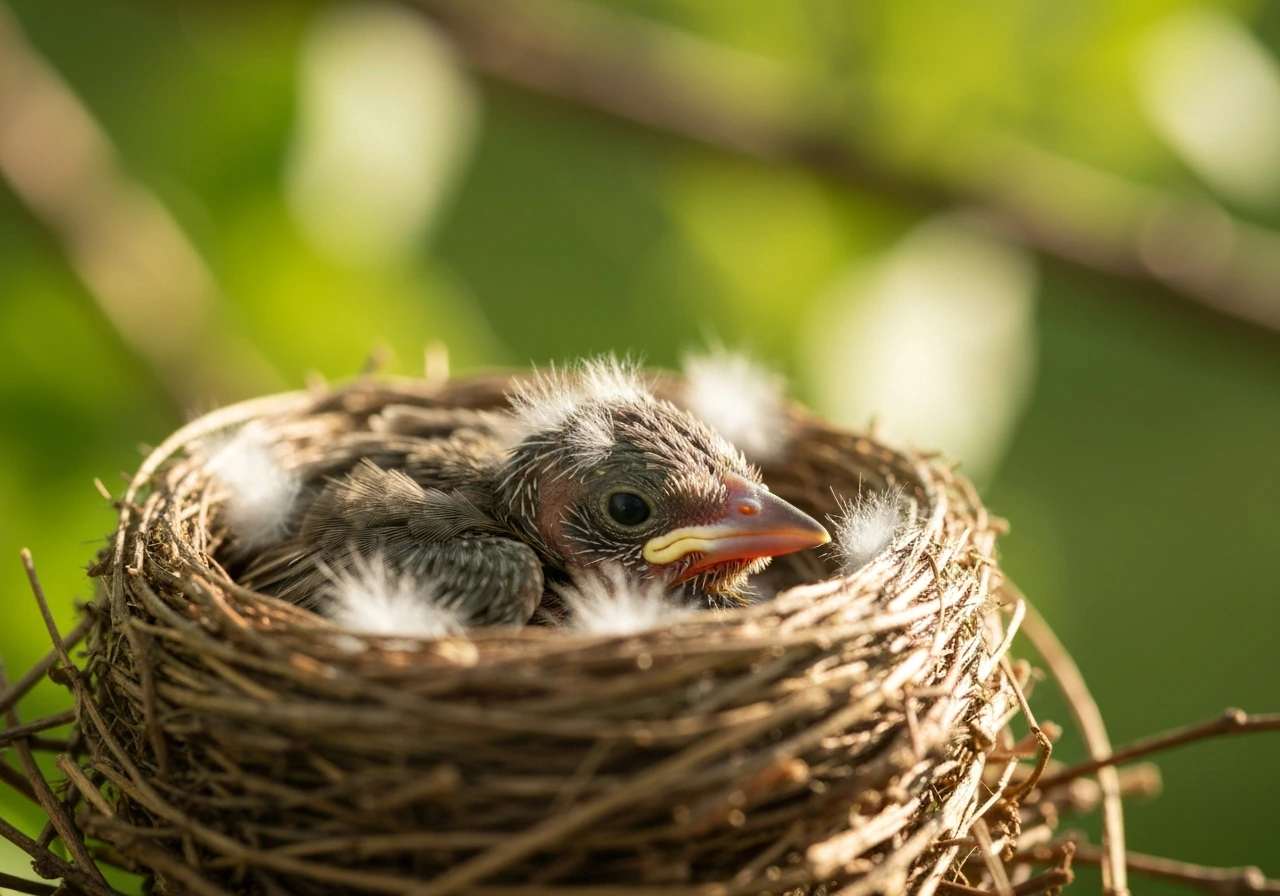
"Little by little the bird makes its nest" means that big things are achieved through small, consistent efforts over time. It's a proverb about patience and steady progress, reminding you that you don't need to do everything at once, you just need to keep going. A bird doesn't build a nest in a single trip. It picks up one twig, then another, then another, until something solid exists. That's the whole lesson.
Little by Little the Bird Makes Its Nest Meaning and Uses

Marcus Winters
13 May 2026
Where the proverb comes from
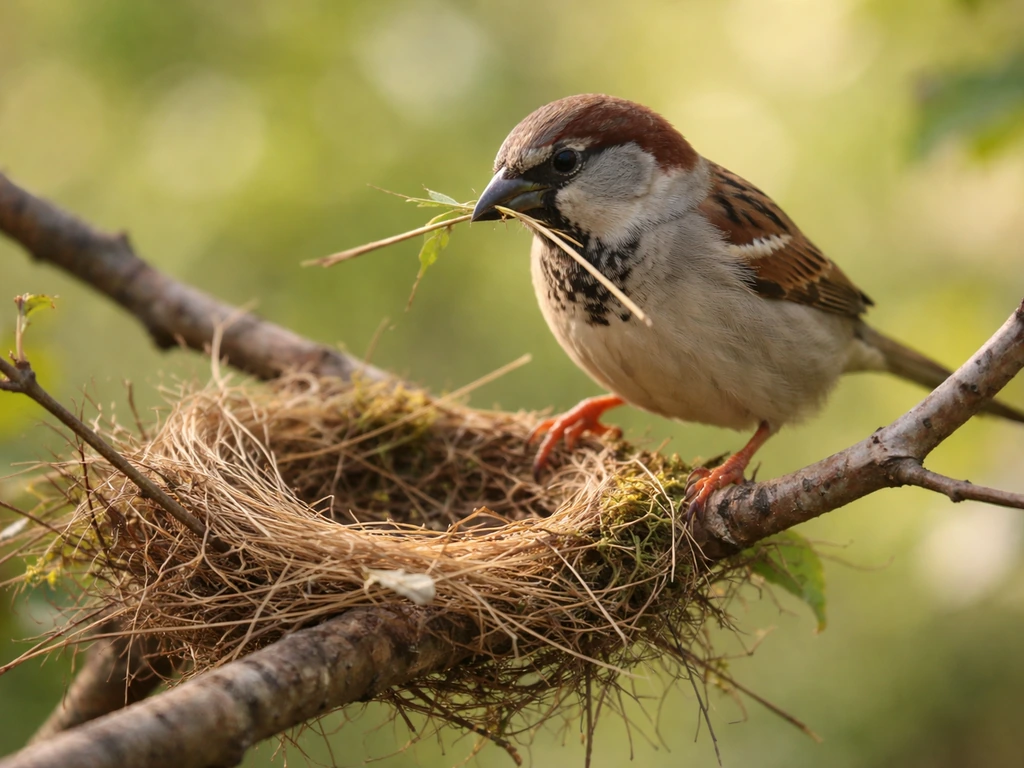
The phrase is rooted in a very old European proverb tradition. The Spanish equivalent, "poco a poco el pájaro hace su nido," has been documented in multilingual proverb collections going back centuries, and the English rendering "by little and little the bird makes his nest" appears in historical reference works as a direct parallel. What's interesting is how many cultures landed on the same bird-and-nest image independently, because nest-building is one of the most universally observable examples of patient, incremental work in nature.
The proverb shows up in literature too. Donald McCaig used it in the 2014 novel "Ruth's Journey" (p. 32), writing "Little by little, the bird makes his nest" as a piece of wisdom passed between characters. That's exactly how proverbs tend to travel, through books, letters, and conversation, each use reinforcing the same core idea. The phrase sits in the same family as "many small make a great" and "the whole ocean is made up of single drops," all of which point to the same truth: scale comes from accumulation.
What it really means: patience, progress, and perseverance

Cambridge Dictionary defines "little by little" as meaning "slowly, in small amounts." That's the engine of the proverb. The bird part gives you the image, and the "little by little" part tells you the mechanism. Together they describe a process that's slow on purpose, not because of failure, but because that's how durable things get built.
Figuratively, the proverb is about three things working together. First, patience: accepting that the timeline is long and that's okay. Second, consistent effort: showing up repeatedly even when the individual action feels tiny. Third, trust in accumulation: believing that small inputs compound into real results. These aren't just motivational ideas. They describe how most meaningful things in life actually get done, whether that's learning a language, recovering from an injury, building a career, or saving money.
How to use it naturally in conversation and writing
This phrase works best when someone is feeling overwhelmed by a long process or discouraged that they haven't made visible progress yet. It's a reminder, not a critique. You'd use it to encourage, not to instruct. A “hand reared bird” is a bird that has been raised by people, rather than by its parents, and it helps to understand that context when discussing bird behavior and care hand reared bird mean. Here are some natural contexts where it fits:
- A friend learning to code from scratch and feeling like they'll never get it: "Don't stress about the whole thing. Little by little the bird makes its nest."
- A caption under a photo of a work-in-progress creative project: "Slow process, but little by little the bird makes its nest."
- Advice to someone rebuilding after a setback: "You're not starting over from zero. You're just going back to an earlier stage. Little by little the bird makes its nest."
- A journal entry or goal-setting note to yourself when motivation dips: "Returned to the habit today even though I missed three days. Little by little."
- A teacher encouraging students on a long assignment or skill-building exercise.
The tone is always gentle and forward-looking. It doesn't judge where you are right now. It simply points in the direction of continued effort. In writing, you can use the full phrase or shorten it to just "little by little" and the meaning carries through, especially if the context makes the incremental effort clear.
Related bird idioms worth knowing (and how they differ)
Bird idioms about effort, progress, and growth are surprisingly common, and it helps to know how this proverb sits among them so you pick the right phrase for the right moment. If you're also curious about other phrase-level interpretations, the nestling bird meaning is a related birds-and-life cycle angle you can compare to this proverb birds idioms about effort, progress, and growth. If you are also wondering about the young bird meaning in different sayings, you can connect it to growth, learning, and new beginnings in the same way.
| Idiom or Proverb | Core Meaning | Key Difference from "Little by Little..." |
|---|---|---|
| Little by little the bird makes its nest | Steady small efforts build something great over time | The original; emphasizes process and accumulation |
| A bird in the hand is worth two in the bush | Secure what you have rather than chasing uncertain gains | About caution and risk, not effort or progress |
| The early bird catches the worm | Starting early gives you an advantage | About timing, not sustained incremental effort |
| Rome wasn't built in a day | Large achievements take time | Similar message, but no bird symbolism; less personal |
| Many a little makes a mickle | Small amounts add up to large totals | Identical message; "mickle" means "much" in Scottish English |
| Birds of a feather flock together | People with similar traits group together | About social identity, completely unrelated to effort |
If you're reaching for encouragement around patient effort and incremental progress, "little by little the bird makes its nest" is the most direct fit. If you like that image of a bird learning step by step, you may also enjoy exploring fledgling bird meaning as a related way to understand growth and early stages. "The early bird catches the worm" is about urgency, not patience, so don't confuse them. And "Rome wasn't built in a day" works in similar moments but doesn't carry the same vivid, constructive image of an animal methodically assembling something from almost nothing.
What birds and nests symbolize across cultures and folklore
The reason this proverb works so well as an image isn't accidental. Across folklore, spirituality, and cultural tradition, birds building nests carry deep symbolic weight. In many traditions, the nest represents home-making, foundation-building, and the start of new life. Heirloom bird meaning is often tied to symbolism of legacy, careful care, and lasting value passed from one generation to the next. It's not just a shelter; it's something created with intention and care, piece by piece, to hold something precious.
In Christian symbolic tradition, birds caring for their nests are often used as examples of diligence and providence. In Chinese folklore, certain birds building or returning to their nests signal renewal and domestic harmony. In Indigenous North American traditions, birds' nest-building behaviors were often read as signs of seasonal change and preparation, a kind of natural wisdom about timing and readiness.
What's consistent across these traditions is that the nest is never seen as permanent or effortless. It's built, maintained, and sometimes rebuilt. That's part of why the proverb resonates so broadly. In some contexts, the phrase is also interpreted as a metaphor for the bird hatching meaning, where patience leads to the moment of new life.
The image of a nestling bird, a fledgling finding its footing, or a bird at the hatching stage all connect to the same arc of gradual development. A fledgling bird meaning is tied to that early stage of growth, when new life is learning how to stand on its own fledgling finding its footing. The nest is just the beginning of that story, assembled one twig at a time before any of those stages can even happen.
How to actually apply the proverb to your goals right now
The proverb is only useful if it changes how you act, not just how you feel for a moment. Here's how to turn it into a practical framework for whatever you're working on.
- Break your goal into the smallest possible actions. A bird doesn't think about the whole nest. It picks up one piece of material. What's your one-piece equivalent today? Twenty minutes of practice, one paragraph written, one email sent.
- Set a daily or weekly minimum, not a target. The bird doesn't aim to collect 200 twigs. It just goes out and brings something back. A minimum removes the pressure of a big target while keeping motion alive.
- Track small wins visibly. Keep a simple log: a checkmark, a journal note, a progress bar. Watching the nest take shape, even slowly, is what maintains motivation over weeks and months.
- Reframe slow days as part of the process, not failures. The bird has bad weather days. It still counts. Any day you do something small is a nest-building day.
- Set a review point, not a deadline. Instead of "I'll be done by X date," try "I'll check on my progress in 30 days." This matches the organic pace of the proverb rather than fighting it.
- Identify your 'twigs': the small, repeatable inputs that compound. For fitness, it's daily movement. For writing, it's daily words. For relationships, it's regular check-ins. Name your twigs specifically so they're actionable.
The key mindset shift is from outcome focus to process focus. The bird doesn't stare at an imaginary finished nest and feel discouraged. It just picks up what's in front of it. That's the practical application: shrink your focus to the next small action, trust that it adds up, and repeat.
Real examples with quick "what it means here" breakdowns

Here are several real-world scenarios where this proverb applies, with a brief interpretation for each so you can map it to your own situation.
- "I've been studying Spanish for six months and I still can't hold a full conversation." What it means here: You're mid-nest. The twigs are there even if the structure isn't obvious yet. Keep the daily 15-minute sessions going.
- "I started saving $50 a month and it feels pointless against my debt." What it means here: The nest is $50 bigger this month than last. That's real. Compound interest is the bird's second flight.
- "My freelance business has two clients after a year of trying." What it means here: Two clients is a nest. It can hold more. Little by little means you now pitch a third client, not that you rebuild from scratch.
- "I wrote three chapters of my book then stopped for two months." What it means here: The nest didn't disappear while you were away. Pick up the next twig. Write one paragraph today.
- "I keep failing the same certification exam." What it means here: Each attempt is material. You know more about the structure of the test than someone who hasn't tried yet. That's part of the nest too.
- "I've been going to the gym consistently for three weeks and I look exactly the same." What it means here: Three weeks is early nest-building. The body adapts on a longer timeline than the eye can see. The habit is the twig, not the result.
In every one of those cases, the proverb isn't about feeling better, it's about continuing. That's what makes it genuinely useful rather than just comforting. It points you back toward the action, which is always the next small thing.
FAQ
When does “little by little” encouragement stop being helpful and become a sign to change strategy?
Use it when progress is slow but still visible from a distance. If you are seeing no movement for weeks or months, it helps to pair the idea with a quick diagnostic, such as whether the plan is too vague, too ambitious, or missing a feedback loop (for example, practice plus measurement).
What does “small consistent effort” look like in real life, not just as motivation?
A good rule is to identify the smallest repeatable action you can do consistently (daily or weekly), then define what “done” looks like. For example, instead of “learn a language,” set a daily 20 minute session with a specific activity (flashcards, listening, or speaking practice).
How do I make sure the small steps are compounding, and not just repeating the same ineffective action?
Don’t rely only on time. Two different projects can get the same months of effort but produce different results because of quality, feedback, and constraints. Build in a checkpoint every 2 to 4 weeks to confirm that your small steps are actually compounding.
Can I use this proverb even when the situation feels urgent or high stakes?
It can, but it should not be used to justify neglecting urgent risks. If health, safety, debt, or work compliance issues are involved, you still need immediate action. The proverb fits for improvement and recovery, not for delaying what must be handled right away.
What should I do if I’ve been trying “little by little,” but results aren’t improving?
The phrase is about persistence, but it also implies adaptation. If your “twig” strategy keeps failing, switch which twig you pick up, keep the frequency, and refine based on what works (better resources, different schedule, or a revised method).
Is this proverb appropriate for workplace feedback or is it too soft?
Yes. “Little by little” is often warm and supportive, so it can soften criticism. However, in performance or conflict situations, it may sound patronizing if you ignore the other person’s urgency. In those cases, use it with a concrete next step and a clear timeline for the next check-in.
How do I apply the proverb when I don’t feel motivated or disciplined yet?
A common mistake is waiting for motivation before acting. The bird image suggests showing up for the next action even when you feel unready. If motivation is low, lower the step size further so you can still complete it reliably.
What’s a simple method to turn this proverb into a routine I can track?
Try pairing it with a “next twig” rule. For any goal, write the single next action that takes less than 15 to 30 minutes, schedule it, and then track completion. Completion data helps you trust accumulation even before big outcomes appear.
Does “little by little” apply to bad habits too, and how should I interpret that?
Yes, but be careful not to stretch the meaning into “anything goes.” Sometimes small actions can accumulate harmful habits, like unchecked spending or doomscrolling. The proverb works best when the small efforts are aligned with your actual values and desired direction.
How can I tell whether “little by little” or a proverb about urgency fits my situation better?
In contrast, it is usually better for situations where you want steady development rather than immediate action. If the moment calls for urgency, the early-bird idea fits more. If it calls for building foundations, renovation, training, or recovery, the nest-building idea fits better.
Next Article
Nestling Bird Meaning: Real Life and Symbolism Guide
Learn nestling bird meaning: literal biology, symbolism of vulnerability and new beginnings, plus safe steps if you find