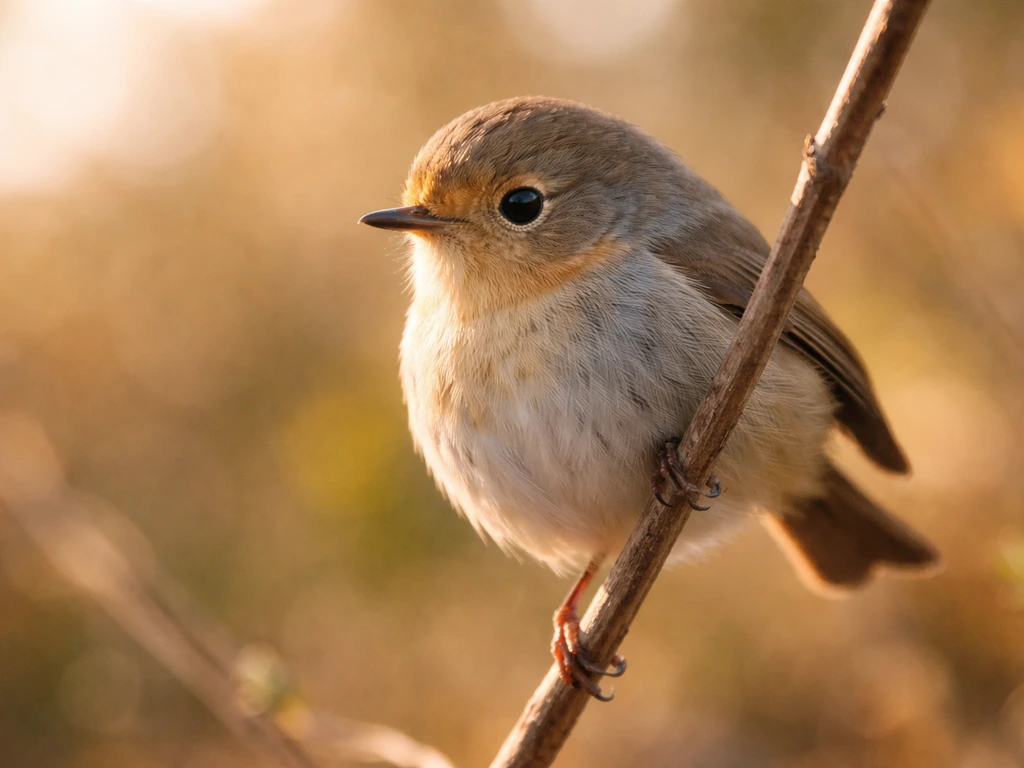
When someone searches for "small bird meaning," they are usually asking one of two very different questions: what does a specific small bird (a sparrow, wren, finch, or swallow) symbolize, or what does the phrase "little bird" mean when someone uses it in conversation, a poem, or a spiritual context? The answer depends entirely on the context, and once you know what to look for, sorting between them is straightforward.
Small Bird Meaning: Literal vs Symbolic Interpretations

Marcus Winters
12 Jun 2026
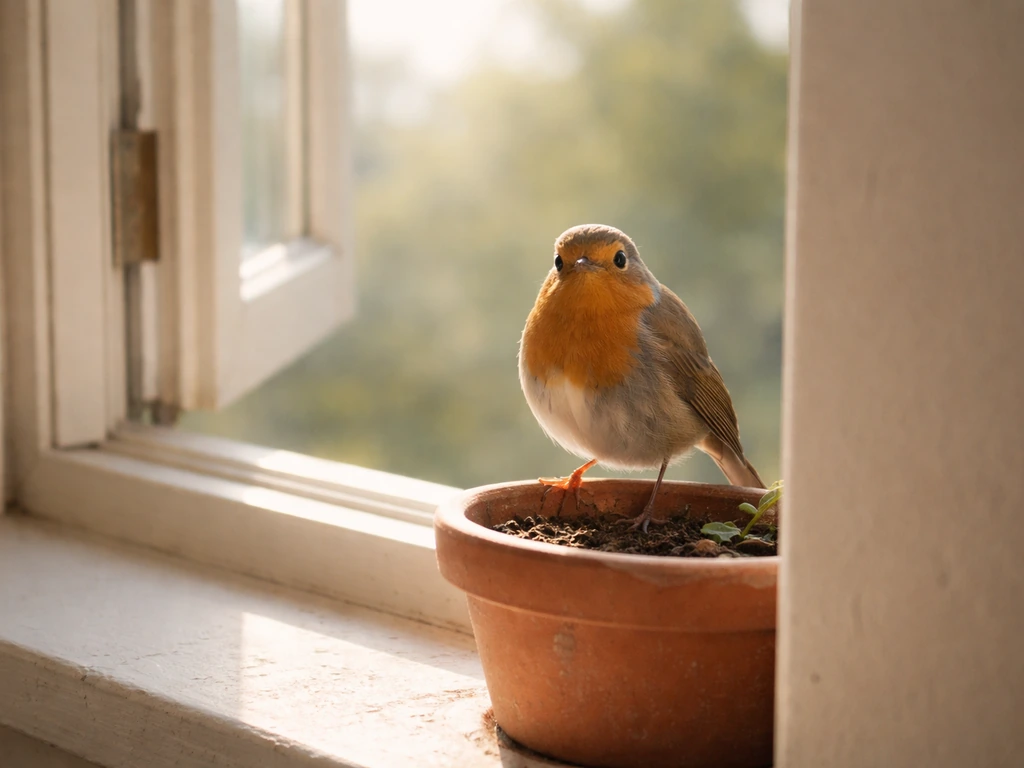
Literal vs. figurative: how to tell which one someone means
In everyday language, "small bird" can work two ways. The literal version is simple: someone saw a tiny bird, wants to identify it, and is wondering what cultural or spiritual weight it carries. The figurative version is older and richer. When people say "a little bird told me," they are not describing an avian encounter at all. They mean they heard something through the grapevine, a rumor, a secret passed along by an unnamed source. That idiom dates back to biblical phrasing (the Book of Ecclesiastes uses the idea of a bird carrying a voice), and it has stuck around in everyday English because it is a graceful, slightly playful way to avoid naming your source.
The quickest test for which meaning applies: is there an actual bird involved? If someone says "a little bird told me you got a promotion," there is no bird. If someone says "a small bird flew into my kitchen this morning and I can't stop thinking about it," the literal bird is the starting point, and the symbolism question comes second. Keeping that separation clear saves a lot of confusion.
Common phrases and idioms that include "small bird"
The heavyweight idiom here is "a little bird told me," which the Cambridge English Dictionary defines as a way of saying you learned something without wanting to reveal your source. It is a polite fiction, a conversational shorthand for "someone told me in confidence." The phrase shows up in song titles, book titles, and casual conversation constantly, which is part of why it reads as such a natural expression rather than a deliberate figure of speech.
"Little bird" also functions as a term of affection in some dialects and contexts. You might hear a parent call a child "little bird," or a poet address a lover that way. This endearment use is less about birds and more about the connotations attached to them: delicacy, freedom, a certain sweetness. In the context of slang, "bird" on its own has a separate history in British English (Cockney rhyming slang, for instance, builds phrases where the literal word drops out entirely), so when you encounter "bird" in older British slang, the small-bird meaning has often been fully replaced by something unrelated to the animal.
The broader takeaway for idioms: if "small bird" or "little bird" appears in a sentence without describing a real encounter, it is almost certainly doing figurative work, either as a rumor-messenger device or as an endearment. In that case, it is usually about what someone is calling “little bird meaning,” not literal birds. The literal bird meaning reasserts itself only when context makes the physical encounter clear.
What small birds symbolize across folklore and cultural traditions
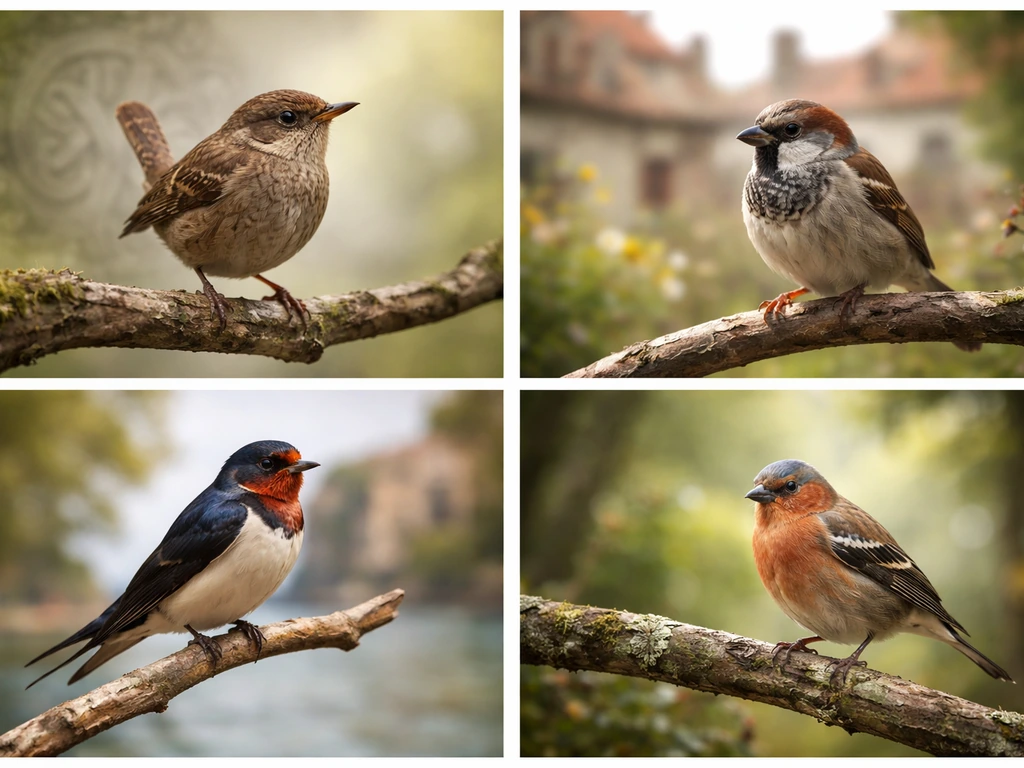
Different small birds carry very specific symbolic freight depending on the culture and time period. The wren is one of the most loaded examples. Across Ireland, Britain, and parts of Northern Europe, the wren was called "king of the birds" based on a legend where it won a flying contest through cleverness rather than strength. Wren Day (December 26, St. Stephen's Day) involved elaborate community rituals, including symbolic wren hunts, that made the wren a focal point of seasonal custom. In regions where the tradition was strongest, harming a wren outside of the ritual context was actually considered taboo, which tells you how deeply revered the bird was despite its tiny size.
The sparrow carries a different but equally deep resonance in religious and literary traditions. In the Bible, the Greek diminutive used for sparrow essentially meant "any small bird," so when Scripture references sparrows it is often speaking about small birds as a category rather than that specific species. This is why the sparrow became a symbol of divine attention to even the smallest, most overlooked life: the point was that no creature, however insignificant, falls outside of notice.
Swallows sit in a different lane. The barn swallow has been linked to the arrival of spring and romantic love since at least the late Latin poem Pervigilium Veneris. Swallows returning after winter were treated as proof that the cold had broken and that warmth, renewal, and new beginnings were on the way. There is even a proverb built around this: "one swallow does not make a spring," meaning you should not draw major conclusions from a single sighting or event, which is a surprisingly useful caution when it comes to interpreting bird encounters generally.
| Small Bird | Core Symbolic Association | Cultural Origin |
|---|---|---|
| Wren | Cleverness, kingship, seasonal ritual, sacred status | Irish/British/Northern European folklore |
| Sparrow | Divine care for the humble, universality of small lives | Biblical and broader religious tradition |
| Swallow | Spring, renewal, hope, good luck, romantic love | European (late Latin poetry, maritime tradition) |
| Finch | Joy, resilience, adaptability, creative energy | Pan-European and North American symbolism |
| Robin | Renewal, protection, messages from the deceased | British and Irish folklore |
The spiritual meaning of small birds: omens, messages, and how to think about them
A lot of people who search "small bird meaning" have just had an unexpected encounter: a bird tapped on a window, flew into their house, or appeared repeatedly over several days. The instinct to read that as a message is genuinely ancient. Across spiritual traditions, small birds have been treated as messengers carrying guidance, signals of change, or contact from loved ones who have passed. That interpretive tradition is real and meaningful to many people, and it deserves to be taken seriously.
That said, there is an important honest caveat here. Researchers who study how people interpret bird encounters have flagged a pattern called confirmation bias: once you decide a bird is a "sign," you tend to notice every detail that supports that interpretation and filter out anything that doesn't. A bird flying into a house can mean impending change in one folk tradition and good luck in another, which means the interpretation often says more about the observer's current emotional state than about any fixed meaning. Fear tends to push interpretations negative; hope tends to push them positive. Neither is necessarily wrong, but being aware of that filter helps you engage with the meaning more honestly.
The most grounded approach is to treat spiritual interpretations as a layer of meaning, not a literal instruction. If a swallow flies into your home, the cultural tradition says that is a positive omen of good luck and renewal. You can hold that symbolism and find comfort or inspiration in it. You do not need to decide whether the universe literally sent a bird to your living room to benefit from that framing. The spiritual and the practical can coexist.
What to actually do when a small bird shows up

This is where a lot of articles drop the ball: they give you the symbolism and then leave you standing in your kitchen with a confused wren flying in circles. Here is the practical side. If a bird is trapped inside your home, the humane approach is to confine it to as small an area as possible, open a door or window nearest to where the bird is, and gently guide it toward the exit (a broom held low and wide works well). Keep the rest of the house dark and the exit well-lit, since birds naturally move toward light.
If the bird appears injured rather than just disoriented, do not try to care for it yourself. Contact a local wildlife rehabilitator immediately. Stressed wild birds can deteriorate very quickly, and migratory birds in particular are covered by federal regulations in the United States, meaning there are both legal and humane reasons to hand off care to a professional. The symbolic moment can wait; the bird's welfare cannot.
For repeated sightings rather than a single indoor visit, the more useful questions are: is the same species appearing each time, or just small birds generally? Is the behavior unusual (a bird that approaches you closely, sits near you without fleeing, sings persistently in a particular spot) or is it normal wildlife activity? Unusual, repeated, or strikingly timed encounters are the ones people most often read as meaningful, and that instinct is culturally consistent across dozens of traditions. Normal foraging behavior, by contrast, is probably just a bird doing bird things.
Questions to ask before settling on an interpretation
- Which species is it? Different small birds carry very different symbolism, so identifying the bird (even roughly) sharpens the meaning considerably.
- Is the behavior unusual or is it ordinary wildlife activity in your area?
- Is this a single encounter or a pattern of sightings?
- What emotional state were you in when the encounter happened? That context shapes what feels meaningful.
- Are you drawing on a specific cultural or spiritual tradition, or trying to find a universal meaning? The two often give different answers.
Small birds as metaphor: poetry, slang, and storytelling
In poetry and literature, "small bird" and "little bird" are workhorses of metaphor. The most persistent use is the bird as a stand-in for the soul: free, light, capable of leaving the body behind. A well-known hymn captures this exactly, using the image of "a little bird" to describe the soul's longing for freedom and spiritual flight. If you are also curious about a light bird meaning, you can use the same approach: match the phrase to the context and the tradition it comes from. This soul-as-bird metaphor runs through centuries of religious verse, Romantic poetry, and folk songs. When you encounter it, the small bird is never really about the animal; it is about inner life, longing, or liberation.
In storytelling, a small bird often functions as a messenger (echoing the idiom), a symbol of the overlooked or underestimated (echoing the sparrow's biblical resonance), or a marker of fragility that is about to be tested. The wren-as-king story is a perfect storytelling archetype: the smallest creature outsmarts the strongest through wit, which is why it keeps reappearing in fables and parables across cultures. If a small bird appears in a story or poem you are trying to interpret, look for which of those roles it is playing: messenger, soul, the underdog, or the harbinger of a season changing.
Slang usage is narrower but worth knowing. In British English, "bird" has carried meanings ranging from a person (often a woman, in older usage) to a prison sentence in Cockney rhyming slang. In those contexts, "small bird" would not typically appear as a fixed phrase; the word "bird" alone is doing the slang work. If you encounter "little bird" in a modern lyric or slang-heavy text, the Jonas Brothers song "Little Bird" and similar pop culture uses tend to lean on the endearment and messenger traditions rather than introducing new slang meanings. If you are looking for the little bird Jonas Brothers meaning, this endearment and messenger tradition is a useful starting point Jonas Brothers song "Little Bird".
The broader pattern across all of these uses, whether in folklore, spiritual tradition, idiom, or verse, is that small birds consistently punch above their weight symbolically. Size is almost never the point. What matters is the behavior, the timing, the species, and the tradition you are drawing on. Pin down those four things and the meaning of any small bird encounter, phrase, or image becomes much easier to read accurately. If you want to go deeper on specific birds or phrases, the meanings of "little bird" as a standalone concept, specific song meanings like those referenced in pop lyrics, and the idea of "tiny bird" symbolism all branch off from this same root in interesting directions. If you are specifically interested in tiny bird meaning, focus on the bird type, the situation, and whether the language is literal or symbolic. If you are specifically asking about the "little bird" phrase and the fall little wendy bird fall meaning, focus on whether it is being used as an endearment, a rumor-style message, or a poetic image of freedom.
FAQ
If I want the “small bird meaning” for a specific moment, how do I avoid mixing up idiom meaning with a real encounter?
Check for physical details first (window tapping, trapped indoors, repeated species). If the sentence could make sense without a real sighting (for example “a little bird told me”), treat it as the rumor or endearment function, not a spiritual message.
What should I do if a bird keeps flying at my window or returning to the same spot?
Try reducing reflections and making the glass visible. Close blinds or curtains, add window decals, and keep lights off in the room facing the window, especially during peak flying times. If the bird looks injured or weak, contact a wildlife rehabilitator.
Does “small bird” always mean good news in spiritual interpretations?
No. Many traditions interpret the same type of encounter differently. Your emotional state and what is happening in your life can strongly shape the meaning you notice, so consider asking, “What practical change would help me right now,” instead of locking into a single outcome.
How can I tell whether a “sign” story is being fueled by confirmation bias?
Write down what you observed objectively (species if known, location, time, behavior) before you search for meaning. Then list one alternative interpretation that would fit the same facts. If only one interpretation can explain everything, you may be filtering out conflicting details.
If a small bird approaches me closely, does that automatically mean something symbolic?
Close approach is often just feeding or curiosity, especially near gardens, benches, or open trash. Symbolic readings are more credible when timing is unusual (repeated appearance over days) or behavior is atypical (staying near you without typical fleeing).
Can “little bird” be an endearment and not a spiritual message?
Yes. In affectionate contexts, “little bird” functions like “sweetheart” or “dear” and usually appears in a direct address (“come here, little bird”). It is less likely to be meant as a secret-messenger phrase unless it is tied to “told me” or similar wording.
What is the safest way to handle a bird indoors without accidentally harming it?
Use gentle guidance, confine the space, and avoid chasing. Keep most rooms dark and the exit (door or window) well-lit. Do not use food or household chemicals, and don’t attempt to hold or restrain the bird unless it is necessary for immediate safety and you know what you are doing.
Should I try to rehabilitate an injured bird at home?
Avoid it. Even if it seems minor, stressed wild birds can worsen quickly. In the US, many migratory birds are protected by federal rules, so the correct step is to contact a licensed wildlife rehabilitator and follow their instructions.
If I only know it was “a small bird,” is species identification still important for meaning?
It helps, because symbolism and traditional associations vary by species. If you cannot identify the bird, focus on the role in the story (messenger, underdog, soul metaphor) and the context (idiom, poem, spiritual practice) rather than trying to assign a specific species-based legend.
How should I interpret “small bird” in poetry or songs when the lyrics are unclear?
Look for cues about inner life rather than real-world events. When the poem emphasizes longing, freedom, or the soul departing, the “bird” image is usually metaphorical. If the lyrics describe a rumor or a secret, it is more likely connected to the messenger idiom pattern.
Is “a little bird told me” always polite, or can it imply distrust?
It is typically a convenient way to avoid naming a source and to signal confidentiality. However, tone matters, and sometimes it can also be used to sound authoritative without evidence. If you are deciding whether to act on the information, request details rather than relying on the “source hidden” framing.
Next Article
Tiny Bird Meaning: Literal, Symbolic, and Context Answers
Disambiguates tiny bird meaning: literal species, common symbolism, and context clues for dreams, sightings, and message