A 'bird with a broken wing' means something or someone that is grounded, limited, and unable to move forward the way they normally would. Figuratively, the phrase captures a state of visible vulnerability combined with a loss of freedom or momentum. Literally, it refers to a bird with a genuine wing injury that prevents flight, which is a medical emergency requiring wildlife rehabilitation help. Understanding injured bird meaning can help you interpret the phrase correctly, whether you mean the literal medical situation or the figurative idea of vulnerability bird with a genuine wing injury. This guide covers both meanings so you can apply the right interpretation or the right action today.
Bird With a Broken Wing Meaning: Literal and Figurative

Marcus Winters
14 May 2026
Literal vs. Figurative: Two Very Different Meanings
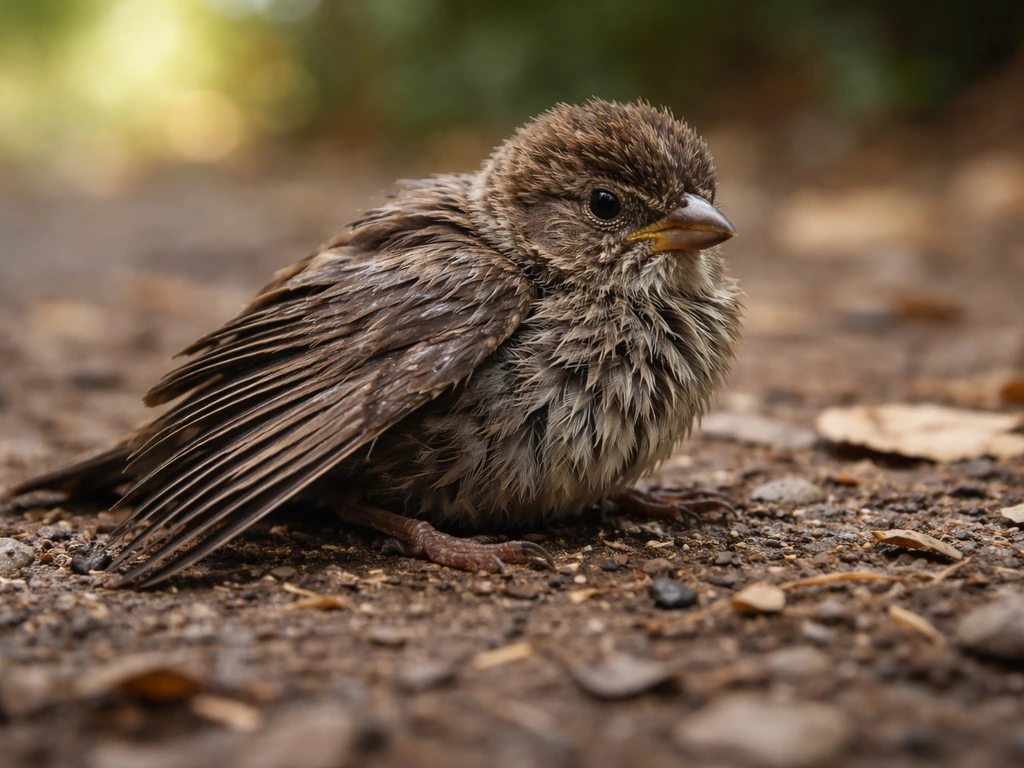
The literal meaning is straightforward: a bird physically cannot fly because its wing is damaged. Cambridge English Dictionary uses exactly this kind of example to illustrate the word 'wing,' noting that a bird couldn't fly because it had a broken wing. That's the baseline image. The bird is grounded, moving awkwardly, exposed to threats it would normally escape by flying away.
The figurative meaning borrows that image and applies it to people, relationships, or situations. When someone says a person is 'like a bird with a broken wing,' they're saying that person is struggling, constrained, unable to do what they're naturally capable of. If you are wondering about the winged bird meaning, the figurative and literal definitions can help you interpret the phrase correctly. The phrase often implies the limitation is visible and perhaps temporary, not permanent, which is part of what makes it emotionally resonant rather than just bleak. It's not the same as saying a bird is dead. The bird is still alive, still trying, just not flying.
There's also a fascinating third layer worth knowing: what looks like a broken wing sometimes isn't. Killdeer and other ground-nesting birds perform what wildlife researchers call a 'broken-wing display' or 'injury feigning,' deliberately acting as though their wing is damaged to lure predators away from their nest. So the visual image of a broken wing can itself be a performance, a piece of deceptive theater. That nuance has crept into figurative use too, sometimes implying someone is playing the victim or appearing weaker than they are to deflect attention.
The Symbolism Behind the Image
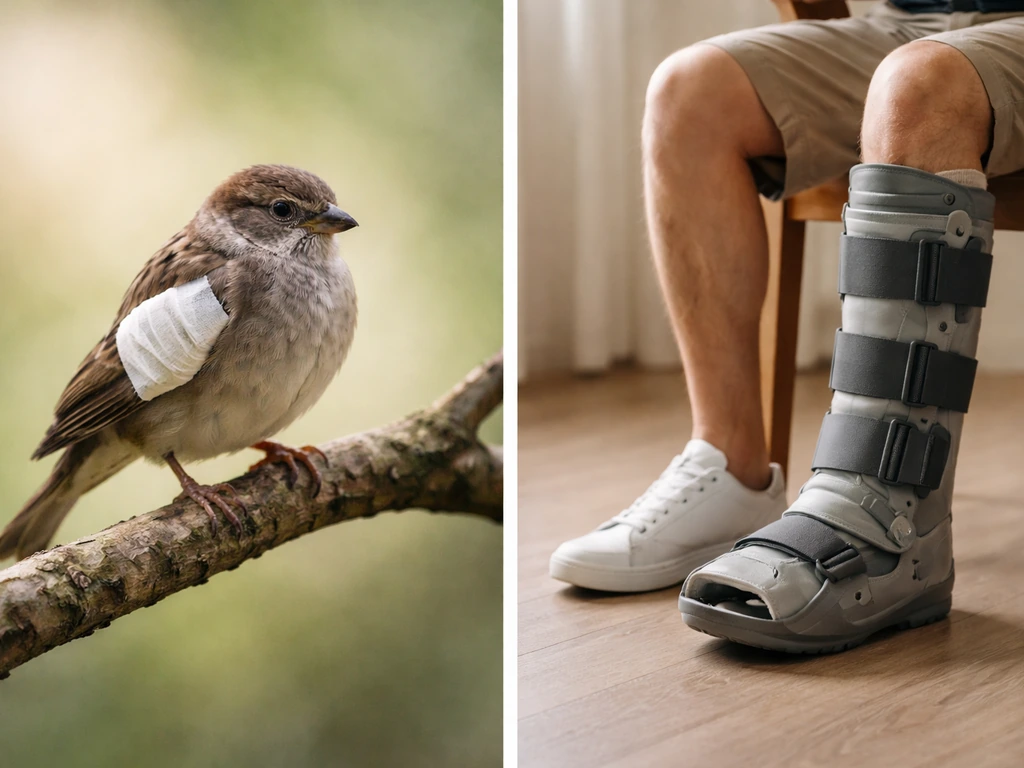
Birds in language and culture consistently represent freedom, aspiration, and the ability to rise above circumstances. A wing is the mechanism that makes all of that possible. Break the wing and you don't just injure the bird, you take away the defining thing that makes it a bird in the meaningful sense. That's why 'bird with a broken wing' carries such emotional weight compared to, say, 'bird with a broken leg.' Legs are for walking. Wings are for flying. Flying is what birds are for.
The dominant emotional themes attached to this phrase are vulnerability, limitation, and the possibility of healing. Vulnerability because the grounded bird is exposed, visible, and defenseless in a way it normally wouldn't be. Limitation because the injury cuts off a capacity rather than just causing pain. And healing because broken bones can mend, which is part of why this phrase often comes with an undertone of hope or protectiveness rather than hopelessness.
There's also a strong theme of care-triggering. Injured birds instinctively provoke a rescue response in most people. When we describe a person as a 'bird with a broken wing,' we're often implicitly calling for that same impulse: a desire to protect, nurture, or fix. This is why the phrase is so common in the context of romantic relationships, parental care, or mentorship, anywhere one person naturally gravitates toward sheltering another who seems diminished.
How People Actually Use This Phrase

In conversation, 'bird with a broken wing' almost always describes a person going through a difficult period that has visibly limited them. It usually carries sympathy, though the tone can shift depending on context. Here are the most common ways you'll hear it:
- Describing someone who is emotionally wounded and struggling to function at their usual level, often after a loss, breakup, or personal setback.
- Referring to a relationship dynamic where one person is drawn to 'fixing' or rescuing someone they see as damaged or struggling, sometimes critically, as in 'he's always falling for birds with broken wings.'
- Describing a situation or project that has lost its momentum or capability, like a business or plan that can't execute the way it was designed to.
- In literature and classroom analysis, the image is used to probe character, as in a New York State Common Core ELA curriculum that directly references 'the bird with a broken wing' as a figure of speech tied to themes of limitation and identity.
- Occasionally used self-referentially, where someone describes themselves as 'feeling like a bird with a broken wing' to communicate exhaustion, restriction, or a loss of their usual drive.
The tone is almost never mocking. This phrase lands in the emotional register of tenderness or concern, not ridicule. That said, when it appears in relationship commentary, there can be a gentle critique embedded: the 'rescuer' may be enabling rather than helping, or may be drawn to people who seem broken in an unhealthy pattern. Context determines which reading applies.
Cultural, Spiritual, and Folklore Roots of Injured Bird Imagery
Injured bird imagery shows up across folklore, spiritual traditions, and literary history with remarkable consistency. In many traditions, birds serve as messengers between the earthly and divine realms. An injured bird, unable to complete that flight between worlds, becomes a symbol of interrupted communication or blocked spiritual progress. Finding one is often interpreted as a sign that something in your life is similarly grounded or obstructed.
In Native American traditions, birds are frequently associated with the soul and spiritual messages. A wounded bird can signal that care and healing energy are needed, either for yourself or for someone close to you. The specific meaning varies by tradition and by species, but the thread of 'something that should be soaring is not' runs through many of them.
In Western literary tradition, the wounded or caged bird is one of the oldest and most persistent symbols of constrained potential. Maya Angelou's 'I Know Why the Caged Bird Sings' uses a related image, though the cage rather than the broken wing provides the constraint. The broken wing adds a bodily, internal dimension to that imprisonment: the limitation comes from within, not just from external circumstance. This makes it a particularly apt metaphor for depression, grief, or trauma, conditions that ground a person from the inside out.
The killdeer's broken-wing display adds an interesting folklore angle too. Here is a creature that mimics injury as a survival strategy, performing vulnerability to protect something precious. Some interpretations of the 'broken wing' symbol pick up on this duality: appearing wounded can itself be a form of strength or strategy. It connects to related ideas explored around wounded bird symbolism and the distinction between being injured and performing injury.
If You Actually Found a Bird with a Broken Wing
If you're reading this because you've found an actual bird and you think its wing might be broken, the first thing to do is pause before you touch it. If you’re trying to interpret finding a bird wing meaning, the figurative and literal possibilities can guide what you do next bird with a broken wing. Your instinct to help is good, but acting too fast can hurt the bird or you. The U.S. Fish & Wildlife Service recommends looking for the cause of the injury and generally avoiding interference unless you have clear evidence the bird needs help blank" rel="noopener noreferrer">. Your instinct to help is good, but acting too fast can hurt the bird or you.. Here's what to do immediately.
- Confirm it really needs help. A bird sitting quietly on the ground isn't automatically injured. Check whether it's a fledgling (young bird learning to fly) or whether it's performing a broken-wing display to protect a nearby nest. If it's moving awkwardly, has a visibly drooping or oddly angled wing, or is clearly unable to fly when approached, those are signs of genuine injury.
- Keep people and pets away. Clear the immediate area. Children and dogs should be moved back. An injured bird is already stressed, and additional threats can be fatal before you even get it to help.
- Do not offer food or water. This is emphasized by Audubon, the U.S. Fish and Wildlife Service, and the American Bird Conservancy. Food and water can cause aspiration or other harm in an injured bird, and you likely don't know what the species eats.
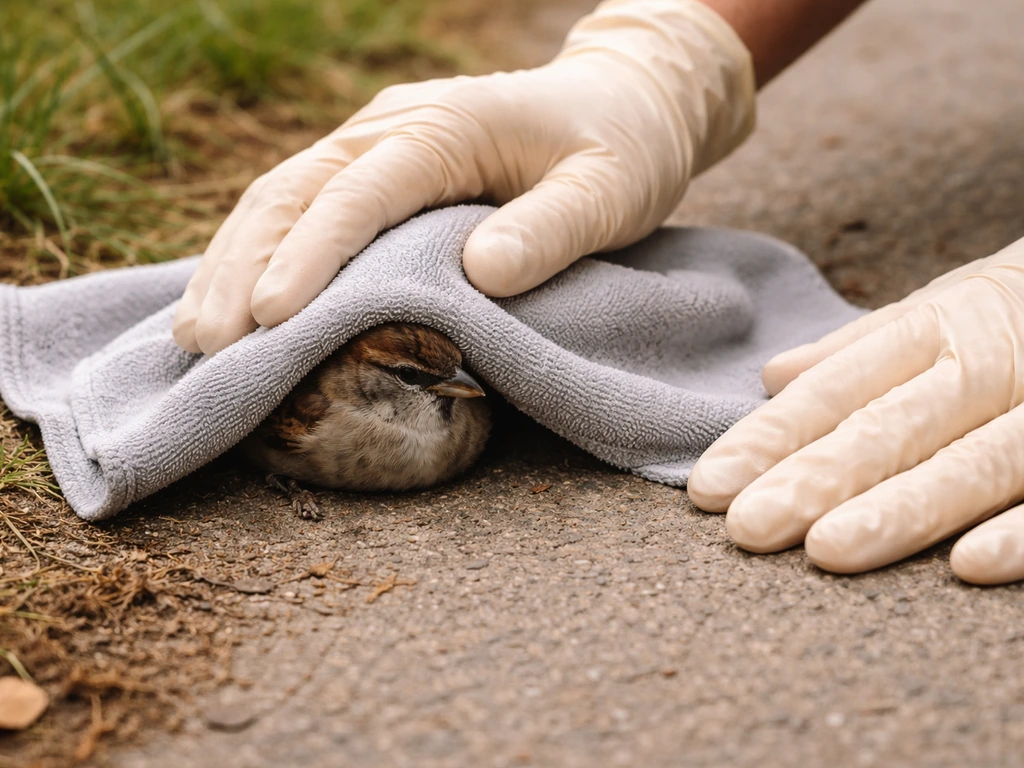
- Protect yourself. Use thick gloves if you have them. Birds, even small ones, can bite and scratch, and larger birds with talons or sharp beaks (herons, raptors) can cause serious injury. The American Bird Conservancy notes that an injured bird may still be fully capable of hurting you.
- Contain the bird carefully. Use a cardboard box or shoebox lined with a cloth or paper towel. Make ventilation holes in the lid. Place the bird gently inside and close it in a dark, quiet space. Darkness calms birds significantly.
- Contact a wildlife rehabilitator immediately. This is the most important step. Call your local wildlife rehabilitation center, your state fish and wildlife agency, or your local animal services center. The Audubon Society recommends contacting your local animal services center if you cannot reach a wildlife rehabber directly.
The Full Rescue Workflow: From Finding the Bird to Handing It Off
Step 1: Assess and contain

Once you're confident the bird is genuinely injured, prepare your transport container before you try to pick the bird up. A shoebox with a lid works for most songbirds. Line it with a paper towel or thin cloth, not loose fabric the bird's feet could get tangled in. Poke small air holes in the lid. Keep the interior dark to reduce the bird's stress and limit its movement, which can worsen a wing fracture.
Step 2: Pick it up safely
Approach slowly and cover the bird with a lightweight cloth or your gloved hands. Gently scoop it up and lower it into the box. Don't squeeze. For larger birds like hawks, owls, or herons, the Tufts Wildlife Clinic and Audubon both recommend extra caution. Raptors have powerful talons that can close on a finger before you realize what's happening. If the bird is too large for you to handle safely, call for help rather than attempting containment alone.
Step 3: Keep it quiet and warm while you make calls
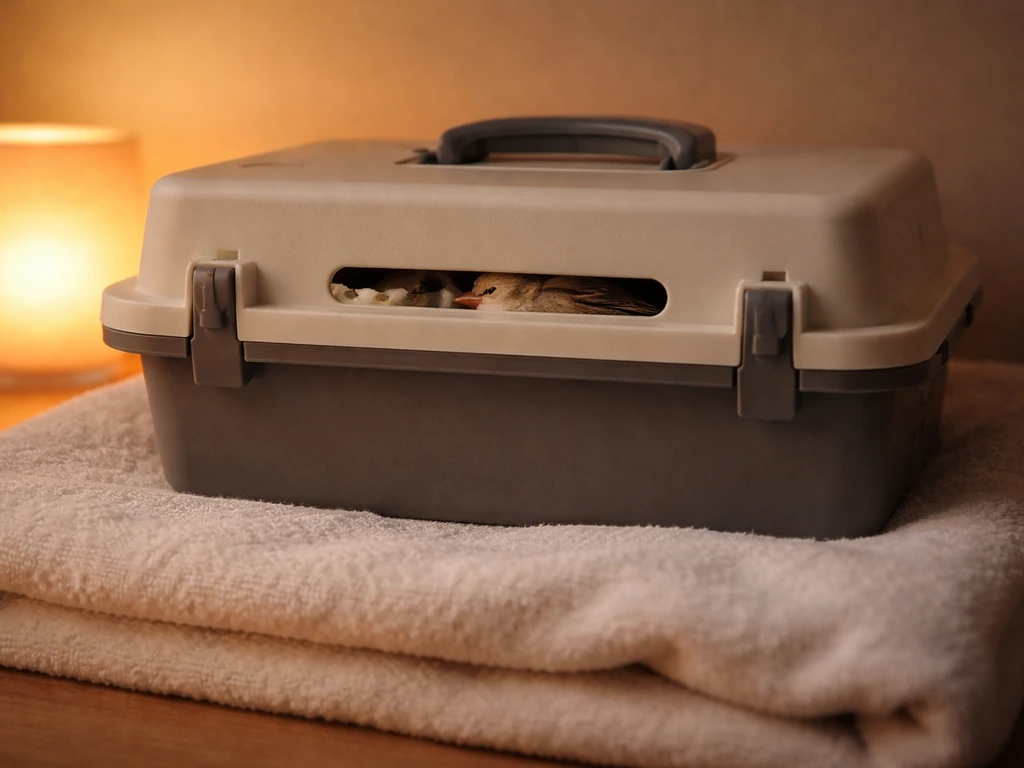
Place the closed box in a quiet, warm room away from noise and activity. Avoid checking on the bird repeatedly. The American Bird Conservancy suggests letting the bird rest in a dark, quiet space for up to an hour while you arrange care. Do not put the box in direct sunlight or in a car that's heating up.
Step 4: Who to call
Your best first call is to a licensed wildlife rehabilitator in your area. If you found a sick or injured bird, Tufts Wildlife Clinic advises keeping pets and children away, wearing thick gloves for personal safety, placing the bird in a box or crate for transport, and contacting a local wildlife rehabilitator. You can find one through your state's fish and wildlife agency website, through the National Wildlife Rehabilitators Association directory, or by calling your local animal shelter. If it's nighttime and no one is available, the Golden Gate Bird Alliance advises keeping the bird in the dark box overnight and calling first thing in the morning. Never attempt to treat or splint the wing yourself.
Step 5: Transport and handoff
When you take the bird to a rehabilitator or drop-off location, keep the box flat and stable in your vehicle. Avoid loud music or conversation near the bird. At drop-off, provide any information you have: where you found the bird, what you observed, and how long you've had it. Tufts Wildlife Clinic notes that if you're arriving outside of normal drop-off hours, you should call ahead and leave a message, then keep the bird securely boxed and quiet until staff can respond.
What happens after
A genuine broken wing will require professional veterinary care, possibly including splinting or surgery depending on the fracture and species. Rehabilitation timelines vary widely. Some birds recover fully and can be released. Others with severe injuries may become education animals if release isn't possible. The rehabilitator will assess the bird and keep you informed if you leave contact details. Your job ends at handoff, and that's exactly as it should be.
A Quick Reference: Figurative vs. Literal, Side by Side
| Aspect | Figurative Meaning | Literal Situation |
|---|---|---|
| What it describes | A person, relationship, or situation that is limited, vulnerable, or unable to move forward | A wild bird with a physical wing injury preventing flight |
| Emotional tone | Sympathy, tenderness, sometimes concern about enabling | Urgency, caution, practical action required |
| Common context | Conversation, literature, emotional description | Outdoors, finding an animal in distress |
| What to do | Listen carefully, offer support, consider whether 'rescuing' is healthy | Contain safely, call a wildlife rehabilitator, do not feed or water |
| Related imagery | Wounded bird, grounded spirit, loss of freedom | Broken-wing display, injury feigning, genuine wing fracture |
Whether you heard this phrase in a conversation and wanted to understand what it really means, or you're standing outside looking at a bird on the ground right now, the core of both situations is the same: something capable of flight can't fly, and that matters. If you are also wondering about a falling bird meaning, the same literal versus figurative distinction can help you interpret what you see. If you’re trying to pin down the bird on the wing meaning, start by separating the literal situation from the figurative message bird on the ground right now. The figurative meaning deserves reflection. The literal one deserves action. Both deserve more than a quick dismissal.
FAQ
How can I tell whether “bird with a broken wing” is meant literally or figuratively in a sentence?
Look for care actions or medical details (finding the bird, wing injury, “rehabilitator,” “broken wing”) which signal the literal meaning. If the wording is about someone’s life limits (stalled progress, needing support, “like,” “feeling grounded”) it is almost certainly figurative. Also note whether the context mentions sympathy or enabling, those are common figurative cues.
Is the phrase ever insulting, or is it always meant sympathetically?
It is typically tender, but it can become critical depending on context. If the speaker talks about someone being “too broken to help themselves” or repeatedly attracts rescuers who enable bad patterns, the meaning can shift toward judgment, not compassion.
What does it imply if someone says “I’m a bird with a broken wing” about themselves?
Usually it signals a temporary or ongoing constraint that feels visible, not hidden. People often use it to ask for protection, patience, or practical assistance, rather than for advice. A helpful next step is to ask what support would actually help (space, accountability, resources, or listening).
Can the phrase mean someone is faking weakness?
Yes, sometimes. Because some birds use broken-wing displays to lure predators, the metaphor can be extended to situations where vulnerability seems strategic. If the person benefits from attention or avoids responsibility while presenting themselves as helpless, that can be a sign the metaphor is being used with that edge.
If I find a bird on the ground, does that always mean its wing is broken?
No. Birds may be grounded for many reasons, including shock, illness, or being a fledgling that hasn’t learned to fly yet. If the bird has intact movement, no obvious swelling, and appears young or feathered differently than expected, it may not be a wing fracture. In that case, contacting a wildlife rehabilitator is still the safest move.
What if I’m unsure whether the wing is truly injured, should I still box it?
If the bird is active, alert, and able to move normally, avoid handling and let a professional assess it if needed. If it is lethargic, you see obvious drooping, bleeding, or it cannot maintain balance, then preparing a quiet, dark container and seeking help is appropriate. When unsure, prioritize minimizing stress and handling time.
Can I splint or try to “fix” the wing myself?
No. DIY splinting can worsen fractures, damage tissues, and stress the bird further. The safest approach is containment, warmth, low light, and a call to a licensed wildlife rehabilitator as the first action.
How long should I keep an injured bird in a box before help arrives?
Aim for the shortest time possible while still keeping the bird calm and secure. The article suggests not repeatedly checking and keeping it dark, quiet, and warm, and it notes letting it rest for up to about an hour while arranging care. If there is no immediate option, keep it contained overnight in appropriate conditions and contact help in the morning.
What information should I give the rehabilitator when I drop off the bird?
Share where you found it, the exact time, weather or exposure conditions, whether you saw it fly or avoid you, any bleeding or visible deformity, and how long you have had it. Mention if cats or traffic may be involved, because that changes the likely injury and urgency.
Does the phrase connect to grief, depression, or trauma specifically?
Often yes, in figurative language, because “broken wing” can describe lost internal capacity rather than external confinement. If you are using the phrase to describe a mental health state, consider that it may be inviting care and support, and it can be more effective to be specific about what is happening (sleep, focus, safety, support needs) rather than relying only on the metaphor.
Next Article
Winged Bird Meaning: Literal, Symbolic, and Spiritual Interpretations
Understand winged bird meaning in literal, symbolic, and spiritual contexts, plus a quick checklist to decode your dream