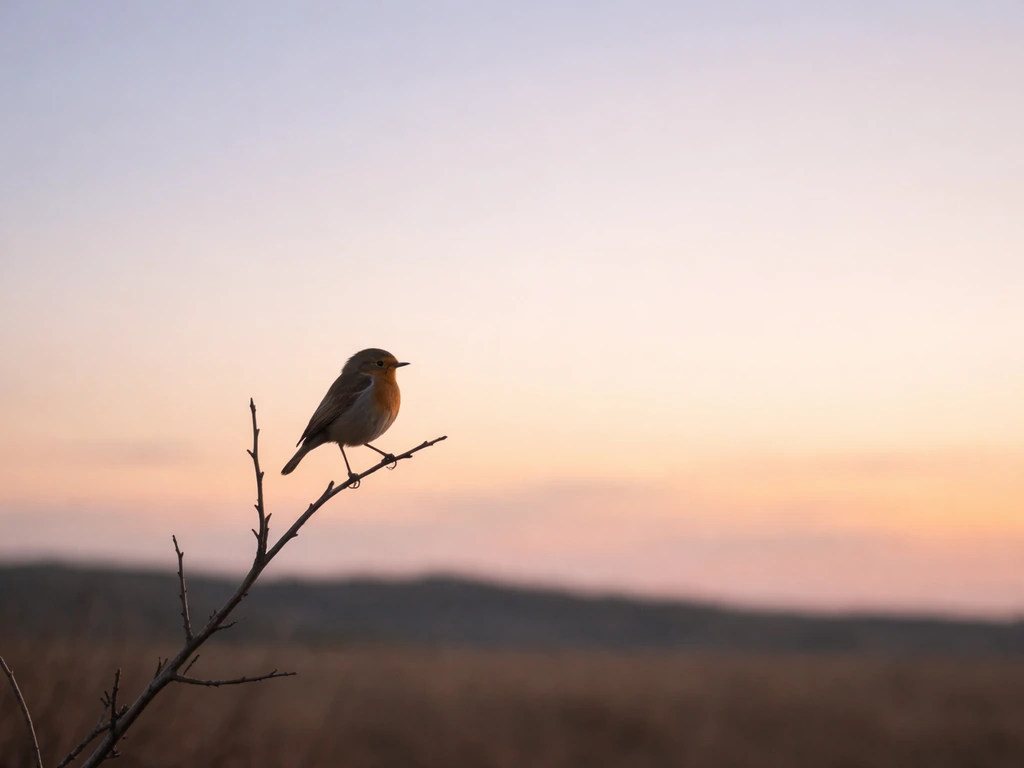
A one-legged bird most often means one of two things: a real bird that is literally missing a limb (or just tucking one leg away for warmth), or a figurative expression pointing to something that is lopsided, incomplete, or only half-functional. Which meaning applies depends entirely on context, and the gap between the two is wider than you might expect. The figurative use draws on the adjective 'one-legged' itself, which Collins English Dictionary formally defines three ways: having only one leg, being one-sided (as in an argument), or being ineffectual because key elements are missing. All three definitions feed into how the phrase gets used today.
One-Legged Bird Meaning: Literal vs Figurative Interpretations

Marcus Winters
23 May 2026
What 'one-legged bird' actually means and where you'll hear it
At its most basic level, 'one-legged bird' is a descriptive phrase, not a fixed idiom like 'a bird in the hand.' That means its meaning shifts depending on who is using it and why. You will encounter it in four main settings: as a literal description of an injured or disabled bird, as a vivid metaphor for imbalance or limitation, as a reference to specific mythological birds in Chinese folklore, and increasingly in internet meme culture as an image label for birds standing awkwardly on one leg.
The Collins Dictionary example sentence 'A mobile crane stood like an awkward, one-legged bird' is a great illustration of how naturally the phrase slips into figurative territory even when no one is really talking about birds. The crane (the machine) is being compared to a bird on a single leg, conjuring an image of precarious, lopsided balance. That is the phrase doing its most common figurative job: making abstract awkwardness or imbalance instantly visual.
In modern internet culture, the phrase also shows up as a meme descriptor. The 'Tripod Bird' meme template is widely tagged as 'one legged bird' or 'bird with one leg,' and platforms like Tenor have entire tag collections labeled '#One-leg-bird-edit.' Here the phrase is functioning as a caption or image label, with no deeper symbolic intent, just a funny or dramatic visual of a bird in an unusual stance.
Literal vs. figurative: how to tell which one you're dealing with
The fastest way to sort this out is to ask: is there an actual bird being described, or is a bird being used as a stand-in for something else? If someone says 'I saw a one-legged bird on the beach this morning,' they almost certainly mean a real bird.
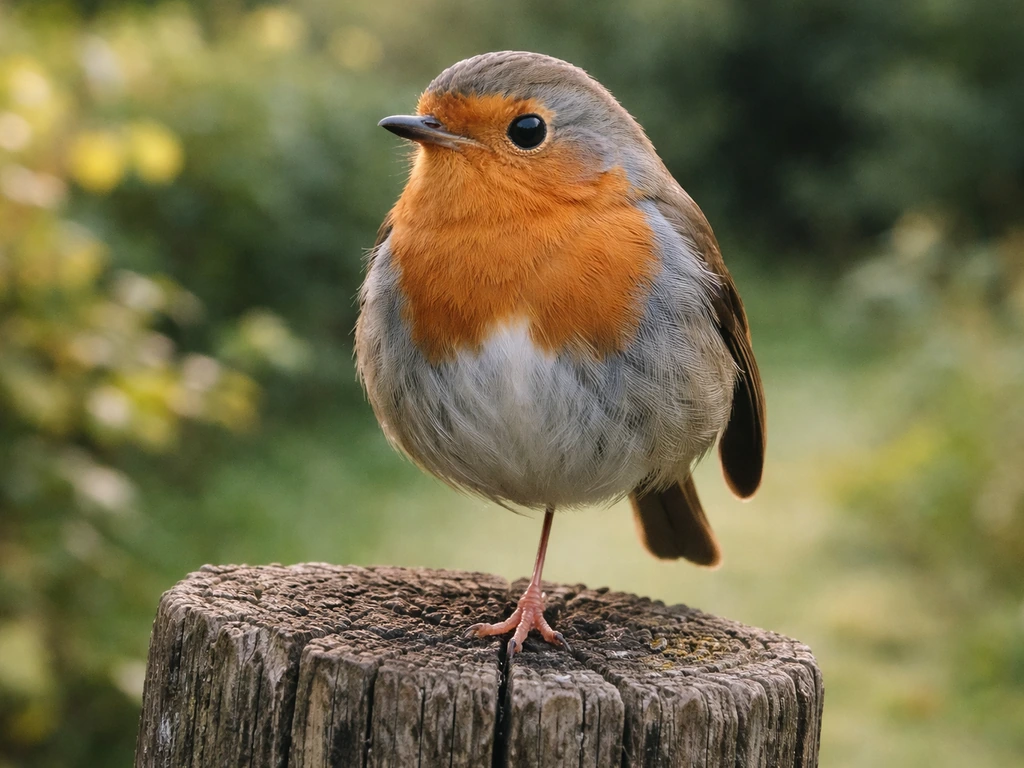
Shorebird expert Felicia Sanders of the South Carolina DNR points out that when people spot apparent one-legged birds on beaches, the bird is usually just hiding its other leg, a completely normal behavior. Smithsonian researchers confirm that birds stand on one leg to conserve body heat and reduce energy use, not because they are injured.
Smithsonian Voices (from the National Zoo conservation biology institute) explains that this one-legged stance helps shorebirds conserve energy by supporting thermoregulation through their warming and cooling mechanisms conserve body heat and reduce energy use. So even in a literal context, 'one-legged bird' can be a misreading of normal bird behavior.
Figurative use tends to appear in sentences where the bird is not the main subject. If someone describes an argument, a plan, a relationship, or a performance as 'like a one-legged bird,' they are borrowing the imagery of imbalance or incompleteness. The same logic applies if the phrase shows up in creative writing, journalism, or commentary: a policy described as 'one-legged' is lacking something essential to function properly. The bird is just the vehicle for that idea.
| Context | Most likely meaning | Example |
|---|---|---|
| Nature/wildlife writing | Literal: a bird with one leg or standing on one leg | "A one-legged sandpiper rested on the rocks" |
| Opinion or argument framing | Figurative: one-sided, lacking balance | "That was a one-legged argument at best" |
| Creative writing / poetry | Symbolic: imperfection, damaged beauty, resilience | "I saw in that imperfect bird..." (Poetry Foundation) |
| Chinese mythology / folklore | Mythological: a named omen creature (Shangyang, Bifang) | "The one-legged bird danced before the palace" |
| Internet/meme captions | Descriptive label: an image of a bird in an odd stance | "#One-leg-bird-edit" on Tenor GIFs |
What a one-legged bird symbolizes
When the phrase is used symbolically, it tends to cluster around four core themes. None of them are rigid or universal; the symbolism is built fresh each time from the image of a bird that is visibly incomplete but still functioning. If you came across the expression “lone bird meaning,” that is usually pointing to the same idea: a bird singled out for imbalance, incompleteness, or survival despite the odds.
Imbalance and one-sidedness
This is the most common figurative meaning in everyday English. Collins explicitly flags 'one-legged' as meaning 'one-sided' when applied to arguments or points of view. A one-legged bird can only hop or teeter, never walk smoothly, which makes it a natural image for anything that is structurally lopsided: a debate with only one strong side, a partnership where one person carries all the weight, or a plan missing a critical component.
Incompleteness and ineffectiveness
Collins also defines 'one-legged' as 'ineffectual because basic elements are lacking.' A bird built for two legs, forced to manage with one, is not functioning at full capacity. This maps cleanly onto plans, systems, or people that are technically present but missing something fundamental. You might see this used in commentary on half-measures: a solution that only addresses one part of a problem could be called 'one-legged' in a way that immediately communicates its inadequacy.
Resilience and survival against the odds
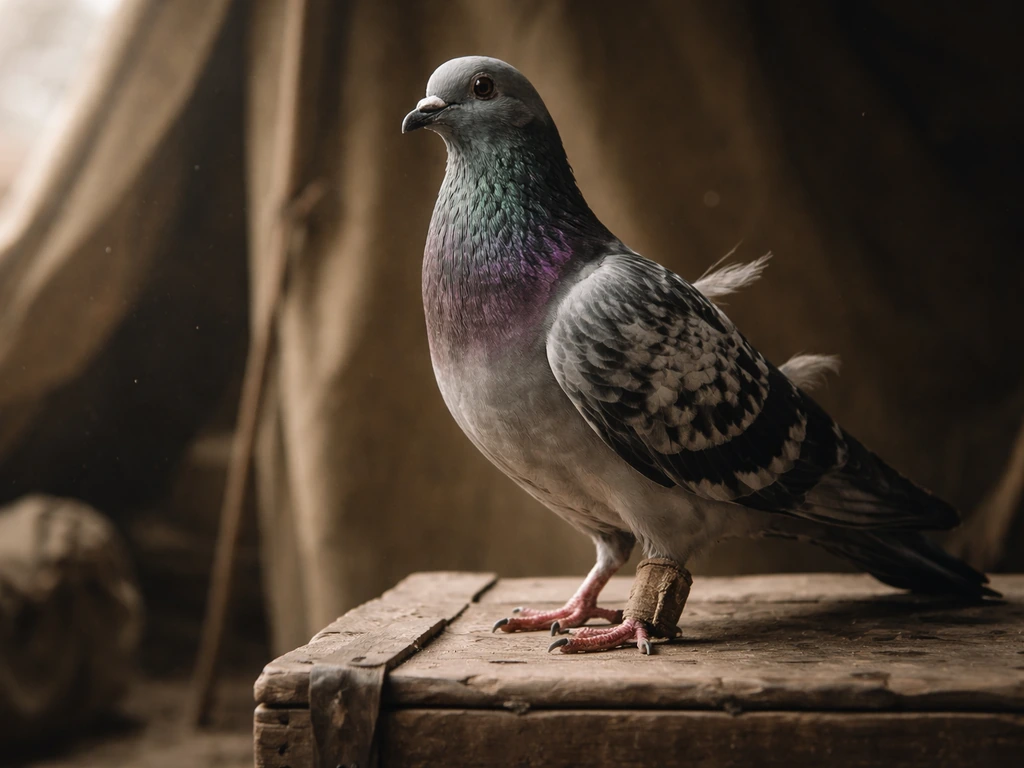
Real one-legged birds survive. Cher Ami, the WWI carrier pigeon that delivered a critical message after being shot and losing the use of a leg, became a celebrated symbol of wartime resilience precisely because it kept going despite the injury. A church blog post about a one-legged starling in Texas takes the same angle: the bird's continued presence and survival reframes the missing limb as a mark of toughness rather than weakness. When people encounter a real one-legged bird and feel moved by it, resilience is almost always the emotion they are responding to. In creative and spiritual writing, this meaning shows up whenever someone wants to honor something damaged that is still standing.
Limitation and being 'only half there'
There is also a gentler symbolic use where 'one-legged bird' implies someone or something that is partially present: physically, mentally, or emotionally. If you are wondering about hollow bird meaning, these “only half there” metaphors are often what people are reaching for. The image of a bird that cannot fully engage with its environment because it is missing a limb lends itself to describing distraction, half-heartedness, or a commitment that is not complete. If you are looking for the loneliness angle behind half-heartedness metaphors, a related option is the lonely bird meaning. This is closer to a creative metaphor than a fixed expression, so it tends to show up in personal writing and conversation rather than formal usage.
The cultural and mythological roots: why a one-legged bird carries so much weight
Birds have been used symbolically across almost every human culture because they move between earth and sky, making them natural messengers between the human world and something beyond it. A bird with an unusual physical feature, especially one as striking as a single leg, tends to get elevated to omen status. Chinese mythology has two well-documented one-legged birds that are worth knowing because they come up in literary and spiritual contexts.
Shangyang: the Chinese rainbird
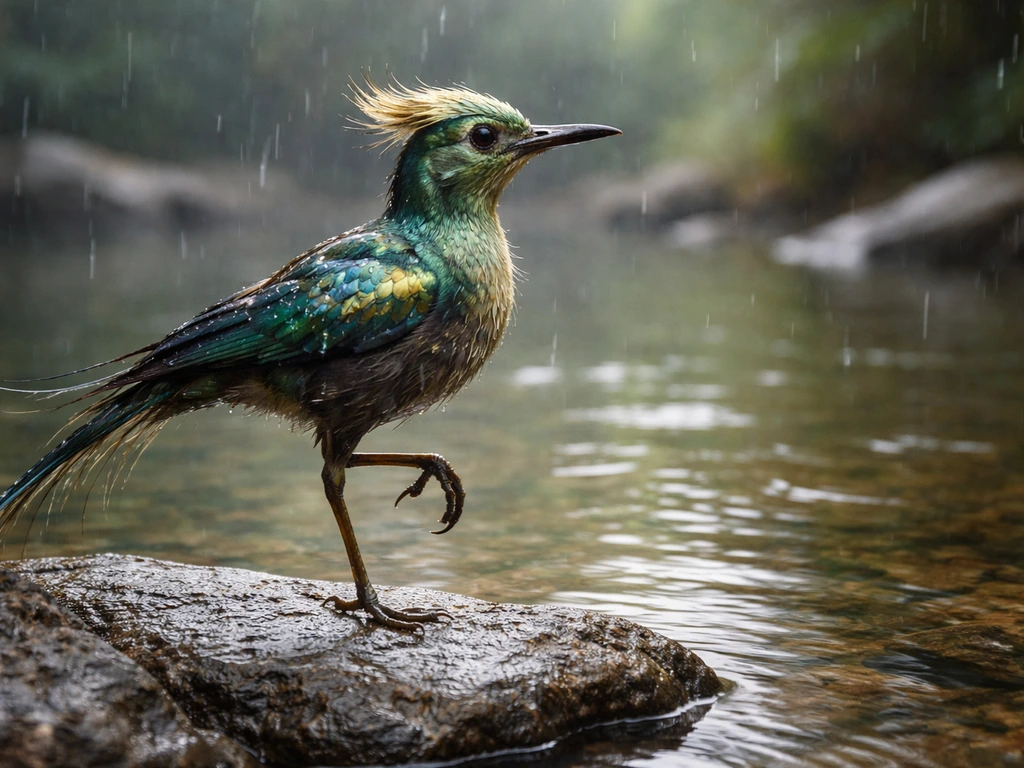
Shangyang is described in Chinese mythology as a one-legged bird that performed a dance on its single leg as a sign of imminent rain. According to the story, Shangyang hopped before the palace, and Confucius interpreted this as a warning to prepare: dig drainage channels and raise the dikes. The regions that heeded the advice survived the floods that followed; those that ignored it did not.
The Lun-heng, an ancient Chinese philosophical text, records a version of this story with the phrase 'a one-legged bird said... ' treating the bird as a direct speaker of natural omens. Shangyang is not just a curiosity; it connects the image of a one-legged bird directly to the idea of reading signs correctly and acting on incomplete-looking information before it is too late.
Bifang: the fire omen
Bifang, described in the Shanhaijing (Classic of Mountains and Seas), is a crane-like bird thought to have one leg and is associated with fire omens. Its appearance was read as a warning of fire rather than rain. Wikipedia notes that sources vary on its exact description, which is common for mythological creatures whose details shift across regional traditions. What stays consistent is the one leg as a marker of otherness: this is not an ordinary bird, and its appearance means something significant is coming.
Both Shangyang and Bifang share a pattern with one-legged bird symbolism across other cultures: the missing limb signals that this creature exists at the edge of the normal world. It is incomplete by ordinary standards, which makes it a threshold figure, a messenger from a place where the usual rules do not apply. That is why poets, spiritual writers, and storytellers return to the one-legged bird image when they want to signal that something extraordinary (or ominous) is at work.
It is also worth noting that the symbolic weight of unusual birds, particularly those with missing or altered features, connects to a broader tradition of reading meaning into physical incompleteness. Topics like what a bird without wings or a bird without legs signifies follow a similar symbolic logic: the missing part defines what the creature can and cannot do, and that limitation becomes the whole point of the symbol. This can help you interpret a bird without legs meaning when you see similar symbolism in images or phrases what a bird without legs signifies. A bird without wings meaning often points to limitation, loss of capability, or a sense of being incomplete in how it can function what a bird without wings or a bird without legs signifies.
How to figure out what it means in a specific sentence or image
If you have come across the phrase somewhere specific and are trying to pin down the intended meaning, work through these questions in order. They will get you to the right interpretation almost every time.
- Is there an actual bird in the picture or story? If yes, start with the literal reading. A real bird standing on one leg is probably just thermoregulating, not a symbol.
- What is the surrounding subject matter? If the text is about an argument, a policy, a relationship, or a plan, 'one-legged' is almost certainly being used to mean lopsided or incomplete.
- What is the tone? A humorous or ironic tone points toward a joke or light metaphor. A reverent or ominous tone points toward mythological or spiritual symbolism.
- Is there a cultural or regional context? Chinese literary or spiritual references to a one-legged bird are very likely pointing to Shangyang or a related omen tradition.
- Is it a meme or social media post? If so, 'one-legged bird' is probably just an image descriptor, with no deeper figurative meaning intended.
- Is the phrase applied to a person? When used about a human being, 'one-legged bird' typically implies someone who is limited, disadvantaged, or operating at half capacity, though the exact shade depends on whether the intent is sympathetic or critical.
Common confusions and similar phrases worth knowing
One frequent confusion is between a bird that is literally missing a leg and a bird that simply appears to have one leg because it is tucking the other one up. Wildlife writers and birdwatchers often describe a bird as 'one-legged' when it is really just resting in a completely normal posture. If you see the phrase in a nature photography caption or a beach observation, do not automatically assume the bird is injured or amputated.
Another source of confusion is the crossover with fandom and gaming slang. Urban Dictionary has an entry for 'Yawstrich' from the game My Singing Monsters that describes the character as a 'one legged bird who sings very well.' If you searched the phrase after seeing it in a gaming or fan community context, that specific reference is the one you are looking for, and it has no connection to folklore or figurative English.
People sometimes conflate 'one-legged bird' with related expressions like 'lame duck' (a leader or institution in decline), 'crippled,' or 'hobbled,' all of which share the theme of impaired function. If you are comparing similar symbolism, the headless bird meaning is another angle on how missing parts can change what an image communicates. These are separate idioms with their own histories, but the conceptual territory overlaps. If someone uses 'one-legged bird' where you might expect 'lame duck,' they are probably reaching for a more vivid, image-based way to say the same thing.
It is also worth flagging that 'one-legged' applied to sports fixtures (as in 'one-legged matches' or 'one-legged ties' in soccer) has nothing to do with birds or physical limitation at all. It just means a tie decided by a single match rather than home and away legs. That usage is entirely structural and regional to British and European sports coverage.
Finally, the broader family of 'incomplete bird' imagery is worth keeping in mind if you are doing deeper research. Expressions and symbols built around birds missing something, whether wings, legs, a head, or a partner, tend to cluster around related themes of limitation, vulnerability, and resilience. If you are comparing this to headless bird symbolism, it follows a similar idea where the missing feature becomes the meaning, not the biology.
The one-legged bird sits in the same symbolic neighborhood as the lone bird and the solitary bird in terms of what they say about isolation and impairment, even if the specific mechanics differ. In the same symbolic neighborhood, a lone bird meaning often points to isolation, solitude, and being cut off or incomplete.
FAQ
Is “one-legged bird” an idiom, or does it always stay literal and descriptive?
It is best treated as a descriptive phrase first, not a fixed idiom. People use it figuratively as a comparison (like “like a one-legged bird”), but the exact nuance usually depends on what is being described (imbalance in an argument, missing capability in a plan, incomplete participation, or internet captioning).
How can I tell whether someone means a real bird or a metaphor when they do not mention injury?
Look for what the “bird” is standing in for. If the sentence includes a location, observing behavior, or bird details (feeding, hiding a leg, standing posture), it is typically literal. If the bird is not the main subject, or the sentence centers on a debate, relationship, system, or performance, it is almost certainly figurative imagery.
What’s the most common literal mistake people make with “one-legged bird” sightings?
Assuming it is injured. Many birds commonly tuck one leg when resting, and that posture can look like a missing limb in photos or quick glances. If the context is a beach, trail, or wildlife photo, prioritize normal behavior over amputation.
If the phrase is used in creative writing, what symbolism should I assume by default?
A safe starting assumption is “imbalance or limitation,” because “one-legged” naturally evokes incomplete function. From there, narrow it based on surrounding cues, for example, resilience if the character keeps going, or loneliness if the tone emphasizes detachment.
Does “one-legged bird” imply negativity, or can it be positive?
It can be both. Figuratively it often highlights inadequacy or imbalance, but when applied to a real injured animal, it frequently shifts toward resilience and toughness (surviving despite the missing leg).
Can “one-legged bird” refer to sports “one-legged ties,” and how do I avoid that confusion?
Yes, but only when the context is soccer or European/British sports scheduling. If the phrase appears near terms like tie, fixture, legs of a match, or aggregate scoring, it is about match structure, not birds or physical limitation.
Is there any connection between “one-legged bird” and “lame duck” or other impaired-function expressions?
They overlap conceptually (impaired or declining function), but they are separate expressions with different imagery. “One-legged bird” tends to be more visual and comparative, while “lame duck” has a longer-established idiomatic history in politics and institutions.
What if I saw “one legged bird” as a tag in gaming or memes, does it mean folklore?
Not necessarily. Meme tags and fandom descriptors can reuse the visual phrase with no deeper symbolism. If the surrounding context includes a game character, editing meme formats, or platform tags, treat it as captioning rather than cultural omen.
How should I interpret “one-legged bird” in mythology context, like Shangyang or Bifang?
In mythology usage, the single leg is part of the creature’s otherness and the message it signals (for example, warning signs tied to rain or fire). The key difference from everyday metaphor is that the bird is treated as a sign-reader tied to events, not just an image for human shortcomings.
What’s a quick checklist I can use when I need the “one-legged bird meaning” of a specific sentence?
Ask these in order: (1) Is a specific bird being observed or photographed? (2) Does it describe normal resting behavior? (3) Is the sentence about a non-bird topic like arguments, plans, or relationships? (4) Is it sports scheduling or matchmaking language? (5) Is it a meme or fandom tag? The first matching context usually determines the intended meaning.
Next Article
Lonely Bird Meaning: What It Implies in Context
Understand lonely bird meaning in everyday and figurative use, including bird loneliness symbolism and how to respond.