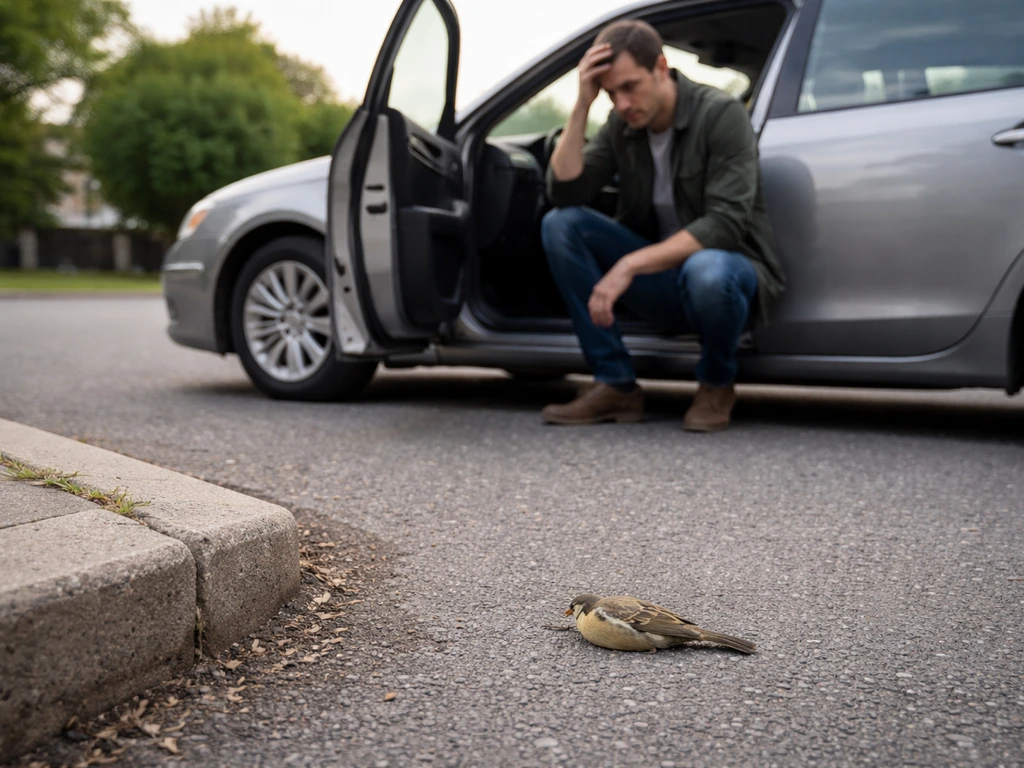
When someone says 'wandering bird,' they are almost always describing a person (or soul, or heart) that has been displaced from where they belong, is restlessly searching for something, or is moving through the world without a fixed home. The exact shade of meaning shifts depending on context: sometimes it signals exile and loss, sometimes spiritual longing, and occasionally free-spirited roaming. The quickest way to tell which one you are dealing with is to look at the emotional tone around it. If there is sorrow or longing attached, it is almost certainly about displacement. If the mood is expansive and celebratory, it leans toward freedom. If it sounds introspective or restless, it is probably about inner searching.
Wandering Bird Meaning: Symbolism, Folklore, and Usage

Marcus Winters
27 May 2026

The literal meaning versus what people actually mean by it
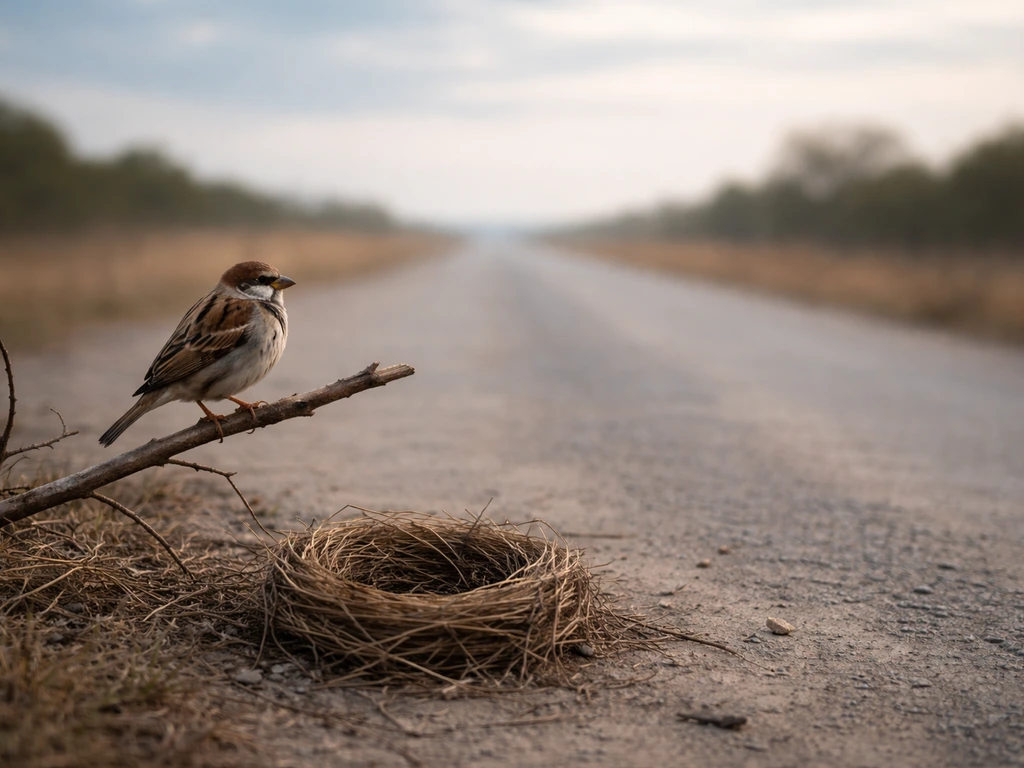
In purely literal terms, a wandering bird is a bird that has strayed from its nest, territory, or usual range. Ornithologists sometimes use 'wandering' to describe birds far outside their normal habitat, which is closely related to what birders call a vagrant. But that literal usage is not usually what a writer, poet, or speaker has in mind. In the same way, people sometimes ask what ran over a bird meaning is trying to say about guilt or harm.
Figuratively, 'wandering bird' is a metaphor for a person who has left or lost their proper place. The key word is 'proper' because the metaphor implies there was somewhere they belonged, and now they are away from it. That is subtly different from someone who simply loves to travel. The biblical text that planted this phrase most deeply in English reads: 'As a bird that wandereth from her nest, so is a man that wandereth from his place' (Proverbs 27:8, KJV). That one verse set the template. Wandering here is not romantic. It is a warning about leaving where you are supposed to be.
Isaiah 16:2 sharpens it further with 'a wandering bird cast out of the nest,' which adds forced exile to the mix. You are not just a bird that wandered off voluntarily. You were ejected. Those two biblical framings have shaped how English speakers read the phrase ever since, even when they have never opened a Bible.
How 'wandering' works in everyday speech
The word 'wandering' is doing a lot of heavy lifting in English idiom. It almost never means purposeful travel. You wander when you have no fixed destination, when your mind drifts, when you are distracted, lost, or aimless. In John Burroughs's prose, the phrase “[a mere wandering voice in the air](https://www.
gutenberg. org/ebooks/4203. html. images)” is used to convey uncertainty about the voice’s source or direction, matching the everyday sense of wandering as dispersed presence rather than purposeful travel.
If you are asking what “loop track bird meaning” implies in everyday speech, it usually points to restlessness or a mind that keeps circling without settling. That nuance carries directly into 'wandering bird. ' When someone calls another person a wandering bird, they are rarely paying a compliment to their adventurous spirit. They are more likely noting that the person seems unmoored, searching, or cut off from their roots.
That said, 'wandering' can shift in register depending on the speaker's sympathy. A parent describing a grown child who cannot settle down might use it with quiet sadness. A poet might use it to romanticize restlessness. A religious writer, following Spurgeon's interpretation of Proverbs 27:8, would use it as a word of caution, pointing to someone who has strayed from their spiritual 'place' and is suffering for it. Knowing whether the speaker is sympathetic, sad, or cautionary tells you almost everything about which meaning is intended.
What bird symbolism actually brings to the phrase

Birds carry a specific bundle of symbolic associations that make this metaphor so durable: migration, restlessness, freedom, longing, and the tension between home and the open sky. That last one is the core of 'wandering bird.' Birds know where their nest is. They return. A bird that is not returning, or cannot return, is the unsettling image the phrase reaches for.
- Migration: Birds move with the seasons, so 'wandering' can suggest someone following an inner pull they cannot explain or resist.
- The nest: The nest represents home, safety, and belonging. A bird away from its nest is vulnerable, exposed, and incomplete.
- Restlessness: A bird that cannot settle, lighting briefly in one place before moving on, maps perfectly onto the modern metaphor of emotional or psychological restlessness.
- Longing: Bird song heard from an unseen source, 'a mere wandering voice in the air,' as naturalist John Burroughs once put it, captures the ache of something present but unreachable.
- Freedom vs. exile: Flight is associated with freedom, but a bird cast out of its nest is not free in any joyful sense. It is homeless. The difference between freedom and exile in bird symbolism comes down to whether the bird chose to leave.
This is why the phrase 'world-wandering bird' can carry a completely different emotional charge. A bird that has ranged widely and then returns to 'homely things' is experienced, seasoned, and ultimately home-seeking. In the poem "Homing Wings," the "world-wandering bird" is paired with suspending her nest and returning to "homely things," echoing the idea that wide-ranging wandering can still be home-seeking. The wandering was a phase, not a permanent condition. Context always decides whether the bird's wandering is a tragedy, a virtue, or simply a state of being in transition.
Cultural, spiritual, and poetic uses across traditions
The biblical tradition is the deepest well for 'wandering bird' in English. Proverbs 27:8 and Isaiah 16:2 both frame it as displacement and loss. Spurgeon's famous sermon built entirely on the Proverbs verse treated the wandering bird as a soul that has lost its proper spiritual station. The metaphor is not about physical travel at all in that context. It is about someone who has wandered away from their calling, community, or faith, and is now adrift. That reading still echoes in how English speakers use the phrase in religious or reflective writing today.
The Hebrew poetic tradition also invokes the wandering bird in Psalm 11:1, where the image of a bird urged to 'pass over your mountain' or flee suggests aimless dispersal under threat, a person urged to scatter and hide rather than stand firm. The bird here is not free. It is being pushed out of its normal place by external pressure.
In Romantic and Victorian poetry, the image softens slightly but the core sadness remains. William Motherwell's verse uses 'wandering bird' in a context of parting from a 'dear warm nest,' which keeps the displacement reading intact but wraps it in personal grief rather than theological warning. The emotional focus shifts from spiritual error to human loss.
Modern poetry has pushed 'wandering bird' further inward. Contemporary verse treats the wandering bird as a metaphor for the restless heart itself, 'today here tomorrow there, building a temporary nest,' as one poem puts it. Here the wandering is not about exile or spiritual failure. It is about the interior life of a person who cannot commit, settle, or find rest. That psychological reading is probably the most common one in informal, non-religious use today.
How to figure out which bird or reference is being used

Sometimes 'wandering bird' points to a specific species, and sometimes it is purely abstract. Here is how to work out which you are dealing with.
- Check the source context first. If the text is religious or draws on scripture, the reference is almost certainly the biblical 'wandering bird' metaphor (no specific species intended, the image is the point).
- Look for named species nearby. If the surrounding text mentions a dove, swallow, or nightingale, the author may be combining a specific bird's symbolism with the wandering idea. Doves suggest peace and homing instinct; swallows are migration birds; nightingales are associated with longing and song in the dark.
- Notice whether the bird is described physically. A literal wandering bird (a vagrant species outside its range, as birders discuss) will come with descriptive detail: plumage, location, season. A figurative one will not.
- Consider the literary tradition the writer is working in. Someone writing in a biblical or religious register is pulling from the Proverbs/Isaiah frame. A Romantic poet is likely using it for emotional displacement. A modern writer may mean psychological restlessness.
- Pay attention to whether any other bird-related terms appear. A phrase like 'vagrant bird' often overlaps with 'wandering bird' in both the birding and figurative senses, pointing toward someone or something out of their proper place.
The three core meanings side by side
| Meaning | Emotional tone | Typical context | Clue words to look for |
|---|---|---|---|
| Displacement/exile | Sad, melancholy, warning | Biblical, religious, classical poetry | Cast out, nest, home, strayed from place |
| Restlessness/searching | Introspective, unsettled, wistful | Modern poetry, personal writing, psychology | Heart, temporary, no rest, today here tomorrow there |
| Free-spirited roaming | Expansive, warm, nostalgic | Travel writing, celebratory verse, personal praise | World-wandering, return home, experience, wide-ranging |
What it most likely means and how to use or respond to it
In practice, when you encounter 'wandering bird' today, the displacement or restlessness readings are far more likely than the free-spirited one. Most writers reach for this phrase when something is lost, unmoored, or searching, not when they want to celebrate adventurousness. If someone calls you a wandering bird, they are probably expressing concern or empathy, not admiration for your travel schedule.
If you want to use the phrase yourself, a few things help it land clearly. Pair it with a nest or home reference if you mean displacement ('a wandering bird far from her nest'). Add inner or restless if you mean psychological searching ('my heart is a wandering bird these days'). If you genuinely mean free-spirited roaming with a positive charge, you may want to add 'world-wandering' or 'wide-ranging' to signal that the movement is chosen and energetic rather than sad.
Synonyms and near-equivalents that carry similar weight: 'a soul without a home,' 'a displaced heart,' 'a stray,' 'a restless spirit,' or in birding and figurative overlap, a vagrant. That last one is worth exploring separately if you are trying to nail down the displaced-from-natural-range sense specifically, since vagrant bird carries more technical precision in both the birding and figurative contexts. If you are curious about vagrant bird meaning, the same idea shows up in both birding and figurative descriptions of someone out of place.
The phrase has enough flexibility that context will almost always tell you what you need to know. Lead with the emotional tone of the passage, check whether there is a specific bird species or scripture reference nearby, and ask whether the wandering was chosen or forced. Those three questions will get you to the right interpretation every time.
FAQ
If someone calls me a “wandering bird,” is that usually meant as an insult or a compliment?
It is usually concern or empathy, not admiration, because the phrase typically frames wandering as unmoored from “proper place.” To tell which, look for cues like apology or worry (more empathetic), or for blame terms like “should” or “left” (more cautionary or negative).
How can I tell whether “wandering bird” means forced exile versus voluntary drifting?
Watch for verbs and context. If the wording includes cast out, ejected, driven, or under pressure, it leans toward forced exile. If it includes chosen, free, seeking, or exploring, it is more likely voluntary roaming or a positive “transition” interpretation.
What emotional tone is a reliable indicator of the intended meaning?
Sorrowful, lonely, or longing-adjacent tone points to displacement or spiritual/inner restlessness. Expansive, celebratory, or “adventure” tone points toward freedom, but it often still implies a temporary phase rather than stable belonging.
Can “wandering bird” have a literal meaning in everyday conversation, not just figurative use?
Yes, but it is rarer. Literal usage tends to appear in birding contexts or when someone is describing a specific out-of-range sighting. In general speech, people use it metaphorically unless they mention location, species, migration, or habitat.
Does the phrase always imply wrongdoing or moral failure?
Not always. In religious contexts tied to the Proverbs and related tradition, it can carry a warning about straying from spiritual station. In modern, non-religious writing, it more often functions as a metaphor for an unsettled heart or inability to commit, without any moral accusation.
Is it better to write “wandering bird” or “world-wandering bird” when I want a positive, free-spirited sense?
“World-wandering” or “wide-ranging” helps because it signals choice and breadth. Without that kind of qualifier, readers still often default to the displacement or restless interpretation, since the core association is home versus not-home.
What are common mistakes when using the phrase in a sentence?
A frequent mistake is treating it like “adventurous traveler.” If your sentence lacks any home, nest, roots, or restlessness contrast, the reader may feel the phrase is mismatched. Another mistake is ignoring tone, for example using it humorously in a context that has loss imagery, which can confuse the intended register.
How should I interpret “wandering bird” in a poem that uses it as a symbol but avoids explicit “home” language?
Look for psychological clues. If nearby lines mention sleep, commitment, distraction, drifting thoughts, or building temporary arrangements, it is likely an inward reading. If nearby lines mention being excluded, threatened, or exiled, it is more likely displacement under pressure.
Can “wandering bird” refer to a specific person’s situation, like grief, divorce, or relocation?
It can, especially when the surrounding text indicates a change that disrupted belonging. For grief, it often frames someone as cut off from their former “place.” For relocation or separation, it can describe transition, but you will usually still see signals about longing for home or inability to settle.
Is there a difference between a “vagrant bird” and a “wandering bird” figuratively?
Yes. “Wandering bird” is broader and more emotional, it can mean unsettled, searching, or spiritually adrift. “Vagrant” tends to be more technical and sharper about being out of normal range, so in figurative writing it can sound more like “out of place by fact,” not just “restless by feeling.”
Next Article
Ran Over a Bird Meaning: What to Do and Symbolism
What to do after hitting a bird, plus literal vs idiom meanings, symbolism, omens, and cultural interpretations.