
When someone says 'chicken bird,' they almost always mean one of three things: calling someone a coward, using a playful or nonsensical phrase for laughs, or talking about actual chicken symbolism in a spiritual or cultural context. The coward meaning is the oldest and most documented, the Century Dictionary literally defined 'chicken-bird' as 'a coward', but in 2026, you're just as likely to encounter it as internet slang or a meme. The key is figuring out which context you're looking at, and this guide walks you through exactly that.
Chicken Bird Meaning Explained: Literal and Figurative Uses

Marcus Winters
31 May 2026
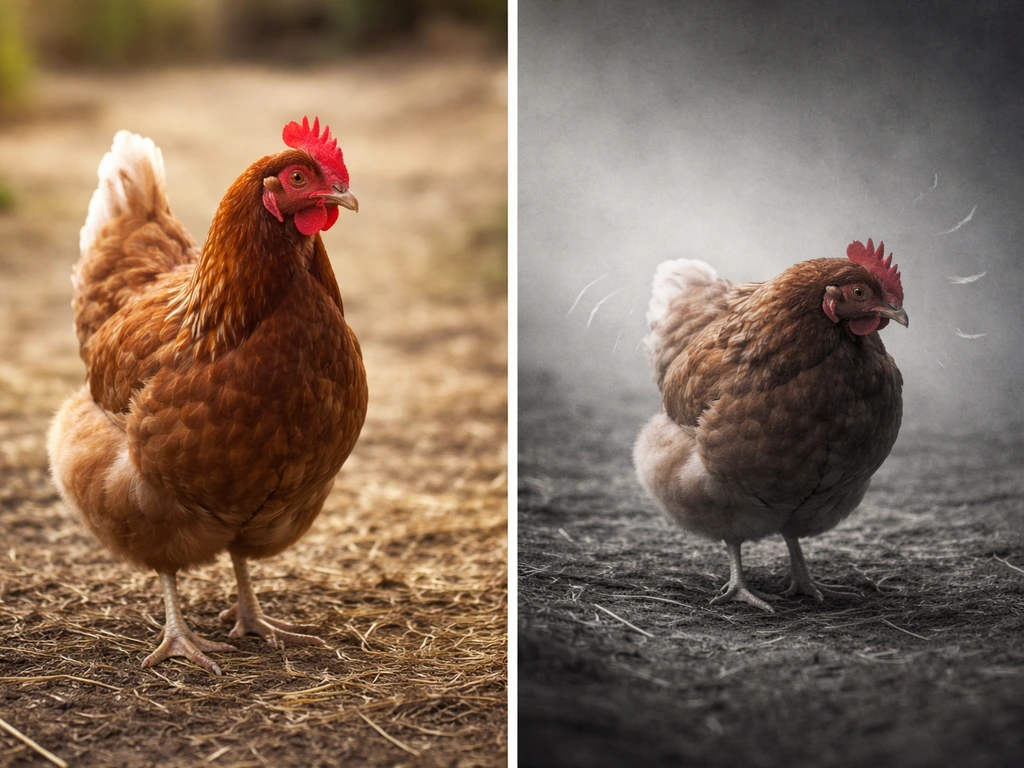
Literal vs. Figurative: What 'Chicken Bird' Could Mean
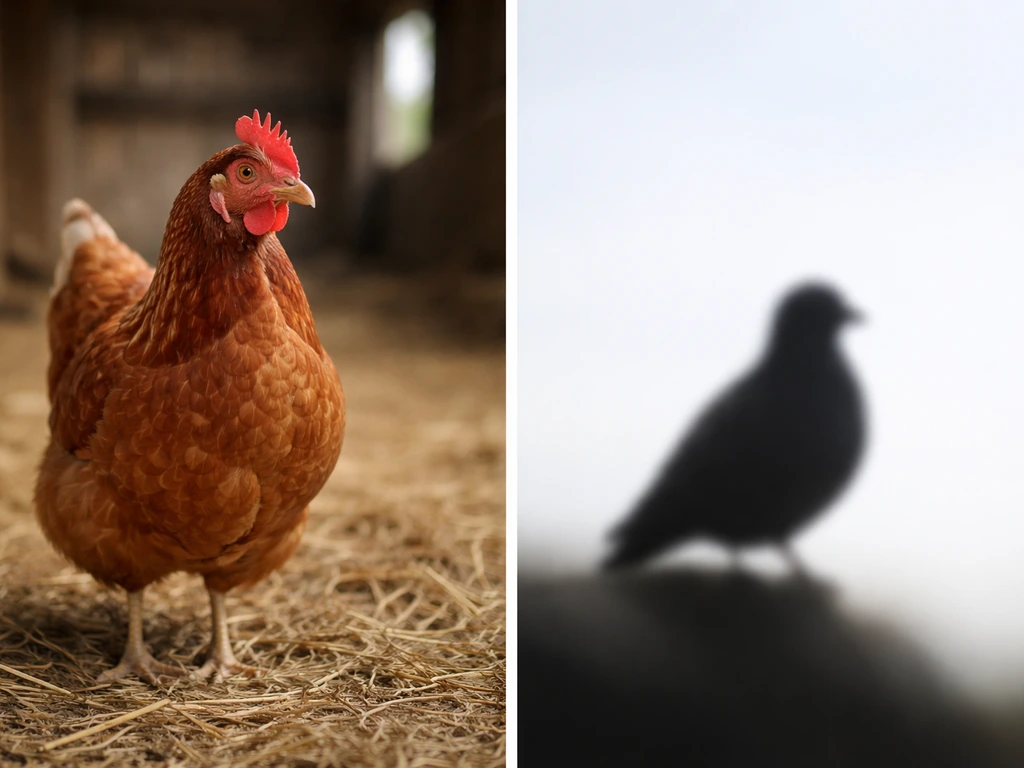
The phrase 'chicken bird' sits at a crossroads between two very different worlds. On one side, you have the literal world: chickens are real birds, domesticated animals with actual symbolic weight in cultures around the globe. On the other side, 'chicken' has been figurative slang for a coward in English for centuries, and 'chicken bird' is just an intensified or doubled-down version of that same insult.
There's also a third lane that's grown bigger in internet culture: 'chicken bird' as pure playful nonsense. Reddit threads and Urban Dictionary entries document people using it simply because it sounds funny or rhythmic, no deeper meaning intended. The phrase has even surfaced as a meme format on Know Your Meme, meaning context can completely change its significance depending on where you saw it.
One thing it almost certainly does not mean: a specific bird species. There is no widely recognized ornithological species called simply the 'chicken bird.' The Greater Prairie-Chicken is a real bird, and 'yard bird' is old slang for a chicken prepared as food, but 'chicken bird' as a species name isn't a thing. If you saw it in a nature article, double-check the exact name, it may have been a colloquial nickname or a misquote.
The Literal Side: What Chickens Actually Represent as Birds
Chickens are one of the most domesticated birds on Earth, and that domesticity is exactly where their symbolic power comes from. They're not wild, they're not predatory, and they're deeply tied to human life in a way that few other birds are. That relationship has given the chicken a layered symbolic identity that varies by culture.
The most striking example comes from Chinese and Taiwanese culture, where chickens are associated with the sun, yang energy, and positive life forces, a meaning that's essentially the opposite of cowardice. In animal symbolism writing more broadly, chickens appear as symbols of nurturing, maternal protection, and fertility, largely because of the hen's egg-laying and chick-rearing behavior. The egg itself is one of the oldest universal symbols of new beginnings and rebirth, which is why it carries such weight at events like Easter.
So if someone is talking about chickens in a spiritual, folkloric, or cultural context, the bird likely represents motherhood, renewal, domestic warmth, or solar vitality, none of which overlap with the coward meaning. These are two completely separate symbolic traditions sharing the same animal.
The Figurative Meaning: Cowardice, Meekness, and More
The 'chicken equals coward' association is old and deeply embedded in English. The Century Dictionary, a major historical reference, listed 'chicken-bird' directly as a noun meaning 'a coward.' Cambridge Dictionary today frames it the same way: 'Are you chicken?' means 'Are you too frightened to do something involving a risk?' It's not an archaic usage. It's alive and active in everyday conversation.
Merriam-Webster documents both the noun form ('don't be a chicken') and the adjective form ('too chicken to try it'). The related phrase 'blank" rel="noopener noreferrer">chicken-hearted,' built from the same root, means timid or cowardly. Urban Dictionary adds another layer, listing 'chicken bird' as slang for extreme stupidity or calling someone a very stupid person, a related but distinct insult. So figuratively, 'chicken bird' can mean cowardly, meek, fearful, or just plain foolish depending on how it's used. TheFreeDictionary’s idiom entry for “chickened” defines it as “cowardly” and “fearful,” which aligns with the coward reading discussed here blank" rel="noopener noreferrer">chickened meaning.
The personality symbolism stacks up like this across figurative uses:
- Cowardly or not brave: the classic sense, used in challenges like 'don't be a chicken'
- Meek or overly cautious: someone who avoids conflict or risk without moral courage
- Stupid or foolish: the Urban Dictionary sense, where 'chicken bird' becomes a sharper insult
- Playful teasing: when used among friends with a light tone, it softens into mild ribbing rather than a genuine attack
Cultural and Folklore Meanings of Chicken Imagery
Across different traditions, the chicken carries meanings that might surprise you if you're only familiar with the English-language coward connotation. In Chinese culture, the rooster (a male chicken) is one of the twelve zodiac animals and represents punctuality, courage, and honesty. That's a direct inversion of the coward association. The solar symbolism noted in Taiwanese ritual practice positions the chicken as a creature connected to daylight, vitality, and positive yang energy.
In many folk traditions and spiritual symbolism frameworks, the hen specifically represents maternal protection. The image of a hen gathering chicks under her wings is one of the most consistent cross-cultural symbols of sheltering love and safety. This is why chicken imagery shows up in spiritual and new-age writing tied to themes of home, family protection, and nurturing instincts.
Fertility symbolism ties in through the egg. Because chickens produce eggs consistently, and because an egg can hatch into new life, chickens have been connected to cycles of renewal and new beginnings in many traditions. This is the same symbolic root that makes eggs a central element of spring festivals across cultures. If someone uses 'chicken bird' in a spiritual or folkloric context, this is the symbolic register they're almost certainly drawing from, not the coward meaning. In folk bird meaning terms, the “chicken bird” idea points you toward cultural symbolism and tradition-specific interpretations rather than the English insult.
It's worth noting that folk bird symbolism as a category is rich and often surprising. Folk traditions assign meanings to birds that don't always match what modern culture expects, and chickens are a perfect example of how one animal can carry wildly different meanings depending on who is doing the interpreting.
How to Read the Context and Pick the Right Meaning
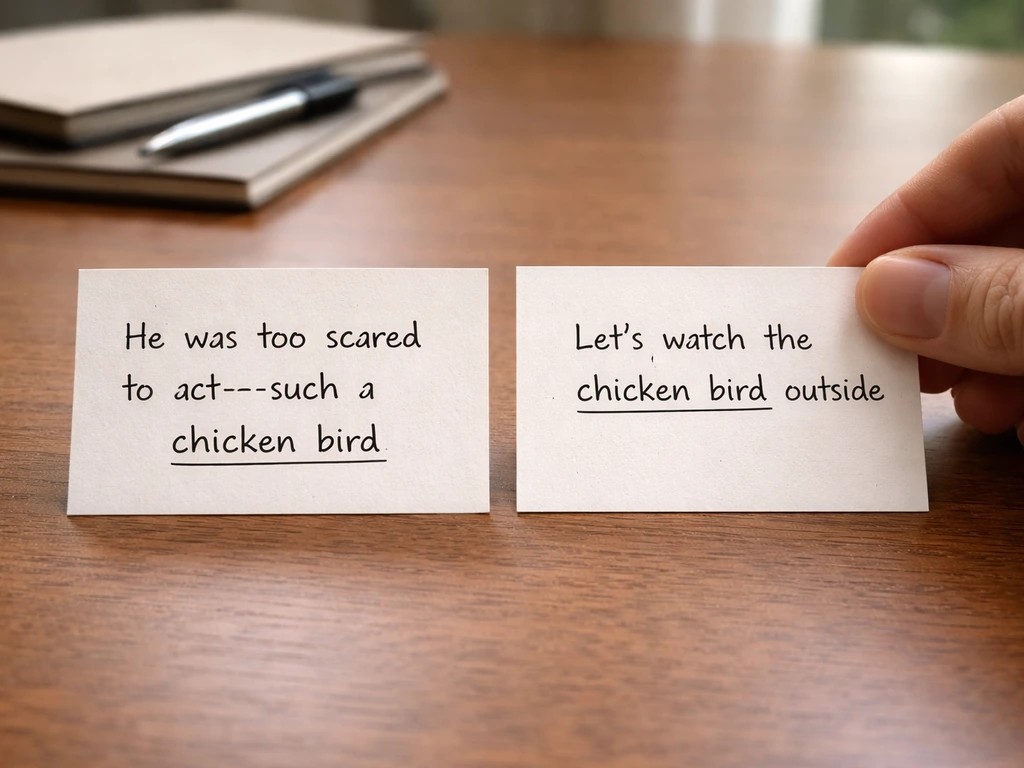
This is the practical core of the whole question. When you encounter 'chicken bird,' the surrounding context will almost always tell you which meaning applies. Here's a direct breakdown:
| Context clues | Most likely meaning | What to do |
|---|---|---|
| Fear, risk, challenge, 'don't be a…', dares, competitions | Coward / not brave (figurative) | Read it as the classic 'chicken' insult, rooted in centuries of English usage |
| Calling someone stupid, 'you're such a…', mockery of intelligence | Slang for a foolish person (Urban Dictionary sense) | It's an insult, not symbolism — context is interpersonal |
| Funny phrase, wordplay, memes, Reddit, playful nonsense | Internet slang or playful filler with no fixed meaning | Don't over-analyze; it may just be used because it sounds funny |
| Spiritual writing, animal symbolism, folklore, dreams, rituals | Literal chicken symbolism: nurturing, fertility, protection, solar energy | Look at the specific tradition being referenced for precision |
| Nature content, birdwatching, wildlife discussion | Possibly a literal species nickname — verify the exact bird name | Cross-check with ornithological sources to confirm the species |
The single most reliable signal is the surrounding vocabulary. Words like 'jump,' 'fight,' 'try,' or 'step up' pull you toward the coward reading. Words like 'spirit,' 'dream,' 'symbol,' or 'energy' pull you toward cultural symbolism. Meme formatting or absurdist humor pulls you toward the internet-slang lane.
Related Idioms and Bird Terms Worth Checking
If you're trying to track down where a phrase came from or confirm an interpretation, a few related terms are useful comparison points.
- Chicken-hearted: a direct synonym for cowardly, built on the same figurative root as 'chicken bird'
- Yard bird: old slang for a chicken (as food), which is a completely different lane — food reference, not a coward reference
- Chicken hawk: a compound that can mean a hawk that preys on chickens (literal) or a person with aggressive views who avoids personal risk (figurative) — shows how 'chicken' compounds can go either way
- Chicken ain't nothin but a yard bird: a reassurance phrase meaning something is no big deal, not worth worrying about
- Don't be a chicken / chickened out: standard English idioms for backing down from something due to fear
If you want to compare how different birds carry symbolic weight, it's worth looking at terms like turkey bird meaning or show bird meaning, the 'bird' suffix in compound phrases often works differently depending on the species attached. Roosters and turkey birds occupy different symbolic spaces even though both are domestic fowl, and the differences reveal a lot about how language builds meaning around animals.
Myths and Misreadings to Avoid
A few common mistakes trip people up when they search for 'chicken bird meaning,' and it's worth naming them directly so you don't fall into the same traps. If you're looking for the show bird meaning, the key is still to match the phrase to the context and symbolism being referenced chicken bird meaning.
If the phrase is used around a wedding, the “bird” symbolism often points to themes like new beginnings and nurturing rather than fear wedding bird meaning. If you're specifically wondering about the turul bird meaning, compare the context and origin cues the same way you would for chicken bird meaning. It can also show up in folk bird meaning discussions, where the focus is on cultural or spiritual symbolism rather than insults.
- Assuming 'chicken bird' is a specific species: It is not. There is no standard ornithological species called simply the 'chicken bird.' If you saw this in a wildlife context, the writer was almost certainly using a colloquial nickname, and you should verify the actual species name separately.
- Applying coward symbolism to spiritual or cultural chicken references: If someone discusses chicken imagery in a dream, a ritual, or a spiritual tradition, the coward meaning usually has no relevance. The solar, maternal, and fertility meanings from various cultural traditions are entirely separate from the English-language slang.
- Over-literalizing internet uses: When 'chicken bird' appears in memes or casual online conversation, people often use it as a fun-sounding phrase with no consistent meaning. Treating it as a coded idiom with a specific message is reading too much into it.
- Assuming one meaning is universal across cultures: In English, 'chicken' trends toward cowardice. In Chinese zodiac culture, the rooster trends toward courage and integrity. Same animal, opposite connotations. Always check the cultural tradition before applying a meaning.
- Conflating 'chicken bird' with 'chicken hawk' or other chicken compounds: Each compound has its own etymology and usage history. Chicken hawk, yard bird, and chicken-hearted all have distinct origins and should be looked up individually if that is the phrase you actually encountered.
The clearest takeaway: 'chicken bird' is not a stable phrase with one fixed meaning. It shifts based on who is using it, where, and why. Once you identify those three factors, the right interpretation almost always becomes obvious. If you are still uncertain after checking context, the coward reading is the safest default in everyday English conversation, but always hold that interpretation loosely until the surrounding language confirms it.
FAQ
If I see “chicken bird” in a video caption, how can I tell whether it is an insult or meme humor?
Look at the surrounding caption words and who is being addressed. If it’s followed by challenges like “try,” “go,” “step up,” or “fight,” it is usually coward-based teasing. If it stands alone, is formatted like a template, or is paired with absurd actions (no risk language), it is more likely nonsense meme use rather than a serious insult.
Does “chicken bird” ever mean something literal about chickens, like a breed or an animal reference?
It rarely functions as an accurate literal species label. If it appears near nature writing, check whether the text names a real species separately (for example, a known wild chicken relative) or uses the phrase as a nickname. If no scientific or commonly recognized name is given, treat it as figurative or mistaken labeling.
Is “chicken bird” the same thing as “chicken-hearted” or “chicken” (coward)?
They are related but not identical. “Chicken” and “chicken-hearted” point clearly to fear or timidity. “Chicken bird” can still carry that meaning, but it can also be intensified wording or a different insult (like foolishness), so you should still judge by nearby verbs and tone.
What if “chicken bird” is used in a spiritual or dream interpretation post, is it always the nurturing or renewal meaning?
Not always. Spiritual posts often reuse symbolic language, but the exact theme can change based on the scenario described (for example, eggs and hatching usually point to new beginnings, while protective imagery like a hen under wings points to safety and shelter). The safest approach is to match the “chicken bird” reference to the accompanying details in the post.
Can “chicken bird” mean “stupid person” instead of coward, and how can I detect that fast?
Yes, some internet slang uses it to imply stupidity or foolishness rather than fear. Fast detection: if the sentence includes evaluation words like “idiot,” “clown,” “dumb,” or “nonsense,” it’s probably attacking intelligence. If it’s framed around fear, risk, or unwillingness, it’s more likely the coward meaning.
When should I treat “chicken bird meaning” as a translation issue rather than an English phrase?
If the text sounds translated, or it references culture-specific imagery (solar energy, zodiac, ritual practice) without typical English insult structure, it may be an attempt to map a different concept into English. In that case, the meaning may be cultural symbolism in origin, not an English idiom, even though the words look similar.
If I’m trying to write something and want the coward meaning, is “chicken bird” appropriate, or are there better options?
If your goal is clearly the coward insult, “chicken” or direct phrasing like “too chicken to…” is usually more immediately understood. “Chicken bird” can be clearer to some audiences as a meme-style intensifier, but it’s more ambiguous and can accidentally read as foolishness or playful nonsense depending on the setting.
What is the “safest default” meaning if context is missing online?
In everyday English conversation, the coward or fear-based reading is usually the most defensible default. Still treat it loosely until you see risk-related verbs, address direction, or meme-style formatting, because the phrase can shift to foolishness or pure humor.
Next Article
Wedding Bird Meaning: Symbolism, Birds, and How to Identify It
Discover wedding bird meaning: which birds it may reference, symbolism for love luck, and how to identify your context.