The Turul is a legendary bird from Hungarian mythology, not a real zoological species you can find in a field guide. It functions as a divine, falcon-like creature that represents power, national identity, protection, and destiny in Hungarian and broader Central Asian Turkic tradition. When people search for 'turul bird meaning,' they are almost always looking for one of three things: the bird's role in Hungary's founding myth, its symbolism as a national and spiritual icon, or what it means when they see the word used in a name, monument, or modern context. In that phrase, the “meaning” usually points to the Turul’s symbolism as a divine, protective bird tied to Hungarian origin stories and modern spiritual use turul bird meaning.
Turul Bird Meaning: Symbol, Origins, and Common Uses

Marcus Winters
11 Jun 2026
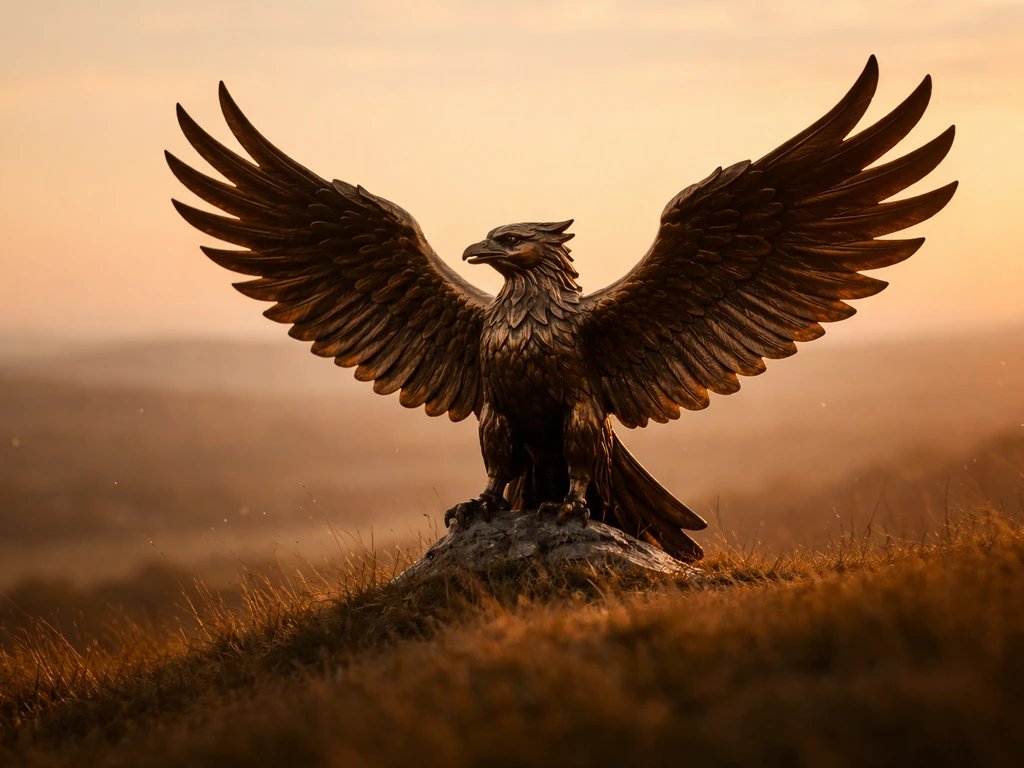
Is the Turul a real bird or a mythic creature?
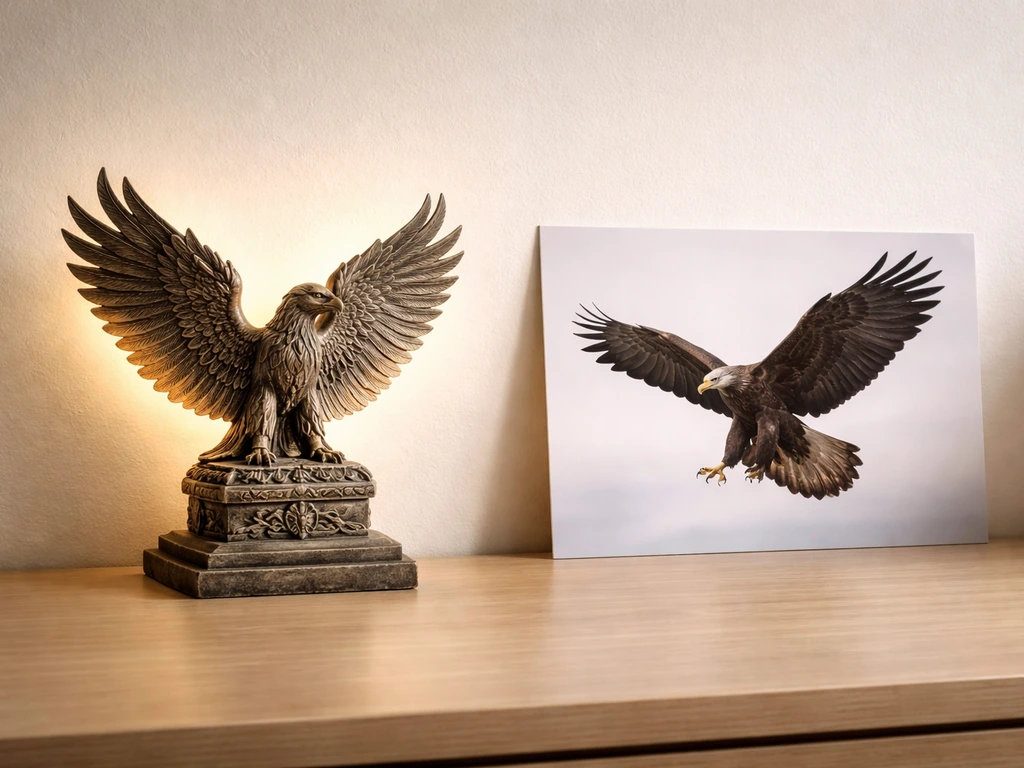
This is the first thing to get straight, because it trips people up constantly. The Turul is not a species. You will not find it classified in ornithology. It is a legendary creature from Hungarian and pre-Hungarian nomadic tradition, most often depicted visually as a large falcon or hawk, sometimes with eagle-like qualities. Medieval Hungarian chronicles describe it in terms of a divine bird that acts with purpose and carries supernatural authority. Think of it less like a specific animal and more like a symbol that was given a bird's form, the way a phoenix or a thunderbird works in other cultures.
That said, most visual representations of the Turul, including famous statues in Budapest and across Hungary, show it as a large bird of prey: broad wings spread wide, talons gripping a sword or a branch, beak hooked like a falcon. Scholars generally connect its visual form most closely to the saker falcon (Falco cherrug), a bird sacred across the Eurasian steppe and historically associated with Hungarian hunting culture. But calling the Turul 'a falcon' misses the point. It is what the falcon represented: divine will and the destiny of a people.
Where the Turul legend actually comes from
The Turul's most important appearance in the historical record comes from 'blank" rel="noopener noreferrer">Gesta Hungarorum,' the 12th-century chronicle written by the scribe known as Anonymus, and later in the 'Chronicon Pictum' (also called the Képes Krónika). These are the foundational texts of early Hungarian history, and both reference the story known as 'Emese álma,' or Emese's Dream.
The story goes like this: Emese, a noblewoman and ancestor of the Árpád dynasty, has a divine vision while pregnant. In the dream, a turul bird (described in the original Hungarian as 'turulmadár') appears, lands on her, and mystically impregnates her. The child born from this divine union is Álmos, whose name connects to the Hungarian word for 'dream.' Álmos becomes the father of Árpád, the leader who led the Magyar tribes into the Carpathian Basin around 895 CE, establishing what would eventually become Hungary. So the Turul is literally woven into the origin story of the Hungarian nation.
What makes this doubly interesting is that the tradition does not exist in isolation. The Turul legend reflects a broader pattern found across Turkic and Mongolic peoples of the Eurasian steppe, where a divine bird or eagle figures in the ancestry of a ruling clan. The Hungarians, who originated as a nomadic Finno-Ugric people with deep steppe connections, brought this mythological framework with them when they settled in Central Europe. The Turul is essentially where the ancient nomadic world met the Christian medieval one, and the chroniclers preserved both.
What the Turul symbolizes: the core meanings
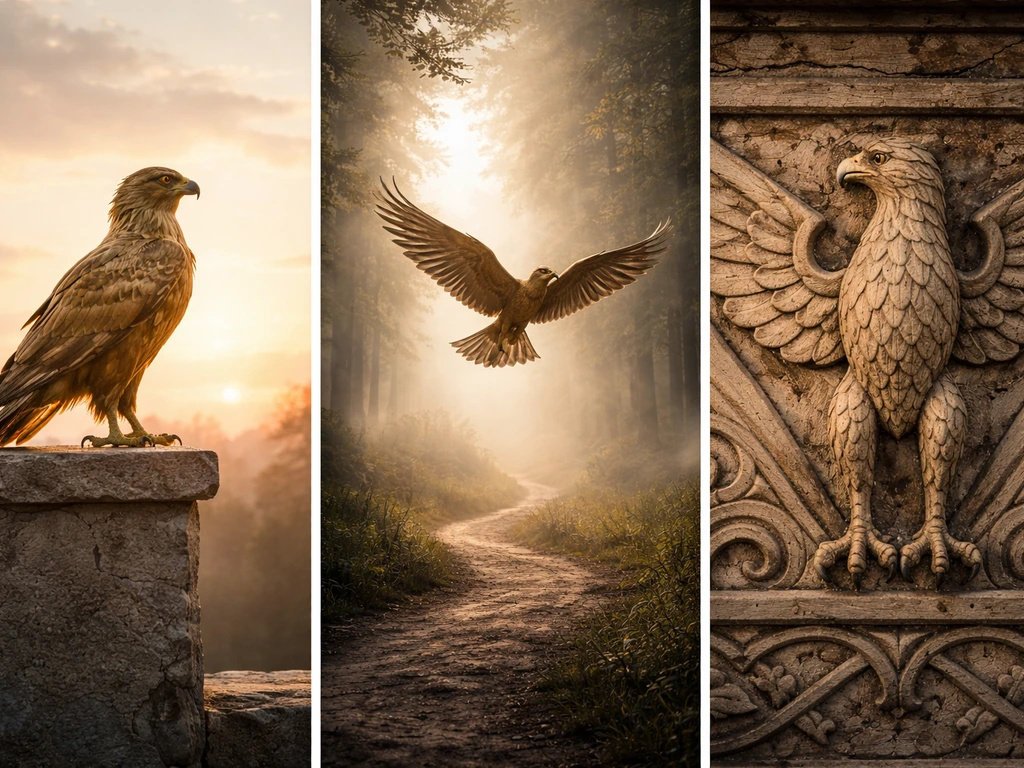
Understanding the Turul's symbolism is easier if you think in layers. The bird carries meaning on several levels simultaneously, and depending on the context you encounter it in, one layer will be more prominent than the others.
| Layer of Meaning | What It Represents | Where You See It Most |
|---|---|---|
| Divine authority | The will of God or the heavens channeled through the bird; a celestial messenger | Medieval chronicles, origin legends |
| National identity | The founding and legitimacy of the Hungarian people and the Árpád dynasty | National monuments, state symbols, official contexts |
| Protection | A guardian spirit watching over the nation and its people | Statues, military insignia, heritage organizations |
| Destiny and prophecy | The idea that Hungarian history was divinely ordained from the beginning | Cultural writing, patriotic speeches, folk tradition |
| Power and warrior spirit | Strength, speed, and ferocity associated with birds of prey and steppe warrior culture | Sports teams, martial arts clubs, tattoos, personal names |
The protection angle is worth pausing on. In Hungarian folk belief, the Turul was understood as a kind of ancestral guardian, a spirit-bird that watched over the Magyar people collectively. This makes it less like a national animal in the modern civic sense and more like a totem in the anthropological sense: a being whose presence signals that a community is under sacred protection. That spiritual weight is exactly why the symbol has endured across centuries, survived the Christianization of Hungary, and still resonates today.
The Turul in modern and spiritual contexts
Today, the Turul carries meaning well beyond medieval history class. In spiritual and neo-pagan communities, particularly within movements that revive pre-Christian Hungarian or broader Uralic and steppe traditions, the Turul is treated as a genuine totem animal. People working with it as a spirit guide emphasize the same qualities: farsightedness, divine purpose, fierce protection of what matters, and connection to ancestral heritage. If you have come across 'turul bird meaning' in a spiritual or totem-animal context, this is the tradition being drawn from. Wedding bird meaning searches can also connect to the Turul symbol when it is used as a protective, ancestral totem in modern spirituality. If you specifically mean the “turul bird meaning” in a spiritual or totem-animal sense, it’s tied to those ancestral-guardian beliefs.
In Hungary specifically, the Turul has experienced a significant revival since the late 20th century. After decades of communist rule during which nationalist symbols were suppressed, the 1990s brought a resurgence of interest in Hungarian heritage, and the Turul came with it. It now appears in everything from public art installations to right-wing political iconography to mainstream cultural festivals. This wide range of modern adoption means that the Turul's symbolism can carry very different political or cultural weight depending on who is using it and how, which is worth knowing before you interpret it in any specific context.
Real-world places you will encounter the word Turul
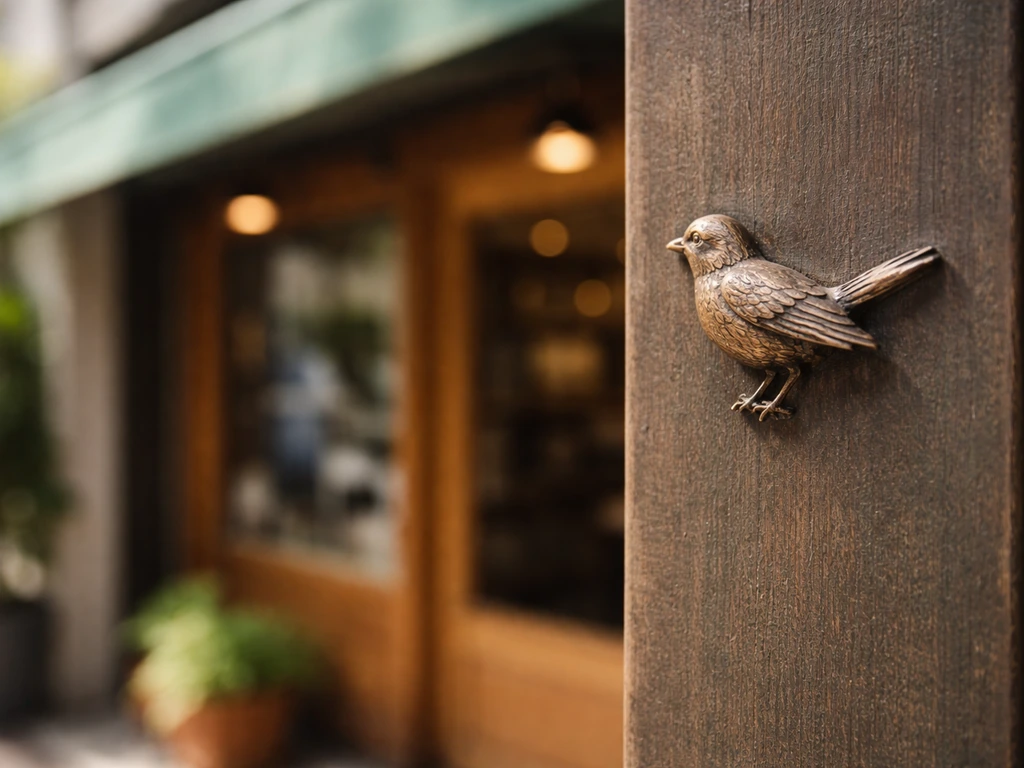
The Turul shows up in everyday life in more places than you might expect. The most famous is the Turul statue on the Buda Castle hill in Budapest, a massive bronze bird with outstretched wings gripping a sword, created by sculptor Gyula Donáth in 1905. There are dozens of Turul statues across Hungary and in neighboring countries with ethnic Hungarian populations, including Romania (Transylvania), Slovakia, and Serbia.
- Personal names: 'Turul' is used as a given name and surname in Hungary, carrying connotations of nobility, strength, and national pride
- Military and police units: Several Hungarian military and law enforcement units have historically used the Turul as part of their insignia or naming
- Sports teams and martial arts clubs: The name appears frequently in Hungarian sports culture, especially in combat sports where the warrior symbolism fits naturally
- Heritage organizations: Groups promoting Hungarian cultural identity both inside Hungary and in diaspora communities often use the Turul as their central symbol
- Online and gaming communities: Hungarian national pride spaces online frequently use the Turul as an avatar or group symbol
- Monuments in contested regions: Turul statues erected in areas with significant Hungarian minority populations (especially in Romania and Slovakia) have occasionally become political flashpoints, with the bird's presence reading as a claim of Hungarian cultural ownership
Common mix-ups and where people go wrong
The biggest misconception is treating the Turul as simply a synonym for 'eagle' or 'hawk.' It is not. Real birds of prey carry their own meanings across dozens of cultures, and while eagles and falcons share some symbolic territory with the Turul, they are distinct symbols in distinct traditions. If someone says 'the turul is just an eagle,' they are technically describing the visual but missing everything that makes the Turul specifically meaningful in Hungarian culture.
A related confusion happens when people mix the Turul up with the coat of arms double-headed eagle used by various empires, including the Habsburg Empire that ruled Hungary for centuries. These are completely separate symbols with different origins, different meanings, and different cultural ownership. The double-headed eagle is a Byzantine and later Holy Roman/Habsburg emblem. The Turul is specifically Hungarian and pre-dates Habsburg rule by centuries.
Another point of confusion: some people encounter the Turul through far-right Hungarian nationalist movements and assume the symbol itself carries that political freight. The reality is more complicated. The Turul predates modern politics by a thousand years and is used across the full spectrum of Hungarian cultural life, from mainstream national museums to folk heritage festivals to school emblems. The political associations in some modern uses are real and worth knowing about, but they do not define the symbol's core meaning.
It is also worth noting that the Turul is occasionally confused with similar divine bird figures from other cultures: the Hungarian Turul, Mongolian and Turkic sacred eagle traditions, the firebird of Slavic mythology, and even generic totem-bird concepts get blurred together in online spiritual communities. If you are reading about the Turul in a spiritual context and something feels like it is describing a different tradition, it may well be. The Turul is specifically Hungarian and Central Asian Turkic in origin.
How to figure out which Turul meaning applies to your situation
The context you found the Turul in will tell you most of what you need to know. Here is a practical way to work through it.
- If you found 'Turul' on a statue or monument: Look for inscriptions that reference Árpád, the Magyar conquest, or Hungarian heritage. This is almost certainly the national-identity and protective guardian meaning. The date of the statue matters too: statues from the 1890s-1920s reflect the nationalist cultural revival of that era, while modern ones may carry a more deliberate political message.
- If you found it in a name (person, team, organization): The connotation is typically strength, national pride, and warrior spirit. It is the bird-of-prey symbolism filtered through Hungarian identity, similar to how other cultures use the eagle or the lion as a name element.
- If you found it in a spiritual or totem-animal article: The writer is drawing on the ancestral guardian and divine messenger aspects. Focus on the protective and destiny-oriented meanings, and treat it as a spirit guide in the steppe-nomadic tradition.
- If you found it in a political or news context: Be aware that Turul imagery has been used by Hungarian nationalist political movements since the 1990s. The symbol itself is culturally neutral, but its deployment in this context emphasizes ethnic Hungarian identity and sovereignty claims.
- If you found it in a historical or academic text: The source is almost certainly referring to the Emese dream legend and the founding mythology of the Árpád dynasty, as recorded in Gesta Hungarorum and related chronicles.
- If you need to explain it to someone else: The simplest accurate version is this: 'The Turul is a legendary divine bird in Hungarian mythology, like a sacred falcon, that is the symbolic ancestor and protector of the Hungarian people. It appears in the founding myth of Hungary and has been used as a national symbol for over a thousand years.'
Bird symbolism works this way across many traditions: the same creature can carry layered meanings that shift depending on who is using the symbol and why. You see a similar dynamic in how different cultures use the term 'folk bird' in folklore, or how a 'show bird' takes on a completely different register in performance and display contexts. In the same way, the phrase show bird meaning can help you separate performance context from spiritual or national symbolism when interpreting the Turul. In folklore, folk bird meaning often points to what communities believe the bird represents, rather than to any single species. The Turul is a particularly rich example because it spans a genuine founding myth, a living national symbol, and an active spiritual tradition all at once. That layering is what makes it worth understanding properly.
FAQ
Is the Turul bird the same as a real eagle or hawk?
No. “Turul bird meaning” usually refers to the Turul’s role as a legendary, divine symbol, not an actual animal you can identify by sight. Even when depictions look like a specific raptor, the intended meaning in Hungarian sources is symbolic, tied to destiny and ancestral protection rather than species biology.
What part of the legend is most closely connected to the Turul’s meaning?
The specific vision story is Emese’s Dream, where a Turul lands on Emese and leads to the birth of Álmos. If you see the Turul described as an ancestor marker in family or clan contexts, it is typically pointing back to that founding-myth function rather than to a generic “bird omen.”
Why does the Turul seem to mean different things in statues versus spiritual communities?
Yes, the meaning can change a lot depending on setting. In public monuments it often functions as heritage and identity. In neo-pagan or totem-animal practice it is used as an ancestral guardian spirit, with emphasis on protection, guidance, and purpose. The same imagery can therefore carry different practical interpretations.
Do all Turul statues depict it the same way, and does the details matter?
It commonly shows up as a sword-gripping or talon-holding bird in official art and monuments, but that detail is not a universal rule in every depiction. When you interpret it, prioritize what the overall scene is communicating in that context (founding, protection, authority) rather than assuming every statue matches the exact same design elements.
If I see a Turul symbol in politics, does that automatically mean it’s endorsing the same ideology?
Not necessarily. Because the Turul appears across the political spectrum in modern Hungary, the symbol’s “meaning” in public life can shift with who is displaying it and why. A safer approach is to treat the Turul as an older cultural icon, then evaluate the accompanying text, organization, or event to understand any additional political claim being made.
How can I tell the Turul apart from the double-headed eagle on coats of arms?
A key distinction is ownership of origin. The double-headed eagle is an emblem with Byzantine and later Habsburg-Holy Roman associations, while the Turul comes from Hungarian and earlier steppe-rooted tradition. If you are trying to identify a symbol, compare form and surrounding motifs, because online images can blend these categories.
Why do online posts sometimes mix Turul ideas with other cultures’ bird myths?
You may see the Turul discussed alongside other “divine bird” traditions (Turkic-Mongolic sacred eagles, Slavic firebird themes, generic totem-bird ideas), but the Turul is specifically Hungarian and tied to that tradition’s founding story. If a source does not connect to Emese’s Dream or Hungarian origin narratives, it may be describing a different bird-myth framework.
What does “turulmadár” mean, and is it a clue to the Turul being a real bird?
In Hungarian usage, “turulmadár” literally points to the Turul as a bird figure within the story, and the meaning is anchored in the myth’s symbolism. If someone claims a precise translation like a specific raptor species name, that is usually oversimplifying. The more reliable interpretation is myth-symbol, not word-to-species mapping.
How is the Turul meaning used in neo-pagan or totem-animal practice?
Yes. When the Turul is used in modern spiritual or neo-pagan work, it is often treated as an “ancestral guardian” or spirit guide, with typical emphasis on protection and inherited purpose. If you are evaluating a practice, look for whether they frame it as ancestry, guidance, and protection, rather than as a literal nature-animal.
What’s the biggest common mistake people make when interpreting Turul symbols?
A common mistake is assuming any “bird of prey” silhouette automatically equals Turul meaning. Real raptors can have symbolic associations, but Turul symbolism depends on the Hungarian and steppe-rooted narrative layers. If the article or image lacks the Hungarian myth context, it is likely using “Turul” as a label for general raptor symbolism rather than the specific tradition.
Next Article
Folk Bird Meaning: Definitions, Symbols, and Context Clues
Define folk bird meaning, spot context clues, and identify likely referents and symbols across cultures and regions.