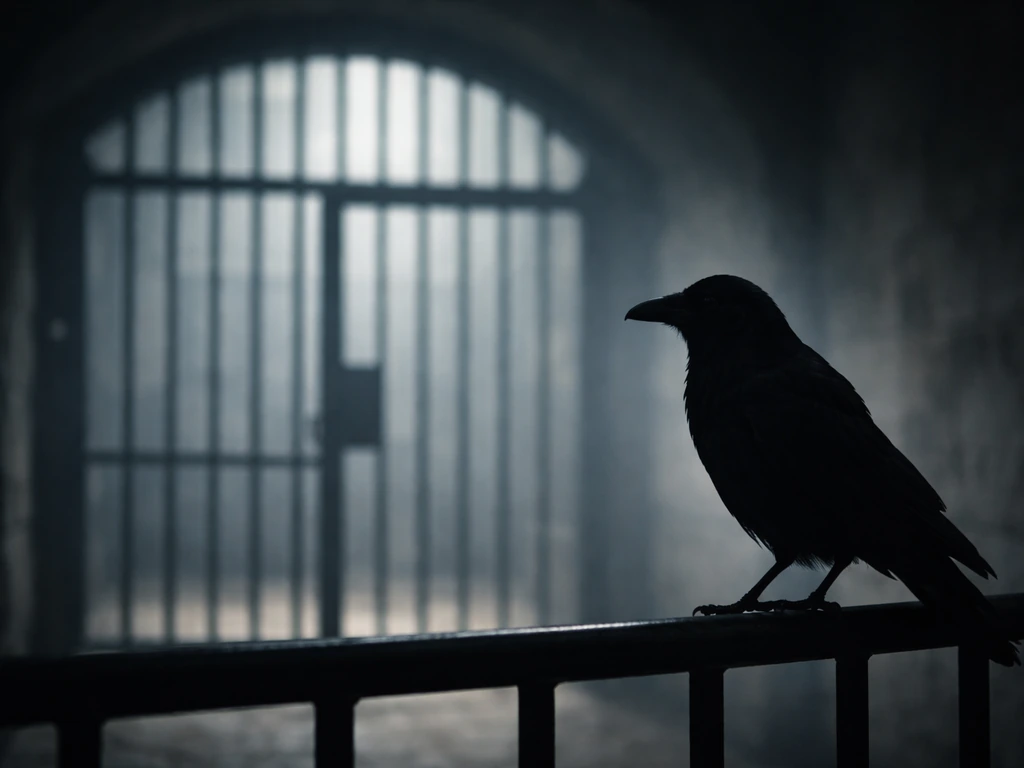
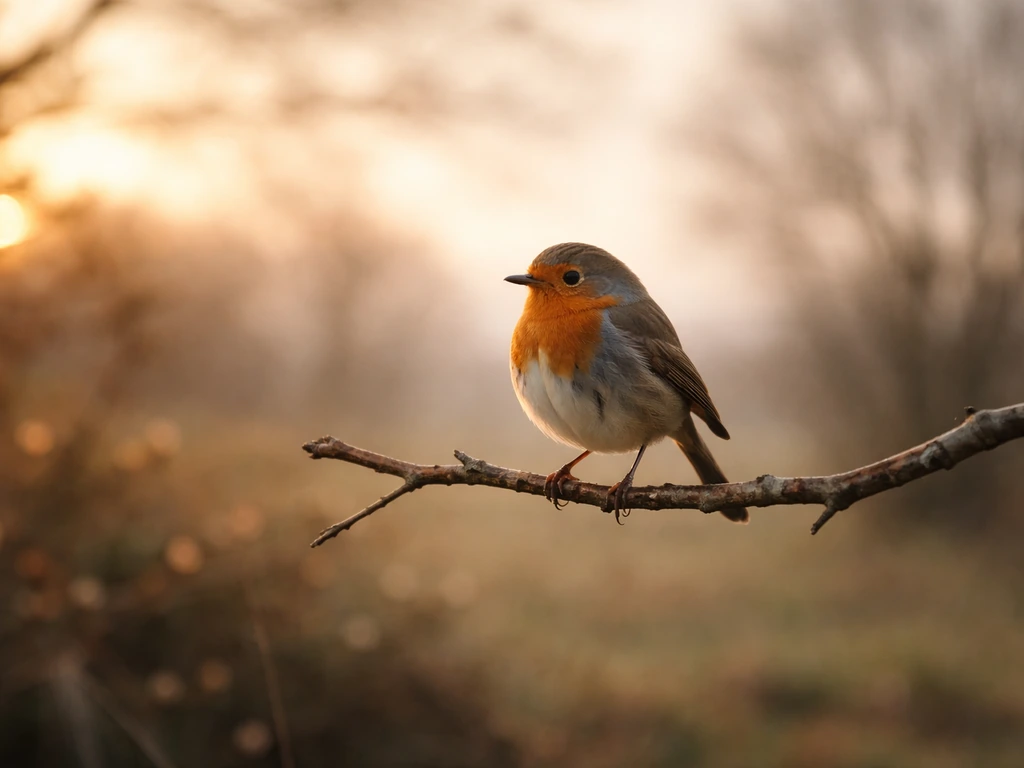
Victor Hugo wrote a short, striking poem that tells you to be like a bird sitting on a branch too thin to hold its weight: the branch bends, maybe breaks, but the bird keeps singing because it knows it has wings. That is the whole message. Resilience is not about the branch holding. It is about knowing you do not need it to.
Be Like the Bird, Victor Hugo Meaning and Origin

Marcus Winters
9 Jun 2026
The quote and its common wording variants
If you have searched this phrase online, you have almost certainly run into several different English versions. The core idea is consistent, but the exact wording shifts depending on which translator or quotation database you land on. Here are the three versions you will most commonly see:
- "Be like the bird who, pausing in her flight awhile on boughs too slight, feels them give way beneath her, and yet sings, knowing she hath wings."
- "Be like the bird, who / Halting in his flight / On limb too slight / Feels it give way beneath him, / Yet sings / Knowing he hath wings."
- "Soyez comme l'oiseau, posé pour un instant / Sur des rameaux trop frêles, / Qui sent fléchir la branche, / Et qui chante, pourtant, / Sachant qu'il a des ailes !" (the original French)
The pronoun shifts between "her" and "him" depending on the translation, and some versions break the lines as a poem while others run them together as prose. None of this changes the meaning. What you want to hold onto is the image itself: a bird, a bending branch, and singing anyway. Every version is pointing at the same thing.
One thing worth flagging: A-Z Quotes has occasionally linked this line to Les Misérables, which is almost certainly wrong. The poem source is well-established elsewhere, and mixing it up with Hugo's novel is a known quirk of how quotation aggregator sites sometimes mislabel material. Do not use "Les Misérables" as the source when citing this line.
Where it actually comes from
The attribution to Victor Hugo is solid. This is not one of those internet quotes falsely stamped with a famous name. The most reliable bibliographic trail points to a poem titled "Dans l'église de " ("In the Church of "), which is poem number 33, section 6 in Hugo's 1836 collection Les chants du crépuscule, translated into English as Songs of Dusk. The French lines that correspond to the "be like the bird" stanza appear in that poem, and the collection is a verified Hugo work from his early Romantic period.
The asterisks in the title are not a placeholder error. Hugo used them intentionally to obscure the specific church's name, a literary convention of the period that added a sense of universality or discretion to the setting. The poem is longer than just the bird stanza, and the bird image appears near its conclusion, which is why some sources describe it as coming from "the last stanza of a much longer poem." Modern choral composers, including Abbie Betinis, have set the English text to music and credited the lyrics to Victor Hugo, which further confirms the attribution has been accepted outside of just the quotation-collector world.
The only genuine uncertainty is the translation. Hugo wrote in French, and there is no single official English rendering of this stanza. The versions you see online are different translators' attempts to preserve the rhythm and meaning, which is why the pronouns and line breaks vary. When using this quote in writing, picking the version that reads most naturally for your context is perfectly fine, as long as you credit Victor Hugo and do not claim a specific page reference you cannot verify.
What "be like the bird" actually means in plain English
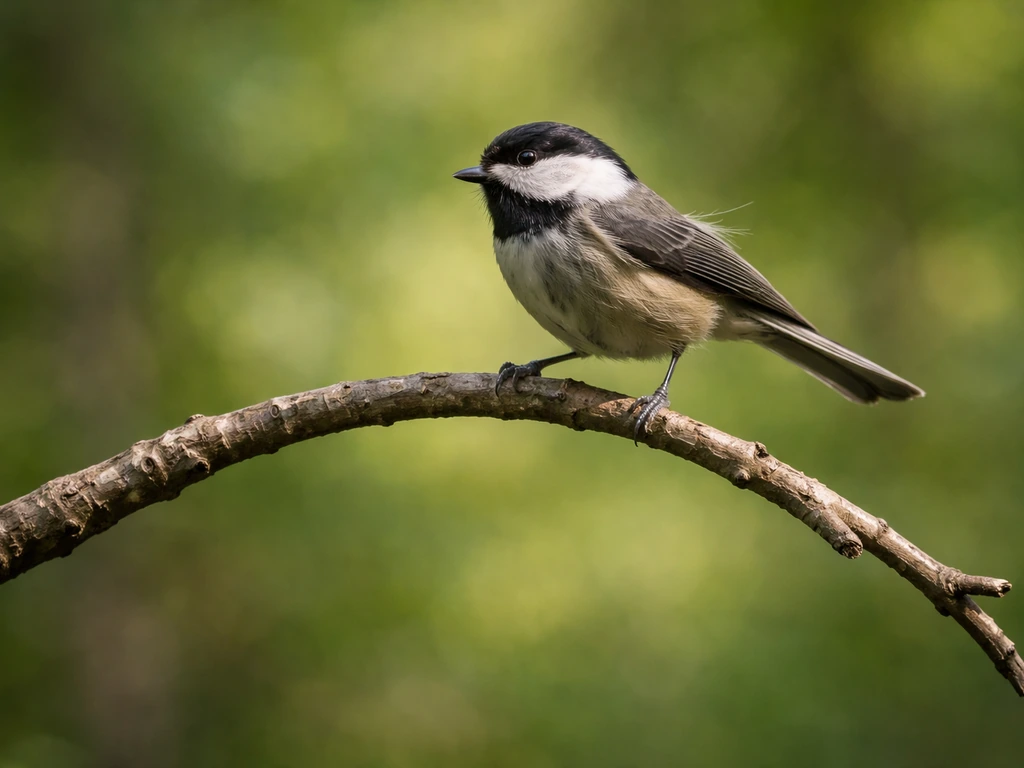
Hugo is describing a bird that has landed on a branch it can already feel is too weak to support it. The branch bends under the bird's weight. Maybe it cracks. The bird does not panic, does not fly away in fear, does not stop what it is doing. It sings. And the reason it can do that is simple: it knows it has wings. It knows it can fly if the branch fails completely.
In plain English, the message is this: when your circumstances are unstable, when the situation you are standing on feels fragile or unreliable, you can still act with confidence and even joy if you trust in your own capacity to recover or adapt. The branch is the external situation. The wings are your internal resources. Hugo is saying the wings matter more.
This is a resilience message, but it is also something more specific than the generic "stay positive" advice. It is about the relationship between security and action. Most people wait for stable ground before they feel safe enough to sing. Hugo says: do not wait for the branch to hold. Know your wings, and the branch becomes irrelevant.
Why a bird carries this message so well
Hugo did not pick a random animal for this image. In some online discussions, people also ask what the prison bird meaning is, but that is a separate cultural idea from Hugo's poem. Birds carry an enormous load of symbolic meaning across cultures and across his own body of work. In Western literary tradition, birds have consistently stood for the soul, for freedom, for aspiration toward something higher than the ordinary. Hugo used bird and wing imagery throughout his life as a poet. blank" rel="noopener noreferrer">In his prose reflections, he wrote that the soul has illusions the way a bird has wings, and that this is what sustains it. Evene (Le Figaro) attributes this Hugo soul-and-wings line to Victor Hugo: “L’âme a des illusions comme l’oiseau a des ailes ; c’est ce qui la soutient.” the soul has illusions the way a bird has wings. That idea maps directly onto "be like the bird": your inner life, your imagination, your belief in your own capacity to rise, that is the wing.
The branch in the poem also matters symbolically. Branches, perches, and cages appear repeatedly in bird-related idioms and expressions as stand-ins for constraint, for temporary resting places, or for the limits imposed by external circumstances. You may also run into other idioms with bird imagery, like a jail bird, and it helps to know the exact meaning before using it a jail bird idiom meaning. The phrase “speak now bird cage meaning” points to how people interpret that same bird-and-cage symbolism. The image of a bird on a branch that is giving way is almost a visual argument: the bird does not need the branch to be permanent. The bird's freedom is intrinsic, not granted by the branch. This is what separates Hugo's image from a simple "hope for the best" sentiment. It is structurally different. The bird is not hoping the branch holds. The bird already knows it does not need the branch to hold.
This is also worth keeping in mind when you encounter related bird expressions, like those about birds in cages with open doors, or birds on wires. Those images often deal with the question of whether freedom is available or recognized. Hugo's bird image skips that question entirely. The bird is already free. The cage is not even in the picture.
How to actually live this message

The quote is easy to admire. Applying it is harder, but it is also more specific than most motivational writing suggests. Here is how to actually use what Hugo is describing:
- Identify your wings before you need them. The bird knows it has wings before the branch bends. That means building the skills, relationships, savings, or habits that give you genuine options before a crisis. Hugo is not writing about wishful thinking. He is writing about earned confidence in a real capacity.
- Stop waiting for stable conditions to begin. If you are holding off on a creative project, a conversation, or a decision until circumstances feel more certain, you are waiting for the branch to hold. Hugo's bird does not wait. It lands, it feels the branch bending, and it sings anyway.
- Let your actions reflect your capacity, not your circumstances. Singing while the branch gives way is a choice to express what you are capable of regardless of what the situation allows. In practice, this looks like continuing to do quality work during uncertain times, or maintaining your values when external pressure pushes against them.
- Reframe instability as temporary contact, not permanent ground. The bird is "pausing in her flight" or "halting in his flight." The branch was never the destination. It was a momentary stop. Treating unstable situations as temporary contact points rather than foundations changes how much power they have over you.
- Build the habit of noticing your own resources. Hugo's bird does not need someone to remind it that it has wings. That awareness is already there. Practicing a realistic inventory of your actual strengths, not inflated self-talk but genuine recognition of what you can do, is how you develop the same internal reference point.
Using the quote correctly in writing, captions, and conversation
This quote works well in a lot of contexts, but using it well means being precise about a few things. Here is the practical guidance:
Which version to use
For casual use in a social media caption, a speech, or a note to a friend, the most readable English version is: "Be like the bird who, pausing in her flight awhile on boughs too slight, feels them give way beneath her, and yet sings, knowing she hath wings., Victor Hugo" The archaic "hath" gives it a literary quality without being incomprehensible. If you want something that reads more cleanly as a short caption, you can trim it to: "She sings, knowing she hath wings., Victor Hugo" and it still carries the core of the image.
How to attribute it
Attribute it to Victor Hugo. If you want to be more specific, the source is his 1836 collection Les chants du crépuscule (Songs of Dusk), poem "Dans l'église de *." Do not attribute it to Les Misérables. That attribution appears on some quotation sites but is not supported by the bibliographic record. If you are writing something formal, noting that this is from an English translation of the French original is accurate and honest.
When it fits and when it does not

| Context | Does it work? | Why |
|---|---|---|
| Encouraging someone facing a career setback | Yes | The branch-giving-way image maps directly onto losing a job or a project failing |
| A graduation or commencement speech | Yes | The message about inner capacity over external stability is a natural fit |
| Captioning a nature photo of a bird | Partially | Decorative use is fine, but the quote's depth is underused in pure aesthetic contexts |
| Describing actual bird behavior in a nature article | No | This is a metaphor, not ornithology |
| A eulogy or tribute | Yes, carefully | The resilience and soul-as-wing imagery can be deeply appropriate, especially for someone who endured hardship with grace |
| Business or leadership writing about change management | Yes | The message about acting from internal capacity rather than waiting for stable conditions is directly applicable |
One thing to avoid
Do not flatten the quote into generic "be brave" advice when you use it in conversation or writing. The specific power of Hugo's image is the detail: the bird feels the branch giving way and still sings. That detail is what makes it more than a motivational poster. When you reference it, keep the branch in the picture. The contrast between the unstable external situation and the confident internal action is the whole point. Without that contrast, you lose what makes this particular line worth quoting over hundreds of other resilience sayings.
FAQ
What does “be like the bird” mean if my situation is not something I can “sing through,” like grief or burnout?
Use the image as a permission slip to do what you can, not to force cheerfulness. Hugo emphasizes acting and continuing even as the “branch” bends, so you can adapt the behavior (rest, seek support, take one next step) while still holding onto your “wings,” meaning your internal ability to recover.
How do I apply the quote at work or in school when the “branch” is my environment or a manager’s decisions?
Treat the branch as controllable conditions you do not own. Focus on wings you can influence, like skill-building, communication, planning options, and documenting decisions. If the branch fails (a project changes, timelines shift), you switch tactics rather than stopping your effort.
Is it better to use the full archaic line with “hath,” or should I use the shorter caption version?
If your audience may not handle older English, the shorter version keeps the core idea while staying readable. In formal writing, use the longer line if you need the poetic cadence, but avoid mixing fragments from multiple translations in the same sentence.
Can I claim this quote is from Les Misérables in a blog or speech?
No, you should not. The article’s bibliographic trail points to a Hugo poem from 1836, not his novel. If you encounter a source that labels it as Les Misérables, treat it as a misattribution and cite Hugo instead.
What should I say when I quote it in formal writing, since translations vary?
Credit Victor Hugo and clarify it is from an English translation of the French poem. If you used a specific translator’s wording, name the translator; if you are unsure, avoid implying a verifiable edition or page number.
Does the “wings” idea mean ignoring the problem or pretending everything is fine?
No. Hugo’s point is not denial of instability, it is confidence in capacity. The bird notices the branch giving way and responds with continued action, so you acknowledge the risk and plan for recovery or adaptation.
What if I cannot identify the exact stanza or version I’m using, can I still use the quote?
Yes, as long as you do not claim unnecessary precision. Credit Hugo, keep the wording consistent, and do not state it is “the last stanza” or quote a specific line number unless you verified it in the source you used.
How should I respond if someone asks whether this is connected to other bird phrases like “prison bird” or “birds in cages with open doors”?
Explain that those are separate cultural or idiomatic concepts. Hugo’s image is structural, the bird is already able to sing because its freedom is intrinsic, so it is not centered on a cage, an open door, or whether freedom is available.
Is there a common mistake when people use this quote as motivation?
The main mistake is removing the contrast between unstable “branch” and confident “wings.” If you apply it, keep the instability in view, even briefly (for example, “while the situation is shifting,” “as the plan changes”), so the resilience is grounded rather than generic.
Next Article
Jail Bird Idiom Meaning: What It Really Means
Meaning of the jailbird idiom, where it comes from, usage examples, and differences from ex-con and con.