When someone calls a person a 'prison bird,' they almost always mean a prisoner or ex-convict, the same idea carried by the more familiar term 'jailbird.' It is a piece of slang with roots going back to at least 1603, when early English texts used forms like 'iaile-birde' and 'goal-birds' to label criminals kept in gaol. That is the default, literal meaning. But in poetry, song, and spiritual symbolism, 'prison bird' shifts register entirely and becomes a metaphor for a soul in captivity, someone longing for freedom, or a mind trapped by circumstance. Knowing which meaning is in play comes down to context, and this guide will walk you through exactly how to tell.
Prison Bird Meaning: Literal vs Figurative Interpretations

Marcus Winters
24 May 2026
What 'prison bird' usually refers to
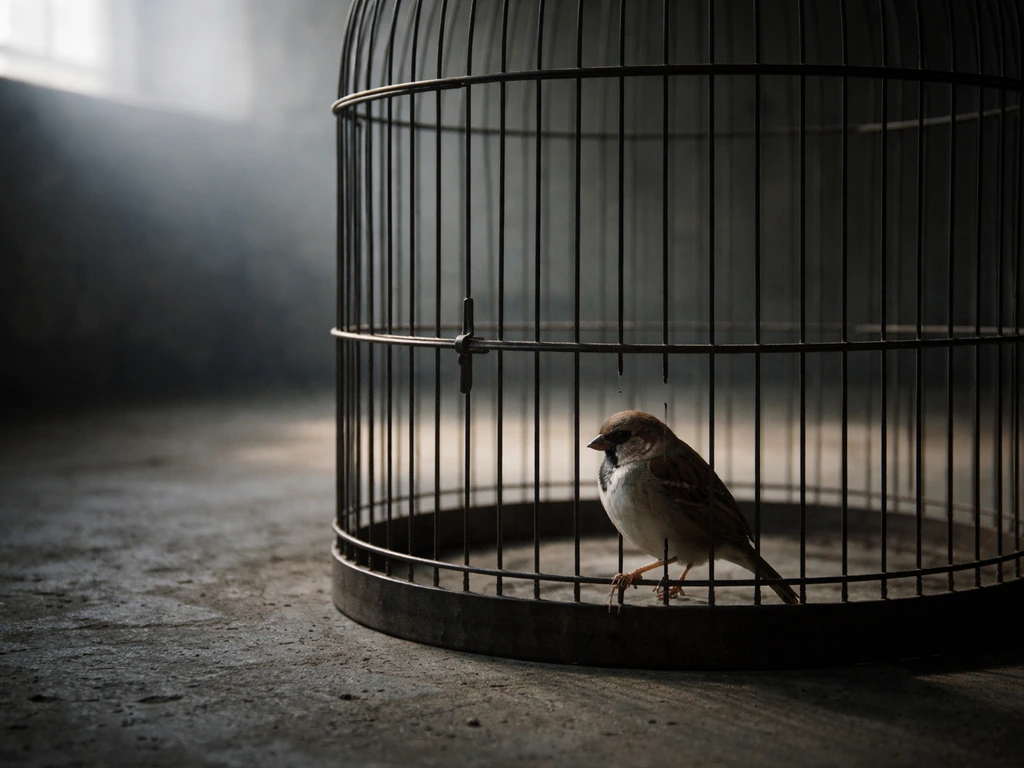
At its most direct, 'prison bird' is a variant of 'jailbird' or 'gaolbird,' all of which belong to the same slang family. Green's Dictionary of Slang explicitly lists 'prison-bird' alongside 'gaolbird,' 'gaol rat,' and 'jail rat' as recognized variant forms of the same term. A 1628 citation from Massinger reads 'I sent the prison-bird this morning for em,' using the phrase exactly as you would use 'jailbird' today. The core meaning is: a person who is, or has been, in prison, especially someone with a pattern of ending up there. Japanese dictionaries translate 'prisonbird' as 'prisoner, habitual offender,' which confirms this reading travels across languages and cultures. Kotobank’s Japanese dictionary entry for prison bird/prisonbird defines it as 囚人;常習犯,ごろつき (prisoner; habitual offender, go-between/rabble-rogue) Japanese dictionaries translate 'prisonbird' as 'prisoner, habitual offender,'. So if you see 'prison bird' used as a noun to describe a person, start there.
Literal vs figurative meanings
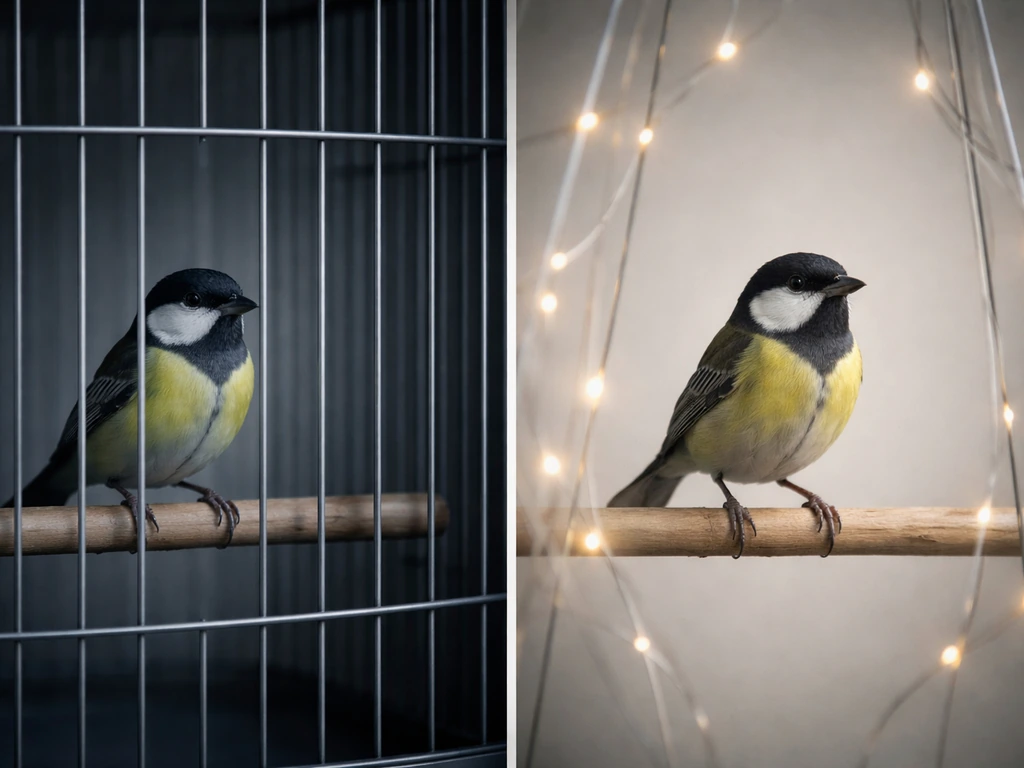
The literal meaning is social labeling: calling someone a prison bird is calling them a convict or recidivist. It is informal, slightly old-fashioned, and carries a stigma. Think of it the way you would use 'ex-con' in casual speech, except with the added image of a caged creature. That bird imagery is exactly what opens the door to the figurative meaning.
The figurative meaning treats the 'bird in prison' as a symbol for any person, soul, or mind held under constraint. Here the phrase stops being about criminal justice and starts being about the human experience of captivity, whether that captivity is a relationship, a system, an addiction, a mental state, or society itself. A poem titled 'Prison Bird' (published on PoemHunter by Neptune Barman in 2015) uses the framing of literal prison walls to explore longing for freedom in a way that has nothing to do with crime and everything to do with interior life. That is the figurative lane. The two lanes look the same from a distance but carry completely different passengers.
Where the phrase shows up
Songs and poems
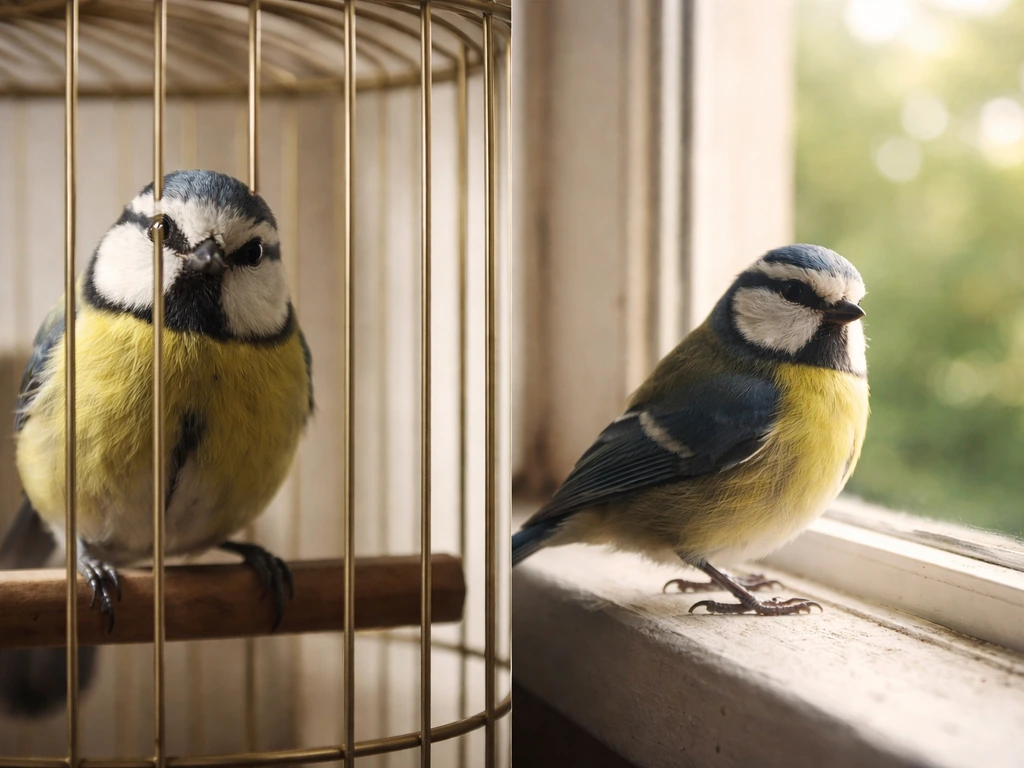
Bird-and-cage imagery is one of the most durable metaphors in lyric writing precisely because it works on both levels at once. When you encounter 'prison bird' in a song title or poem, it is almost certainly operating figuratively, using captivity to describe emotional or spiritual restriction. Maya Angelou's 'Caged Bird' (and Paul Laurence Dunbar's original 'Sympathy' before it) established this tradition so firmly that any 'caged' or 'prison' bird in a poem now carries that freight automatically. SparkNotes' analysis of 'Caged Bird' puts it plainly: the bird's body itself becomes a prison, which means the bird is both victim and metaphor at the same time.
Books and storytelling
Lynn Floyd Wright's book 'The Prison Bird' is a real example of the phrase used as a title, suggesting a narrative built around either an actual prisoner or the emotional weight of captivity. The Birdman of Alcatraz story (Robert Stroud, who studied and wrote about birds while imprisoned at Alcatraz) is a famous historical case where 'bird' and 'prison' collide in a completely literal but symbolically loaded way: a man using birds as his only connection to freedom and life while physically confined. That story resonates exactly because it plays both registers simultaneously.
Everyday slang
In casual speech, 'prison bird' is simply a synonym for 'jailbird. Reverso’s English dictionary flags “jailbird” as informal and old-fashioned, and it defines it as “a person who has been in prison” (also noting the sense of a habitual criminal) “jailbird” is informal and old-fashioned. ' It is informal and a little dated, the kind of thing you might hear in older British English or in writing that deliberately reaches for a more colorful expression than 'ex-con.' Reverso's dictionary flags 'jailbird' as informal and old-fashioned, which tells you that 'prison bird' in slang usage will often signal a speaker who is either from an older generation, using it humorously, or quoting an older text.
Spiritual and folk contexts
In spiritual and folk traditions, birds broadly represent the soul, the free spirit, or the life force. A bird in a cage or prison becomes a fallen or constrained soul. This symbolism appears in folk songs, religious poetry, and oral traditions across cultures. When 'prison bird' shows up in a spiritual context, it is almost never about crime: it is about the soul's longing to return to its natural state of freedom and light.
The deeper cultural symbolism behind the bird motif
The reason 'prison bird' carries so much emotional weight, even in its slang form, is that birds have always stood for freedom in Western and non-Western symbolism alike. Flight is the one thing humans cannot do naturally, so birds have been proxies for the human desire to transcend limits, whether those limits are gravity, mortality, social constraint, or mental suffering. When you put a bird in a prison, you are inverting its core symbolic identity. You are taking the freest creature and making it the least free. That inversion is jarring by design, and it is why the image sticks.
That same symbolism shows up in the related idiom 'bird in a cage with the door open,' which asks whether freedom that is technically available but psychologically blocked is really freedom at all. The 'prison bird' phrase sits in the same symbolic neighborhood. It is worth noting that expressions like 'a jailbird idiom meaning' and 'bird on a wire' are close relatives, all playing on the tension between birds as symbols of freedom and the physical or social constraints that ground them. Be aware that Victor Hugo's "like the bird" idea is often discussed as a metaphor for freedom and captivity, so the meaning depends heavily on context a jailbird idiom meaning. If you are also curious about the separate slang idea of "bird on a wire" and "rat in a pocket," you can use the same context-first approach to pin down the bird-and-rat meanings bird on a wire rat in a pocket meaning.
What it feels like: captivity, freedom, regret, and hope
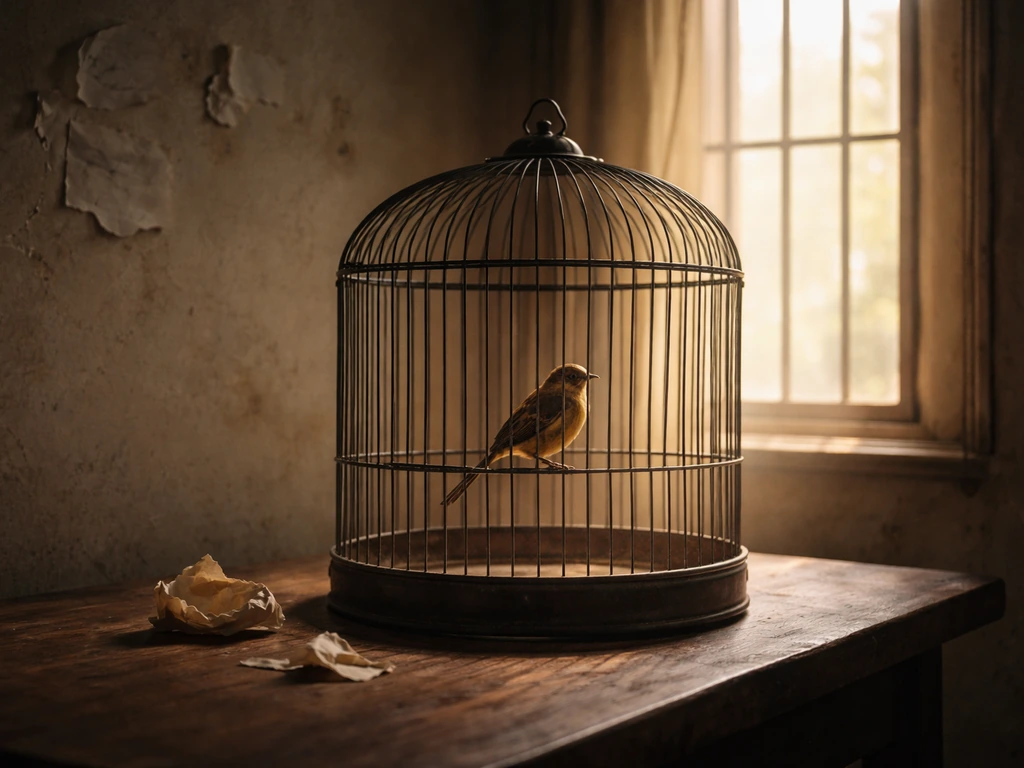
The emotional register of 'prison bird' is rarely neutral. Whether literal or figurative, the phrase almost always carries one or more of these feelings:
- Captivity and restriction: the sense of being held against one's will or natural direction
- Longing for freedom: the bird straining against its cage, which in figurative use translates to a person straining against a relationship, system, or internal limitation
- Regret and stigma: in the slang sense, being a 'prison bird' often comes with a social label that follows a person well after release, the way a bird that has been caged can seem changed even when freed
- Resilience: the Birdman of Alcatraz is a perfect example of a person finding life and meaning inside captivity, so 'prison bird' can also carry an undertone of unexpected survival and adaptation
- Hope and eventual release: any bird imprisoned implies the possibility of flight once freed, which is why the image works in redemptive and spiritual storytelling
These emotional layers are not mutually exclusive. A song that calls its narrator a 'prison bird' might be carrying all five at once. A slang use of the term in conversation is more likely to emphasize the stigma and identity dimensions. Understanding which emotions are foregrounded helps you understand what the speaker is really communicating.
How to figure out which meaning is intended
Context is everything here. Run through these questions when you encounter 'prison bird' and are unsure of the meaning:
- Is it being used as a noun to describe a specific person? If yes, lean toward the slang/jailbird meaning: someone is, or was, incarcerated.
- Is it appearing in a poem, song lyric, or literary title? If yes, lean toward the figurative meaning: captivity as metaphor for emotional or spiritual restriction.
- What is the tone? Casual and slightly judgmental usually signals slang. Mournful, searching, or lyrical usually signals metaphor.
- Is there a character, plot, or narrative attached? A named character described as a 'prison bird' in a story is likely an ex-convict. A nameless speaker in a poem called 'prison bird' is likely a metaphor.
- Are there spiritual or religious cues in the surrounding text? If so, the bird is almost certainly representing the soul under constraint.
- Who is the audience? Older British English contexts favor the slang reading. Contemporary literary or musical contexts favor the figurative reading.
The single biggest mistake readers make is assuming 'prison bird' is always a metaphor because 'bird' sounds poetic. It is not always poetic. Sometimes it is just a blunt label for someone who has been to prison, with exactly the stigma that implies. Do not over-read it in slang contexts.
Related phrases and close equivalents
| Phrase | Meaning | Register |
|---|---|---|
| Jailbird | A prisoner or ex-convict; habitual criminal | Informal slang, slightly old-fashioned |
| Gaolbird | UK/historical spelling variant of jailbird; same meaning | Old-fashioned, formal writing |
| Caged bird | A soul or person under captivity or oppression; also literal | Literary, poetic, spiritual |
| Bird on a wire | A person in a precarious or constrained position | Idiomatic, literary |
| Convict | A person convicted of a crime; currently or formerly imprisoned | Neutral to formal |
| Habitual offender | Someone who repeatedly commits crimes and is imprisoned | Legal, formal |
| Captive | Any being held against its will, literal or figurative | Broad, formal or literary |
The 'jailbird' idiom and 'prison bird' are essentially interchangeable in slang. Where 'caged bird' is more purely metaphorical and literary (especially after Angelou), 'prison bird' sits in between: it can operate as straight slang or as a symbolic image depending on context. That middle position is what makes it interesting and what makes it worth double-checking when you encounter it.
How to use or respond to 'prison bird' correctly
If someone uses 'prison bird' to describe a person in casual conversation, treat it as you would 'jailbird': they are saying that person has been to prison. Responding to it involves understanding the context is likely criminal history, stigma, or identity. If someone uses the phrase in a creative or reflective way (in a poem they wrote, a song they are recommending, or a piece of writing), engage with it as the metaphor it is: ask what kind of captivity or constraint they are exploring.
If you want to use the phrase yourself, be clear about which register you are working in. Using 'prison bird' as slang for a person is blunt and carries a slight stigma, so be intentional if that is your goal. Using it as a metaphor in writing or speech (as in 'she felt like a prison bird, restless and watched') is well within the established literary tradition and will land clearly for most readers. If you are looking for the speak now bird cage meaning, treat the imagery as a clue to whether the reference is literal incarceration or metaphorical captivity. Avoid mixing the two without signaling which you mean, since the gap between 'calling someone a criminal' and 'describing a feeling of being trapped' is significant.
When paraphrasing 'prison bird' for someone else, the safest approach is to ask which sense is meant before you translate. If that is not possible, use the context clues above. In slang: paraphrase as 'someone who has been in prison' or 'a jailbird.' In literary or spiritual use: paraphrase as 'someone who feels trapped and longs for freedom,' which captures both the emotional weight and the bird symbolism without losing either.
FAQ
Is “prison bird” more offensive than “jailbird”?
It can be, depending on who uses it and how. “Prison bird” is less common and often feels more pointed because it adds vivid cage imagery, so in casual talk it may land as harsher than “jailbird,” especially if aimed at a real person. In a quoted or literary context, it is usually safer.
How can I tell if it is literal slang or metaphor in a sentence?
Check whether there are cues about crime, time served, charges, probation, or an actual person’s background. If the sentence instead mentions feelings like restlessness, longing, watching, spiritual captivity, or emotional constraint, it is likely metaphorical. Also watch for pronouns and agency, for example, “I felt like a prison bird” reads figurative, while “He’s a prison bird” reads literal.
Does “prison bird” only refer to prisoners in jail, or can it include former inmates?
It commonly covers both, similar to “jailbird.” If someone is described that way, they may be framed as currently incarcerated or as having a history that shapes how others judge them. Context like “just got out” or “after his release” usually clarifies which.
Can “prison bird” be used without negative judgment?
Yes, but it’s less typical in everyday slang. Literal use often carries stigma, while figurative use can be sympathetic, focusing on captivity, suffering, or yearning. If the surrounding tone is mournful, reflective, or forgiving, the speaker is more likely using the image emotionally rather than as an insult.
What if I see “prison bird” in a song title, poem, or quote, but the artist is also talking about incarceration?
It can be deliberately mixed. The phrase may work on both levels at once, the literal confinement feeding the metaphor, or vice versa. If the lyrics mention prison details (bars, guards, sentences), treat the title as anchored in literal imprisonment but still read for symbolic themes like trapped identity.
Is “prison bird” ever used as a general metaphor for being trapped, like in a job or relationship?
Yes. The metaphorical lane includes non-criminal captivity such as controlling relationships, addiction, mental health constraints, or oppressive social expectations. If the text lacks any crime references and focuses on emotions or systems, that generalized “trapped life” reading is likely.
Is it safe to use “prison bird” when I am not sure which meaning the writer intends?
Usually not. Because it can be either stigma-based slang or emotionally loaded symbolism, unclear usage can cause misunderstanding. If you must paraphrase, use a neutral version aligned to context, for example, “someone who has been to prison” for slang, or “someone who feels trapped and longs for freedom” for figurative use.
How should I respond if someone calls me (or someone else) a “prison bird” in conversation?
Treat it like “jailbird,” it is identifying someone’s criminal history and carrying stigma. If it’s directed at you, a direct clarification helps, for example, asking what they mean and whether they are referring to a specific past case. If it is unwanted, you may want to set a boundary, since it is not neutral language.
Are there close relatives or nearby expressions I might confuse with “prison bird”?
Yes. “Caged bird” tends to be more purely literary and freedom-focused, while “jailbird” is the common direct slang equivalent. Phrases that mix bird freedom imagery with “open door” or “on a wire” often shift the emphasis to psychological freedom, temptation, or constraints, so matching the exact imagery to the text usually prevents misreads.
What is the quickest context checklist to apply when I encounter the phrase?
Ask four things: (1) Is a person being labeled, or is an internal feeling being described? (2) Are there crime or incarceration markers (release, sentence, court, guards)? (3) Is the tone sympathetic, insulting, or poetic? (4) Is “bird” doing symbolic work (watching, longing, soul) or being used as blunt slang for someone with a prison past?
Next Article
Bird on a Wire Rat in a Pocket Meaning Explained
Decodes the idiom bird on a wire rat in a pocket, symbols and context to identify hidden danger or deception.