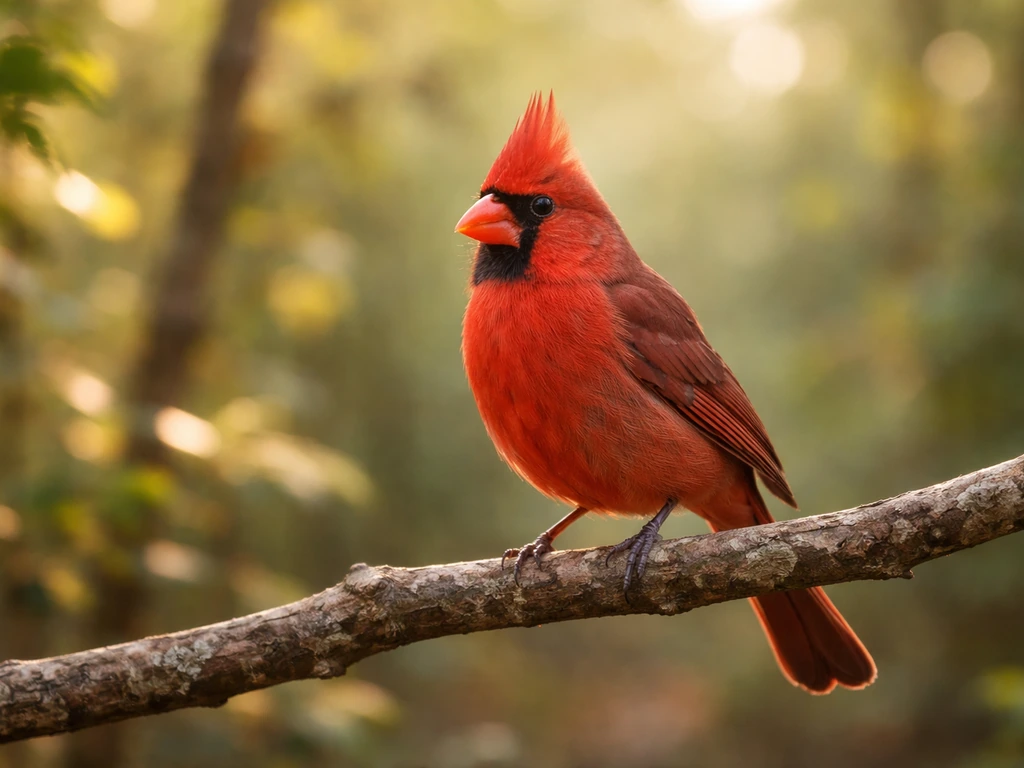
"Sweet bird of truth" is a poetic phrase that uses a bird as a symbol of honesty, revelation, or the moment when an uncomfortable truth finally gets spoken out loud. Most people encounter it as the title of a 1986 song by the British rock band The The, which drew its imagery from Tennessee Williams's play "Sweet Bird of Youth" and wrapped it around a sharp critique of American military power. The "bird" here is not a literal animal. It is a messenger figure, something that arrives, sings its piece, and cannot be silenced or ignored.
Sweet Bird of Truth Meaning and How to Interpret It

Marcus Winters
23 Jun 2026

What "sweet bird of truth" actually means (literal vs. figurative)

On the literal surface, the phrase strings together three familiar words: sweet, bird, truth. None of those words is unusual on its own. But taken together as a noun phrase, they create a symbolic figure, a bird that embodies or delivers truth. In the same way, “female bird meaning” depends on the specific bird and its cultural symbolism, which can shift across traditions. The word "sweet" does real work here. It is not saying that the truth itself is sweet or pleasant. It is describing the bird in the way you would call a songbird sweet, for its voice, its purity, or its inevitability. There is almost a bittersweet tension in calling a truth-telling figure "sweet," because the truths such figures carry are rarely easy to hear.
Figuratively, "sweet bird of truth" describes something or someone that exposes what has been hidden. It can mean a whistle-blower, a confession, a moment of sudden clarity, or any situation where reality cuts through deception. When someone invokes the phrase today, they are usually pointing at a moment of reckoning. Think of it as a poetic shorthand for: "the truth has arrived, and it has wings, and you cannot outrun it."
Where the phrase comes from
The clearest origin point for this exact phrase is The The, the project of British musician Matt Johnson. Their song "Sweet Bird of Truth" appeared on the 1986 album "Infected" (released on the Epic/CBS label, catalogue number TENSE2, with a first chart date recorded as 07/06/1986 by the Official Charts). The song is a blunt, unsettling piece about American military aggression, told from the perspective of a soldier or airman going down over the Middle East. Johnson wanted to release it as the album's first single in April 1986, but CBS refused to promote it because of its controversial lyrics. The timing was pointed: 1986 was exactly when the US bombed Libya. The title itself was the political and moral sting in the tail.
Johnson did not invent the "sweet bird" construction from scratch. blank" rel="noopener noreferrer">Wikipedia's entry on Tennessee Williams's play "Sweet Bird of Youth" notes that The The's song title is understood as a direct reference to that play. Williams's 1959 work is a tragedy about the destruction of youth, beauty, and innocence by corruption and time. The phrase "sweet bird" in Williams's title is a metaphor for youth itself, something precious, alive, and ultimately uncatchable. Johnson flipped the object from "youth" to "truth," which is a deliberate, pointed substitution. Where Williams mourned something lost, Johnson was pointing at something that refuses to stay buried.
It is also worth noting that the "bird of truth" as a symbolic motif is older than either Williams or Johnson. Folklore traditions across multiple cultures include a bird figure whose function is to reveal hidden or suppressed truth. Wikipedia's entry on "The Bird of Truth" documents variants of this folk tale archetype in which a bird literally speaks or sings what others refuse to say. Wikipedia’s “The blank" rel="noopener noreferrer">Bird of Truth” page discusses folklore variants in which a bird literally speaks or sings the hidden truths others refuse to say. That deep folkloric root is part of why the phrase lands so cleanly: the bird-as-truth-teller is a pattern humans have used for a very long time.
Who uses it and when
You will mostly encounter "sweet bird of truth" in one of three situations. The first is someone quoting or referencing The The's song, either because they are discussing the band, the album "Infected," or the political themes in the lyrics. The second is someone using it as a general rhetorical flourish in poetry, essays, or speeches to mean "the moment of honest reckoning. In similar bird-as-symbol language, the beautiful bird meaning points to a revelation that breaks through silence moment of honest reckoning. " The third is someone who encountered it through Tennessee Williams scholarship or a discussion of his play, tracing where the phrase migrated after it left his hands.
In casual conversation it sometimes appears when someone is calling out hypocrisy or celebrating the moment a lie finally collapses. "Here comes the sweet bird of truth" functions like a dramatic entrance cue. It signals: brace yourself, something real is about to be said. That usage is informal, a little theatrical, and often ironic. It is the kind of phrase a person reaches for when a plain sentence like "let me be honest" does not feel strong enough.
Why birds carry meaning in language and poetry

Birds turn up constantly in idioms, proverbs, and symbolic language, and there are real reasons for that. Birds occupy a space humans have always found compelling: they move between earth and sky, they appear and vanish, their songs carry across distances, and they seem to arrive as if from somewhere else entirely. In many cultural traditions birds are messengers, carrying information between realms (the living and the dead, the human and the divine, the known and the unknown). That messenger quality is exactly what makes a "bird of truth" feel right. If you are wondering about love bird meaning, the idea of a messenger bird can help explain why such phrases often point to revealing what matters most a "bird of truth". Truth, like a bird, cannot always be held. It arrives, says what it has to say, and you either listen or you let it fly past.
The voice quality of birds matters too. A bird's song is spontaneous, unfiltered, and often described as pure. That connects to the idea of speaking truth without artifice. When poets reach for a bird to represent honesty or revelation, they are drawing on this long association between birdsong and something that cannot dissemble. The "sweet" in "sweet bird" leans into the song quality: this is a truth that sings, that cannot help but be heard. This is closely related to how other bird-linked expressions work, including the idea of a "sweet bird" more broadly, where the sweetness refers to a kind of natural, uncorrupted voice rather than a pleasant emotion. If you also mean the expression in a broader sense, the happy bird meaning is usually about joy paired with a positive, honest message.
The "truth" theme: honesty, confession, and calling things out
The truth dimension of the phrase does a lot of the emotional weight. In The The's song, the "truth" being delivered is uncomfortable at best and damning at worst: the reality of military violence, of empire, of lives spent in service of causes that do not hold up under scrutiny. That is a specific kind of truth, the confessional or revelatory kind, where something that powerful people wanted kept quiet gets exposed anyway.
When people use the phrase more broadly, the truth theme tends to cluster around a few consistent ideas. Sometimes it is about personal honesty, an admission someone has been putting off. Sometimes it is about systemic hypocrisy being named out loud. Sometimes it is about a moment of clarity after a long period of self-deception. In all these cases, the bird framing adds something important: it makes the truth feel inevitable rather than chosen. The bird arrives on its own schedule. You did not summon it. It just came.
That sense of inevitability is different from simply "telling the truth." It implies that the truth was always going to emerge. The bird was always going to land. The phrase is doing something more fatalistic and more powerful than a basic call for honesty. It is saying: reality does not ask permission.
Phrases people confuse it with (and how they differ)
Because the phrase sits at the intersection of bird imagery, sweetness, and truth-telling, it is easy to mix it up with several related expressions. Here is how the main ones differ:
| Phrase | Where it comes from | What it means | Key difference |
|---|---|---|---|
| Sweet bird of truth | The The (1986), referencing Tennessee Williams | A messenger or moment of unavoidable honest reckoning | Emphasizes revelation and inevitability; truth that arrives on its own |
| Sweet Bird of Youth (Williams play) | Tennessee Williams, 1959 | Youth as a fleeting, precious, uncatchable thing | About loss of innocence, not truth-telling; "truth" is not the object |
| The bird of truth (folklore) | Widespread folk tale motif | A magical bird that reveals hidden secrets | Literal story device rather than a poetic phrase; older and narrative in form |
| A little bird told me | Common English idiom | I heard this from an unnamed or secret source | About secret information and unnamed sources, not moral revelation |
| Sing like a canary | Slang idiom | To confess or inform on others, especially under pressure | Focused on forced confession, often criminal contexts; no "sweetness" or inevitability |
The Tennessee Williams confusion is the most common one. People who know "Sweet Bird of Youth" sometimes assume "sweet bird of truth" is a direct line from the play. It is not. The The borrowed the structure and tone of Williams's title but replaced "youth" with "truth" as a deliberate creative act. If you are reading a quote and trying to source it, that distinction matters: the play is about mortality and corruption, while the song is about political dishonesty and military violence. Same bird, very different cage.
How to interpret the phrase whenever you see it quoted

When you come across "sweet bird of truth" in the wild, a quick checklist will get you to the right interpretation fast: If you are wondering about the sweet bird meaning, it usually points to a revelation that exposes what has been kept hidden.
- Check whether it appears as a song title or in a musical context. If yes, you are almost certainly in The The territory, and the meaning is political truth-telling and moral reckoning.
- Check whether it appears in literary criticism or drama discussion. If yes, it may be referring back through The The to Tennessee Williams, and the theme will be about corruption, innocence, and what cannot be recovered.
- Check whether it is used rhetorically in speech or writing without a direct citation. If yes, the speaker is using it as a poetic metaphor for a moment of honest revelation, likely calling out something that was previously hidden.
- Ask whether the context involves hypocrisy being exposed, a confession being made, or a lie collapsing. If yes, the "truth" theme is active and that is the core meaning.
- If none of those apply and the phrase feels more spiritual or folkloric, the speaker may be drawing on the older bird-of-truth motif from folk tradition, where the bird is a divine or magical truth-revealer rather than a political one.
The phrase is versatile enough to travel across those contexts, but the emotional core stays consistent: a bird, which is to say a voice or messenger that cannot lie, has arrived and is singing something you need to hear. Male bird meaning is most often used as shorthand for symbolism tied to masculinity, fertilization, or protection, depending on the culture and context bird, which is to say a voice or messenger. That is the meaning whether the source is a 1986 post-punk record, a Williams scholar, or someone reaching for a phrase that captures the moment when reality finally speaks up.
FAQ
How can I tell if someone means The The song versus just using the phrase generally?
Check the context keywords. Mentions of Matt Johnson, the album Infected, 1986, or military politics usually signal the song. If the speaker is talking about confession, accountability, hypocrisy, or a sudden revelation without any band or album details, they are almost certainly using it as general rhetorical shorthand.
Does the phrase literally mean the truth is “sweet” or pleasant?
No. The “sweet” typically describes the bird-voice or the messenger quality, not the emotional comfort of the truth itself. The intended feeling is often that truth arrives clearly and unavoidably, even when it is uncomfortable.
Is it accurate to say “sweet bird of truth” comes directly from Tennessee Williams’s play?
Only in a broad sense of borrowed imagery or structure. The body of work typically used for comparison is Williams’s Sweet Bird of Youth, but the specific substitution of “youth” with “truth” is treated as a deliberate reworking, not a direct line from the play’s text.
What’s the difference between “sweet bird of truth” and “bird of truth”?
“Bird of truth” is the core symbol, a messenger who reveals what was hidden. Adding “sweet” usually shifts the emphasis to how that revelation is delivered (a voice quality, a singable clarity, a purity of message), not to a different kind of truth.
If I see the phrase quoted in an essay or online post, how should I cite it safely?
Treat it as a phrase with layered sources unless the author specifies otherwise. One safe approach is to note it is associated with The The’s 1986 song and also connected to Tennessee Williams’s Sweet Bird of Youth through title structure, then avoid claiming it “originated” in either place without evidence.
Can the phrase be used ironically or sarcastically?
Yes. In everyday speech, it often works like a dramatic entrance cue, meaning “brace yourself, reality is about to land.” When the surrounding text suggests mockery, it can imply the truth is landing belatedly or after unnecessary denial.
What if the phrase shows up in a different culture or language, does the meaning change?
It can. The general “bird as messenger of suppressed truth” pattern is common, but the emotional coloring of “sweet” or the gendered symbolism of birds can vary by tradition. If the source text is culturally specific, interpret the bird symbolism through that tradition’s typical associations.
Is the phrase a call to honesty, or does it imply the truth will emerge on its own?
It leans toward inevitability. Instead of framing honesty as a choice you make, it frames truth as something that arrives regardless of permission, timing, or attempts to silence it.
What are common misreadings I should avoid when interpreting it?
Avoid assuming it means a pleasant truth, avoid treating it as a direct quote from Williams’s play, and avoid assuming every use refers to the 1986 song. When the author is discussing general revelation or accountability, it’s usually rhetorical rather than musical or biographical.
If I want to interpret it for my own writing, what should the “bird” represent?
Use “bird” to represent a messenger function, often a voice, a disclosure, or a moment of clarity that cuts through deception. Keeping that messenger idea consistent helps the metaphor work, even if your “truth” is personal (admission), social (hypocrisy exposed), or political (systemic wrongdoing named).
Next Article
Male Bird Meaning: Literal ID and Symbolic Uses Explained
Understand male bird meaning: identify male vs female birds and decode figurative symbolism in idioms, folklore, and sla