A 'clockwork bird' most commonly means one of three things: a metaphor for someone living a mechanical, controlled, or overly regimented life; a literal artificial bird (like the famous wind-up bird from Hans Christian Andersen's 'The Nightingale'); or a reference to the sci-fi horror audio drama 'Clockwork Bird' produced by Rusty Quill. Which meaning fits depends entirely on where you encountered the phrase, who said it, and whether it was capitalized like a title or used in a descriptive, poetic way.
Clockwork Bird Meaning: Symbolism and What It Could Signify

Marcus Winters
14 Jun 2026
Breaking down the phrase: what 'clockwork' and 'bird' each bring to the table
To understand 'clockwork bird,' you need to pull the two words apart first, because each one carries a distinct symbolic weight before they ever meet each other.
Clockwork, at its most literal, refers to a geared, spring-wound mechanism that produces repeating motion. A pocket watch. A wind-up toy. But in figurative language and literature, 'clockwork' almost always signals something deeper: imposed mechanical order, control, and the idea of a living thing being reduced to predictable, repeatable behavior. Think of how often fiction uses clockwork imagery to critique societies or characters that have lost their spontaneity and become obedient, regulated, and interchangeable. The phrase 'like clockwork' in everyday English already captures this: it means something happens with robotic, unfailing regularity.
Birds, on the other hand, carry almost the opposite symbolic energy. Across cultures and throughout history, birds have represented freedom and transcendence (they literally move through a dimension most creatures can't), spiritual connection (birds as messengers between worlds), voice and song (the bird that sings its truth), and transformation. When a bird appears in folklore or divination, it's rarely treated as random. Ancient Greek ornithomancy and Roman augury were entire interpretive systems built around reading omens from birds' flight, cries, and behavior. The bird was a channel for something beyond the ordinary.
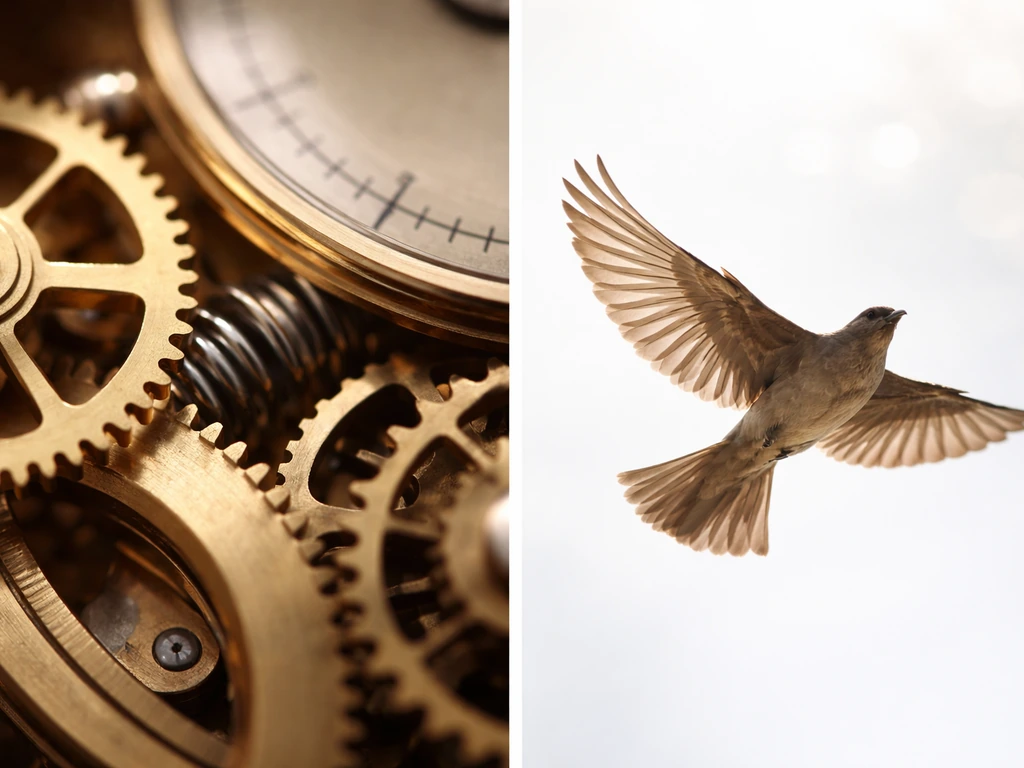
Put them together and you immediately feel the tension. Clockwork suggests constraint, repetition, and artificiality. Bird suggests freedom, spirit, and living voice. That tension is exactly what makes 'clockwork bird' such a rich phrase, and also why it can mean very different things depending on context.
The most common interpretations people actually mean
Based on how the phrase turns up in the wild, here are the interpretations you're most likely dealing with.
A metaphor for a controlled or automated life
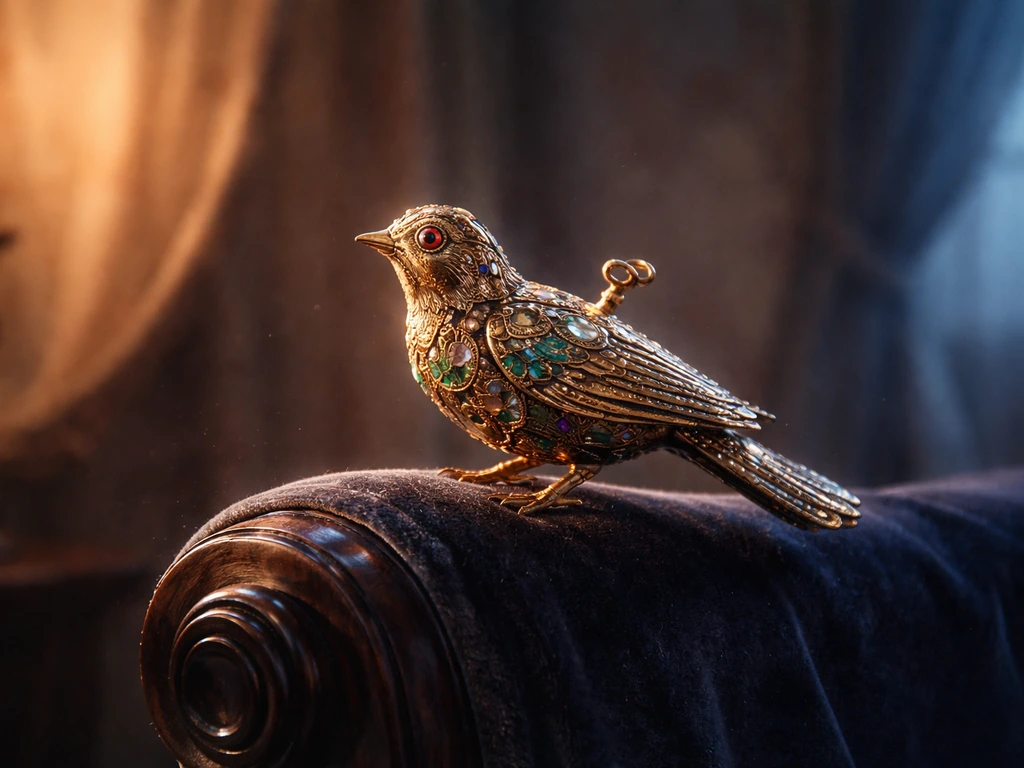
This is the most common figurative use. When someone calls a person, a routine, or even a society a 'clockwork bird,' they're usually pointing to something that should be free and alive but has been wound up, programmed, and set running on a track. The bird part says: this creature was meant to fly, to sing its own song, to be unpredictable and spiritual. The clockwork part says: but instead, it's been mechanized. It goes through the motions. It performs its song on schedule. There's no genuine freedom left. Literary critics use clockwork motifs this way constantly, framing mechanical imagery as a critique of control, obedience, and the suppression of individuality.
A literal artificial bird (especially in fairy tales)
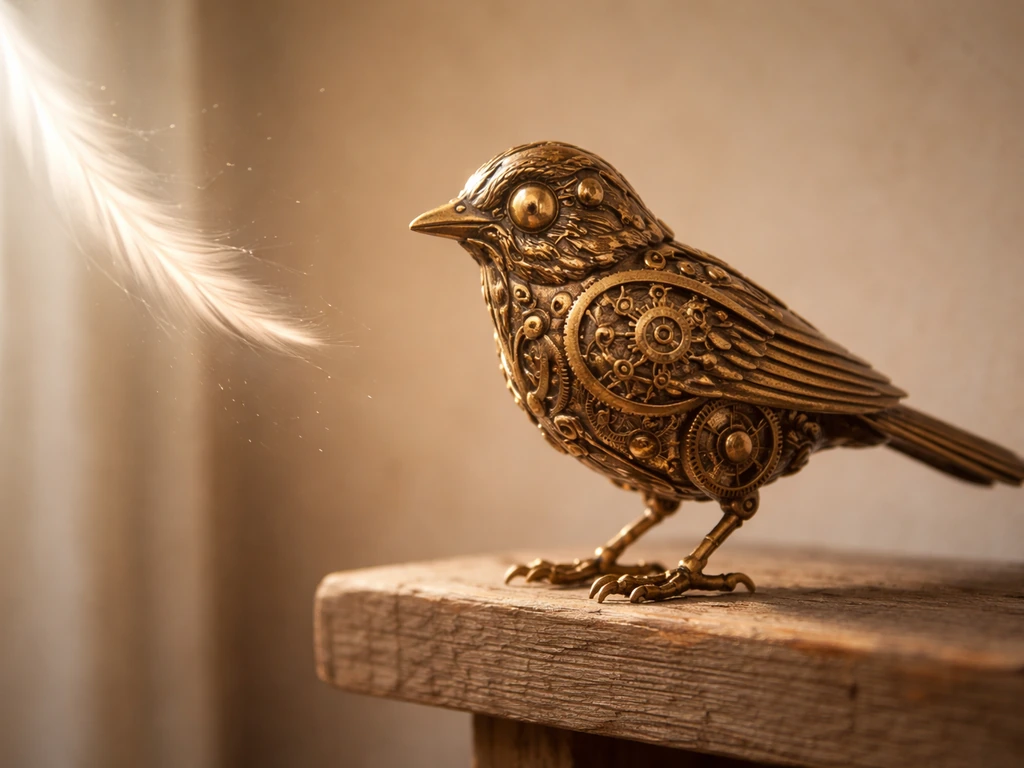
In Hans Christian Andersen's story 'The Nightingale,' a [clockwork bird is a central object: a beautiful mechanical bird made of jewels and metal, wound up with a key, that sings a perfectly regular song. ](https://etc. usf. edu/lit2go/pdf/passage/4795/the-yellow-fairy-book-025-the-nightingale.
pdf) The story explicitly contrasts it with the real nightingale, whose song is imperfect, emotional, and alive. The clockwork bird in that narrative is a literal artifact, not a metaphor, though the story obviously uses it to make a larger point about authenticity versus artificiality. If you encountered 'clockwork bird' in a fairy tale context, a children's story, or a retelling of 'The Nightingale,' this is almost certainly what's being referenced.
The same kind of literal artificial-bird construction appears in 'The Clockwork Three' by Matthew Kirby, where a character builds a clockwork bird in the epilogue.
The 'Clockwork Bird' audio drama
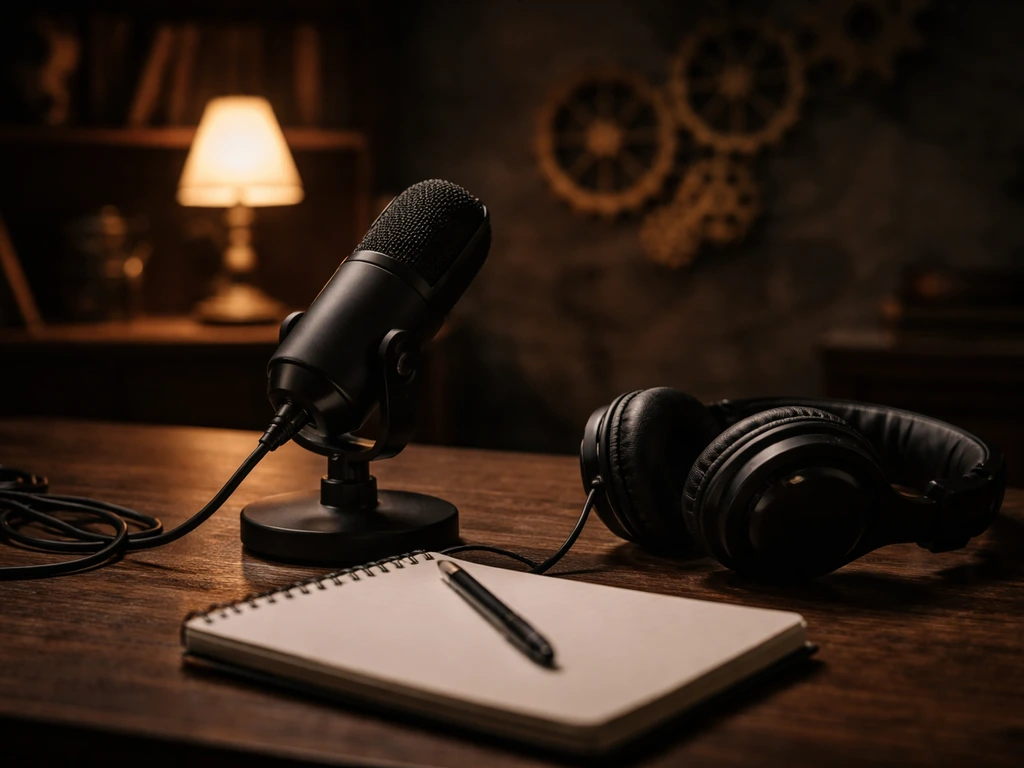
If you saw 'Clockwork Bird' capitalized, on a podcast platform, or in a discussion forum about audio dramas, you're most likely dealing with the Rusty Quill sci-fi horror production of the same name. It's a branded property: a specific show with a synopsis involving synthetic limbs, technology, and a disappearance. People discuss it on Reddit and podcast communities the way fans discuss any show. In that context, 'Clockwork Bird' is a title, not a symbol.
A spiritual omen or message
Some people arrive at 'clockwork bird' from a spiritual or omen-seeking angle, especially if they've been reading about bird symbolism and stumbled across the phrase. This is the least well-documented of the four meanings, but it's not without logic. If someone experienced something that felt like a bird-as-message (a bird behaving strangely, appearing at a significant moment, or recurring in dreams) and the experience also felt tied to themes of time, routine, or feeling trapped, they might reach for 'clockwork bird' as a description. That said, there's no established folkloric tradition that specifically names a 'clockwork bird' as a distinct omen type the way, say, a nightingale or a raven has specific omen traditions attached to it.
Context clues that tell you which meaning fits
The fastest way to crack the correct interpretation is to ask a few simple questions about where and how you saw the phrase.
| What you noticed | Most likely meaning |
|---|---|
| Capitalized ('Clockwork Bird'), on a podcast or media platform | The Rusty Quill audio drama — it's a title |
| In a fairy tale, children's story, or Andersen retelling | Literal artificial/mechanical wind-up bird |
| Used poetically about a person, lifestyle, or society | Metaphor for controlled, mechanical, freedom-suppressed life |
| In a spiritual or dream journal context, after an unusual bird encounter | Possible personal omen reading — needs further grounding |
| Lowercase, in casual Reddit/social media post about a strange sound or robot | Colloquial description of something that sounds like a mechanical bird |
| In literary criticism or a school text analysis | Symbolic clockwork motif — control, order, loss of individuality |
Pay attention to capitalization, platform, and tone. A capitalized proper noun in a media context is almost always a title. A lowercase phrase used in creative writing or conversation is almost always figurative. The literal fairy tale meaning usually comes with surrounding description of a physical object: metal, jewels, a key, winding up.
If you're reading it as an omen or spiritual message: how to do that responsibly
If the 'clockwork bird' you're trying to interpret felt like a message rather than a reference, here's how to think about it without going down an anxious rabbit hole.
The oldest and most credible framework for bird omens is ornithomancy, the ancient practice of divination from birds' flight, cries, and behavior. The Greeks and Romans took this seriously as a formalized system: augurs would interpret the direction of birds in flight, whether they were on the left or right, what species they were, and what sounds they made. The key thing about that tradition is that it was contextual, species-specific, and behavior-based.
Bird omens and messengers are widely documented across folklore traditions, but the meaning depends on species and context rather than a one-to-one universal interpretation species-specific, and behavior-based. It wasn't 'any bird means something. ' A crow flying left meant one thing; an eagle circling meant another.
The reading required specific knowledge and specific behavior.
So if you're applying an omen lens to your experience, ask yourself: was there an actual bird, and what was it doing? What species was it? Was its behavior genuinely unusual, or are you pattern-matching because you were already in a symbolic headspace? The 'clockwork' element in an omen reading would most naturally point to themes of time running out, cycles, routine being disrupted, or something mechanical in your life needing attention. But that reading only holds weight if the bird experience actually felt significant, not just because you later read about bird symbolism and wanted it to mean something.
One useful rule from responsible bird symbolism interpretation: don't assign a meaning before you've sat with the experience for a day or two. What felt urgent in the moment often clarifies into something much more ordinary. And if it still feels meaningful after reflection, let the meaning be personal and specific to your situation rather than pulling in a generic 'clockwork bird' interpretation from somewhere online.
Pop culture, literature, and literal references worth checking
If you suspect your 'clockwork bird' is a reference to something specific, here are the key sources to check against.
- Hans Christian Andersen's 'The Nightingale': The original and most famous literary clockwork bird. A jeweled mechanical bird that sings on command, contrasted with the real nightingale's authentic voice. If you're reading anything that adapts or references this story (including the BBC School Radio version), this is your source.
- The Clockwork Three by Matthew Kirby: A middle-grade novel where a clockwork bird appears as a crafted object in the epilogue. Minor reference but documented.
- Clockwork Bird (Rusty Quill): A sci-fi horror audio drama available on podcast platforms. If the phrase is capitalized and you found it in a media or fan community context, this is almost certainly what's being discussed.
- Haruki Murakami's 'The Wind-Up Bird Chronicle': This isn't 'clockwork bird' by name, but it's a close thematic neighbor worth knowing. The 'wind-up bird' in Murakami's novel is a mysterious bird whose cry signals ill fortune and serves as a deeply symbolic presence throughout the story. If you've been reading about wind-up bird meaning, that's a separate but adjacent concept.
- General clockwork imagery in steampunk fiction and fantasy: 'Clockwork bird' as a type of construct (mechanical birds that spy, carry messages, or serve as companions) appears widely in steampunk and fantasy settings without a single canonical source.
It's also worth noting that the nightingale specifically has centuries of symbolic weight as a bird of song, longing, and artistic truth, which is partly why Andersen chose it for his contrast with the clockwork bird. The nightingale bird meaning is often tied to song, longing, and artistic truth.
If you're researching related bird meanings, the nightingale and the nightjar are both worth exploring as birds with deep literary and folkloric traditions, and they sit in the same symbolic neighborhood as what makes the 'clockwork bird' contrast so powerful. If you want the nectar bird meaning specifically, it helps to compare how different sources describe the same kind of bird symbolism bird meanings.
Nightjar bird meaning is often discussed through that same lens, where species-specific traits and context shape what people think they are seeing. Nightjar bird meaning is usually approached through the same species-specific symbolism lens, where context shapes what people think they are seeing.
Practical next steps: confirm the source, then apply the meaning
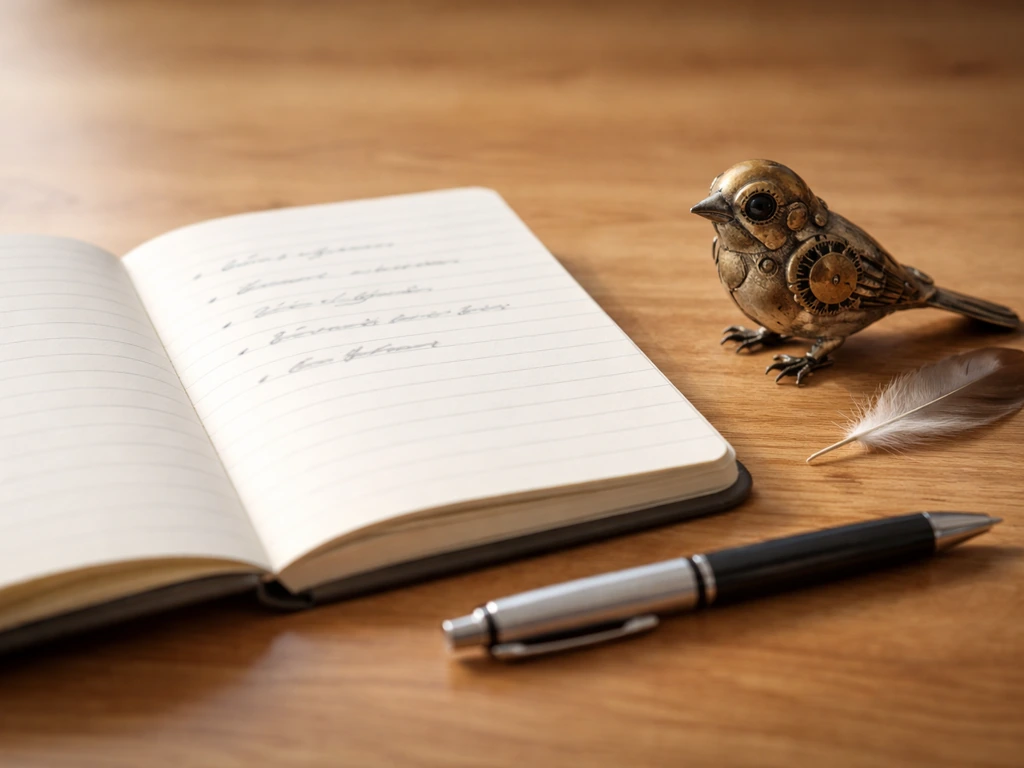
Here's a simple process for figuring out what 'clockwork bird' means in your specific situation and doing something useful with that answer. If you meant the exact phrase wind up bird meaning, the key is figuring out which context you saw it in, since the expression can point to either a metaphor or a literal toy from fiction clockwork bird. If you're specifically looking for nemesis bird meaning, the same context clues apply, but the phrase points to a particular kind of symbolic “enemy” or opposing force.
- Write down exactly where you saw or heard the phrase. Book, podcast title, social media post, dream, poem, someone's tattoo, a friend's comment about their job. The source narrows the interpretation dramatically.
- Check capitalization and framing. 'Clockwork Bird' as a proper noun in a media context means you're looking at a title. Look it up directly on podcast platforms or a search engine with the full capitalized name.
- If it was used figuratively (about a person, a life, a routine), ask what feeling it was meant to convey. Was the speaker criticizing something? Describing a loss of freedom? A sense of going through the motions? That's the controlled-life metaphor at work.
- If the source is a fairy tale or story involving a physical object that sings, look for Andersen's 'The Nightingale' first. The BBC School Radio transcript and Lit2Go both have the relevant passages if you want to read the exact original context.
- If you're hoping for a spiritual or omen meaning, ground it in the actual bird experience (if there was one). Look at species, behavior, and whether ornithomancy or augury traditions say anything about birds of that type behaving that way. Don't retrofit a 'clockwork' meaning onto a real bird encounter without that grounding.
- If nothing from the above matches, describe the context to someone who knows the source material well (a forum, a fan community, a literature teacher). Sometimes 'clockwork bird' is a one-off invention by a specific writer or creator, and the only way to know what they meant is to ask or look for their own explanation.
The phrase 'clockwork bird' is genuinely evocative precisely because it puts two opposing symbolic worlds in collision. When you understand what each half means and how they interact, the interpretation that fits your context usually becomes clear pretty quickly. Trust the specifics of where you found it, and don't reach for the most mystical explanation when a simpler one is right there.
FAQ
Is “clockwork bird meaning” usually metaphorical or could it be literal?
In most cases, yes, because the phrase is strongly associated with control and repetition as a critique. Still, you should treat it as literal only when you see cues like a physical object (wind-up key, metal parts, jewels) or you are clearly in a fairy-tale or artifact-focused retelling.
How can I tell if “Clockwork Bird” is a title versus a symbol?
Look for “Clockwork Bird” with initial caps, a synopsis, cast, or discussion about an audio drama. If it appears without caps inside an argument or poem about personality and control, it is more likely the figurative critique (a life that feels wound up, predictable, and deprived of freedom).
If I saw a bird after reading about clock symbolism, does that guarantee a specific omen?
Not automatically. Bird omens are usually species- and behavior-dependent, so if you cannot identify the bird, you should avoid drawing a specific prediction. A safer approach is to treat the experience as a prompt to reflect on routines, deadlines, or feeling “mechanized,” then see what becomes clearer after a few days.
What does the “clockwork” side usually imply in real-life situations?
The “clockwork” part can point to timing pressures, rigid schedules, or feeling like you are running on autopilot. To use it practically, ask what in your day or relationships feels most programmed, then identify one small change that restores choice (a different route, a new habit, or a conversation that breaks the pattern).
How do I separate a real meaningful sign from coincidence or confirmation bias?
In ornithomancy, context matters, so “significance” is not just how you felt, it is also what happened and whether it was unusual for you. If the bird was common in your environment and nothing specific stood out, the meaning may be personal rather than “fated.”
What should I do if I’m getting conflicting interpretations about clockwork bird meaning?
If you are unsure, postpone the conclusion. The article suggests waiting a day or two, which helps because symbolic urgency often fades, and your memory of details becomes more accurate. Write down what you observed immediately (time, location, behavior) before interpreting it.
When does the Hans Christian Andersen meaning fit best?
Yes. Andersen’s “The Nightingale” framing is distinctive because the clockwork bird is an artifact used to contrast authenticity versus perfect but artificial song. If your context involves singing, art, longing, or “truth” versus “performance,” that meaning has higher odds than the general “mechanized person” metaphor.
What is a common mistake people make when interpreting “clockwork bird”?
Common mistake: assuming every bird reference automatically equals “freedom” or “spiritual messages.” Here, the phrase’s power comes from tension, so the best match is often “freedom suppressed by control.” If your context is mostly spiritual without any time, routine, or control theme, the phrase may not be the right lens.
What if I can’t remember the bird species or what it did?
If you do not have the species or behavior details, you can still do a grounded interpretation by focusing on the “clockwork” themes (cycles, schedules, repetition). Treat any “bird message” as thematic reflection rather than a precise forecast, unless you can describe what the bird did.
How can I confirm whether I’m thinking of the Rusty Quill audio drama versus the generic symbolism?
If you are trying to identify whether it comes from Rusty Quill’s audio drama, check whether the phrase is used like branding (capitalized, referenced alongside plot details, or discussed in media communities). For everyday conversation or literature analysis, the lower-case figurative meaning is far more common.
Next Article
Nightjar Bird Meaning: Symbolism, Omens, Dreams, and Totem Use
Explore nightjar bird meaning: symbolism, omens, dreams, spiritual totem use, and how to interpret real sightings.