When people search for the nightjar bird's meaning, they're almost always trying to decode something: a strange call heard at dusk, an unexpected sighting, or a vivid dream. The short version is that nightjars have been symbols of mystery, liminality, and the boundary between worlds for centuries, across cultures ranging from rural England to indigenous North America. They sit at the edge of night, are almost impossible to see, and make a sound that can genuinely unsettle you if you don't know what it is. That combination has made them magnets for symbolic meaning, from protective spirit guides to omens of death, depending entirely on who you ask and where they're from.
Nightjar Bird Meaning: Symbolism, Omens, Dreams, and Totem Use

Marcus Winters
8 Jun 2026
What people usually mean when they say "nightjar"
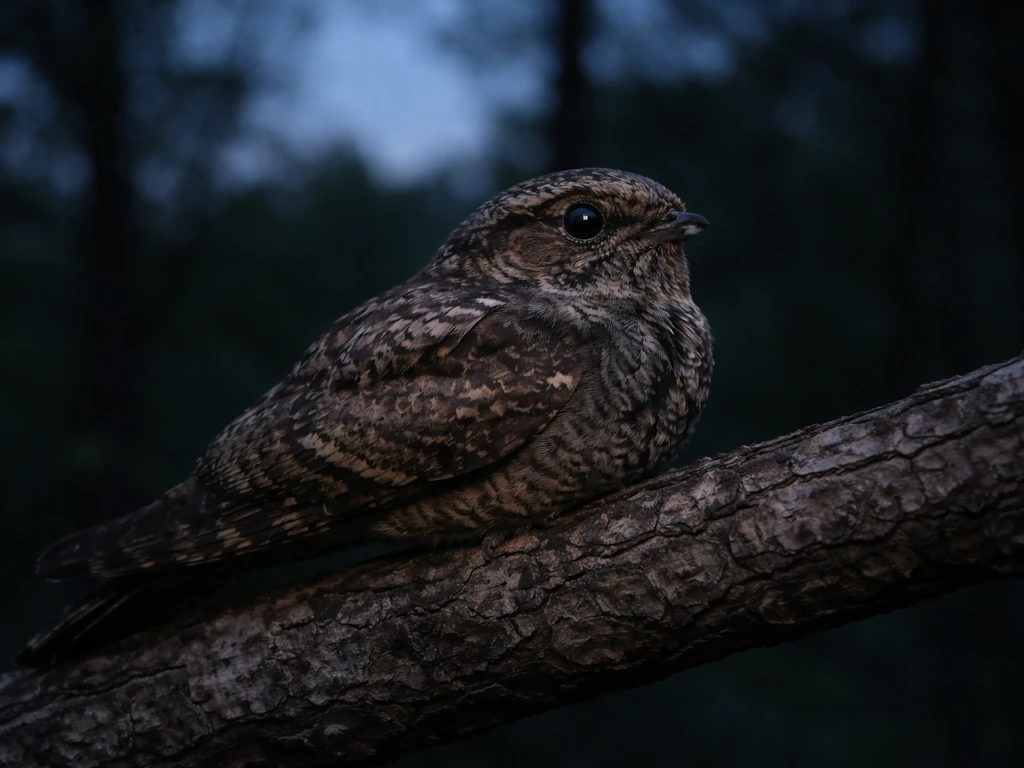
The nightjar is a real bird, and a fascinating one. It belongs to the family Caprimulgidae, a group of nocturnal and crepuscular birds found across most of the world. The European nightjar (Caprimulgus europaeus) is the one most people in Britain are referring to, a migratory summer visitor you're most likely to hear on southern heaths at dusk from May onward. North Americans tend to encounter nightjar-family birds through the whip-poor-will or chuck-will's-widow, which carry the same ecological personality: invisible by day, loud and active once the light fades.
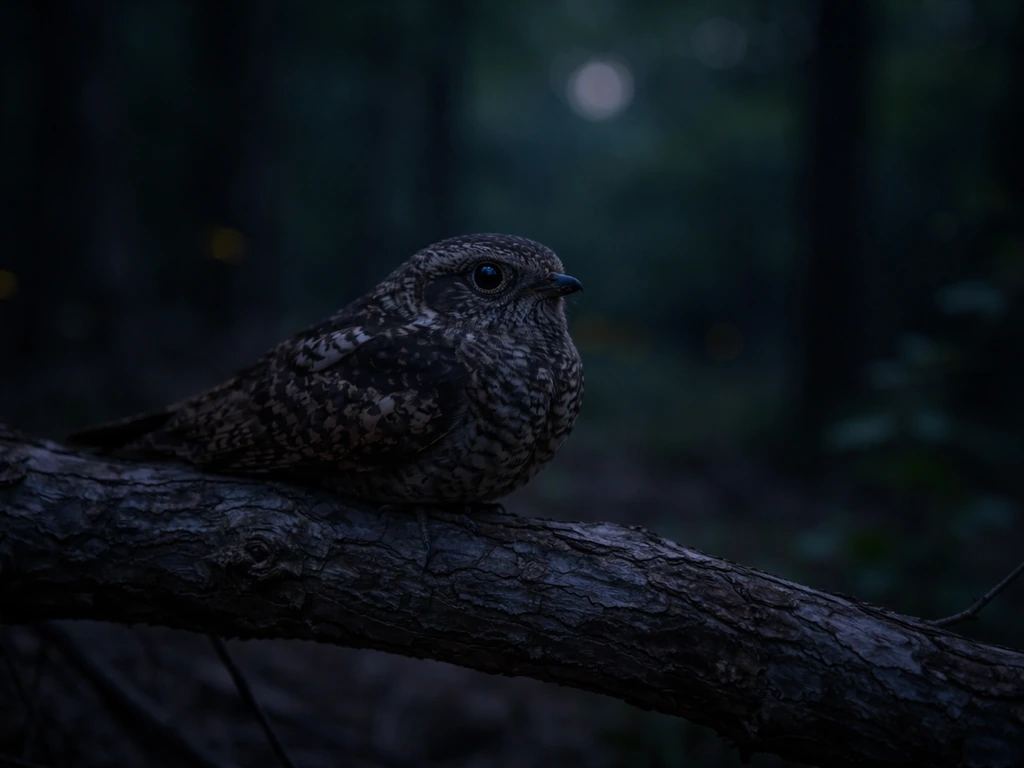
Physically, nightjars are built for the dark. They have enormous eyes for low-light vision, cryptic bark-like plumage that makes them virtually disappear when roosting on the ground or along a branch, long wings for silent aerial hunting, and very short bills that open into a wide gape for catching moths in flight. Audubon also describes whip-poor-wills and related nightjars as having cryptic plumage for hiding in the day and huge eyes for seeing in the dark, which helps explain their eerie, mysterious cultural treatment. You won't often see one. What you're far more likely to do is hear it: the European nightjar's call is a loud, mechanical churring sound that can go on for minutes without stopping, most often from males displaying at dusk. That name, "nightjar," first recorded in 1630, comes directly from this call, the "night" half for obvious reasons and the "jar" half because the churring sound literally jars the silence of an evening.
One important piece of context: the nightjar's scientific genus name, Caprimulgus, comes from the Latin for "goat milker" (capra meaning goat, mulgere meaning to milk). This traces directly to an ancient and completely false belief that nightjars would sneak into farms at night and suck milk from goats. This myth is the reason nightjars are also called "goatsuckers" in many languages. It matters for understanding the symbolism, because that reputation for sneaky, hidden, nocturnal behavior shaped how people in many traditions thought about the bird.
Nightjar bird meaning in folklore and symbolism
The core symbolic threads woven around nightjars are strikingly consistent across traditions, even when the specific story differs. They center on night, concealment, mystery, transition, and the uneasy space between the known and unknown world. A bird you cannot see but can clearly hear, one that operates at exactly the moment the day world becomes the night world, is almost irresistible as a symbol for liminality: the idea of existing at a threshold between two states.
In European folk tradition, one of the most vivid examples comes from a German common name for the European nightjar: "Todtenvögel," which translates directly to "death bird." That association, a nocturnal bird linked to death and the boundary of life, runs through many nightjar traditions. The goatsucker mythology added another layer: a creature that appears harmless by day but secretly visits livestock at night suggests something deceptive, something operating outside the normal order. That's the kind of reputation that generates folklore fast.
In North America, the whip-poor-will, a member of the same nightjar family, has one of the most documented omen traditions on the continent. Historically, hearing a whip-poor-will calling near or around your home was widely interpreted, especially in New England and Appalachian folklore, as a sign that death was coming for someone in the house. Washington Irving's fiction helped cement this image in the popular imagination. This belief is understood to be connected to earlier Native American folk beliefs about the same birds, though the exact Indigenous traditions vary by nation and region.
Alongside the darker associations, nightjars also carry meanings connected to communication and hidden knowledge. A bird that is heard but rarely seen, that "speaks" through a repetitive, almost hypnotic call from total darkness, can easily become a symbol for messages from unseen realms, intuition, or the things we know without being able to explain them. This is the thread that modern spiritual and totem interpretations tend to pull on most.
Nightjar symbolism in dreams and omens
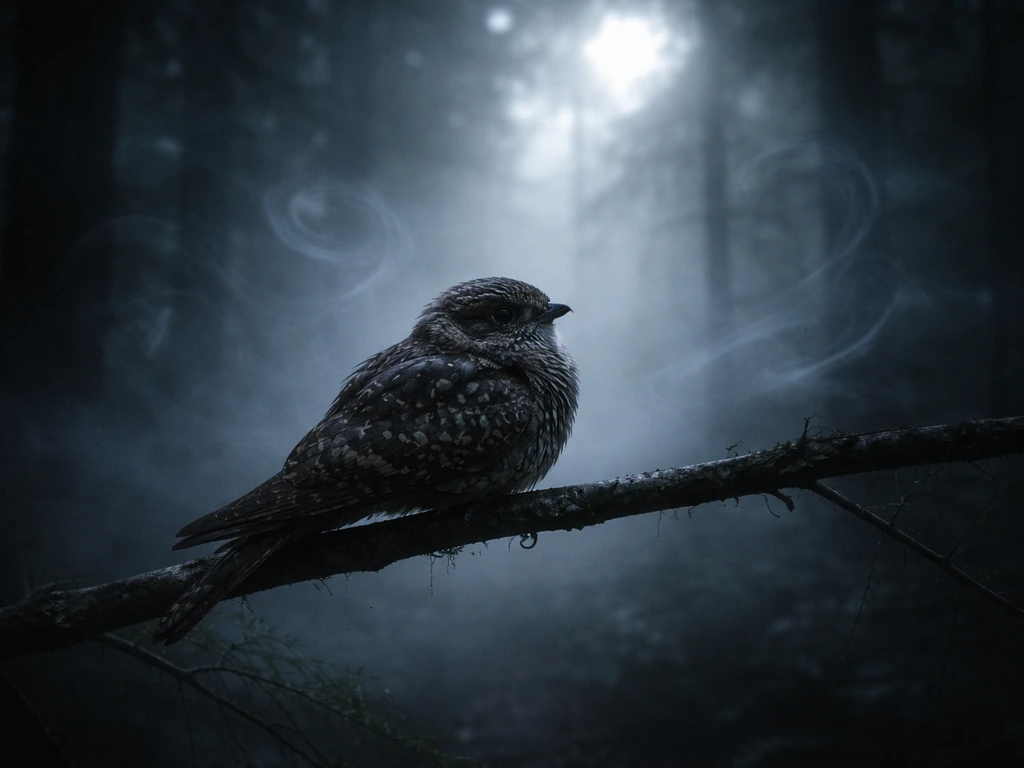
If you've dreamed about a nightjar and you're wondering what it means, the honest answer is: it depends on what the dream felt like and what's going on in your life right now. Dream symbolism is personal, not universal, and any dream interpretation site that hands you a confident one-sentence meaning is flattening something that deserves more nuance.
That said, the symbolic themes nightjars carry in waking folklore tend to show up in dream interpretation too. Dreaming of a nightjar is commonly associated with themes of transition, something in your life that's moving from one phase to another. The bird's invisibility in daylight but loud presence at night can symbolize things that are just below your conscious awareness, fears, desires, or truths you sense but haven't fully acknowledged. If the dream felt ominous, that may reflect anxiety about change or something unresolved. If it felt peaceful or even magical, it may reflect comfort with uncertainty or an intuitive sense of guidance.
The traditional omen interpretations, especially the death-omen association from European and North American folklore, are worth knowing about but shouldn't be taken literally. Historically, "death" in omen traditions often meant significant change or the ending of a chapter rather than literal death. If you heard a nightjar call in real life and felt unsettled, the most useful question to ask yourself isn't "is someone going to die?" but rather "what in my life feels like it's ending or needs to?" That reframing is how these old omen systems actually work when you use them thoughtfully.
Spiritual and animal totem interpretations of nightjars
Modern spiritual communities, particularly those working with animal guides, spirit animals, or totem frameworks, have developed a fairly consistent set of nightjar meanings. These typically emphasize the bird's connection to the liminal, to night wisdom, to clairvoyance and intuition, and to the ability to navigate what others cannot see. If nightjar appears as your totem or spirit animal in this framework, it's generally interpreted as a call to trust your instincts and your ability to move through uncertain or dark periods.
One thing worth flagging: the popularity of online animal-spirit content means nightjar symbolism is sometimes presented with a confident specificity it doesn't fully deserve. Sites like Astrology.com and similar platforms publish nightjar spiritual meanings as if they're established tradition, but many of these interpretations are relatively recent and eclectic, drawing from multiple unrelated cultural sources. That doesn't make them useless, but it does mean you should hold them loosely rather than treating them as authoritative.
In genuine shamanic and Indigenous traditions, using a bird as a personal totem or guide isn't as simple as reading a description online and deciding it resonates. Discussions in communities practicing these traditions often point out that dreaming frequently about an animal doesn't automatically make it your totem: that determination usually involves sustained relationship, lived experience, and sometimes guidance from an elder or practitioner. If you feel a genuine draw to nightjar as a spiritual symbol, that's worth exploring, but through personal reflection and respectful engagement with the traditions you're drawing from, rather than just collecting symbolic meanings.
- Nightjar as totem: often associated with intuition, night wisdom, and the ability to navigate uncertainty
- Nightjar as spirit guide: connected to clairvoyance, hidden truths, and liminal transitions
- Nightjar as power animal: sometimes interpreted as protection during vulnerable or dark periods in life
- Common themes across traditions: mystery, camouflage (hiding one's true self or gifts), and communication through non-obvious means
Nightjar in idioms, metaphors, and everyday language

The nightjar hasn't generated a rich library of idioms the way some birds have, but its name and its associations do show up in metaphorical language. "Nightjar" itself functions as a kind of ready-made metaphor: a jarring sound in the dark, something that disrupts the quiet without being visible. You'll occasionally see it used in literary or poetic contexts to describe anything that's unsettling, hidden, and heard rather than seen.
The goatsucker associations have had a longer cultural life in metaphor, particularly through the word's overlap with the mythological chupacabra. Merriam-Webster has noted that "chupacabra" may be related to the same goat-sucker vernacular root that gives nightjars their alternate name, which means the nightjar's old mythology has echoed forward into modern cryptid folklore, a genuinely strange cultural journey for a small, moth-eating bird.
In spiritually oriented writing and conversation today, "nightjar" functions as a metaphor for anything that operates at the threshold of perception: intuitions, dreams, signals we receive but can't fully explain. It sits in similar symbolic territory to the nightingale (famous for its night singing and emotional resonance) but with a distinctly more mysterious, slightly eerie quality rather than the nightingale's associations with beauty and longing. If you're looking for the nightingale bird meaning, it's often framed through the same idea of night communication and emotional resonance.
How nightjar meanings change by region and tradition
This is where it gets genuinely interesting and where a lot of online content oversimplifies. Nightjar symbolism isn't one tradition; it's a cluster of loosely related traditions that vary quite a bit depending on which continent and which nightjar species you're talking about.
| Region / Tradition | Species Involved | Primary Symbolic Association | Notable Belief or Myth |
|---|---|---|---|
| Britain and Northern Europe | European Nightjar (Caprimulgus europaeus) | Mystery, the uncanny, liminality | "Todtenvögel" (death bird) in German folk tradition; goatsucker milk-theft myth |
| New England and Appalachian U.S. | Whip-poor-will (Antrostomus vociferus) | Death omen, foreboding | A whip-poor-will calling near the house signals an approaching death |
| Broader North America (Indigenous traditions) | Various nightjar-family species | Spirit world messenger, boundary crossing | Varies significantly by nation; often connected to transitional states and communication with spirits |
| Modern Western spiritual communities | Nightjar generally (eclectic) | Intuition, night wisdom, liminal protection | Animal totem and spirit guide frameworks; largely contemporary synthesis |
One of the most common mistakes people make is treating the whip-poor-will's folklore as interchangeable with nightjar folklore generally. They're in the same family, yes, but the whip-poor-will has a highly specific omen tradition tied to its distinctive repeating call and its range in the eastern United States. Applying that death-omen meaning to a European nightjar sighting, or to any nightjar-family bird encountered anywhere, is a stretch that doesn't reflect how these traditions actually developed.
Another common confusion: people sometimes conflate nightjars with owls in symbolic terms, because both are nocturnal and both have strong death-omen associations in various cultures. But these are very different birds with distinct mythological histories. If what you actually saw or heard was an owl, the symbolic traditions around that bird are quite different and shouldn't be swapped in. Similarly, if you're exploring the symbolism of birds encountered at night more broadly, a clockwork or wind-up bird reference in literature or culture carries entirely different connotations rooted in mechanical metaphor rather than natural history. In literature and culture, a wind-up bird often symbolizes mechanical thinking, artificial nostalgia, or control, which is a different vibe than a nightjar's natural omen themes. If you meant a clockwork bird meaning, that mechanical metaphor usually points to ideas like control, repetition, or an unsettling sense of something operating on a loop clockwork or wind-up bird reference.
How to actually use this meaning: practical next steps
If you saw or heard a nightjar and felt pulled to understand what it might mean, here's how I'd suggest approaching it. Start with the ecology. A nightjar call at dusk in summer on a British heath, or a whip-poor-will repeating its name in an eastern American forest in late spring, is almost certainly just a bird doing exactly what it does. Nightjars are not rare in the habitats they favor; in the right place and season, hearing one is entirely normal. That doesn't make the experience any less striking, but it does mean you don't need to treat every encounter as a message.
If the encounter felt significant to you, that feeling is worth paying attention to, not because the bird is sending you a coded message, but because significant feelings about unexpected experiences often point toward something real in your own inner life. The question to sit with is: what was I thinking about or dealing with when this happened? Night, mystery, transition, and hidden things are the nightjar's symbolic territory. If you came here because you want the specific answer to the nemesis bird meaning, start by looking at the symbolism of night and hidden things first. Are any of those themes live for you right now?
- Note the context: where were you, what time of day or night, what were you doing or thinking just before the encounter?
- Write down the feeling the encounter gave you: unsettled, peaceful, curious, awed? The emotional quality is more useful for personal interpretation than any generic symbolic list.
- Identify which symbolic theme resonates most: transition, hidden truth, night wisdom, communication from the unseen, or simply mystery. Does any of those feel relevant to your life right now?
- If you dreamed about a nightjar, journal the whole dream, not just the bird. The setting, people, and feeling of the dream matter as much as the symbol.
- Hold the interpretation loosely. A single sighting or dream is a prompt for reflection, not a prophecy. Let it open a question rather than deliver an answer.
- If you're drawn to the totem or spirit animal framing, spend time with the actual ecological reality of nightjars too. Knowing how they really live, camouflaged, nocturnal, navigating by sound and low light, often grounds the symbolism in something genuinely meaningful rather than abstract.
The nightjar is a genuinely extraordinary creature, and the symbolism that cultures have attached to it over centuries isn't arbitrary. It lives at the edge of things: day and night, visible and invisible, silent and jarring. If that resonates with something in your life, let it. Just remember that the most useful thing any symbolic system can do is prompt you to reflect more honestly on your own experience, not hand you a predetermined answer about what the universe is trying to tell you.
FAQ
If I saw a nightjar once, does that automatically mean it is my personal totem or spirit guide?
Not automatically. In living traditions, totem status usually comes from sustained interest and repeated, meaningful experiences, often with guidance from someone knowledgeable. One vivid sighting is a prompt to reflect, not a final label. If you want to explore it, track what you were dealing with emotionally around each encounter, then decide whether a pattern emerges over time.
How do I tell whether I actually heard a nightjar or just mistook something else at dusk?
Use timing and sound structure. Nightjar-family birds typically vocalize at dusk and early night, with repetitive, mechanical-sounding calls that can run for minutes. Owls also call at night but usually have different pacing and call patterns, and insects can create constant noise that lacks a distinct repeating phrase. If you cannot describe the call rhythm clearly, treat the encounter as ecological first, symbolic second.
Does dreaming about a nightjar always predict death or an ending?
No. Even where “death bird” associations appear in folklore, they often refer to endings, major change, or a shift in a life chapter, not literal death. A useful approach is to ask what transition you are avoiding, whether a relationship, identity, job role, or belief system is shifting. If the dream felt purely ominous, consider anxiety about change as a more likely personal signal than prophecy.
What should I write down to get a better personal meaning from a nightjar dream?
Record three things: (1) the mood (ominous, peaceful, urgent), (2) what the nightjar did (approached, called repeatedly, disappeared), and (3) what else was happening in the dream. Then link it to your waking context, especially anything involving uncertainty, thresholds, or information you “sense” but have not acknowledged. This prevents forcing a generic one-sentence interpretation.
If I heard a nightjar call near my home, how can I avoid letting fear run the interpretation?
Separate “symbolic relevance” from “literal outcome.” Ask, what in my life feels like it is ending or entering a new phase, and what action would help me move through it? If fear spikes, focus on practical steps for the next 24 to 72 hours rather than trying to predict events. Folklore systems were historically meant to guide reflection, not to create panic.
Are nightjar meanings the same for the European nightjar versus the whip-poor-will?
They are related but not interchangeable. Some omen traditions are species-specific, especially the whip-poor-will’s well-documented repeating-call association in parts of eastern North America. If you apply a “death” framework from one region or species to a different nightjar encounter, you may be importing the wrong cultural story. Use location and which bird you likely heard as your first filter.
Is it accurate to swap nightjar symbolism with owl symbolism since both are nocturnal?
Usually not. Nocturnal birds share “night” vibes, but their cultural histories and symbolic roles differ. Owls often carry distinct meanings tied to wisdom, warning, or protection in many traditions, while nightjars are strongly tied to liminality and the eerie presence of something heard but seldom seen. If the evidence suggests an owl, use owl symbolism instead of forcing nightjar themes.
What if I want a spiritual interpretation, but I do not want to rely on online “one-size-fits-all” meanings?
Treat modern guides as hypotheses, not authorities. Pick one or two themes that match your real-life situation (transition, intuition, hidden truths), then test them against your feelings and decisions. If the interpretation helps you clarify your next move, keep it. If it feels scripted or causes dread, discard it.
How can I tell whether a “nightjar message” experience is meaningful or just an environmental event?
Let the ecology answer first. In the right habitat and season, nightjars can be a normal part of the soundscape. If you were expecting them (dusk, summer, suitable habitat), your encounter may be purely ecological. If it felt emotionally loaded, focus on what you were thinking about around the moment, since that is where symbolism tends to connect to the inner life.
What practical step should I take after an encounter if I want the meaning to be useful?
Turn symbolism into a reflective action. Choose one threshold in your life and do something small that supports movement through it, such as making a hard call, starting a conversation, setting a boundary, or writing down an unspoken truth. Nightjar symbolism works best as a prompt for honest reflection and transition, not as a predetermined verdict.
Next Article
Wind Up Bird Meaning: Origin, Figurative Use, Examples
Meaning of wind up bird and variant wind-up bird meaning, origin and figurative use with examples and quick response tip