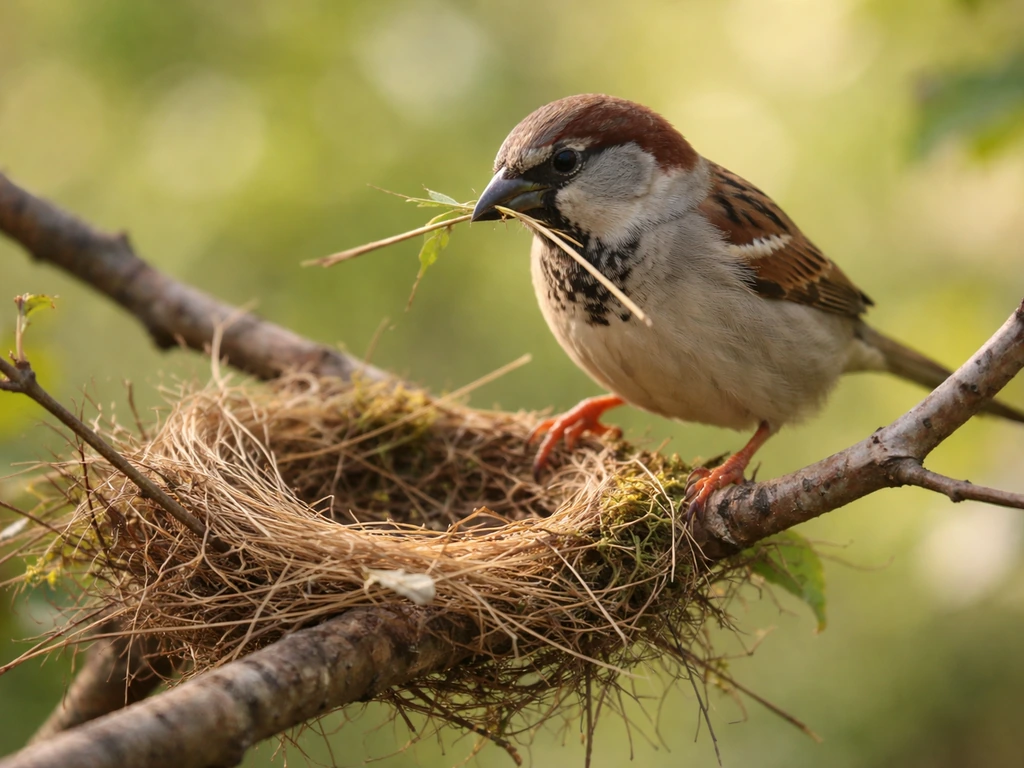
A hand reared bird is one that was raised by humans from a very early age, usually from hatching or shortly after, rather than being raised by its own parents. The person doing the rearing takes on every job the parent bird would normally do: keeping the chick warm, feeding it multiple times a day, and handling it regularly so it grows up seeing humans as safe and familiar. The term comes straight out of practical bird husbandry, and when you hear it in a pet shop, a breeder's listing, or a rescue context, it means one specific thing: this bird had significant human contact during its most formative developmental window. Juvenile bird meaning can vary by context, but it generally points to a young, developing bird rather than an adult.
What Does Hand-Reared Bird Mean and What to Expect

Marcus Winters
17 May 2026
Hand reared vs. parent raised: what the difference actually means
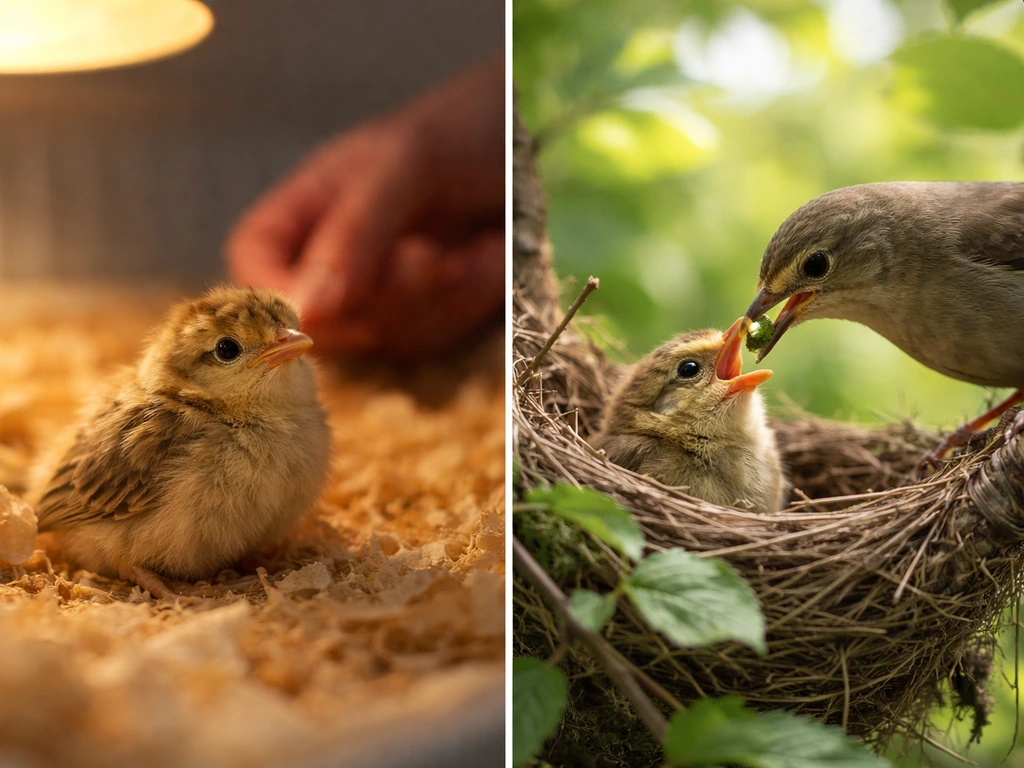
When a bird is parent raised, the chicks stay in the nest with their biological parents, who regulate warmth, provide food, and model normal bird social behavior. The chick learns how to be a bird from other birds. A hand reared bird skips all of that. From the very start, a human is the brooder, the feeder, and the social companion. That shift has real consequences, good and not so good, that last the bird's entire life.
It is worth separating "hand reared" from "tame" or "used to people." A parent-raised bird that has been handled frequently in a busy aviary might be relaxed around humans without being hand reared. Conversely, a bird labeled hand reared may have only received minimal contact after the intensive early feeding phase ended. The phrase specifically refers to the rearing method, not just the outcome. Think of it as a process description, not a personality guarantee. The term “nestling bird meaning” is often used to describe what a bird’s early life stage implies about its care and development.
This term overlaps with related concepts like imprinting and early socialization. An imprinted bird, for instance, may have been hand reared but taken it a step further, fully identifying humans as its own species. That creates a different, and often more complicated, set of behaviors. Hand rearing is the broader umbrella; imprinting is one possible outcome when the process goes very deep.
Why people hand rear birds in the first place
There are three main reasons someone ends up hand rearing a bird, and the reason matters a lot for how you interpret the claim.
- Pet trade and socialization: Breeders, especially of parrots, routinely pull chicks from the nest at a young age and hand feed them so the birds grow up comfortable with human handling. The idea is that early positive contact with people produces a bird that is easier to train, more relaxed in a home environment, and more bonded to its owner. The World Parrot Trust acknowledges both the perceived benefits of this practice and serious considerations that come with it.
- Rescue and rehabilitation: Wildlife rehabilitators hand rear orphaned or injured birds when the parents are dead or unable to care for them. In this context, the goal is usually the opposite of the pet trade scenario: rehabbers try to minimize human imprinting so the bird can eventually be released. Organizations working with corvids and raptors, for example, deliberately wean birds off human contact as soon as the birds can feed independently.
- Incubator hatching: Some eggs are artificially incubated for biosecurity, breeding program reasons, or because a hen abandoned them. When the chick hatches with no parent present, hand rearing begins by default from day one.
Understanding which scenario applies to your bird changes everything. A parrot hand reared by an experienced breeder for a companion role is a very different situation from a wild-caught corvid hand reared by a rehabber for release, or a finch whose egg was pulled for incubation and whose socialization was inconsistent after hatching.
What hand rearing actually looks like day to day
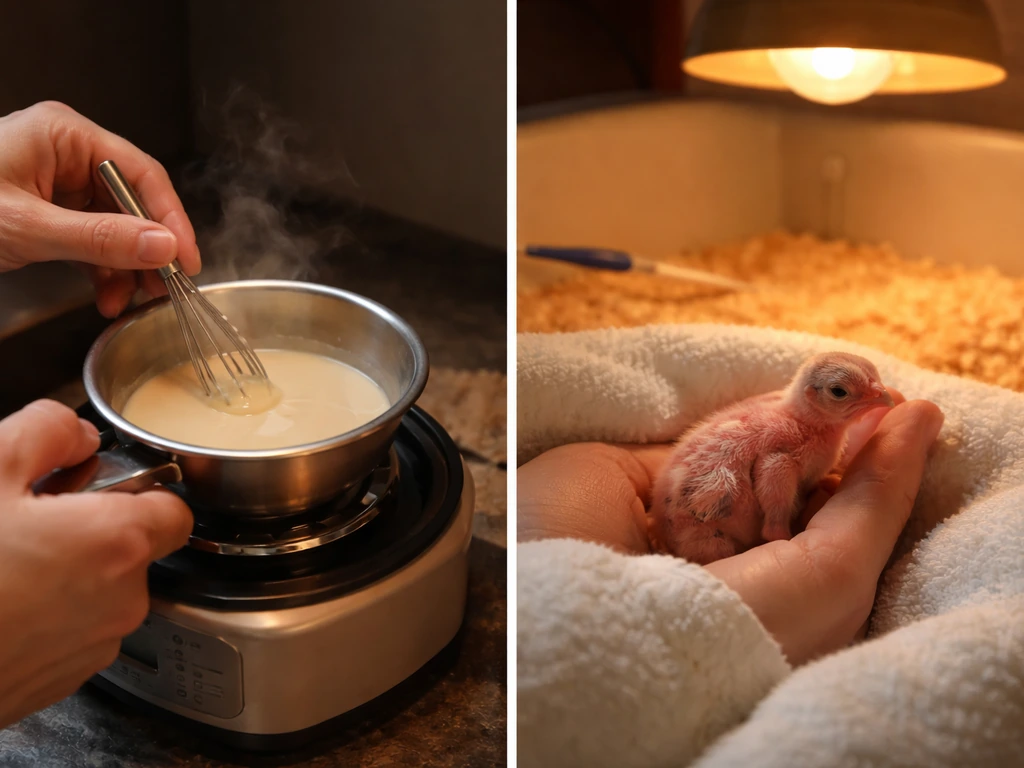
The practical reality of hand rearing is intensive and time-sensitive. For most altricial birds (species born helpless and featherless), the first weeks of life require constant attention.
Warmth and brooding
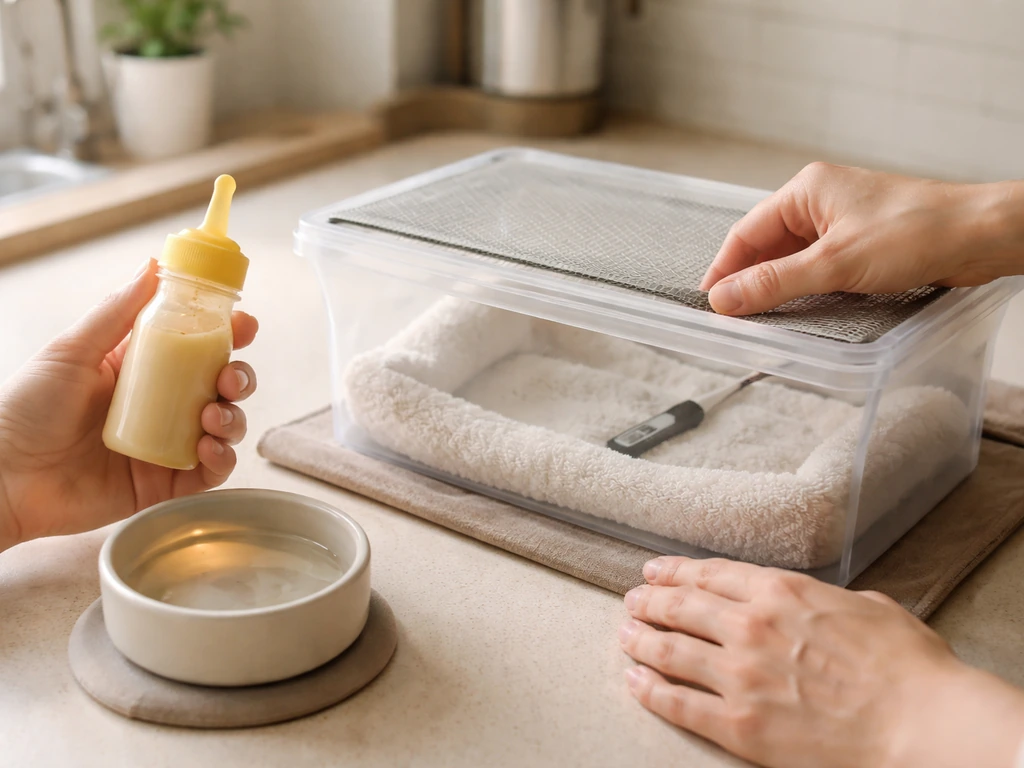
Newly hatched chicks cannot regulate their own body temperature. Newly hatched chicks cannot regulate their own body temperature, which is one part of what people mean when they talk about bird hatching meaning in everyday care. A brooder, which is essentially a controlled-temperature enclosure, replaces the warmth of the parent's body. Getting the temperature wrong, even briefly, can be fatal. As the chick grows feathers and develops thermoregulation, the brooder temperature is gradually reduced.
Feeding schedules
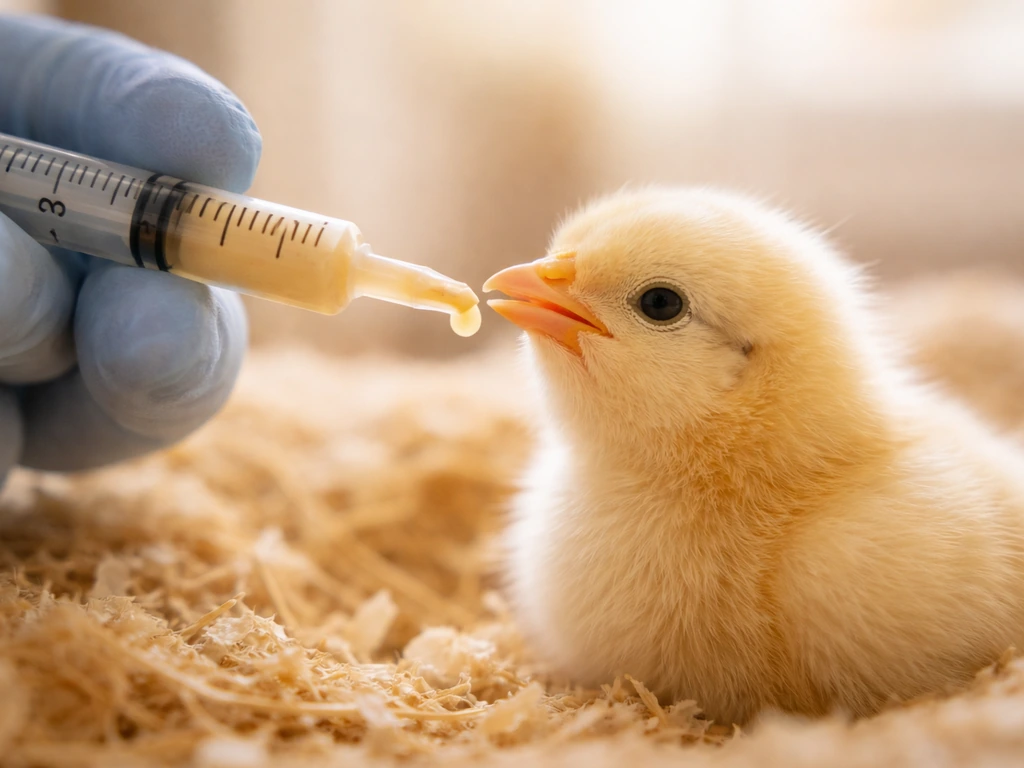
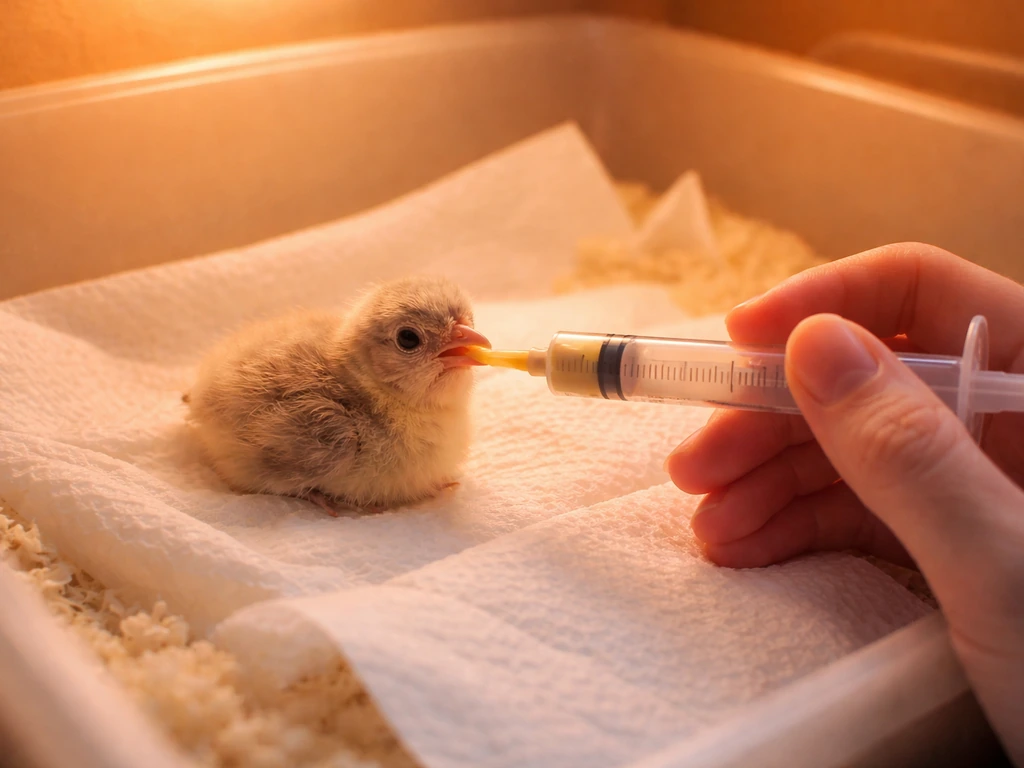
Very young chicks may need feeding every one to two hours. The feeder (human or syringe) provides a warm formula that mimics the nutritional profile of what a parent would regurgitate. A key risk here is temperature: formula served above 110 degrees Fahrenheit (43.3 degrees Celsius) can cause crop burns, which are serious thermal injuries to the crop tissue that can be life-threatening. As the chick grows, feeding frequency drops and the formula transitions toward soft, then solid foods in a process called weaning. Premature weaning is a real welfare concern; research indicates it can trigger lifelong increases in anxiety and aggression.
Handling and socialization
Alongside feeding, regular gentle handling teaches the bird that human hands are safe. This is the core of what produces a tame companion bird. In practice, good hand rearing means the bird is picked up, spoken to, and interacted with throughout every feeding session, not just fed and put back. The consistency of this contact during the sensitive developmental period is what distinguishes genuinely well-socialized hand reared birds from birds that were simply fed by humans.
What to expect from a hand reared bird
Done well, hand rearing produces a bird that is noticeably more comfortable with human interaction than a parent-raised counterpart. In practical terms, this usually means:
- Lower flight distance: the bird does not immediately flee when a hand approaches
- Faster step-up training response: the bird is already conditioned to associate hands with positive experiences
- Stronger individual bonding: the bird may actively seek out its primary human and show visible distress when separated
- Less fear of novel objects and handling for vet visits or grooming
- Greater vocalization directed at humans, especially in parrots
That bonding can also come with complications. A well-documented downside is over-attachment or what researchers call dependency behaviors: screaming when left alone, difficulty adjusting to new environments, and in some cases aggression during hormonal periods toward anyone other than the primary bonded person. Research from 2022 published in Animal Welfare found that hand-reared parrots are more likely to develop stereotypic behaviors compared to parent-reared birds. This does not mean hand rearing is inherently bad, but it does mean that the bird's social and environmental needs post-weaning are just as important as the rearing itself.
Training readiness is often very high in a well-hand-reared bird. Because the bird has no ingrained fear of hands, it moves through basic positive reinforcement training faster. This is part of why the pet trade values the label so strongly. But it is a starting point, not a finished product. Rehabber’s Den’s corvid guidance similarly emphasizes minimizing and gradually weaning off human contact once birds become independent, which supports “soft release” approaches that reduce dependence on humans But it is a starting point, not a finished product.. The bird still needs consistent, thoughtful training and socialization after it comes home with you.
How to verify whether a bird is truly hand reared
The phrase "hand reared" is used loosely, sometimes dishonestly. Here is how to check whether the claim holds up.
Questions to ask the seller or rehabber
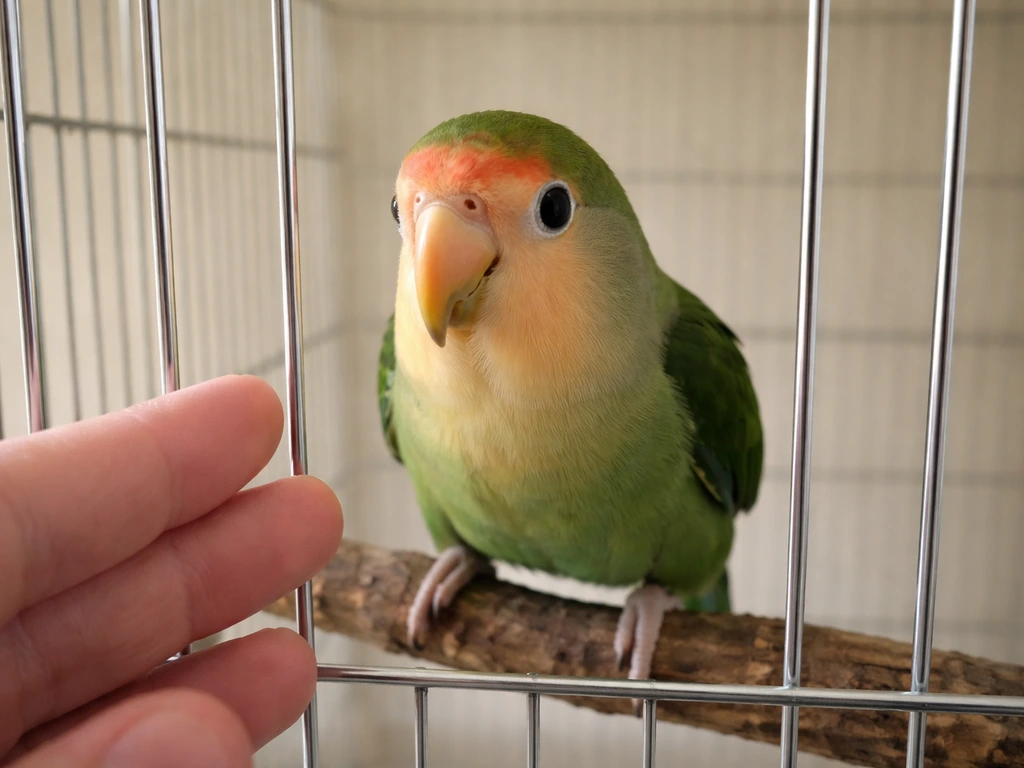
- At what age was the bird pulled from the nest or separated from its parents? Earlier removal (within the first couple of weeks for most parrots) suggests more intensive human imprinting.
- Who did the hand feeding, and how many people were involved? Inconsistent or minimal contact during the feeding phase produces less reliably socialized birds.
- Is the bird fully weaned, or are you being asked to complete weaning yourself? The Avian Welfare Coalition explicitly warns against purchasing unweaned birds with the promise that finishing the hand-feeding process yourself will guarantee a bond. This is a welfare and safety red flag.
- Can you observe the bird with the seller or rehabber before committing? A truly hand reared bird should step up calmly onto a stranger's hand with minimal coaxing.
Signs to look for yourself
- The bird approaches the front of the enclosure when a human walks up, rather than retreating
- It accepts handling without wing-flapping panic or biting as a first response
- It makes contact calls (vocalizations seeking attention) rather than alarm calls when you are near
- It shows a food-begging posture (crouching, wing-quivering) when approached, which is a retained juvenile behavior from being fed by hand
- It steps onto your hand without excessive hesitation, even with a stranger
Be cautious about birds described as "parent raised but handled daily" being marketed as equivalent to hand reared. They are not the same thing, even if the bird is calm. The rearing method and the handling history are different variables.
Risks and welfare considerations you should know about
Hand rearing carries genuine risks that are worth understanding before you commit to a bird or take on the process yourself.
| Risk | What it means in practice | How serious |
|---|---|---|
| Crop burn | Formula fed at too high a temperature damages crop tissue permanently | Life-threatening without vet care |
| Aspiration pneumonia | Formula inhaled into lungs during feeding; can cause immediate drowning or fatal infection | Often lethal |
| Crop stasis | Formula not digesting properly; crop stays full and ferments | Requires urgent veterinary treatment |
| Premature weaning | Bird weaned too early; linked to lifelong anxiety and aggression | Long-term behavioral impact |
| Human imprinting | Bird identifies as human rather than its own species; affects reproduction and social behavior | Significant for birds intended for breeding |
| Stereotypic behaviors | Repetitive abnormal behaviors such as feather plucking or pacing | Welfare concern; hard to reverse |
| Over-dependency | Severe separation anxiety and screaming when left alone | Manageable with training but common |
The Merck Veterinary Manual lists crop stasis and aspiration pneumonia among the top disadvantages of hand raising, and the risk is highest when inexperienced people attempt hand feeding without proper training. This is why wildlife rehabilitators and experienced breeders stress that hand rearing is a skilled job, not a bonding exercise that anyone can improvise.
There is also an ethical dimension worth acknowledging. The practice of pulling chicks from the nest early, while common in the companion parrot trade, has been identified by researchers and welfare organizations as inherently depriving the chick of normal social and sexual development. A 2022 Animal Welfare consensus paper states it plainly: hand rearing involves separating the parrot chick from its parents and deprives the young bird of contact that allows for normal social development. That does not make every hand reared bird a welfare failure, but it does mean buyers should think critically about where the bird came from and how responsibly it was raised, rather than treating the label as a simple quality stamp.
What to do next if you have (or are getting) a hand reared bird
Setting up the right environment
A hand reared bird coming home for the first time needs a space that feels safe without being isolating. The enclosure should be large enough for movement and placed where the bird can see household activity without being in a high-traffic, chaotic area. Familiar sounds (talking, calm music) help because the bird is already conditioned to human voices. Avoid immediately putting the bird in a room alone; the transition from the breeder's busy environment to a quiet house can trigger anxiety.
Weaning and dietary transition
If the bird is fully weaned, your job is to maintain a nutritionally complete diet appropriate for the species. Do not accept an unweaned bird unless you have hands-on guidance from an avian vet or experienced aviculturist who can walk you through the feeding protocol in person, not just via a printed sheet. The risks of getting formula temperature, consistency, or frequency wrong are severe.
If you are told that completing the weaning yourself will strengthen your bond, treat that as a sales pitch, not avian science. The AVIAN WELFARE COALITION ([AWC](https://www. avianwelfare. org/issues/unweaned.
htm)) warns that “unweaned” baby parrots are sometimes sold with claims that finishing hand-feeding and weaning yourself will “guarantee a hand-tame bird” and “ensure bonding,” despite welfare and safety concerns from improper handling or feeding.
Building the relationship without creating dependency
Spend consistent, calm time with the bird every day, but deliberately introduce it to other trusted people, novel objects, and short periods of independent play from the start. A hand reared bird that only ever interacts with one person can become dangerously over-bonded and distressed by any change in routine. Building resilience early saves a lot of behavioral problems later.
When to call an avian vet
Book a new-bird check with an avian vet within the first week or two of bringing a hand reared bird home, regardless of how healthy it looks. Hand reared birds can carry husbandry-related health issues that are not obvious on the surface. Ask the vet specifically about crop health, weight relative to species norms, and any behavioral concerns you have noticed. If the bird was recently weaned, a vet check is especially important. For ongoing behavioral issues like feather destructive behavior or severe screaming, ask for a referral to a certified parrot behavior consultant rather than trying to manage it alone.
Understanding what "hand reared" means in full, including the process, the promise, and the complications, puts you in a much stronger position as an owner. When you think about how a nest is built little by little, the meaning is that early rearing methods shape what the bird learns over time the process.
An heirloom bird meaning can also refer to a bird with a long lineage or heritage breeding, so it is worth clarifying the exact context behind the label you are seeing. The label is real and meaningful, but it is a starting point for a relationship, not a guarantee of an easy one.
If you are trying to interpret what the label might mean for a specific young bird, the “young bird meaning” can help you connect the rearing context to expected behavior.
FAQ
How can I tell if a “hand reared” label is real, or just marketing for a bird that is simply tame?
Look for whether the bird was hand-fed only briefly (for example, during a failed hatching) versus hand reared from hatching or very early life. A bird can be calm after early bottle-feeding but still have limited human habituation later, so ask the breeder or seller for the start date of hand-feeding and whether the chick was handled during every feeding session through early development.
Does “hand reared” always mean the bird is tame and bonded to humans?
No, being “used to people” does not automatically mean hand reared. A parent-raised chick that was frequently handled in a busy aviary can become relaxed around humans, while some hand reared birds may have had minimal contact after intensive early feeding ended. The label should describe the rearing method, not just the current temperament.
What should I do if the seller says the bird is hand reared but it seems too young or not fully weaned?
If the bird is not fully weaned, do not rely on self-guided feeding instructions. Ask for the exact current diet, feeding frequency schedule, and portion consistency, then confirm with an avian vet or experienced aviculturist that you can safely continue the protocol. A hand reared status does not remove the need for real, case-specific medical and husbandry guidance.
What questions about feeding and weaning should I ask before bringing home a hand reared bird?
Request the chick’s weaning timeline and weight trend (daily or weekly if available) and confirm the temperature range used during feeding. These details matter because crop injuries and other complications are often linked to how feeding and temperature were managed, not just whether hand rearing happened.
Are hand reared birds easier to train, and does that eliminate the need for working on independence?
Expect faster progress with positive reinforcement training, but still plan for ongoing socialization beyond basic handling. A well-socialized hand reared bird can still develop dependency behaviors if it is never taught independence, so build routines that include short, supervised alone time and gradually broaden who interacts with the bird.
What behavior should I watch for when evaluating whether a hand reared bird will adapt well to home life?
The “best” signs are not only friendliness, look for how the bird reacts to separation, unfamiliar people, and routine changes. If it becomes frantic immediately when you step away, stays persistently glued to one person, or shows aggression toward anyone else during hormone periods, that can be a dependency pattern that needs a structured plan.
What environmental factors make stereotypies or repetitive behaviors more likely in hand reared birds?
Yes. Hand reared birds may have a higher tendency toward repetitive behaviors like stereotypies, especially when their post-weaning environment does not meet their social and enrichment needs. If the bird will be alone for long periods, plan enrichment and human contact realistically before purchase or adoption.
Can a hand reared bird become worse with handling if I interact too much?
Hand reared birds can be more comfortable with hands, which sometimes leads owners to accidentally over-handle or over-reward. Keep training sessions short, end before the bird escalates, and prioritize consent-based interaction. If the bird escalates to biting when you stop, that is a training gap, not proof that more contact will help.
How do I help a hand reared bird avoid becoming over-dependent on one person?
If you want to prevent over-bonding, introduce multiple trusted people early, but do it gradually, not all at once. Also provide a safe, consistent routine and teach the bird that normal household events happen while it remains calm, then add short periods of independence so it learns to cope with separation.
Does “hand reared” mean the same thing if the bird is from a rescue or meant for release?
Be cautious with “hand reared” claims that come from unknown sources, especially in wildlife trade or improper rehab. For rehabbed or release-intended birds, ask for release goals, handling limits, and whether the bird has been prepared to avoid human reliance. The rearing purpose changes what the label means.
If problems start after I bring the bird home, what information should I track to get better help?
If you took the bird home and routines drift, behavioral issues can appear quickly, particularly during weaning transitions or hormonal periods. Keep a log of sleep schedule, feeding timing, interaction, and triggers, then share that with your avian vet or a qualified behavior consultant instead of guessing.
Next Article
Little by Little the Bird Makes Its Nest Meaning and Uses
Meaning of little by little the bird makes its nest: gradual progress, patience, and steady effort with examples and tip