"Daft bird" is a British and Scottish English phrase that means a silly, foolish, or mildly crazy person. It is almost always directed at a woman or girl, and whether it lands as playful teasing or a genuine insult depends entirely on who says it, how they say it, and the relationship between speaker and target. Most of the time you will hear it used with affection or light mockery, the equivalent of calling someone a "goofball" or saying "you're such an idiot" with a fond eye-roll. But it can sharpen into something more cutting depending on tone, so it is worth knowing the full picture.
Daft Bird Meaning: What It Says and How to Use It

Marcus Winters
11 Jun 2026
What "daft bird" means in everyday English
Break the phrase down and both words are doing clear work. "Daft" is an informal British adjective that Cambridge Dictionary defines as silly or foolish, and Oxford Learner's Dictionaries calls it "very silly" in its British English entry. Collins Dictionary also lists a stronger sense of "mentally ill" or "mad," and Merriam-Webster flags the word as chiefly British and informal, glossing it as "mad" alongside "foolish." So daft already carries a built-in range: at one end it means harmlessly goofy, at the other it tips toward genuinely unhinged. "Bird" here is not a reference to any actual feathered creature; it is British slang for a woman or girl, a usage that has been around since at least the 1300s and is still common across the UK today.
Put them together and the phrase reads as: "silly woman" or "foolish girl," depending on context. The closest American equivalents would be "you're such an airhead," "what a goofball," or in a harsher moment, "that woman is absolutely nuts." The phrase is not a compliment, but it is also not typically a severe attack. Think of it as sitting in the middle zone of British banter: dismissive enough to sting a little if you are on the receiving end, but rarely intended to cause serious offence when used between people who know each other.
Origin and etymology of the phrase
The word "daft" has a long history in English. Etymonline traces it back through Middle English, where it meant something like "simple" or "wanting in intelligence," and over time it absorbed the stronger sense of "crazy" or "mad." The exact origins are described as disputed or uncertain, but the word has been documented in English texts for centuries. Wiktionary's entry for daft includes citations from as far back as the 1600s, which tells you this is not new slang: it is an old, well-worn word that has simply stayed alive in British and Scottish dialects long after it faded from other varieties of English.
The "bird" component as slang for a woman is older than most people realise. It evolved partly from Old English and Middle English uses of "bird" (sometimes spelled "burd" or "byrd") to refer to a young woman or maiden, completely separate from the ornithological meaning. Over centuries this softened into everyday British slang. By the twentieth century, calling a woman a "bird" was standard informal speech across the UK, roughly equivalent to "girl" or "woman" in casual conversation, though it has always carried a slightly objectifying undertone that some people find grating.
Interestingly, the collocation "daft bird" also has a literal history in Scots poetry and dialect writing, where it referred to an actual foolish or wayward bird in nature. A section titled "The Daft Bird" appears in Violet Jacob's Scottish poetry collection published on Project Gutenberg, and a National Library of Scotland text contains the line "An' yon daft bird's aye singing... A National Library of Scotland-hosted PDF line in Scots uses “An' yon daft bird's aye singing...”, showing “daft bird” in historical Scots dialect writing a National Library of Scotland text contains the line "An' yon daft bird's aye singing...". " Both are describing a real bird behaving oddly. That literal use predates the modern slang sense, which is a neat reminder that bird idioms in English often start as literal observations before they become figurative shorthand for human behaviour.
How it's used in conversation

The phrase shows up in a few distinct registers, and reading which one is in play matters. Here are the main scenarios:
Affectionate teasing
This is probably the most common use. A friend does something scatterbrained and you say "oh, you daft bird" with a laugh. A parent says it to their daughter after she locks herself out of the car for the third time. In Pippa Goodhart's children's book Raven Boy, a character says "'Daft bird,'" to another in exactly this kind of low-stakes, eye-rolling way. The tone is warm, the intent is to tease rather than wound, and the person being called it would typically laugh along.
Mild exasperation
Someone at work makes a baffling decision, and a colleague says "honestly, that woman is a complete daft bird" to a third party. Here it is not affectionate, but it is still relatively low-level dismissal rather than a scorched-earth attack. The Wikipedia glossary notes that "don't be daft" is broadly equivalent to "don't be silly," which gives you the flavour: this register of the phrase is more eye-rolling frustration than genuine hostility.
Sharper insult
If the speaker is already angry, or if "daft" is combined with a stronger slur, the phrase escalates. VICE published dialogue where "daft" appears alongside explicit profanity in a clearly hostile context, illustrating how the same adjective can become part of a genuine attack when the surrounding words and emotional temperature shift. In those moments, "daft bird" is not teasing at all and should be read accordingly. The practical cue here: listen to the words around it and the tone of voice.
Who it describes, and when you're likely to hear it

Because "bird" is slang for a woman, "daft bird" almost exclusively describes women or girls. You would not typically hear it used for a man; for a man doing something foolish, a speaker would more likely reach for "daft sod," "daft lad," or just "daft bugger." This gendered framing is worth being aware of.
In terms of social setting, you are most likely to encounter this phrase in everyday British or Scottish conversation, in informal group chats, in TV dramas set in the north of England or Scotland, or in older British fiction. It is less common in formal speech, professional settings, or among younger speakers in larger UK cities, where it can come across as dated. Regional variation is real: in Scotland and parts of northern England, "daft" is still used very naturally in everyday speech; in London or the south, it sounds more deliberately old-fashioned or ironic.
Similar phrases and related slang
If you have come across "daft bird" and want to map it to neighbouring expressions, here is how the nearby slang landscape looks:
| Phrase | Meaning | Tone |
|---|---|---|
| Daft bird | Silly/foolish woman | Teasing to mildly insulting |
| Mad bird | Crazy or wild woman | Usually affectionate, sometimes insulting |
| Crazy bird | Same as mad bird, slightly less British | Neutral to playful |
| Daft bat | Silly older woman ("bat" = older woman in slang) | Often mocking, less affectionate |
| Daft cow | Stupid woman | More insulting than daft bird |
| Daft sod | Silly person (usually male) | Mild, often affectionate |
| Silly mare | Foolish woman | Similar register to daft bird |
| Nutter | Person acting crazy (gender-neutral) | Can be affectionate or insulting |
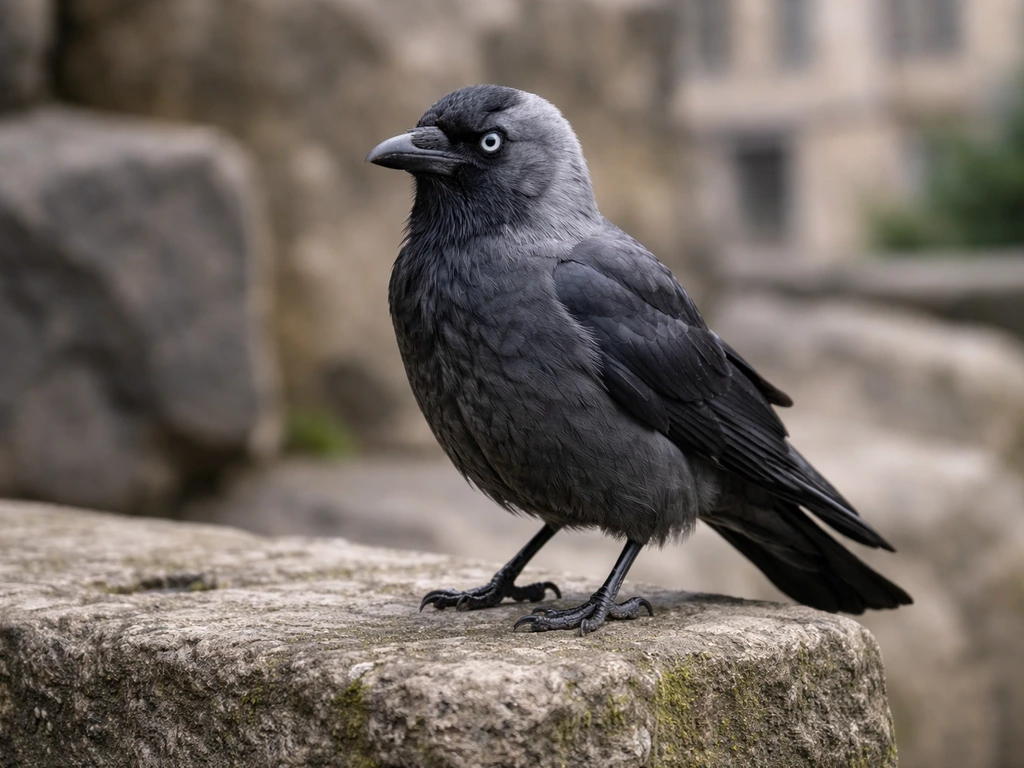
You can see that the register shifts meaningfully depending on the animal word chosen. "Bird" is relatively neutral as British slang goes, which is part of why "daft bird" sits toward the milder end of the scale compared to "daft cow" or expressions that use harsher animal comparisons. The choice of "bird" softens the blow slightly, even when the intent is dismissive. If someone is searching for related expressions involving bird slang, the term "daw" (a jackdaw, used historically to call someone a fool) feeds into the same tradition, and the phrase "bird dawg" connects to a completely different cultural context in American slang.
Why "bird" ends up in so many slang phrases
This site covers bird meanings and idioms extensively, and "daft bird" is actually a good entry point into understanding why bird language works the way it does in English. Because “bird” can be slang for a woman, “down meaning bird” can help explain why the full phrase often targets feminine behaviour rather than anything literal about birds. Birds have been used as figurative stand-ins for people for as long as English has existed, partly because birds are visually expressive creatures whose behaviour maps onto human behaviour in memorable ways: flighty, chattering, skittish, scatterbrained, free-spirited. When you call someone a "daft bird," you are unconsciously drawing on that centuries-old association between birds and people who are unpredictable or hard to pin down.
The slang use of "bird" for a woman specifically reinforces this: women were historically described using bird imagery to suggest lightness, delicacy, or (less charitably) flightiness and lack of seriousness. That is baked into the cultural history of the phrase, which is one reason some women today find being called a "bird" at all somewhat patronising, even when the intent is friendly. It is not a neutral animal choice in the way that, say, calling someone a "bear" might be. The bird-as-woman metaphor carries baggage.
Across the site's content on bird idioms and symbolism, you will find this pattern recurring: birds in language tend to represent freedom, foolishness, or femininity depending on the context. "Daft bird" leans into the foolishness side while the "bird = woman" slang layer gives it its specific target. Understanding both layers is what makes the phrase make sense. Understanding both layers is what makes the phrase make sense, and it is also the key to the dunnet bird meaning.
How to respond to it, and how to use it without causing offence

If someone calls you a "daft bird" and you are not sure how to take it, the most useful thing to do is check the surrounding context before reacting. The jackdaw bird meaning is sometimes discussed in similar idiom and symbolism contexts, so it's helpful to know whether you're dealing with literal observations or figurative ideas. Is the person smiling? Were they already laughing? Do you have the kind of relationship where teasing is normal? If yes to all three, it is almost certainly affectionate and the appropriate response is to roll your eyes, laugh back, or give it right back to them. If the delivery was cold, the surrounding conversation was hostile, or you genuinely do not know this person well, it is completely reasonable to respond with a straight-faced "I'd rather you not call me that" and leave it there.
If you want to use the phrase yourself, there are a few things worth being aware of. First, a Reddit discussion among UK speakers makes a useful point: you might say "daft bird" about someone who is annoying you, but most people would not say it directly to someone's face in a formal or unfamiliar context. It is the kind of thing said behind someone's back in mild frustration, or to someone's face in a relationship where banter is well-established. Second, calling any woman a "bird" at all is something a number of women find dated or mildly disrespectful, regardless of the adjective in front of it. The phrase is safer in established friendships than in new acquaintances.
If you want to express the same idea more safely, you have good alternatives. Calling someone silly, a goofball, a scatterbrain, or saying "you're being a bit daft" without the gendered "bird" component communicates the same mild foolishness without the baggage. "You're such a nutter" (British, gender-neutral) achieves a similar playful effect. These options let you banter warmly without risking the gendered undertone that "daft bird" carries for some listeners.
Quick guide: when daft bird is fine vs. when to rethink it
- Fine: said affectionately to a close female friend who just did something ditzy, with a smile and a laugh
- Fine: used in narration or casual storytelling about someone's silly behaviour
- Fine: received in a context where teasing and banter are clearly mutual
- Rethink: saying it to a woman you do not know well, especially at work
- Rethink: using it when you are genuinely angry, since the tone will make it land much harder
- Rethink: if the person you are talking about has already indicated they dislike being called a "bird"
- Rethink: in formal, professional, or public settings where casual British slang reads as unprofessional
The phrase itself is not offensive in the way that serious slurs are, but it is also not fully neutral. Treat it the way you would treat most informal British banter: it works well inside established relationships and casual settings, and it needs more care outside of them.
FAQ
Is “daft bird” rude, or is it mainly playful banter?
It depends on delivery and relationship, in many friendly contexts it lands like “you goofball” rather than a deep insult. If it is said with a laugh, a smile, and a close relationship (friends, partners, family), it is usually teasing. If it is said coldly, repeatedly, or during an argument, it is more likely meant to belittle.
Can you use “daft bird” in writing, like texting or social media?
Yes, but risk goes up without tone of voice. Add nonverbal cues (a clear joke context, a light apology if needed, or avoid it if the conversation is tense), because plain “daft bird” in a text thread can read sharper than the speaker intended. If you are not sure, use the safer alternatives like “you’re being daft” or “you silly goose” (more gender-neutral).
How should I respond if someone calls me a “daft bird” and I am not sure they mean it kindly?
Quick context check first, were you both laughing, and was it a close acquaintance moment. If the tone seemed neutral-to-warm, a light comeback or eye-roll usually fits. If the tone seemed off, you can shut it down politely with “I’d rather you didn’t call me that,” and then change the subject.
Is it ever appropriate to use “daft bird” toward a man or should you avoid it?
Generally avoid it toward men, because “bird” is commonly used as slang for a woman or girl, so using it for a man can feel odd or oddly gendered. For a man, people in the UK often reach for different terms like “daft lad” or just “daft” without attaching “bird.”
What if the person is angry, and someone says “daft bird” as part of a fight?
Assume it is not playful if the overall language is hostile, there are threats or profanity nearby, or the person is using it as a put-down rather than a joke. In those situations, it is smart to disengage, because escalating back can turn a mild insult into a continuing conflict.
Does “daft” alone mean the same thing as “daft bird”?
Not quite. “Daft” by itself means “silly” or “mad” depending on context, and it is more flexible and less gendered. “Daft bird” adds the woman/girl slang layer, plus a specific banter rhythm, so the full phrase can feel more personal or patronizing than “daft” alone.
Is it common to say “daft bird” directly to someone’s face?
Often it is used directly in established, teasing relationships, but many people would rather talk about someone indirectly to reduce the chance of offense. If you are new to someone, or you do not know if teasing is welcome, keep it off the direct address and use a neutral alternative like “you’re being silly” or “that was a bit daft.”
Are there alternatives that keep the humor but avoid the gendered “bird” undertone?
Yes. “You’re being a bit daft,” “you silly goose,” “you goofball,” or “you’re such a nutter” (in UK usage, often gender-neutral) can express mild foolishness without treating a woman as “bird.” These are typically safer with new acquaintances or mixed-gender groups.
How can I tell whether the speaker means “silly” or “crazy/unhinged”?
Look at what else is said and how the speaker frames the behavior. If it is about a small mistake or forgetfulness, it is usually the “silly” sense. If it is about perceived mental stability, persistent unreasonableness, or it is paired with stronger insults, then “daft” may be used closer to “mad,” and the phrase becomes more cutting.
Could “daft bird” be considered patronizing even when it is meant affectionately?
Yes. Because “bird” can carry an objectifying or dated undertone for some women, even friendly teasing can land as patronizing. If the person you are speaking with seems uncomfortable or asks you to stop, respect that and switch to non-gendered options like “silly” or “goofball.”
Next Article
Jackdaw Bird Meaning: Omens, Folklore, Spiritual Signs
Meaning of jackdaw bird in folklore and spiritual omens, plus sayings and practical ways to interpret signs today.