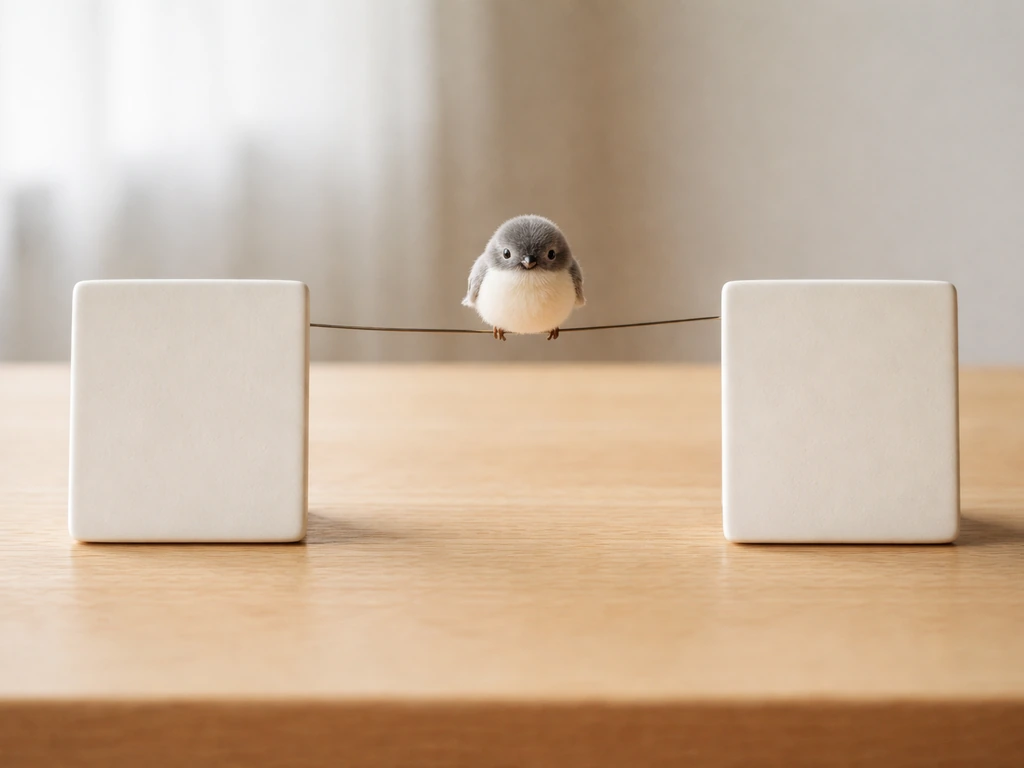
"Like a bird on a wire" means someone is in a tense, precarious position, hovering between two choices or states, unable to fully commit to moving in either direction. It captures that nervous, restless energy of a person who feels exposed, watched, or unsettled, yet is holding still because they don't quite know which way to go. Whether you see it written as "like a bird on a wire" or the shorter "a bird on the wire," both versions point to the same figurative meaning: fragile balance, vigilance, and the uneasy feeling of being poised on the edge of something.
Like a Bird on a Wire Meaning: Origin, Examples, and Usage

Marcus Winters
2 May 2026
Where the idiom comes from

The phrase is inseparable from Leonard Cohen's song "Bird on the Wire," recorded on September 26, 1968, and released in 1969 on his album Songs from a Room. The official LeonardCohen. com page for [Songs from a Room](https://www. leonardcohen.
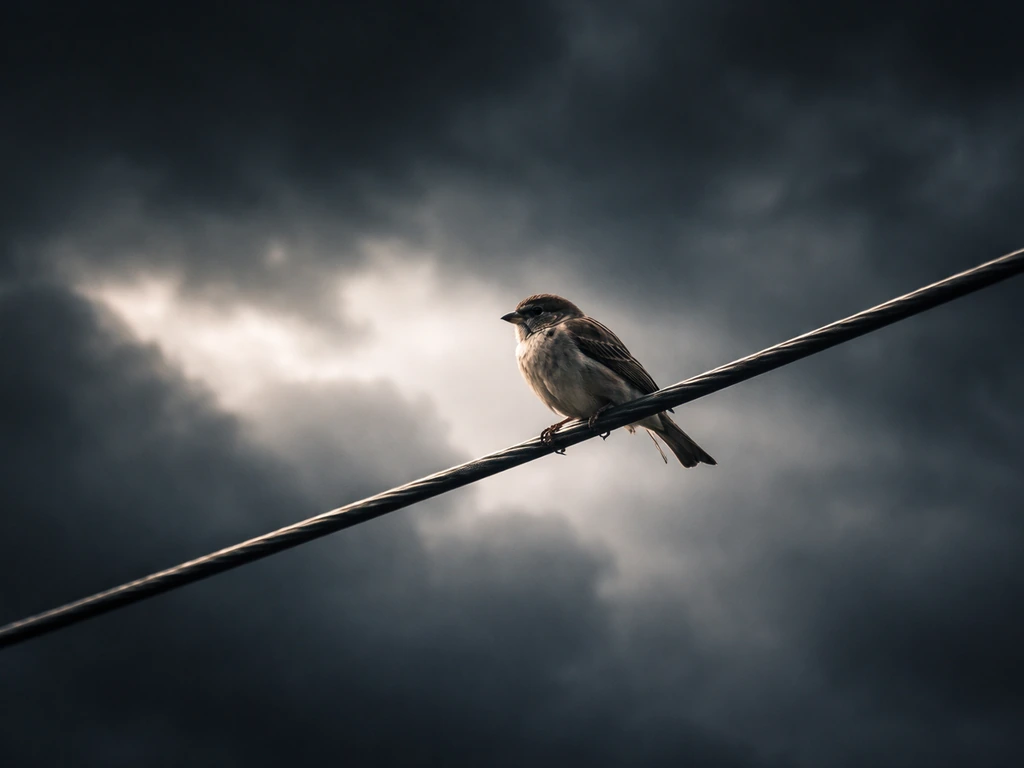
com/music/songs-from-a-room) lists the album’s release date as April 7, 1969 and includes the track “Bird On The Wire. ”. Cohen reportedly wrote it while living on the Greek island of Hydra, where he watched birds perching on the newly installed telephone and electrical wires that had just come to the island. The image struck him: a small creature clinging to something precarious, balanced between the sky above and the ground below, neither fully free nor fully safe.
That image became one of the most memorable opening lines in folk music, and it's the reason this particular phrase carried so much emotional weight into everyday speech.
Before Cohen, nobody was regularly using "a bird on a wire" as a set idiom. The song essentially created the idiom's figurative life. Over the decades, people started borrowing the imagery in conversation to describe situations that matched the song's emotional core: instability, watchful tension, and a kind of restless hovering. Today it's used both with and without the "like" prefix, and both forms mean the same thing.
What it actually means in everyday conversation
The idiom works in a few overlapping ways depending on context, but the core idea is always about precarious balance combined with nervous awareness. Here are the most common uses you'll hear:
- Describing a person who is emotionally unsettled or on edge, unable to relax or feel safe in their current situation.
- Referring to someone hovering between two decisions or life paths, not yet committed to either.
- Capturing the feeling of being exposed or visible in a vulnerable spot, like you could be displaced at any moment.
- Expressing restlessness, a person who can't stay in one place or one state of mind for long.
- Suggesting a kind of imperfect freedom, technically free to fly but choosing (or forced) to stay perched on something uncertain.
You'll also hear it used positively or at least neutrally. Sometimes "like a bird on a wire" describes someone who is resilient: still holding on despite everything. Cohen himself used it that way, as a confession of imperfection paired with a commitment to keep trying. So don't assume the phrase is always negative. Context really does determine the tone.
The tone and personality it implies
When someone uses this phrase to describe themselves, it usually signals self-awareness about their own instability or uncertainty. There's often a touch of vulnerability in it, as if the speaker is admitting they don't have it all figured out. When it's used to describe someone else, it tends to carry empathy rather than criticism. Calling someone "like a bird on a wire" is rarely an insult. It's more an observation that they're navigating something difficult, holding on as best they can.
Personality-wise, the expression often fits people who are at a crossroads, going through transitions, or dealing with chronic restlessness. It's the language of someone reflecting on a life stage rather than dismissing a character flaw. That reflective, slightly melancholy undertone is part of what makes it feel poetic rather than blunt.
How it compares to other bird expressions
Bird idioms cover a wide emotional range, and it's easy to blur their meanings together. Here's how "like a bird on a wire" sits alongside some related expressions:
| Expression | Core meaning | Tone |
|---|---|---|
| Like a bird on a wire | Precarious balance, nervous hovering, caught between states | Reflective, vulnerable, sometimes resigned |
| A bird in the hand | What you already have is more reliable than what you're chasing | Practical, cautionary, grounded |
| Bird on a wire (shortened) | Same as above, used interchangeably | Same as above |
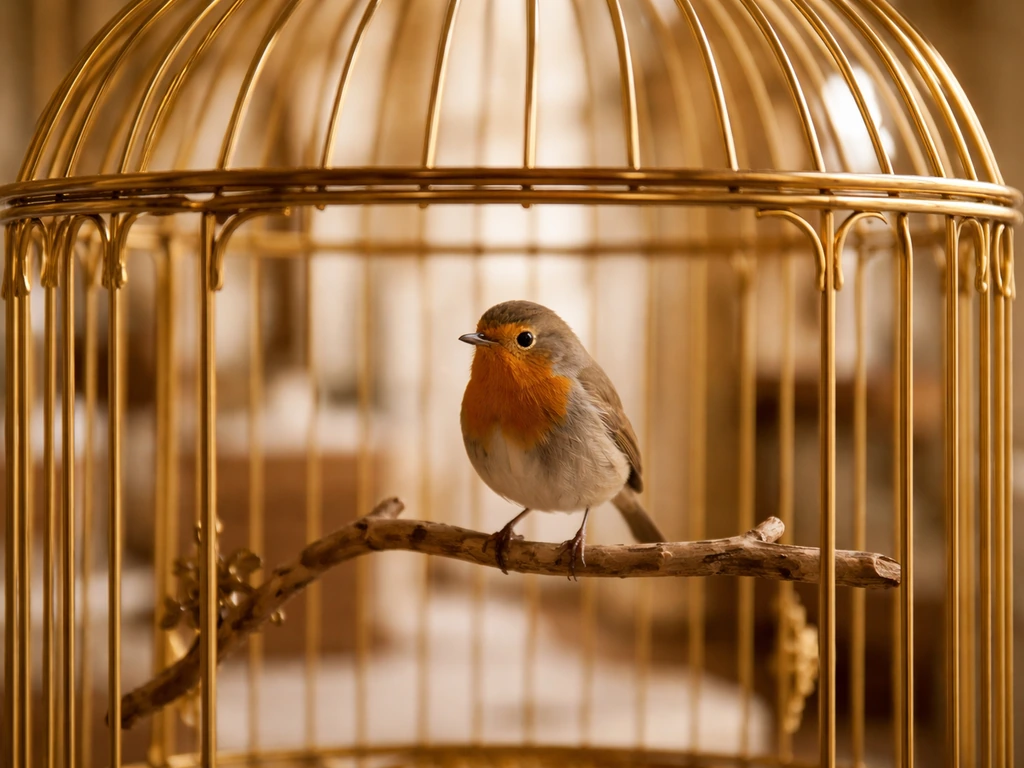
| Bird in a cage | Trapped, confined, lacking freedom despite apparent safety | Sad, constrained, longing |
| Bird in a gilded cage | Comfortable but still trapped, luxury doesn't equal freedom | Ironic, bittersweet, critical |
| Jailbird | Someone who has been imprisoned, or a habitual offender | Blunt, often judgmental or darkly humorous |
The key distinction between "like a bird on a wire" and cage-related expressions like "bird in a cage" or "bird in a gilded cage" is freedom of movement. The phrase “bird in a gilded cage” meaning is similar in theme, but it emphasizes comfort or privilege paired with emotional confinement bird in a cage. In contrast, the bird in a cage meaning is about feeling trapped or restricted rather than poised on the edge of freedom.
The bird on the wire isn't caged. It could theoretically fly away at any moment. That's actually part of what makes the image so poignant: the tension isn't captivity, it's the inability (or unwillingness) to commit to flying. The bird in a cage has no real choice.
The bird on the wire does, and that makes the staying feel more loaded.
Real examples with quick interpretations
Here are some scenarios where you'd hear this phrase, and what the speaker most likely means by it:
- "Ever since the layoffs, I've been sitting at my desk like a bird on a wire." — The speaker feels exposed and uncertain at work, waiting to see what happens next, unable to fully relax or commit to anything.
- "She's been like a bird on a wire ever since she got back from traveling. She can't seem to settle anywhere." — The subject is restless and hasn't found a comfortable landing place, emotionally or physically.
- "He's been a bird on the wire between staying in the relationship and leaving for months now." — He's hovering at a decision point, not moving in either direction, living in a tense in-between.
- "I spent my twenties like a bird on a wire, never sure where I was going, just holding on." — A reflective, slightly nostalgic use, describing a whole life phase defined by uncertainty and resilience.
- "The new CEO is sitting on the wire right now. One bad quarter and she's gone." — A workplace use, emphasizing professional vulnerability and the pressure of holding a precarious position.
Symbolism, spirituality, and cultural angles
Outside of conversational English, the image of a bird on a wire touches some deep symbolic territory that's worth knowing, especially if you've encountered the phrase in a spiritual, artistic, or literary context.
In many spiritual traditions, birds represent the soul or the free spirit, something that exists between the earthly and the divine. A bird in flight is typically a symbol of liberation. But a bird perched on a wire sits in a middle state: it hasn't returned to the ground (the ordinary, the mundane), but it hasn't taken to the sky (freedom, transcendence) either. That liminal positioning makes the wire a symbol of the threshold, of being caught between two worlds or two versions of yourself.
In folklore and symbolism, birds that perch and watch are often associated with vigilance and foresight, even omens. A bird watching from above has a vantage point humans don't. So a bird on a wire can also carry the meaning of watchfulness: someone who is observing before deciding, gathering information, waiting for the right moment rather than acting impulsively.
Cohen's original use of the image leaned into the tension between freedom and commitment. The wire is man-made infrastructure, modernity intruding on a natural creature's world. In that reading, the bird represents someone trying to live freely but constantly navigating constraints they didn't create. That resonates strongly with how the phrase gets used culturally, in poetry, art, and music, to describe the human condition of wanting freedom while being bound by circumstance, obligation, or fear.
It's worth noting that this symbolic layer is separate from the idiom's everyday conversational use. When your coworker says they feel "like a bird on a wire" about their job, they're probably not invoking Cohen or soul symbolism. But in a song lyric, a poem, or a piece of art, those deeper layers are almost certainly intentional and worth unpacking. Leonard Cohen Files compiles background on covers and references connected to “Bird on the Wire,” which can help show how the phrase and song circulated beyond Cohen covers and references connected to “Bird on the Wire”.
How to use it correctly (and how to respond when you hear it)
If you want to use this phrase, the clearest contexts are moments of personal uncertainty, transition, or restless hovering. It works best when you're describing someone (including yourself) who is caught in an in-between state rather than fully committed to a path. It doesn't work well when you mean someone is simply cautious or physically perched somewhere. The figurative weight is important: this phrase is about emotional or situational precariousness, not literal behavior.
If you hear someone use it about themselves, the most useful response is one that acknowledges the tension without rushing them toward a resolution. They're not necessarily asking for advice. They may just be naming where they are. A response like "that sounds like a really uncertain place to be" often lands better than "so what are you going to do about it?
" If you were instead asking about the slang term “jail bird,” its meaning is different from the idiom about being “like a bird on a wire. The phrase “I am a cage in search of a bird” is a related but different way to describe feeling trapped while yearning for something freeing I am a cage in search of a bird meaning. ” jail bird meaning.
If you need to paraphrase it for clarity, good alternatives include: "caught between two paths," "hovering in uncertainty," "in a precarious position," or "holding on but not sure for how long." Each captures a different shade of the original, and choosing between them depends on whether you want to emphasize the instability, the indecision, or the resilience of simply holding on.
FAQ
Is “like a bird on a wire” the same as “caught between two choices”?
They overlap, but the phrase adds a stronger sense of tension and exposure, it is not just indecision. It suggests the person feels watched, unstable, or one mistake away from slipping, and that they are holding still until they can commit.
Can the phrase be used for everyday caution, like waiting before crossing a street?
Usually no. The common usage is figurative and emotional, precarious balance with restless awareness. For literal caution, phrases like “be careful” or “pause before acting” fit better.
Does the tone always lean negative, or can it be hopeful?
It can be neutral or even hopeful. If the speaker frames themselves as still holding on or persisting, the meaning shifts toward resilience. Without that context, people tend to hear it as anxious or unsettled.
What if someone says “a bird on a wire” instead of “like a bird on a wire”?
It is the same idiom in practice. Dropping “like” is common, and listeners typically interpret the same image of precarious, in-between tension.
Is it okay to use it as a description of an entire situation, not just a person?
Yes, but be specific. People commonly say it about a person’s mindset, but you can apply it to a moment or period, like “the team is a bird on a wire during the transition,” as long as the insecurity and in-between state are clear.
How should I reply when someone tells me they feel like a bird on a wire?
Acknowledge the feeling first and avoid pushing for quick decisions. Responses like “That sounds exhausting and uncertain” or “Do you want empathy or ideas?” respect that they may be naming their state, not asking for solutions.
What are common mistakes when using this phrase?
Using it for simple impatience or ordinary nervousness without the precarious “in-between” sense is a common issue. Another mistake is treating it as an insult, it is typically empathetic or self-revealing rather than a character attack.
Which paraphrase is best if I want to emphasize instability versus indecision versus resilience?
For instability, “in a precarious position.” For indecision, “caught between two paths.” For resilience, “holding on despite uncertainty.” Picking the paraphrase helps match the emotional shade the speaker intends.
Are there similar bird idioms I might confuse it with?
Yes. “Bird in a cage” or “bird in a gilded cage” usually centers on restriction or emotional confinement, while “bird on a wire” centers on being poised and tense rather than truly trapped. The wire image implies possible freedom, even if the person cannot or will not commit yet.
When should I interpret it as symbolic or literary rather than everyday slang?
If it appears in lyrics, poetry, or art, or if the surrounding lines discuss freedom, thresholds, soul, transcendence, or spirituality, it likely has extra symbolic meaning. In normal conversation about work, relationships, or life changes, it is usually literal about uncertainty and tension.
Next Article
Bird in a Gilded Cage Meaning: Definition and Usage
Meaning of bird in a gilded cage: privilege that masks confinement, plus golden vs gilded and white bird nuance.