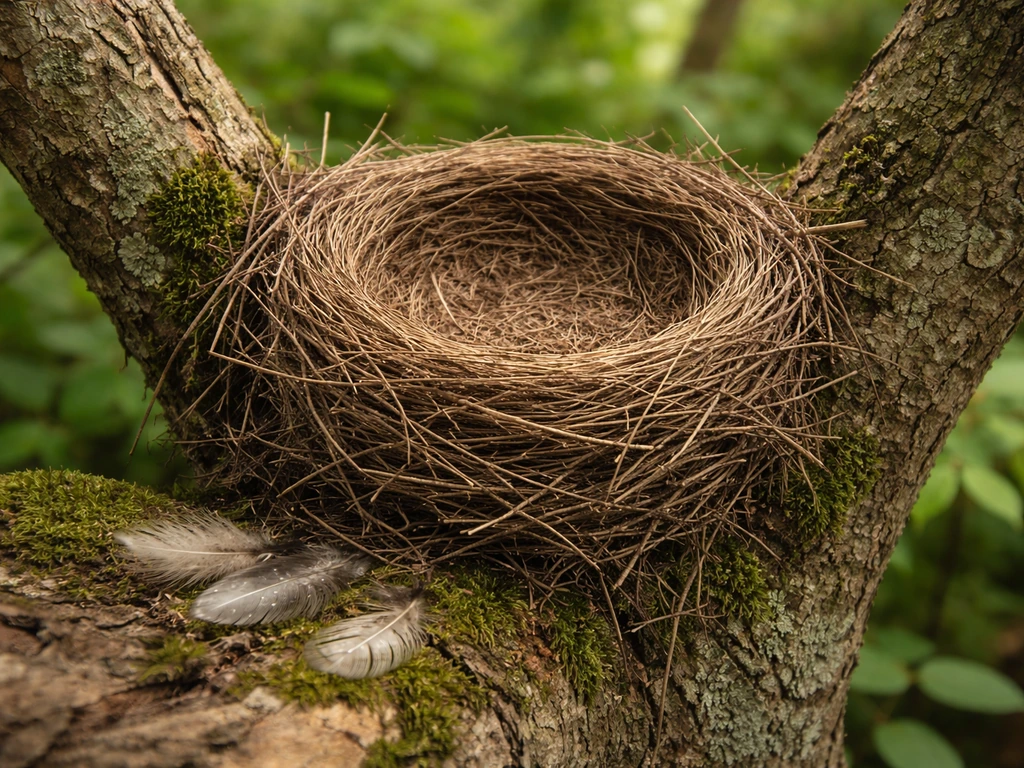
An empty bird nest almost always means one of three things: the young have fledged and left successfully, the nest was abandoned mid-attempt, or you're looking at a nest from a previous season that no bird is currently using. If you are wondering about hatch bird meaning, the timing of fledging versus abandonment is the key detail to look for empty bird nest. Which one applies to your situation makes a big difference, both practically (because active nests are federally protected in the U.S.) and symbolically (because cultures around the world read very different meanings into an empty nest depending on when and how it was found). Here's how to figure out which scenario you're in and what to do next.
Empty Bird Nest Meaning: Literal Causes and What to Do Now

Marcus Winters
31 May 2026
Why nests look empty: the literal explanation
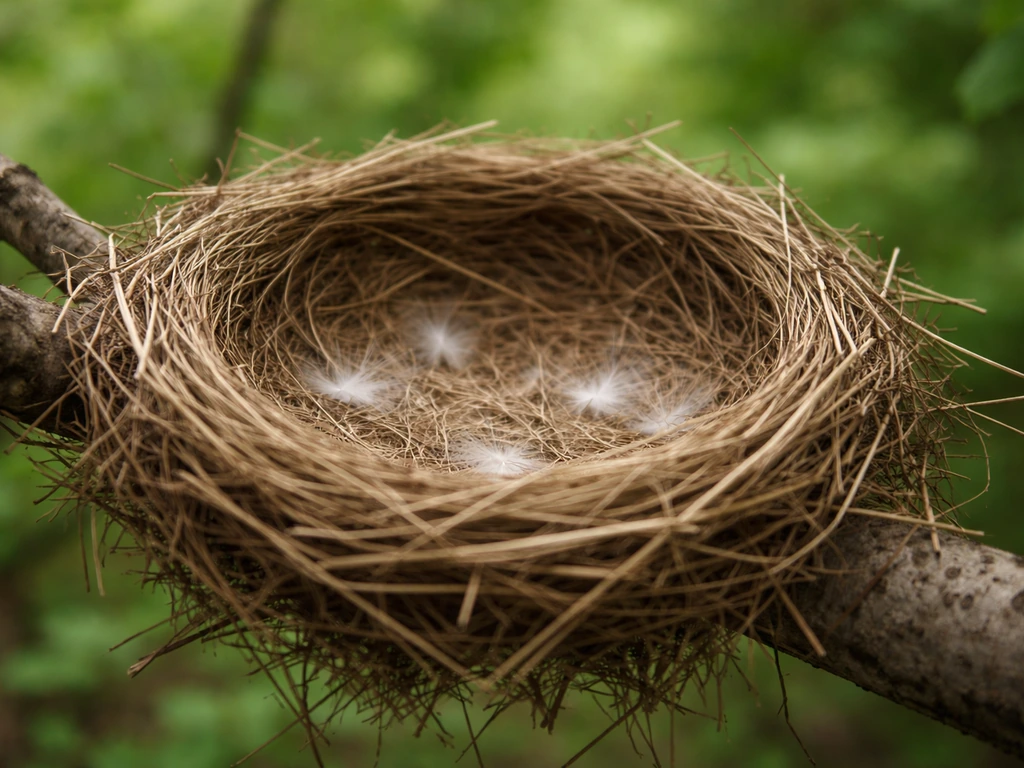
Birds build nests for one purpose: raising young. Once that job is done, the nest sits empty. That's not a sign something went wrong. It's actually the goal. A successful robin nest, for example, is occupied for roughly two weeks of incubation and another two weeks while nestlings grow, then it empties when the chicks fledge. After that, the nest may be reused for another clutch in the same season, abandoned entirely, or left as-is into the following year.
Beyond successful fledging, a nest can appear empty because of abandonment (caused by predator pressure, human disturbance, infertile eggs, or a failed first attempt), relocation (some species will build a new nest nearby if disturbed early enough), or simply because it's an old structure from a prior season. A nest found in late fall or winter is almost certainly inactive. A nest found in May or June, peak nesting season for most North American species, deserves a much closer look before you conclude it's vacant.
How to tell if a nest is abandoned or recently used
This is where most people make mistakes, and it's the most important thing to get right. Not seeing an adult bird near a nest does not mean the nest is abandoned. NestWatch's monitoring guidelines are explicit about this: parent birds often stay away from nests intentionally, especially during incubation, to avoid leading predators directly to the eggs. NJDEP wildlife guidance even warns that predators may follow your scent to a nest after you've visited, which is a good reason to limit how close you get in the first place.
NestWatch recommends waiting about four weeks of observing no adult activity and no visible progress before concluding a nest with eggs is truly abandoned. That's a longer window than most people expect. For nests that are already empty (no eggs, no chicks visible), the question is whether the emptiness is brand new or has been there a while.
Here are the physical cues that help you read the situation from a respectful distance:
- Fresh nest materials (green moss, soft feathers, recently woven grass) suggest recent or current use.
- Dried, weathered, or flattened materials with no structural integrity usually point to an older, inactive nest.
- Fecal sacs (small white capsules) near or in the nest suggest nestlings were or are present.
- Visible droppings on the outside rim of the nest are a strong sign of recent chick activity.
- A nest that smells strongly of decomposition may have suffered a failed clutch.
- Parent birds calling in alarm near your location strongly suggests the nest is still active.
If you can hear alarm calls, see adults circling, or notice any food being carried nearby, treat the nest as active, step back, and observe from at least 10 to 15 feet away. Keep any visit to under a minute, per NestWatch's Code of Conduct, and leave immediately if parents show visible stress.
What an empty nest means spiritually and symbolically
Beyond the biological reality, people have layered rich meaning onto the image of an empty nest for centuries. For some people, the oven bird meaning adds another layer to how they interpret birds leaving or nesting patterns in the natural world. The dominant thread across many spiritual traditions is one of transition: something has been nurtured, grown, and released. Finding an empty nest is often interpreted as a sign that a chapter is closing, not in failure, but in completion. The emptiness isn't loss so much as evidence that the work was done.
In many folk belief systems, particularly across European and Asian traditions, the nest itself is a symbol of home, safety, and careful preparation. An empty nest, then, carries the meaning of a home that has served its purpose and now waits for what comes next. Some interpretations frame it as a prompt to let go, to trust the process, and to accept that departure is part of a healthy cycle.
In Christian symbolism, birds leaving a nest has long been tied to themes of spiritual readiness and the courage to fly. If you're also wondering about an egg bound bird, the meaning can differ depending on the species and how urgent the situation is egg bound bird meaning. An empty nest can signal that you've done your preparing and it's time to act. In some Native American traditions, a bird's departure from a nest marks a moment of blessing, the release of something protected back into the larger world. The nest left behind isn't a wound; it's a record of care.
Dreams or repeated encounters with empty nests are often interpreted in intuitive or spiritual frameworks as nudges toward independence, new beginnings, or the need to release attachments that have been outgrown. The image carries the same emotional weight as the well-known 'empty nest syndrome' phrase that describes parents after their children leave home, an expression that entered everyday English specifically because the symbol resonates so universally.
What folklore and cultural traditions say about birds leaving nests
Birds leaving nests have carried omen-like significance in folklore across virtually every culture with close ties to the natural world. In many European traditions, a bird abandoning its nest mid-season was read as a warning of coming hardship, bad weather, or instability in the household near which the nest was found. The logic was intuitive: if the birds knew something was wrong with this place, you should pay attention.
In Japanese culture, the nest (and the idea of birds carefully building and leaving one) connects to concepts of impermanence and the beauty of transience, themes central to the aesthetic of wabi-sabi. The empty nest isn't sad; it's evidence that something real happened there. Celtic traditions similarly tied the nest to the hearth, with birds nesting on or near a home seen as protective. Their departure could signal that the home's energy had shifted.
In literature, the empty nest has functioned as a powerful symbol of absence and change. Robert Frost's poetry, for instance, circles around themes of birds, nests, and what's left behind after natural cycles complete themselves. If you’re wondering about Robert Frost’s “The Oven Bird” meaning, his symbolism uses the bird’s song to reflect on change and cycles of nature the oven bird robert frost meaning. The image of an empty nest carries the same narrative weight as finding a bird egg or a broken shell. If you’re dealing specifically with a broken bird egg, the meaning can shift from symbolism to likely causes and what to do next finding a bird egg or a broken shell. Each stage of the nesting cycle, from finding an egg to watching a nest empty, maps onto a human experience of beginnings, vulnerability, and release.
Context changes everything: time of year, species, and what's in the nest
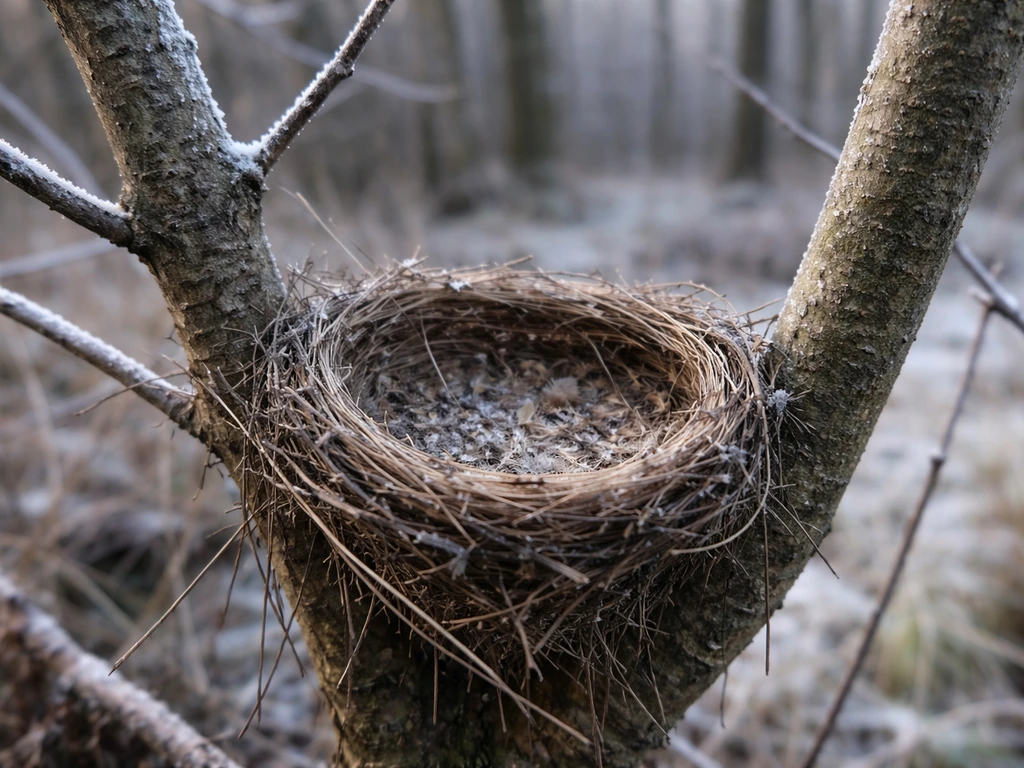
The meaning of an empty nest shifts considerably depending on when you find it and what clues the nest itself provides. A nest found in January in the northern U.S. is almost certainly inactive. A nest found in May or June during peak breeding season for most songbirds deserves serious caution before you assume it's empty and abandoned.
| Scenario | Most Likely Meaning | What to Do |
|---|---|---|
| Empty nest, late fall or winter | Inactive from prior season | Safe to observe closely; not federally protected if truly inactive |
| Empty nest, spring/summer, fresh materials | Recently active or currently between uses | Observe from distance; do not disturb or remove |
| Nest with eggs, no adults seen for days | Possibly abandoned, but not confirmed | Wait up to four weeks before concluding abandonment |
| Nest with chicks, seems unattended | Parents almost certainly nearby and feeding | Step well back; do not 'rescue' unless chick is clearly injured |
| Empty nest, signs of predation (feathers, damage) | Failed nest attempt | Document from a distance; contact wildlife rehabilitator if needed |
| Old weathered nest, no recent activity | Prior season's nest | Likely safe to remove if needed, but check local regulations |
Species clues matter too. Cavity-nesting birds like bluebirds, wrens, and chickadees use enclosed nest boxes or tree holes, so an empty cavity nest is easier to confirm as inactive. Open-cup nests in shrubs or low branches are harder to assess from a distance and deserve more caution. Bluebird parents, for instance, continue feeding their fledglings for about three weeks after the chicks leave the nest, meaning the nest may look empty while the family unit is very much still active nearby.
If you're unsure of the species, look at the nest's construction and placement. Mud-reinforced cup nests are often robins. Soft, compact cups lined with animal hair tucked in a dense shrub are often vireos or warblers. Knowing the species helps you look up the typical nesting timeline and judge whether fledging season has passed.
Safe steps to take right now
If you've found what looks like an empty nest today, here's the practical path forward. The most important rule first: in the U.S., most birds and their nests are protected under the Migratory Bird Treaty Act. This law prohibits taking, destroying, or possessing nests, eggs, or birds without a federal permit. A nest is considered 'active' from the moment the first egg is laid until fledged young are no longer dependent on it. Destroying an active nest, even unintentionally, can carry legal consequences. USFWS also warns that disturbance that destroys active nests, eggs, or nestlings can be avoided by following timing recommendations for land disturbance and vegetation clearing Destroying an active nest, even unintentionally, can carry legal consequences..
- Observe from a distance first. Stay at least 10 to 15 feet away and watch for 10 to 15 minutes at different times of day before drawing any conclusions.
- Look for adult bird behavior. Alarm calls, birds carrying food, or birds hovering near the site all indicate the nest is still in use.
- Check the nest materials visually without touching. Fresh, intact structure and recent droppings suggest active use.
- If it's nesting season (roughly March through August for most U.S. species), assume activity until you have strong evidence otherwise.
- Take a quick photo if you need to document the nest, but keep the visit under one minute and leave if adults show stress.
- Do not touch, move, or remove the nest if you have any doubt about its status.
- Wait the full four weeks of zero adult activity before assuming a nest with eggs is abandoned.
- If you find injured birds, chicks on the ground that appear hurt (not just hopping), or a nest that has fallen, contact a federally permitted wildlife rehabilitator or your state wildlife agency immediately.
The Washington Department of Fish and Wildlife makes a point worth repeating: young birds often leave nests before they can fully fly, and that's normal. If you see a chick on the ground that appears healthy and alert, the parents are very likely nearby and feeding it. Walking away is usually the best thing you can do.
When to call for help

Call a federally permitted wildlife rehabilitator (or your state's wildlife agency) if you see any of the following: a chick that is injured, cold, or clearly weak rather than just grounded; a nest that has fallen from its structure with eggs or live nestlings inside; signs that a parent bird has died near an active nest; or a nest in a location that poses a genuine safety hazard (on live electrical equipment, for example). The USFWS notes that permits for nest removal are generally only issued when there's a direct human health or safety concern, so most situations call for patience and observation rather than intervention.
What the empty nest means: a quick summary by scenario
If you want a fast reference, here's how to read the situation:
- Empty nest in late fall or winter: almost certainly inactive from the prior season. Biologically and legally, this is the lowest-risk scenario for observation or removal.
- Empty nest in spring or summer with fresh materials: treat as potentially active. Observe before concluding anything.
- Empty nest after a known fledging event: a success. The birds did exactly what they were supposed to do.
- Empty nest with signs of predation or sudden abandonment: a failed attempt. Common and natural, though hard to witness.
- Empty nest as a symbol or omen: across most traditions, a sign of transition, completion, or the invitation to begin something new.
- Empty nest in a dream or repeated sighting: often interpreted as a prompt toward independence, release, or a new chapter beginning.
The empty nest, whether you're reading it biologically or symbolically, tells a story of something that was carefully built, actively tended, and then released. That's true whether you're standing in a backyard in May watching where a robin used to roost, or reflecting on what it means to find one unexpectedly on a trail. The nest being empty isn't the end of the story. It's the part that comes after the most important work was already done.
FAQ
What does an “empty bird nest meaning” change when there are still eggs or tiny chicks inside?
If there are eggs or visible nestlings, treat it as active even when no adults are on the spot. Adults often stay out of view during incubation, and an “empty-looking” nest can still be in progress. The practical trigger is visible progress (feeding, changing egg-to-hatch state, chick growth), not your sightline.
How can I tell if an empty nest is abandoned versus recently disturbed or fallen?
If the nest is still attached to its original structure, it is more likely active or recently used than a nest that has been fully dislodged. If it has fallen with eggs or chicks inside, contact a permitted wildlife rehabilitator rather than trying to put it back. The article covers that nests with live young and fallen structures are urgent cases.
Can an empty nest found out of season still be recently used?
Yes. In many areas, bird activity can be earlier than expected due to mild winters or a warm spring, and some species can renest after failures. If you find a “winter-looking” nest in an unusually warm period, rely on cues like nest freshness, recent nesting materials, and any signs of current use, not just the calendar month.
Is it a problem that I already looked closely at the nest?
Limit your disturbance to a quick visual check, then step back and wait. Even one scent-tracking visit can increase risk to the eggs or chicks, especially when predators are active. If you need to monitor, do it from a consistent distance and avoid repeated trips.
What physical signs tell me a nest is from a new attempt versus an old structure?
Look for recent remodeling or fresh nesting lining, droppings patterns below the nest (at a distance), and whether the nest materials look weathered versus newly arranged. A nest left from a previous season often looks flattened, brittle, or heavily degraded compared with one that still shows intact structure.
What should I do if the empty nest is in a backyard birdhouse or nesting box?
If the nest is in a nest box, consider whether it looks like it was last used in the current season, then avoid cleaning or removing it until you are confident it is inactive. For people who want to help birds long-term, many landlords or homeowners choose to wait until after the nesting season ends or until the nest is clearly inactive, so they do not accidentally destroy an active nest.
If I see a chick near an apparently empty nest, should I rescue it?
For most healthy, grounded chicks, the best “action” is usually to leave and observe from a distance because parents commonly continue feeding nearby. The article also notes that walking away is generally the best move if the chick appears alert and not obviously injured.
How should I handle uncertainty when I think the nest was abandoned mid-attempt?
If you suspect egg loss, predator activity, or disturbance but you are unsure whether the nest is active, switch from “fixing” to “verifying.” Wait for the recommended observation window when eggs were present, and look for signs like feeding or continued development before deciding it is truly abandoned.
What if an empty nest is on something dangerous, like power lines or a construction area?
If the site creates a safety issue, your next step is to report or consult the wildlife agency or a permitted rehabilitator rather than taking matters into your own hands. The article calls out hazards like nests on live electrical equipment, and it also notes that permits for removal typically require a direct health or safety concern.
Does “empty bird nest meaning” differ for cavity nesters like wrens, chickadees, and bluebirds?
If you find an empty cavity nest (tree hole or enclosed box), it’s often easier to confirm inactivity than with open-cup nests, but you still should check for recent use cues. Cavity-nesting birds may also continue feeding fledglings nearby for a while, so the “empty” look might be temporary.
Should I interpret the empty nest symbolically, or treat it as an active wildlife situation first?
The main difference is whether any part of the nesting cycle is still underway. If the nest lacks eggs and chicks and has no signs of recent use, “meaning” is more symbolic, and you can leave it undisturbed. If there are any signs of current nesting (eggs, chicks, fresh activity nearby), the meaning is secondary and the priority becomes protection and observation.
Next Article
The Oven Bird Robert Frost Meaning: Summary, Themes
Understand the oven bird’s song in Frost’s poem: meaning, themes, symbols, and how the ending reframes time and life.