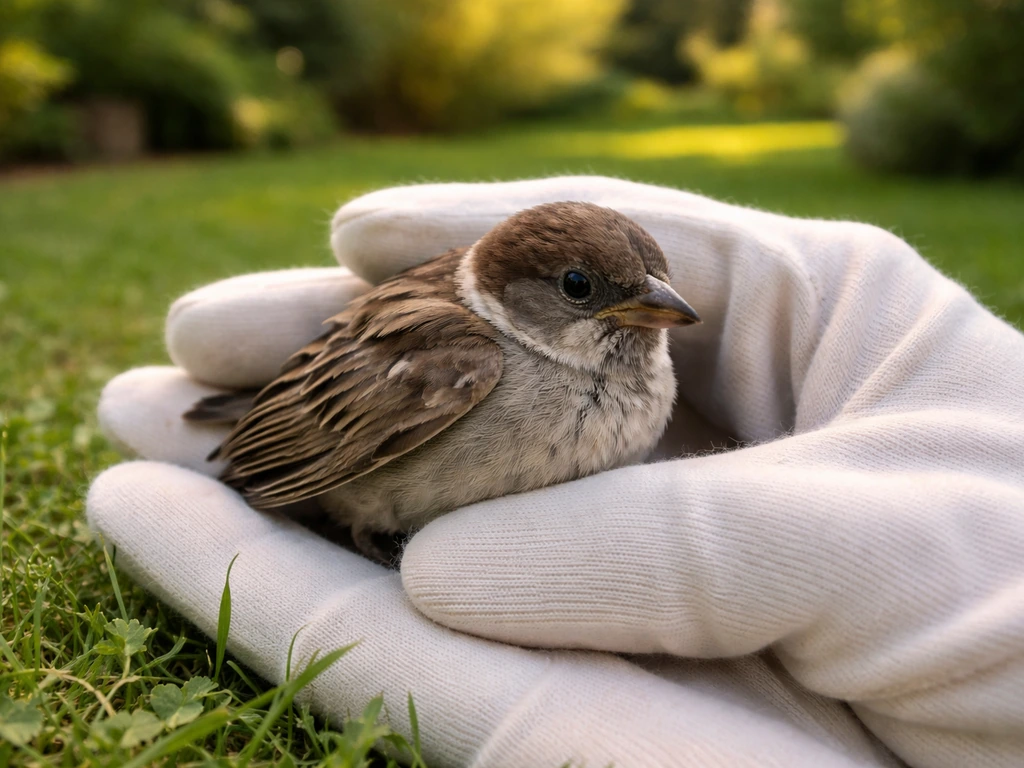
Finding a bird wing almost always has a perfectly ordinary explanation first: predation, a window collision, a storm, or molting. Once you've ruled those out, the symbolic layer opens up, and most traditions read a found wing as a message about transition, freedom, protection, or the crossing of a threshold. Which interpretation fits you depends heavily on where you found it, what condition it's in, and what's happening in your life right now. If you are wondering about a specific situation like a falling bird, that usually points to a different angle than general found-wing symbolism falling bird meaning.
Finding a Bird Wing Meaning: Literal and Spiritual Interpretations

Marcus Winters
27 Jun 2026
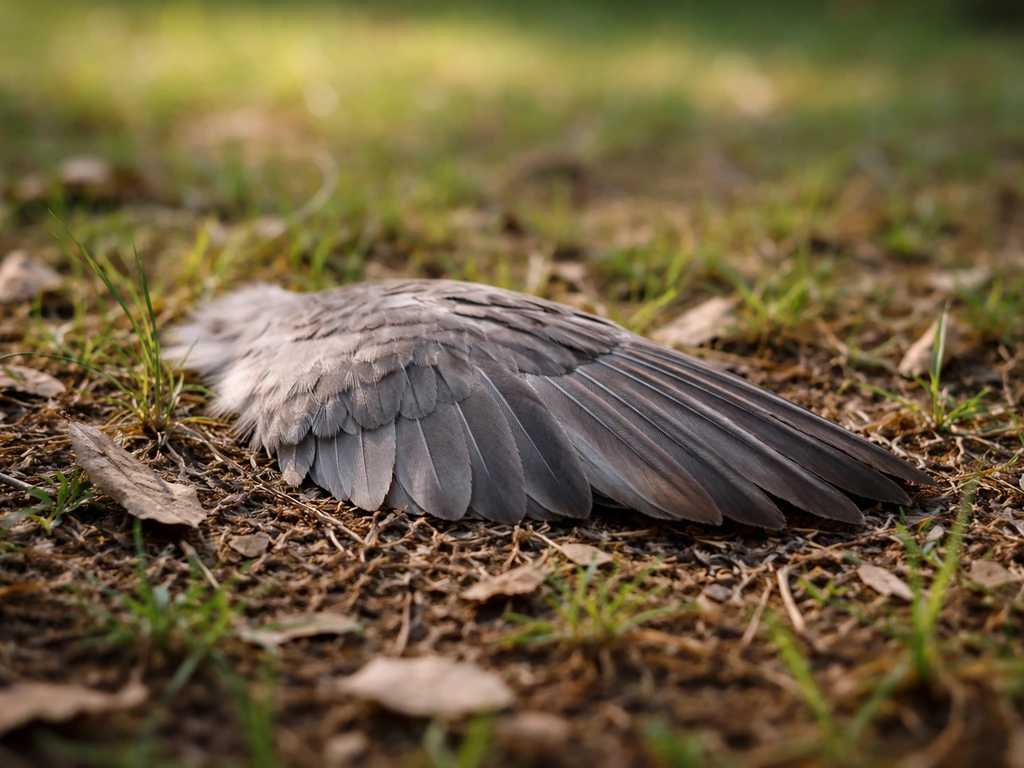
First, rule out the literal reasons you found a wing
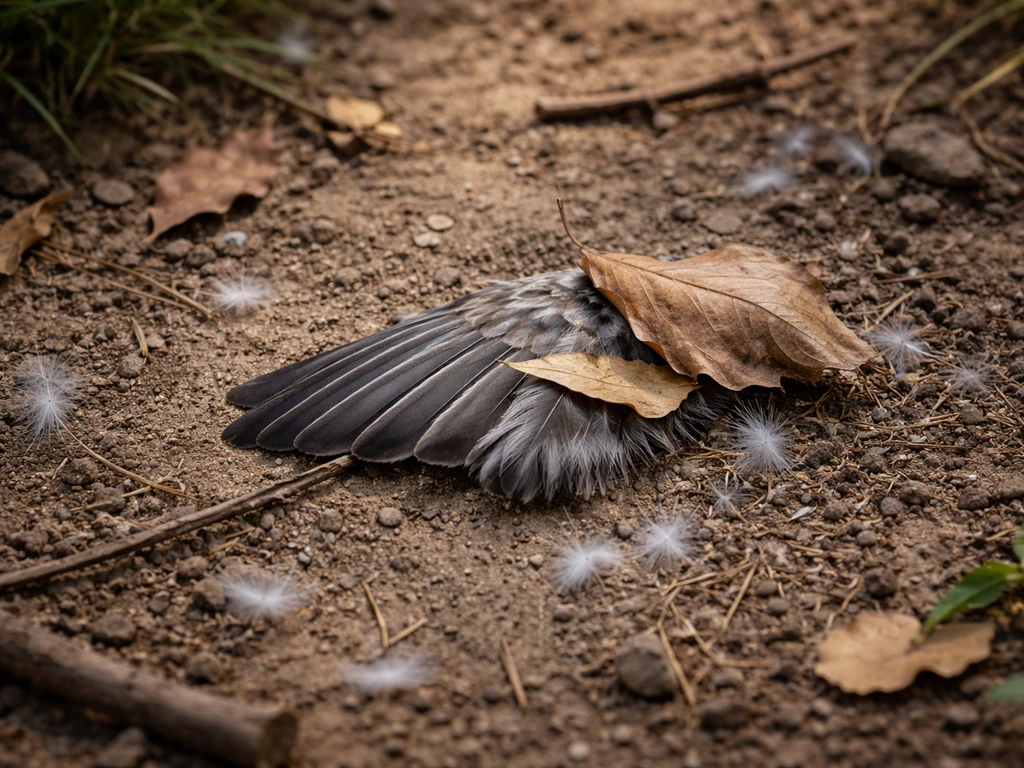
Before you assign any meaning to a found wing, it helps to know why it's there. A wing on its own, separated from a body, usually points to one of a handful of very common, very mundane causes.
- Predation: A cat, hawk, or fox catches a bird and carries the body away, leaving a wing or scattered feathers behind. Cats in particular are well-documented predators of wild birds, and they often leave clear signs: puncture wounds, a cluster of pulled feathers, and detached wing or tail sections nearby.
- Window collision: Birds don't perceive glass as a solid barrier the way we do, so window strikes are extremely common. A collision can kill or stun a bird on impact, and scavengers may move the body quickly, leaving only a wing.
- Molting: Birds shed and regrow their feathers in a controlled sequence. Flight feathers on the wing are replaced one at a time so the bird can keep flying throughout the molt. A single fallen flight feather or a small cluster of wing feathers on the ground under a tree isn't unusual at all, especially in late summer.
- Storm or weather damage: Strong wind events can scatter feathers across large distances. A wing found far from any obvious predation site may have simply blown in.
- Natural death: Birds die from disease, old age, and cold. Bodies decompose quickly outdoors, and wings, being mostly feather and bone, can outlast the rest.
If you find a complete wing with some flesh still attached, predation or collision is the likely cause. If it's dry, fully feathered but detached cleanly at the joint, scavengers probably dismantled a carcass. A single flight feather lying on the ground with no other debris? Almost certainly a molt drop or wind scatter. Knowing the literal reason doesn't erase the symbolic reading, but it gives you a grounded starting point.
Symbolic meanings of a found bird wing
Once you've considered the practical explanation, the symbolic dimension is worth exploring, especially if the find felt significant or surprising to you. Wings carry some of the most consistent symbolism in human culture, cutting across folklore, religion, and spiritual practice in remarkably similar ways.
Transition and threshold moments
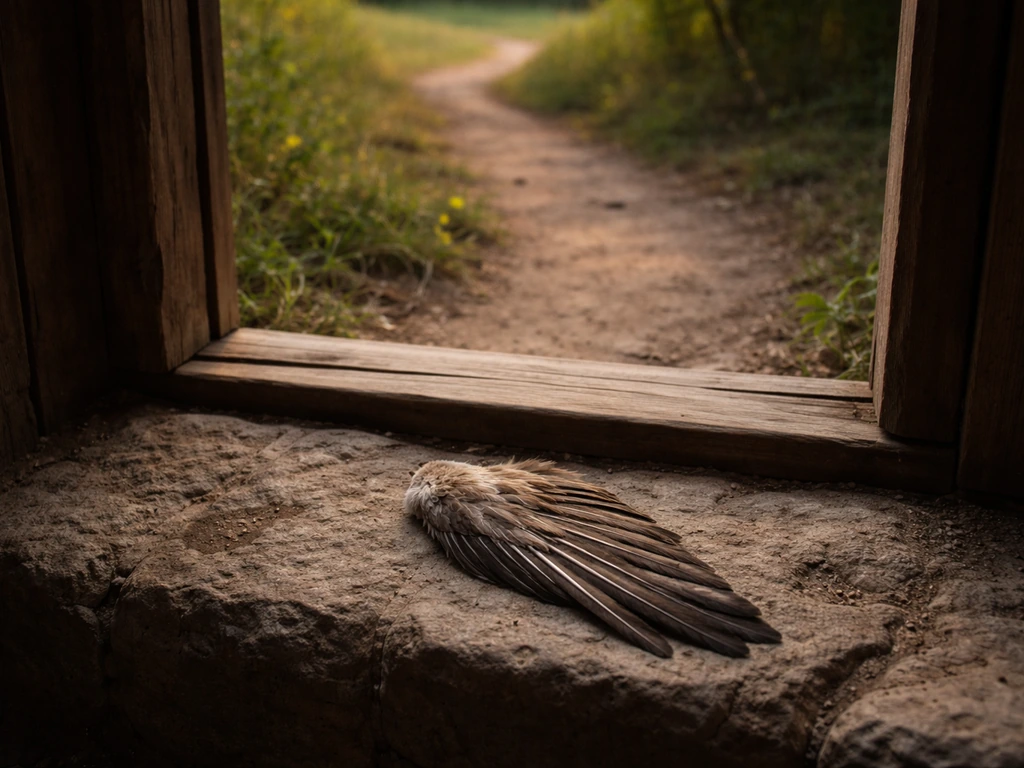
The most common interpretation of a found wing, across folk traditions, is that you are standing at a threshold. Wings represent the capacity to move between worlds or states of being, and finding one often surfaces during periods of change: a job ending, a relationship shifting, a move, a loss, or a new beginning forming on the horizon. The wing itself is neither the bird in full flight nor a feather drifting gently down. It's the mechanism of flight, the thing that makes crossing over possible. That in-between quality is exactly why so many people reach for wing symbolism when they sense their life is mid-transition.
Protection and being watched over
In Western folk belief and in many spiritual traditions, a wing found unexpectedly is read as a sign of protection, the idea that something or someone is watching over you. The phrase 'under someone's wing' has been embedded in English for centuries, and that linguistic root matters here. Finding a wing, in this interpretation, is a physical echo of that idiom. You are being sheltered. Many people who search for 'finding a bird wing meaning' are going through something difficult, and this protective reading resonates deeply in those moments. The broken winged bird meaning is often interpreted through themes of vulnerability, care, and needing support during a difficult season.
Freedom and the urge to move
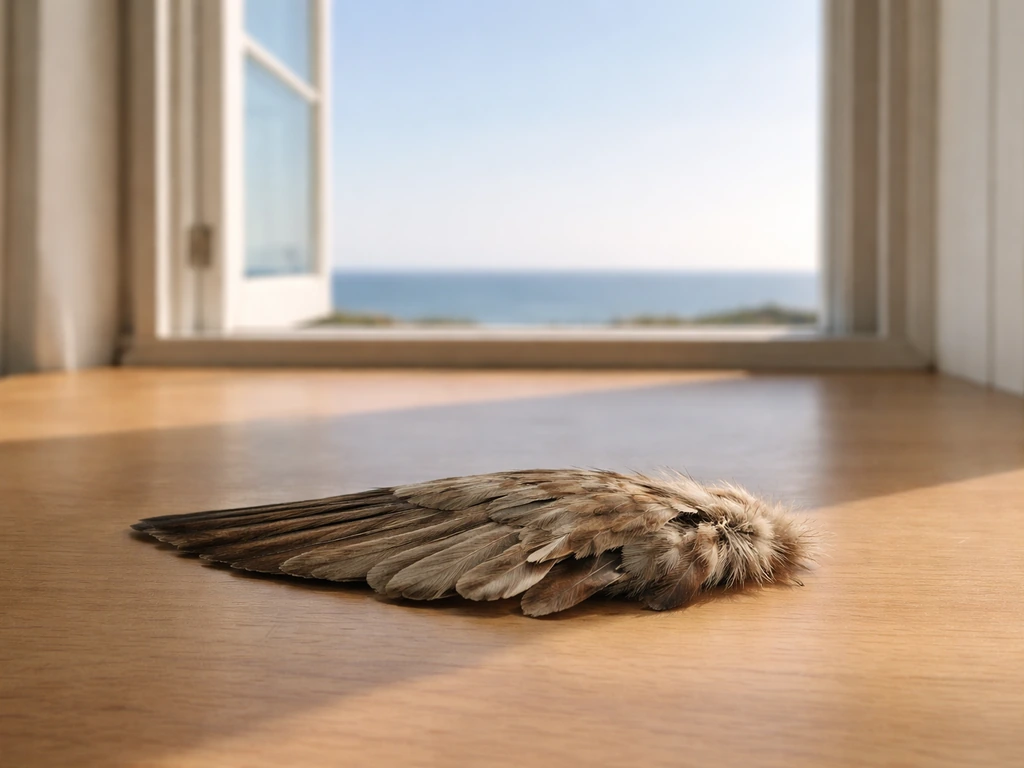
Wings are the defining symbol of freedom precisely because flight is something humans can't do naturally. A found wing, in this reading, is a prompt: something in your life is ready to be released, or you are being invited to pursue something you've been holding back from. This connects closely to the broader symbolism of birds in flight and expressions like 'bird on the wing,' which carries its own connotations of momentum and forward movement.
Endings, loss, and grief
A wing separated from a living bird can also represent loss, an ending, or grief. This isn't a dark omen so much as an acknowledgment. If you've recently lost someone or something important, a found wing can feel like a punctuation mark on that experience, a signal that the grief is real and the loss was meaningful. Some people in spiritual communities interpret this as a message from someone who has passed. The wing represents them having moved on to a different plane, having 'taken flight,' so to speak.
Healing and resilience
There's also a healing interpretation, especially common in more intuitive or nature-based spiritual frameworks. A bird wing still holds the architecture of flight even when detached. It hasn't lost its essential structure. Finding one can be a reminder that the capacity to rise again is still present, even if you feel grounded right now. This overlaps with the symbolism found in concepts like a broken winged bird or an injured bird, where the focus is on potential recovery rather than permanent damage. In that same spirit, a bird with a broken wing meaning is often read as a call to heal, adapt, and regain momentum broken winged bird.
How context changes the meaning
Generic symbolic meanings are a starting point, not a finish line. The specifics of where, when, and how you found the wing sharpen the interpretation considerably.
| Context Factor | What It Suggests Literally | What It May Suggest Symbolically |
|---|---|---|
| Found indoors (inside your home) | Unlikely without help; could indicate an entry point or someone brought it in | Highly personal sign; the message is meant specifically for your household or domestic life |
| Found on your doorstep | Cat or predator left it there; or blown in by wind | Threshold symbolism is amplified; something is arriving or departing from your personal sphere |
| Found in a natural outdoor setting | Predation, molt, or natural death | General nature message; less personal, more broadly about transition or awareness |
| Fresh wing (moist, full feathers, no odor) | Very recent death or injury, likely predation or collision | Urgency; the message is immediate and current |
| Dry, weathered wing (brittle, faded) | Older event; been there a while | Something from the past is resurfacing; old cycles completing |
| Found during a personally significant moment | Coincidence | Many traditions say there are no coincidences; timing amplifies meaning |
| Found after a loss or during grief | No literal connection | Widely interpreted as comfort or spiritual acknowledgment |
| Found near water | Waterfowl or shorebird more likely | Water adds themes of emotion, intuition, and the subconscious |
Timing matters too. Finding a wing at dawn, when birds are most active, feels different from finding one at dusk. Some folk traditions associate dawn finds with new beginnings and dusk finds with release or completion. These aren't hard rules, but they're worth noting when you're building your own interpretation.
Wing vs feather symbolism: flight, transition, vulnerability, protection
A wing and a single feather are related but symbolically distinct, and the difference is worth understanding. A feather is the smallest unit of flight, often interpreted as a gentle nudge, a whisper from the universe, or a sign of lightness and grace. You find a feather, and the feeling is usually soft and personal.
A wing is an entire structure, the whole apparatus of flight. It carries more weight symbolically, both literally and figuratively. Finding a wing suggests something larger is at play: not a gentle nudge but a more significant shift, a more complete transition, or a more powerful form of protection being offered. The vulnerability angle also shifts. A single feather can drift anywhere; a detached wing implies the bird couldn't fly, at least not with this one. That vulnerability, the idea of being temporarily grounded, is a meaningful part of what a found wing communicates. You can connect this to related ideas like the wounded bird or the bird with a broken wing, where the emphasis falls on being in a state of necessary pause before flight resumes. If you’ve heard the wounded bird meaning, it can point to vulnerability, a temporary pause, and the hope of recovery in your own situation.
At the same time, feathers are built from the same architecture as wings. Down feathers, with their loosely arranged barbs, trap air for warmth and insulation. Flight feathers, with their tightly interlocking barb structure, enable lift and direction. When you find a wing, you're holding both functions at once: the warmth and protection of down plus the direction and freedom of flight feathers. That combination is what makes wing symbolism richer and more layered than feather symbolism alone.
Spirituality and intuition vs folklore superstition: two different lenses
There are essentially two frameworks people use to interpret a found wing, and they lead to quite different conclusions. Neither is wrong; they're just different orientations.
The intuitive and spiritual approach
In spiritual and intuitive frameworks, the found wing is meaningful because you noticed it. The act of paying attention is itself the signal. You ask: what was I thinking about right before I saw it? What question have I been sitting with? What does the wing make me feel, immediately and instinctively? In this approach, your gut response is the interpretation. The wing is a prompt for self-reflection, and the meaning is co-created between you and the experience. This framework is more flexible, more personal, and less tied to specific rules about good or bad omens.
The folklore and superstition approach
Folk superstition tends to assign more fixed meanings based on conditions. A wing found intact might be read as good luck or protection offered, while a torn or broken wing might signal a warning about overextending yourself or a caution around travel or freedom-seeking. In particular, people often look up winged bird meaning when they see the message as more than just coincidence. Bringing a bird wing into the home has historically been considered unlucky in some British and Appalachian folk traditions, with the belief that it invites death or sorrow indoors. Other traditions, particularly those with Indigenous American roots (where bird parts carry deep ceremonial significance), treat a found wing with great reverence rather than superstition. It's worth knowing which cultural frame you're working within, because the same object reads very differently depending on tradition.
If you don't feel strongly tied to any particular tradition, the practical approach is to use both lenses. Note what folklore says, then check it against your intuitive response. Where those two align, you're probably onto something meaningful for you.
How to identify the bird wing and narrow the meaning
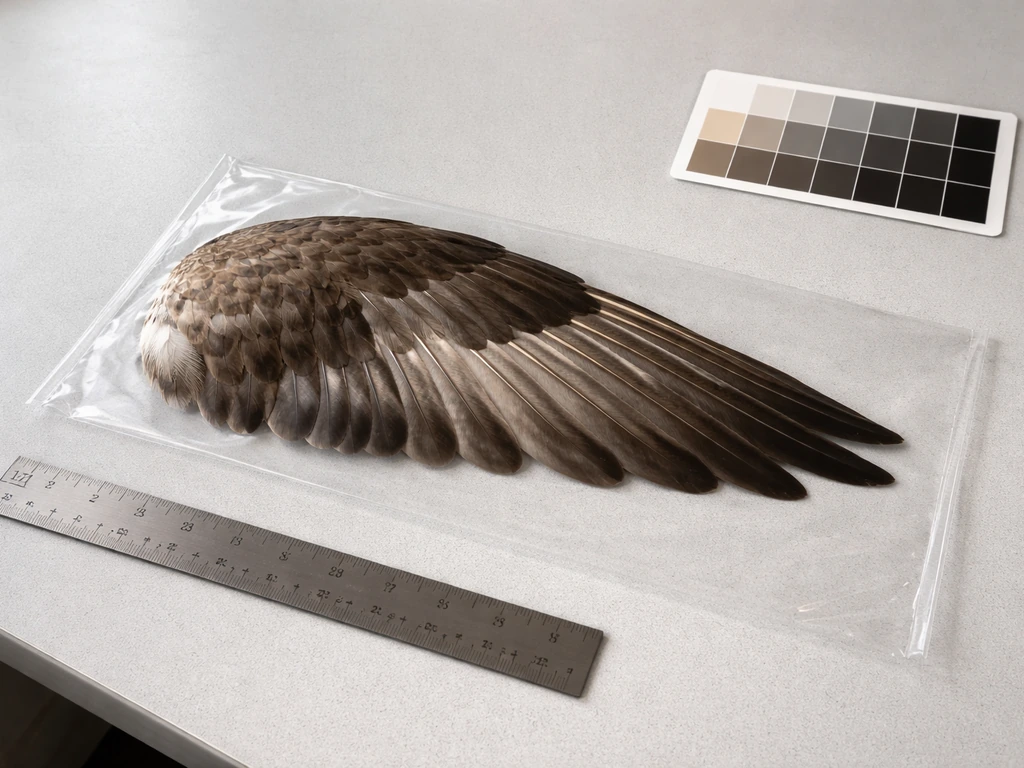
Identifying the bird adds another layer to your interpretation, since different birds carry different symbolic weight. Here's how to start narrowing it down without being an ornithologist.
Size and scale
Lay the wing flat (with gloves or a bag between your hand and the wing) and estimate its length from the shoulder joint to the wingtip. A wing under 6 inches likely belongs to a small songbird like a sparrow, finch, or wren. Six to 12 inches covers mid-sized birds like robins, starlings, pigeons, and jays. Over 12 inches puts you in raptor, crow, duck, or gull territory. Very large wings over 24 inches suggest a heron, hawk, eagle, or large waterfowl.
Feather color and pattern
Look at the primary flight feathers, the long ones at the wingtip. Note the base color, any barring (alternating dark and light bands), iridescence, and whether the feathers have white patches or tips. Iridescent green or purple on dark feathers suggests a starling or grackle. Strong black and white barring is common in woodpeckers. Solid black primaries with a large size points toward crow or raven. Spotted or streaked brown patterns are common in raptors and shorebirds.
Use the FWS Feather Atlas
The U.S. Fish & Wildlife Service Forensics Laboratory maintains the Feather Atlas, a free online image database specifically designed for flight feather identification in North American birds. It has a search tool where you can filter by feather type, color, pattern, and size. It's the most reliable identification resource available to the public, and it's free. Even if you only have the wing and not a single detached feather, matching the primary feathers against the atlas usually gets you to the species or at least the family.
What the bird species adds to the meaning
Once you have a likely species, traditional bird symbolism layers on top of the wing symbolism. A crow wing carries associations with intelligence, mystery, and transformation. A hawk wing points toward vision, focus, and strategy. A dove wing is almost universally associated with peace and the Holy Spirit in Western tradition. A heron or egret wing connects to patience, solitude, and deep seeing. Even narrowing to a family helps: a raptor wing means something different than a waterfowl wing, and a songbird wing reads differently than either.
What to do right now: handling, keeping, and disposal
If you found a wing today and you're trying to figure out what to actually do with it, here's the practical rundown.
Safe handling first
Don't handle a fresh wing with your bare hands. Wild bird feathers can carry bacteria, mites, and occasionally diseases like avian influenza. Use disposable gloves, a plastic bag turned inside-out, or a stick to move it. If you want to examine it closely, let it dry out first in open air before handling. Wash your hands thoroughly after any contact.
The legal reality of keeping it
This is the part most people don't know: in the United States, possessing feathers or other parts of most native North American birds without a federal permit is illegal under the Migratory Bird Treaty Act. This applies even to feathers found on the ground. The law covers nearly all native songbirds, raptors, waterfowl, and shorebirds. The exceptions are non-native species (European starlings, house sparrows, rock pigeons) and domesticated birds. If you're in another country, similar protections often apply under national wildlife laws. So if your wing came from a protected species, keeping it could technically put you in violation of federal law.
Documenting what you found
Before you do anything else, photograph the wing in place, then from multiple angles once you've carefully moved it. Note the exact location, date, time, weather conditions, and anything unusual nearby (broken glass, cat prints, other feathers or body parts). This documentation matters both for identification purposes and, if the find turns out to be connected to a larger die-off or unusual circumstance, for reporting to wildlife authorities.
When to contact wildlife authorities
Contact your state's wildlife agency or the U.S. Fish & Wildlife Service if you find multiple dead birds in the same area (possible disease event), if the wing is attached to an injured living bird, or if you suspect illegal poaching or poisoning. If the wing was attached to an injured bird, the phrase injured bird meaning may also be on your mind as you try to interpret what you found. For a single wing with no other signs of trouble, documentation and proper disposal are sufficient. If you instead found a healthy baby bird, Tufts' wildlife clinic guidance recommends trying to reunite nearly or mostly featherless chicks with their parents when possible, and otherwise contacting a licensed wildlife rehabilitator blank" rel="noopener noreferrer">reuniting nearly or mostly featherless baby birds with parents when possible, and otherwise contacting a licensed wildlife rehabilitator.
Disposal options
If you don't want to keep it (and legally you generally shouldn't), the most respectful disposal is to return it to a natural area, away from foot traffic, where it can decompose naturally. Burying it is also fine. If it's a fresh wing with tissue attached, double-bag it for trash disposal to prevent scavengers from scattering it. If you want to keep a feather or wing for symbolic or spiritual reasons, research whether the species is protected and consider applying for an educational or salvage permit if applicable.
How to reach your own interpretation
Once you've handled the practical side, here's a simple method for arriving at a personal symbolic reading. Write down three things: what you were thinking about or dealing with in the days before you found the wing, what your immediate emotional reaction was when you saw it, and what the wing's condition and location made you feel. Then look at the symbolic meanings that fit your circumstances. The interpretation that shows up in all three of those answers is almost certainly the right one for you. Finding a bird wing is, at its core, an invitation to pay attention, and attention is how meaning gets made. If you are wondering what sore like a bird meaning might be hinting at, look at your context, including when and how you found the wing.
FAQ
What if I find more than one bird wing, or several feathers nearby?
If you found the wing in a pile with other feathers or multiple body parts, treat it as a bigger event, not a one-off symbol. Take wider photos of the area, note how many items you see, and consider contacting your state wildlife agency, especially if it is near a window strike zone or in a spot where pets hunt.
How should my approach change if the wing is attached to a live or injured bird?
Do not rely on symbolism alone when it comes from a living bird. If the wing is attached to an injured bird, your priorities are humane restraint (only if trained), keeping the bird in a dark quiet place, and calling a wildlife rehabilitator. A detached wing on the ground is one thing, an attached injury is another.
Does the time of day (morning vs evening) change the meaning I should choose?
Yes, the timing can shift the emotional tone of the reading, but it should not override what you observed. For example, a dawn find may feel like a “start” to you, while a mid-day find in a storm may point more strongly to literal wind or collision first. Let practical cause and timing both inform your final interpretation.
What does a damaged or torn wing mean compared with a cleanly detached wing?
A torn, heavily damaged, or incomplete wing usually carries more “interruption” meaning in folk and intuitive frameworks, but only after you rule out normal breakdown. Weathering and scavenger damage can look like “breakage.” If the joint is cleanly detached and there is little tearing, treat it differently than a wing with ragged edges.
What if the wing is found indoors, like in a bedroom or near a window?
If you are trying to interpret a specific bird wing found inside your home, start by checking why it entered. Most indoor finds trace back to windows, open doors, garages, HVAC gaps, or pets. Once you account for entry, you can then overlay symbolic “protection” or “threshold” themes without assuming it is automatically a warning.
I’m grieving, should I treat the wing as a message, or as a prompt to process my loss?
If you are dealing with grief, avoid turning the find into a certainty about messages from the dead. Many people find comfort in the “they have taken flight” framing, but others feel more grounded treating it as a cue to acknowledge feelings and support yourself. A good test is whether it helps you function and connect, or traps you in fear.
How reliable is it to guess the bird species from just a wing, and what if I cannot identify it?
Species identification can be tricky with only one wing. Use size and primary feather patterns as a first pass, then verify with a reliable feather atlas or a local birding group. If you cannot confidently identify it, keep the symbolism at the level of “bird wing” rather than assigning overly specific traits to the wrong family.
Is it always legal to keep a found bird wing for spiritual or symbolic use?
If you plan to keep it for symbolic reasons, check protection status first. Even if you found it on the ground, possession rules can vary by country and by whether the bird is native or protected. When in doubt, photograph it, do not keep it, or contact a wildlife authority about educational or salvage options.
What is the safest way to handle and document the wing if I want to examine it?
It is safer to photograph first, then wear gloves and bag the wing without shaking dust into the air. Wash hands after handling, and keep it away from children and pets. If it seems very fresh or there is any tissue, treat it like potential biohazard material and avoid bringing it into living spaces.
How do I choose between a positive transition meaning and a “warning” meaning when I feel anxious?
If you found it during a period that already feels like a “threshold” (job change, breakup, moving), a wing meaning often fits that life transition better than “bad luck.” If the find happened alongside strong anxiety, try the combined-lens method: match the symbol that fits your context, while still respecting that literal causes like collision are statistically common.
Next Article
Broken Winged Bird Meaning: Symbolic, Spiritual, and What to Do
Discover broken winged bird meaning: symbolism, spirituality, and clear steps to rescue an injured bird safely and legal