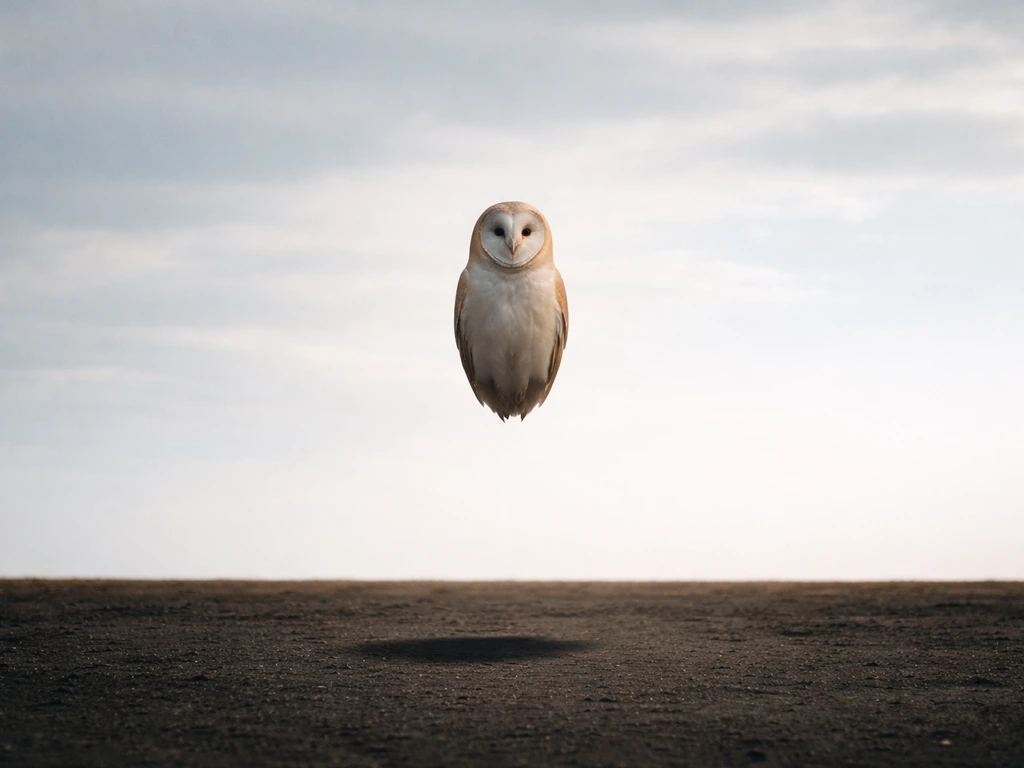
When someone says 'solitary bird,' they almost always mean one of two things: a bird species that genuinely lives and hunts alone rather than in flocks, or a metaphor for a person (or feeling) defined by independence, isolation, or being set apart from the crowd. Which one they mean depends entirely on context, and this guide will help you figure that out fast.
Solitary Bird Meaning: Literal, Symbolism, Folklore

Marcus Winters
22 Jun 2026
What 'Solitary' Actually Means in Bird-Related Phrases
The word 'solitary' comes straight from the Latin 'solitarius,' meaning alone or unaccompanied. In modern English, dictionaries like Cambridge and Merriam-Webster are careful to separate 'solitary' from 'lonely. Merriam-Webster defines “solitary” as “alone,” and notes that it is more about isolation from others than about feeling sadness solitary as “alone”. ' Being solitary is a state of physical separation from others; feeling lonely is an emotional response to that separation. A solitary bird isn't necessarily suffering. It's simply not with others of its kind, either by instinct, habit, or choice.
Collins Dictionary adds a useful detail: 'solitary' in animal biology specifically means an animal that lives alone or in pairs rather than in colonies or groups. That's the technical sense birders and naturalists use. But in everyday language and figurative speech, 'solitary' carries a heavier emotional weight: quiet, self-contained, possibly mysterious, definitely not gregarious. Those two layers, the biological and the emotional, are exactly why 'solitary bird' can mean very different things depending on where you encounter it. If you're also wondering about the odd phrase 'a bird without wings meaning' and how figurative meanings work, that same context rule applies.
The Most Common Interpretations People Mean
In practice, 'solitary bird' shows up in a handful of distinct contexts, and each one pulls the phrase in a different direction.
- A nature observation: someone spotted a bird feeding or resting alone and is describing its behavior, often wondering whether that's normal for that species.
- A spiritual or symbolic reference: the bird represents inner independence, a soul that walks its own path, or a spirit untouched by social noise.
- A literary or poetic image: poets and writers use solitary birds to evoke longing, freedom, resilience, or quiet dignity, often without naming the species at all.
- A metaphor for a person: 'She's a solitary bird' is a common figurative expression meaning someone is self-sufficient, private, or emotionally self-contained.
- A slang or cultural shorthand: in some subcultures and online conversations, 'solitary bird' signals someone who prefers their own company without apology.
The phrase sits close to related expressions like 'lone bird' and 'lonely bird,' but there's a meaningful difference in tone. Merriam-Webster’s thesaurus groups “solitary” with “lone” and “alone” as close synonyms for isolation from others, with nuanced differences handled in related entries blank" rel="noopener noreferrer">solitary with “lone” and “alone” as close synonyms. If you're also wondering about the lone bird meaning, the same ideas of singularity versus emotional tone can help you interpret it correctly. A lone bird emphasizes singularity; a lonely bird leans into sadness. A solitary bird, by contrast, often implies intention or natural disposition, which is why it tends to carry more dignity and less pathos than its siblings.
Symbolism and Spiritual Meanings
Across spiritual traditions, the solitary bird is rarely a figure of weakness. It's almost always associated with strength, clarity, and a kind of earned wisdom that comes from time spent alone. If you're wondering about the headless bird meaning, you'll find it often points to themes of loss, disorientation, or an unsettled spiritual message.
Solitude as Power
In many spiritual frameworks, a bird that stands or soars alone is a symbol of self-mastery. It doesn't need the flock for protection or direction. This maps onto real bird behavior: eagles and herons, both highly solitary, are apex predators or precision hunters who thrive precisely because they don't share territory. Spiritually, that translates to someone (or a soul) who has found its own center and doesn't require external validation.
Independence and Inner Freedom
The solitary bird as a symbol of independence shows up most strongly in meditative and contemplative traditions. In Christian mysticism, the Psalms use the image of a bird alone on a rooftop (Psalm 102) to represent a soul in deep prayer or grief, separated from ordinary life. In Sufi poetry, most famously in Rumi's use of the reed flute and bird imagery, the solitary bird calls out from a place of separation that is simultaneously painful and transcendent. The aloneness is the source of the song.
Survival and Resilience
There's also a survival symbolism tied to solitary birds. A bird that thrives without a flock has developed extraordinary self-reliance. In dream interpretation and spirit animal traditions, encountering a solitary bird is often read as a prompt to trust your own instincts, step away from group thinking, or prepare for a period of focused personal work. It's not an omen of loneliness so much as a signal that solitude has something to teach you right now.
Transformation and Mystery
Owls are the clearest example here. A solitary owl in folklore is almost universally a figure of hidden knowledge and transformation, the bridge between the visible world and what lies beyond it. Solitary birds in general, because they're seen alone and often in liminal spaces like dusk, shorelines, or forest edges, get associated with thresholds: moments of change, endings, and beginnings.
Cultural and Folklore Associations
The solitary bird appears in folklore across every inhabited continent, and the meaning shifts depending on the cultural lens.
| Cultural Tradition | Solitary Bird Symbol | Core Meaning |
|---|---|---|
| Western/European | Solitary raven or crow | Ill omen, messenger from another realm, or wise trickster |
| Native American (various) | Solitary eagle | Vision, spiritual power, connection to the divine |
| East Asian (Chinese, Japanese) | Solitary crane | Longevity, integrity, and refined solitude |
| Celtic | Solitary heron | Patience, self-reliance, secret knowledge |
| Islamic/Sufi | Solitary nightingale or hoopoe | The soul's longing for union, spiritual exile |
| Biblical/Christian | Solitary sparrow or pelican | Grief, prayer, or redemptive suffering |
What's consistent across these traditions is that the solitary bird is never just a background detail. It always carries weight. The bird alone signals that something meaningful is happening: a choice has been made, a threshold is being crossed, or a truth is being held quietly apart from the noise of the crowd.
Bird Species That 'Solitary Bird' Might Actually Be Referring To
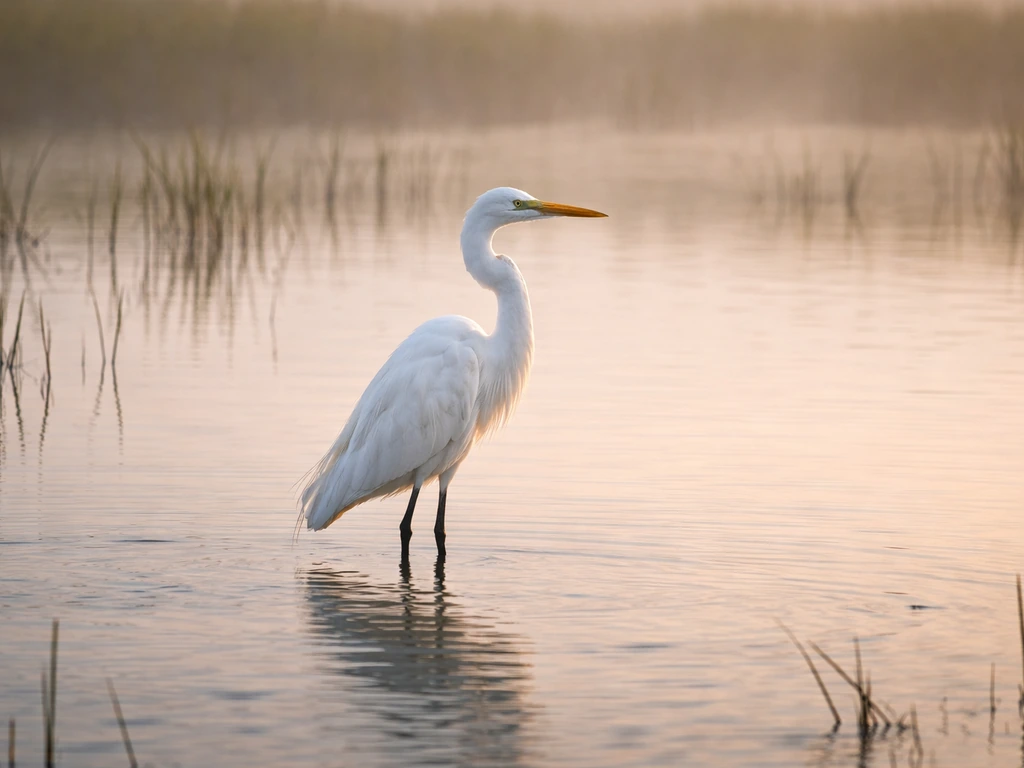
If someone is using 'solitary bird' in a naturalistic or birding context, they're probably thinking of a specific type of bird known for anti-social behavior. Here are the most commonly implied species and how to narrow it down.
| Species | Where It Lives | Why It's Called Solitary | Key Identifier |
|---|---|---|---|
| Great Blue Heron | North America, wetlands | Hunts alone, aggressively defends feeding territory | Tall, slate-blue, slow and still near water |
| Bald or Golden Eagle | North America, open terrain | Solitary hunter and nester outside breeding season | Large wingspan, seen soaring alone over ridges or water |
| Great Horned Owl | Americas, forests and suburban edges | Strictly solitary except during mating; nocturnal | Large, ear tufts, deep hooting call at night |
| Solitary Sandpiper | North America (migrant) | Literally named for its solitary behavior on migration | Small shorebird seen alone at inland ponds, bobs tail |
| Secretary Bird | African savanna | Hunts alone on foot across open grassland | Tall, eagle-like, long legs, crested head |
| Eurasian Bittern | European wetlands | Cryptic, solitary, hides in reed beds | Streaked brown, booming call, rarely seen in groups |
The Solitary Sandpiper is worth a special mention because it's literally named for the behavior: it migrates alone rather than in flocks, which is unusual for shorebirds. If a birder says 'solitary bird,' there's a reasonable chance they mean this species specifically, especially in a North American context during spring or fall migration.
If the context is more visual, think about the setting. A large bird standing perfectly still at the edge of a pond is almost certainly a heron. A bird circling high and alone over open country is more likely an eagle or a large hawk. An owl sitting alone in a tree at dusk is its own immediately recognizable image. The species matters because it shapes which layer of symbolism applies.
When 'Solitary Bird' Is Slang or a Metaphor for a Person
This is where the phrase gets personal. Calling someone a 'solitary bird' in conversation is a gentle, often affectionate way of describing a person who prefers their own company, operates independently, and doesn't conform to social expectations about togetherness. The phrase "one-legged bird" can be used in different ways, so its exact meaning depends on the context. It's usually not an insult. In fact, it often carries quiet respect, the same way calling someone a 'lone wolf' does, but with a lighter and less aggressive connotation.
In poetry and song lyrics, 'solitary bird' almost always refers to the speaker's inner state: a feeling of being apart from others, of watching the world from a distance, of finding meaning in stillness rather than in crowd noise. It connects to the same emotional territory as related phrases like 'lonely bird' or a 'bird without wings,' though the solitary bird usually feels more chosen and composed, less wounded. A bird without legs can also show up as a wordplay phrase, so it helps to know its intended meaning when it appears in conversation a 'bird without wings'.
In online and social media usage, 'solitary bird' occasionally appears as a self-descriptor for introverts, for people navigating grief or recovery, or for those who have deliberately stepped back from social circles. It's become a shorthand for a particular personality type: self-aware, self-sufficient, and comfortable in their own silence. This is where the hollow bird meaning can come up, since people often use the phrase to describe a specific emotional or symbolic sense.
How to Figure Out What 'Solitary Bird' Means in Your Situation
Here's a practical checklist to help you identify which meaning applies to what you're reading, hearing, or experiencing. In particular, a headless bird can suggest a meaning tied to being directionless, cut off from guidance, or dealing with something unsettling.
- Where did you encounter the phrase? A field guide or birding app points to a literal species. A poem, song lyric, or Instagram caption points to metaphor or mood. A spiritual text or dream journal points to symbolism.
- Is a specific bird named or described nearby? If yes, look up that bird's behavioral habits. If no bird is named and the focus is on feeling or identity, you're in metaphor territory.
- Is the phrase describing a person? If a human is being compared to a solitary bird, the meaning is almost always about personality: private, independent, self-contained.
- What's the emotional tone of the surrounding text? Grief or longing suggests the spiritual or poetic tradition (think Psalm 102 or Sufi imagery). Calm admiration suggests nature observation or a compliment about independence.
- What region or cultural background is the speaker from? The implied bird species shifts by region. A European speaker may be thinking of a heron or bittern. A North American speaker might mean an eagle, owl, or literally the Solitary Sandpiper.
- Is there any imagery of thresholds, change, or transitions nearby? References to dusk, seasons turning, journeys, or decisions suggest the transformation symbolism common in folklore and spiritual traditions.
- Is the tone self-referential or introspective? If the speaker seems to be describing themselves through the bird, it's personal metaphor, not nature observation.
Running through this checklist takes about 30 seconds and almost always produces a clear answer. The phrase 'solitary bird' is genuinely versatile, but it's not ambiguous once you know what to look for. If you're wondering about the lonely bird meaning, the best place to start is the context in which the phrase is used solitary bird. The context does the heavy lifting, and now you know exactly what signals to look for.
FAQ
How can I tell if “solitary bird” is meant literally (bird species) or as a metaphor?
Yes. In animal behavior talk, “solitary” usually points to the animal’s social structure (living alone or in pairs). In poetry, it more often describes the speaker’s chosen emotional distance or a quiet, self-contained vibe. A quick check is whether the sentence is about a species and habitat, or about feelings, prayer, grief, or transformation.
Is a “solitary bird” always about loneliness or sadness?
Not necessarily. “Solitary” describes being without company, while “lonely” signals distress or sadness. If the surrounding text mentions pain, longing, or lack of friends, then it is leaning emotional. If it mentions territory, hunting, or “not in flocks,” it is leaning biological.
When someone calls me (or someone else) a “solitary bird,” does it mean a good thing or a bad thing?
Often, but not always. Some people use it playfully to describe introversion or preference for quiet, while other usage can be a soft critique if it’s paired with words like “withdrawn,” “distant,” or “shut off.” Pay attention to the tone markers, like whether the speaker shows respect and admiration or concern.
How should I interpret “solitary bird” when it appears in dreams?
In dream contexts, “solitary bird” is commonly read as a prompt to rely on your own judgment, slow down, and focus on self-directed work. A practical safeguard is to avoid treating it like a fixed prophecy, especially if your dream content includes threat, helplessness, or panic, which may indicate stress rather than empowerment.
What if I only see a solitary bird once, does that still have symbolic meaning?
Yes. A bird can be alone temporarily, like after a storm, during nesting, or while injured, without carrying any symbolic “message.” If the phrase is used in casual conversation after a one-off sighting, it may just be descriptive. If it’s repeated, emphasized, or linked to a turning point, symbolism becomes more likely.
What details should I look for to identify which solitary bird species someone probably means?
In birding, the best way to narrow the species is to combine location, season, and behavior. For example, shorelines during migration often suggest solitary shorebird species, while dusk and woodland edges strongly point readers toward owl symbolism and owl sighting talk. The article’s “edge of water,” “circling high,” and “at dusk” cues are exactly the kind of context that changes the likely species layer.
Can “solitary bird” be an insult?
Usually no. “Solitary bird” is typically not an insult, but it can become one if the speaker uses it to imply social failure or emotional distance from others. If the phrase is paired with reassurance (like “they’re independent,” “they recharge alone,” “they’re wise”), it’s usually affectionate or respectful.
How do I know whether “solitary bird” implies chosen solitude versus being left out?
Check for the word “chosen” or references to agency. If the text says the person prefers solitude, seeks quiet, or finds peace alone, the meaning trends toward empowerment. If it frames solitude as imposed (for example, “cut off,” “left out,” “no one came”), it trends toward grief or hurt.
What’s the risk of confusing “solitary bird” with similar phrases used in the same text?
Yes, especially when it’s used alongside other “bird” metaphors. If the sentence also mentions direction, guidance, or “being lost,” it may be closer to a directionless or guidance-related metaphor than simple independence. If it mentions transformation or hidden knowledge, the imagery is more likely tied to threshold or revelation themes.
Does “solitary bird meaning” vary by culture or tradition, and how should I account for that?
If the author is quoting folklore, spirituality, or cultural symbolism, the safest approach is to treat the meaning as tradition-dependent rather than universal. A solitary bird can symbolize strength in one setting and grief in another, so the context markers (religious imagery, poetry tone, or specific cultural references) should guide you more than the general idea of “being alone.”
Next Article
Bird Without Legs Meaning: Idiom, Symbolism, and Examples
Understand bird without legs meaning as an idiom for being stuck, unsupported, or out of place, plus symbolism and examp