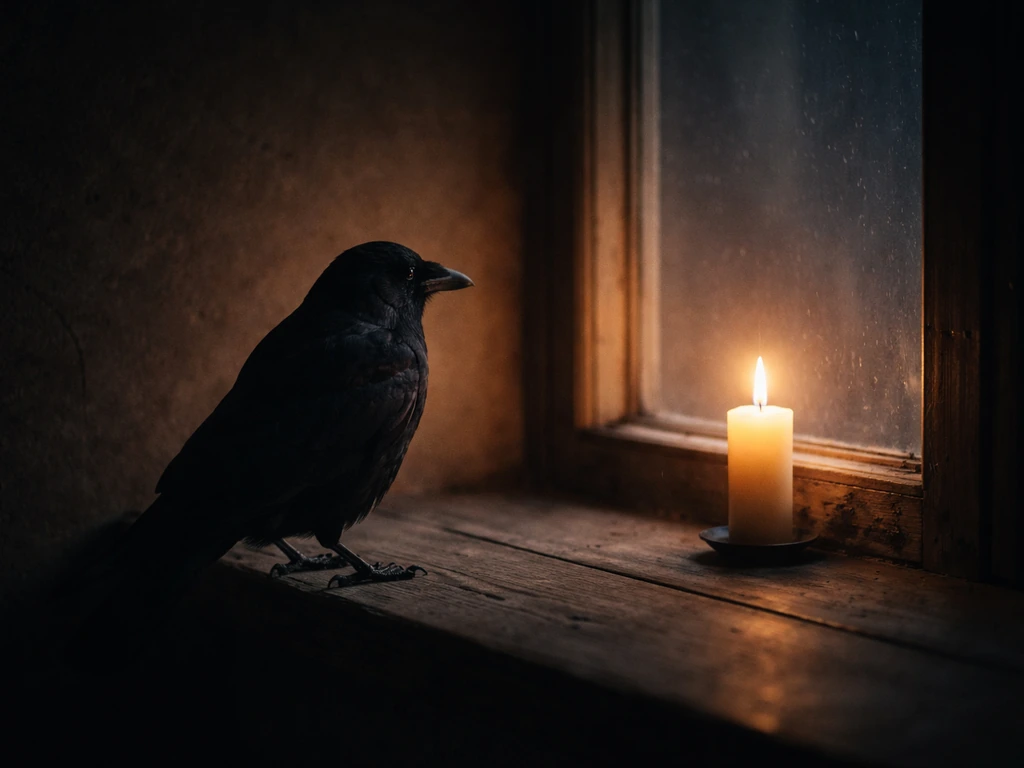
A 'lost bird' can mean two very different things depending on where you encountered the phrase. If someone posted it in a neighborhood Facebook group or texted it to you, they almost certainly mean a real bird is missing and they need help finding it. If you read it in a poem, a song lyric, a spiritual text, or someone used it to describe a person, it's a metaphor for feeling displaced, directionless, or vulnerable. Telling them apart takes about five seconds of context-reading, and this guide walks you through both cases from start to finish.
Lost Bird Meaning: Literal and Figurative Uses and What to Do

Marcus Winters
1 Jun 2026
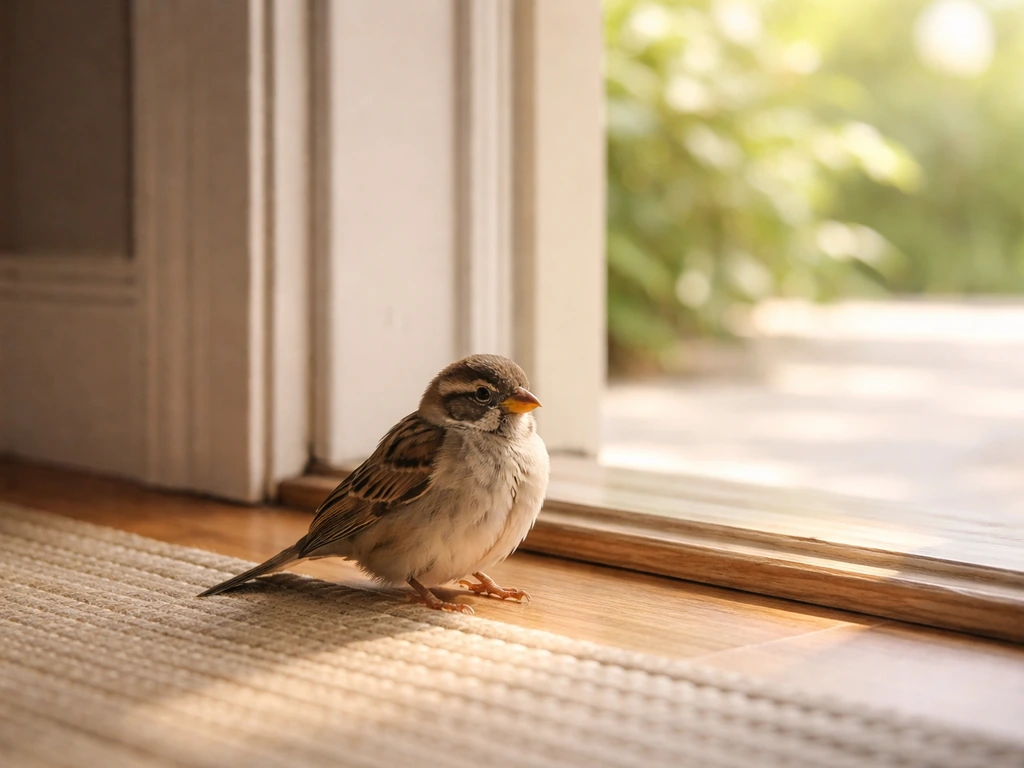
What people actually mean when they say 'lost bird'
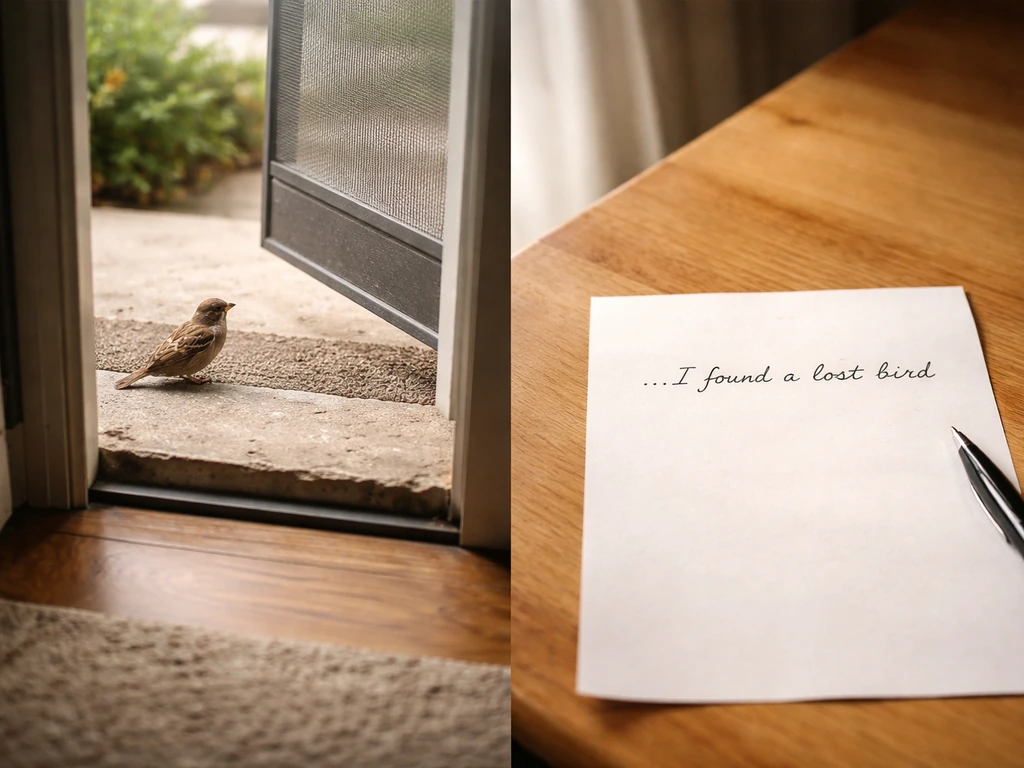
The phrase sits at a crossroads between the literal and the figurative, and people use it freely in both directions without always signaling which they mean. On the literal side, 'lost bird' is exactly what it sounds like: a pet bird, typically a parrot, cockatiel, parakeet, or similar companion bird, that has escaped or gone missing. Bird owners use the phrase the same way dog owners say 'lost dog.' You'll see it on handmade flyers taped to telephone poles, in neighborhood apps like Nextdoor, and in lost-pet Facebook groups. The emotional urgency is real and immediate.
On the figurative side, 'lost bird' is a well-worn metaphor used to describe a person (or sometimes a community or an idea) that has become untethered from where it belongs. If you're looking for the sorrow bird meaning, the key idea is that this metaphor points to grief and being emotionally untethered lost bird. Someone might call a grieving friend a 'lost bird,' describe a country in political chaos as a 'lost bird,' or use it in a song to capture the feeling of searching for identity. The metaphor works because birds are supposed to know where they're going. When one doesn't, it signals something deeply wrong. That contrast is what gives the phrase its emotional power.
What a 'lost bird' symbolizes in spirituality and folklore
Birds have carried navigational symbolism for thousands of years across cultures. Ancient sailors used them to gauge how close land was. Homing pigeons carried messages across war zones. The image of a bird that knows its path is deeply embedded in human mythology, which is exactly why a 'lost bird' hits so hard as a symbol.
In spiritual contexts, a lost bird often represents a soul searching for its purpose or a person in the middle of a life transition. If a bird shows up in a dream behaving as though it's disoriented or can't find its nest, many dream interpretation traditions read this as a sign of inner confusion, a need to find your 'home,' or anxiety about not belonging somewhere. Some Native American traditions view an unusual bird behaving erratically near a home as a message that something in the household is out of balance.
In European folklore, a bird that appears lost or enters a home uninvited has historically been treated as an omen, usually of change rather than outright doom. The exact meaning shifts depending on the bird species. A dove behaving strangely signals unrest in relationships. A sparrow that can't find its way out of a room is often associated with a coming challenge. The consistent thread across these traditions is displacement: the bird is somewhere it shouldn't be, doing something it shouldn't need to do, and that friction carries meaning.
The lost bird also shows up as a symbol of vulnerability and innocence. Because birds are fragile and depend on instinct to survive, a lost one represents something pure and unguarded that has been separated from its protection. This overlaps with related expressions like 'broken bird' and 'fragile bird,' both of which use the same fragility to evoke emotional woundedness in a person. The lost bird adds the dimension of direction: it's not just hurt, it doesn't know where to go. If you're specifically asking about the origami bird meaning, the same themes of hope and belonging show up, but in a more symbolic, intention-based way.
How 'lost bird' works in language, slang, and culture
As a metaphor in everyday language, 'lost bird' tends to describe people rather than situations. You'll hear it used affectionately about someone who seems adrift: 'She's been a bit of a lost bird since the move.' It carries warmth and concern more than judgment, which distinguishes it from harsher bird idioms. Calling someone a lost bird suggests they need guidance or a safe landing place, not that they've done something wrong.
In music, 'lost bird' has appeared across genres as shorthand for longing and displacement. It's a compact image that packs a lot of emotional weight into two words: freedom (a bird can go anywhere) combined with tragedy (but this one can't find its way). Writers and lyricists use it specifically because it avoids sentimentality while still hitting the emotional mark.
Regionally, the phrase doesn't carry dramatically different meanings in English-speaking countries, but the context shifts. In the US, 'lost bird' in community channels almost always means a literal missing pet. In literary or spiritual conversations, especially in communities that engage with symbolism, it skews metaphorical. Outside English, the equivalent phrases in Spanish ('pájaro perdido') and French ('oiseau perdu') follow the same dual-use pattern, appearing in folk songs and expressions to describe wandering or longing.
How to tell what someone means when they say 'lost bird'

Context does almost all the work here. You only need to ask yourself a few quick questions to figure out which sense is being used.
| Clue to look for | Points to literal (real bird) | Points to figurative (metaphor) |
|---|---|---|
| Where did you see/hear it? | Community board, social media lost-pet post, flyer, text from a neighbor | Song lyric, poem, spiritual text, conversation about someone's emotional state |
| Does it include a description? | Yes: color, species, name, location, contact info | No: used to describe a feeling or a person |
| What's the tone? | Urgent, practical, distressed | Reflective, poetic, empathetic |
| Who said it? | A bird owner, a neighbor, a shelter worker | A writer, a friend describing someone, a therapist or spiritual advisor |
| Is there a call to action? | Yes: 'please call if you see him' | No: the phrase is the point itself |
If the phrase comes with a photo, a name, a location, or a phone number, it's literal. If it's in a sentence like 'he's been a lost bird since his divorce,' it's metaphorical. If you meant paper bird instead, the meaning can shift based on the design and who made the fold lost bird. If you are trying to understand the worry bird meaning, focus on the context to see whether it is meant literally or as a metaphor. To understand the trash bird meaning, look at the speaker and how they use the phrase as slang. You can usually tell within the first sentence of context. When you genuinely can't tell, ask. There's no harm in responding to someone with 'are you talking about an actual bird, or using it as a metaphor?' It's a reasonable question and saves everyone time.
What to do when someone means a real lost bird
If you're the one who lost a bird, or you've found one that seems to be a pet, here's what to do. The ASPCA also recommends bringing a recent photo and contacting local animal control agencies, veterinary hospitals, shelters, and rescue groups when a pet bird is missing, along with checking many communities’ local “Lost Pet” Facebook pages blank" rel="noopener noreferrer">contact local animal control agencies, veterinary hospitals, shelters, and rescue groups. If you find a lost pet, the blank" rel="noopener noreferrer">Maryland SPCA advises taking the animal to a veterinarian or animal shelter so it can be scanned for a microchip that links to the owner. Speed matters: pet birds that escape outdoors are vulnerable to predators, weather, and dehydration within hours, especially smaller species like budgies and cockatiels.
If your own bird has gone missing
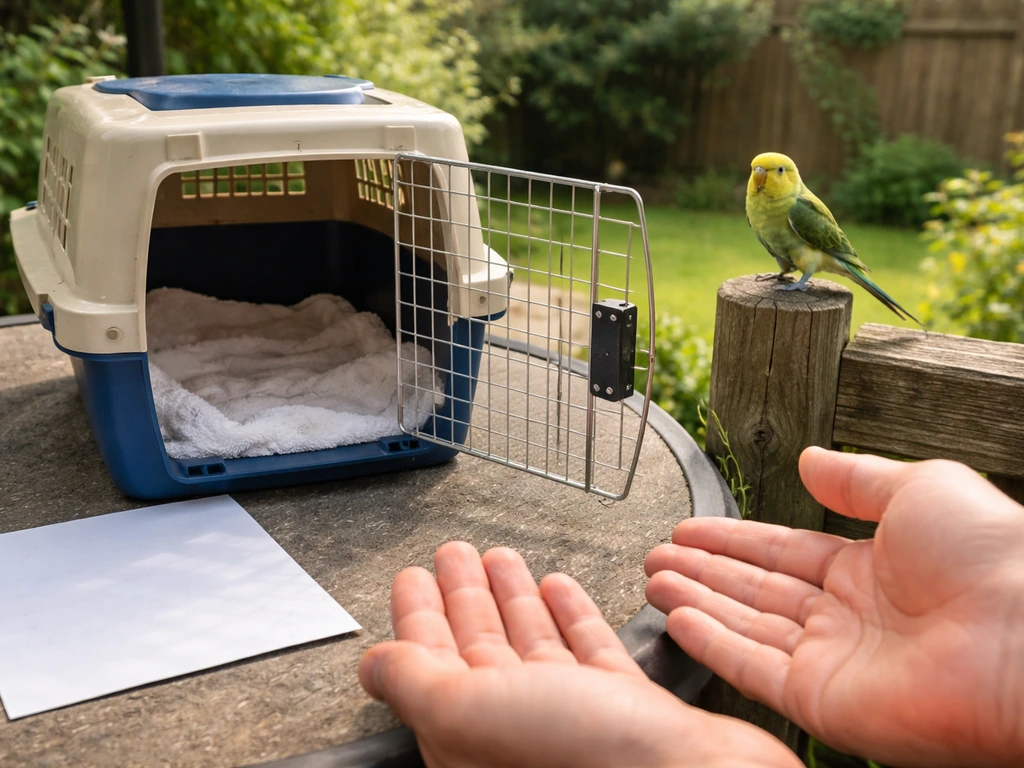
- Search the immediate area first, starting with trees and high perches near the escape point. Escaped birds often land close to home and call out if they hear familiar voices.
- Bring a recent photo of the bird when you go looking and when you contact anyone for help.
- Contact local animal control agencies, veterinary hospitals, and animal shelters (both municipal and private) right away. Give them a description and your contact information.
- Post to community channels: neighborhood Facebook groups, Nextdoor, and local 'Lost Pet' pages. Include a clear photo, the bird's name, species, any distinctive markings, and your phone number.
- Put up flyers at pet supply stores, grooming shops, veterinary offices, and any nearby parks. These are the places where people who care about animals pay attention to bulletin boards.
- Place the bird's cage outside near the escape point with food and water visible. A familiar cage can attract a lost bird back.
- Contact local bird rescues and parrot clubs, as they often have networks of people watching for escaped birds and may have trapping equipment to help.
If you've found a bird that seems to be someone's pet
- Don't try to grab a frightened bird by force. A scared bird can injure itself and you. Approach slowly and speak calmly; many pet birds will step onto a hand or a perch if you offer one gently.
- Take the bird to a veterinarian or animal shelter to have it scanned for a microchip. Many pet birds are chipped, and this links directly to the owner's contact information.
- If the bird is banded (has a leg band), note the numbers and letters on it. These can be traced through bird registries.
- File a found-pet report online with your local shelter or bring the bird in. Shelters log found animals and owners search there first.
- Post in the same community channels where lost-bird notices appear so the owner can find your report.
- Keep the bird warm, calm, and away from other pets while you work on finding the owner.
What to do when someone uses 'lost bird' as a metaphor
If someone calls you a lost bird, or describes someone they care about that way, they're extending empathy, not criticism. The right response is to engage with what's underneath it. They're saying something or someone feels displaced, unmoored, or without direction. In conversation, that's usually an invitation to listen, not to immediately problem-solve. In a spiritual or therapeutic context, sitting with the feeling rather than rushing to fix it is usually the more useful move.
If you're the 'lost bird' in the metaphor and the description resonates, it can actually be a helpful framing. It suggests the disorientation is temporary, not permanent. Birds find their way. The metaphor carries implicit hope: the lostness is a condition, not an identity. That's meaningfully different from phrases like 'broken bird,' which implies damage, or 'worry bird,' which focuses on anxious habits. A lost bird just needs to find its bearings.
Similar phrases worth knowing and where people get confused
A few related phrases get mixed up with 'lost bird' regularly, and the distinctions matter.
- Lost bird vs. stray bird: 'Stray' usually applies to mammals (stray dog, stray cat) in everyday English. When people say 'stray bird,' they typically mean a wild bird that's in an unusual location, not a lost pet. 'Lost bird' almost always implies a pet that belongs to someone.
- Lost bird vs. found bird: These are two sides of the same situation. A 'found bird' post means someone has the bird in hand and is looking for the owner. A 'lost bird' post means the owner is looking for the bird. Both need the same community channels and shelter notifications.
- Lost bird vs. free bird: 'Free bird' is its own loaded phrase, thanks largely to Lynyrd Skynyrd, and carries connotations of independence and refusal to be tied down. A lost bird didn't choose its displacement. A free bird did. The emotional valence is opposite.
- Lost bird vs. sorrow bird: 'Sorrow bird' is a more explicitly emotional metaphor, used in poetry and folklore to represent grief or lamentation. A lost bird can feel sorrowful, but the emphasis is on direction rather than feeling. They're related but not interchangeable.
- 'A bird in a gilded cage' vs. 'lost bird': The gilded cage idiom describes someone trapped in comfort. A lost bird is the inverse: they have freedom but no direction. Both are about belonging but from opposite ends.
- Lost bird in birding contexts: Among birdwatchers, a 'lost bird' or 'vagrant' refers to a wild bird found far outside its normal range, blown off course by weather or migrating abnormally. This is a technical use that's separate from the pet-loss and metaphorical uses, but it's worth knowing if you encounter the phrase in a nature or birding community.
The quickest way to cut through all the possible meanings is to look at who's saying it and where. Birders mean a vagrant. Pet owners mean a missing companion. Writers and people in emotional conversations mean someone who's lost their sense of direction or home. Once you know the context, the meaning is almost never ambiguous.
FAQ
How can I tell whether “lost bird” is literal or figurative when the context is unclear?
If the post includes a photo, a species (for example, cockatiel or parakeet), an address or cross streets, and a contact method, treat it as literal. If you see emotional language (divorce, grief, anxiety, identity) or no identifiable bird details, treat it as metaphor, even if “bird” is mentioned in a social caption.
What should I do differently if the “lost bird” likely refers to a missing pet bird?
For a missing pet bird, prioritize verification and speed over wide posting. Ask for the bird’s band or identifying marks, the last known time outside, and whether it can mimic calls. If you can, put the carrier outside and play familiar sounds, then check early morning and late afternoon when birds are more likely to call back.
If someone calls themself a “lost bird,” how should I respond?
Avoid assuming the person is “in trouble” when it is metaphorical. “Lost bird” is usually an invitation to listen for displacement or grief, so start with questions like “What feels like it’s not fitting right now?” rather than jumping to advice, solutions, or motivational talk.
Is it okay to share a literal “lost bird” notice even if I only have partial details?
If you want to help a literal case, do not wait for perfect information. Post what you know now (bird type, appearance, location, last seen time), and update as you receive new details. Also ask the poster whether they have already contacted local animal services or bird rescues, since those channels can overlap.
Can “lost bird” be a kind or supportive metaphor rather than something negative?
Yes, “lost bird” can be used affectionately and still be metaphorical. If the speaker is talking about a move, breakup, grieving, or feeling out of place, the tone is often supportive, not judgmental, and they may want empathy more than correction.
What if someone says a “lost bird” showed up, but I’m not sure whether they mean a person or an actual bird?
“Found it” language helps. If someone says “a lost bird showed up,” ask whether it’s a new message from a person or an actual bird sighting. For literal situations, confirm the species and behavior, then help with immediate safety steps like keeping the bird contained and minimizing stress.
Is it safe to treat spiritual or dream “lost bird” symbolism as a prediction?
If you are discussing symbolism, be careful not to over-literalize folklore or dream meanings as fixed predictions. Use them as reflective prompts, for example, “What feels like it has lost its way right now?” rather than treating the phrase as a guaranteed omen.
Does the meaning change by country, platform, or type of conversation?
In English, the literal meaning tends to dominate in neighborhood and community feeds, while metaphor dominates in literature, therapy, and personal-emotion conversations. If a single sentence includes personal events or feelings, switch to metaphor, even if the word “bird” is used.
How is “lost bird” different from related bird phrases like “broken bird”?
A common mistake is treating “lost bird” as interchangeable with “broken bird.” “Broken bird” implies damage or harm already occurred, while “lost bird” emphasizes directionless or searching. If you’re advising someone, match the framing to what they are actually experiencing (searching versus coping with injury).
If “lost bird” refers to paper or origami in my context, what should I look for to interpret it correctly?
If you meant paper bird (origami) and the phrase shows up, the meaning usually shifts toward intention, hope, and care rather than emotional displacement alone. Check whether the context mentions giving, making, or wishing, since that often signals a specific symbolic purpose.
Next Article
Sorrow Bird Meaning: What Bird of Sorrow Usually Implies
Meaning of sorrow bird and bird of sorrow as grief or loss symbolism, plus context tips and how to interpret it.