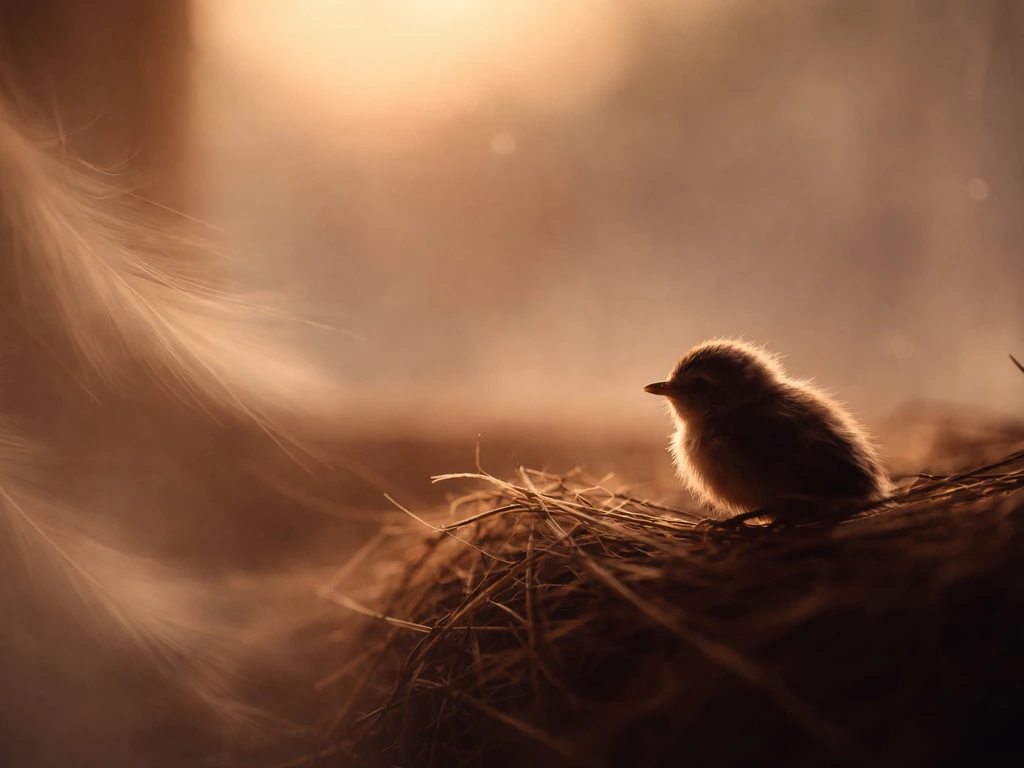
A paper bird most commonly means one of two things: a literal folded paper model (usually an origami bird or a simple craft decoration) or a symbolic object carrying a message, wish, or fragile hope. The Newberry Library’s research guide defines “ephemera” as “minor transient documents of everyday life,” mostly printed on paper blank" rel="noopener noreferrer">“minor transient documents of everyday life”. If you came across the phrase “trash bird meaning,” it is usually referring to a symbolic message or wish rather than a literal craft bird a message, wish, or fragile hope. Which meaning applies depends almost entirely on context. If someone hands you a folded crane, that's craft and tradition. If a poet writes about sending a paper bird, that's almost certainly a metaphor for a fleeting thought, a letter, or a wish released into the world. The good news is that a few quick questions will tell you exactly which meaning is at play.
Paper Bird Meaning: Literal, Symbolic, and Cultural Uses

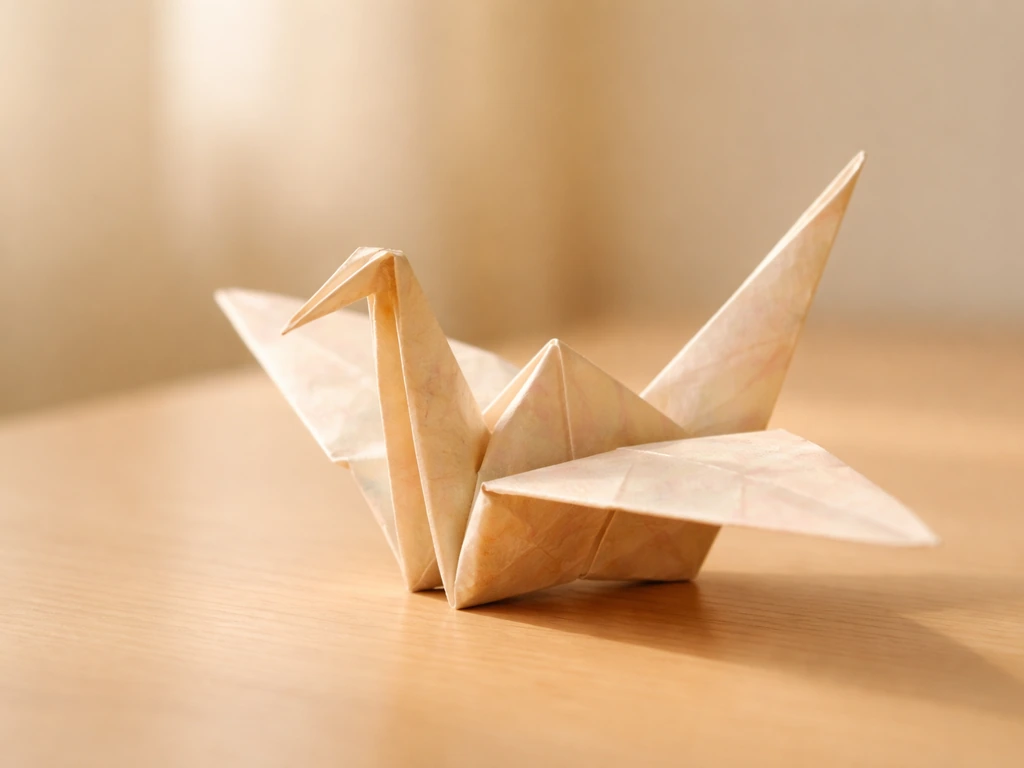
What 'paper bird' actually means in everyday English
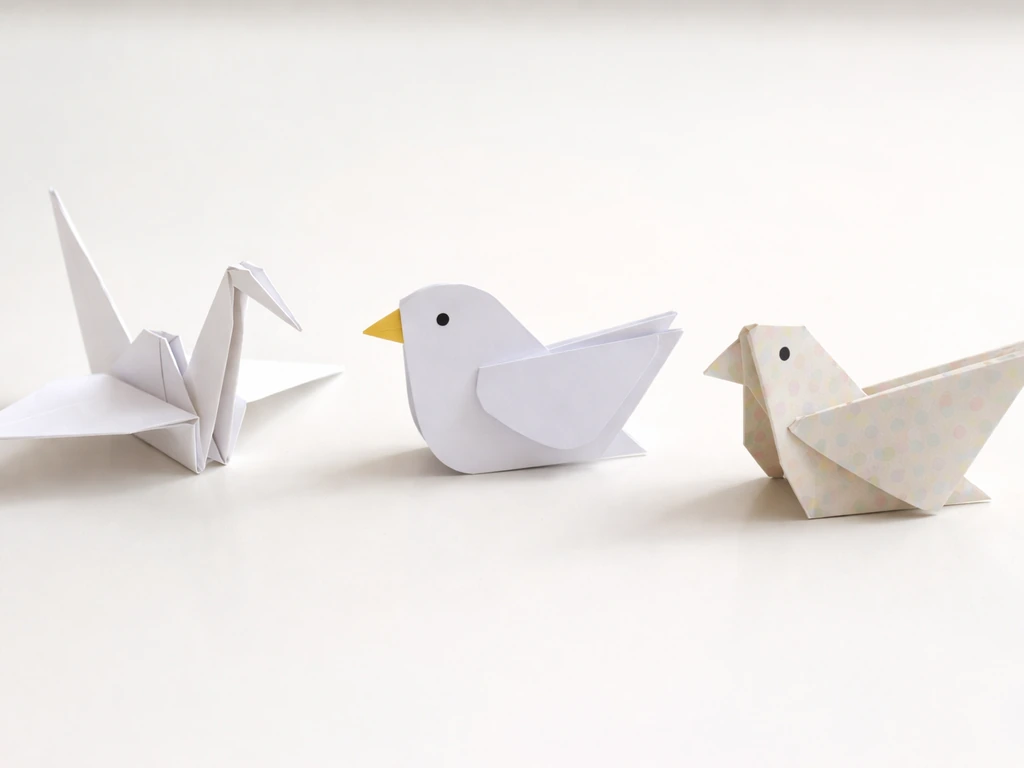
In plain everyday English, a paper bird is a bird made from paper, full stop. That could be a carefully folded origami crane, a cut-and-paste craft from a school activity sheet, or even a quick bird shape folded from a sticky note. The phrase shows up constantly in craft tutorials, classroom instructions, and hobby communities with that straightforward, literal meaning. When a city parks department puts out a 'Paper Bird Take & Make' packet, nobody is expecting spiritual symbolism. They want kids to fold something and take it home.
But the phrase also floats into figurative territory because both of its component words carry independent symbolic weight. 'Bird' in English is tied to freedom, messages, and the soul across dozens of traditions. 'Paper' is tied to writing, records, impermanence, and fragility. Put them together and you have a phrase that can effortlessly mean a temporary hope, a written message, or a tribute to something lost, depending on who is using it and why.
The cultural and spiritual symbolism packed into paper birds
The deepest symbolic layer behind paper birds comes from the origami crane tradition in Japan, specifically the concept of senbazuru, the thousand paper cranes. The legend holds that folding one thousand cranes earns the folder a wish, and the practice became globally famous through the story of Sadako Sasaki, a young girl who contracted leukemia after the Hiroshima bombing and began folding cranes hoping for a wish for health. The Hiroshima Peace Memorial Museum holds her cranes as artifacts. Friends and strangers still donate folded senbazuru chains to this day. The paper bird in this tradition carries hope, healing, resilience, and a very specific anti-war peace message all at once.
Beyond Japan, the symbolism of the paper bird taps into something broader about what paper itself means. Paper is, as one way of thinking about it, both permanent and temporary at the same time. Wikipedia’s “Ephemerality” summarizes the same idea, saying that paper is the medium of permanence and ephemerality at once Paper is, as one way of thinking about it, both permanent and temporary at the same time.. It records words but tears easily. It can survive centuries in an archive or dissolve in rain. That tension is exactly what makes a paper bird such a resonant image in spiritual or poetic contexts: it represents something real and intentional (a crafted object, a recorded wish) that is also fragile and fleeting. Bristol Museums describe origami birds as symbols of long life, hope, and healing. That layered meaning travels well across cultures because the paper-and-bird pairing naturally evokes transformation, a physical thing made by human hands that then takes the shape of something free.
In some spiritual and memorial contexts, paper birds (especially cranes) are folded as offerings or tributes for the deceased. The act of folding becomes a form of prayer or remembrance. The finished bird is not the point so much as the intention poured into each fold.
Paper birds in craft, folk tradition, and origami practice
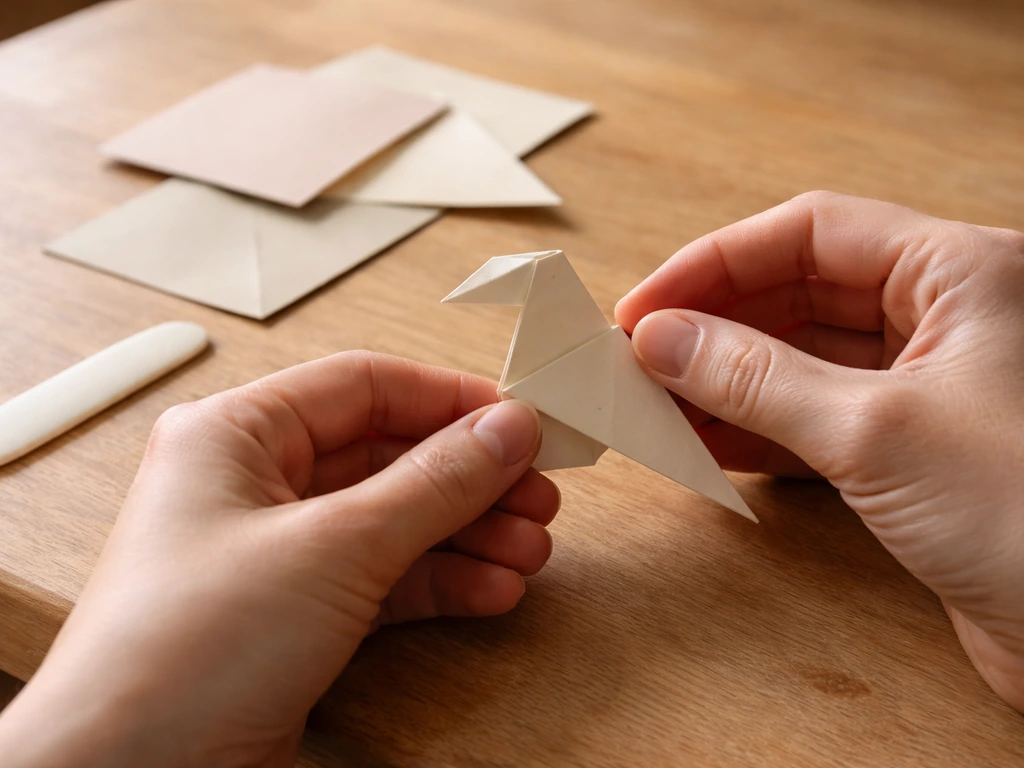
Origami itself comes from the Japanese words 'ori' (fold) and 'kami' (paper), and bird models have been among the most popular folds for centuries. The classic origami crane, or tsuru, is probably the most recognized paper bird worldwide, but it is far from the only one. Named models like the Chataka origami bird and regional folk versions (such as the Spanish pajarita, a stylized bird shape that also has an Arabic equivalent, 'asfur,' meaning folded paper bird) show how deeply the paper bird concept is embedded in folk craft traditions across cultures, not just Japan.
In educational and civic settings, paper bird crafts are used as hands-on activities that gently introduce folding skills, patience, and even cultural history. Scholastic's teaching notes for the book 'Paper Boat, Paper Bird' suggest students think about what secret message they would write before folding their paper bird model, explicitly connecting the craft act to the message-sending symbolism. That is a pretty elegant illustration of how craft and figurative meaning blur in practice: even a classroom activity can become a lesson in symbolic communication.
Folk traditions around paper birds as offerings or omens vary by region. In East Asian traditions, paper objects (including birds) are sometimes burned as offerings for ancestors, sending the symbolic gift into the spirit world through fire. The paper crane chains hung at peace memorials like the one at Hiroshima are a form of collective offering. In Western folk craft, paper birds appear more as decorative omens or seasonal symbols, like doves at weddings or cranes hung for luck in a new home.
Idioms and figurative uses: where 'bird' meets 'paper'
There is no single classic idiom called 'paper bird' in the way that 'a bird in the hand' is a fixed phrase. However, the combination of bird symbolism and paper symbolism creates a very consistent figurative pattern that appears across creative writing, poetry, and even online fiction communities. When someone uses the phrase figuratively, they are almost always drawing on one of a few recurring meanings. “Worry bird meaning” often points to the more figurative idea of paper birds as messages, wishes, or symbols of fragile hope.
- A fragile or temporary hope: something wished for that might not survive, like folding a crane to make a wish you are not sure will be granted.
- A message or letter: birds carry messages in folklore and literature, and paper is the medium of writing, so a paper bird naturally implies a note or communication traveling from one person to another.
- A memorial or tribute: especially in contexts referencing the thousand cranes tradition, a paper bird signals remembrance of someone lost.
- Transformation through making: the act of taking a flat sheet and folding it into a living shape is itself a metaphor for creative or personal transformation.
- Something ephemeral yet intentional: borrowing from the dual nature of paper (fragile but capable of recording meaning) to describe a fleeting but sincere gesture.
In online gaming and fan fiction communities, 'paper bird' has taken on a very specific additional meaning as a message-delivery object. In Dungeons and Dragons discussions, for example, players describe paper birds as enchanted folded notes that fly to a recipient, carrying written instructions or calls for help. This fictional use is a direct descendant of the older bird-as-messenger and paper-as-letter symbolism, just translated into a fantasy setting. If you encounter 'paper bird' in fandom or tabletop RPG contexts, 'magical message carrier' is very likely what is meant.
How to figure out the exact meaning when you encounter it
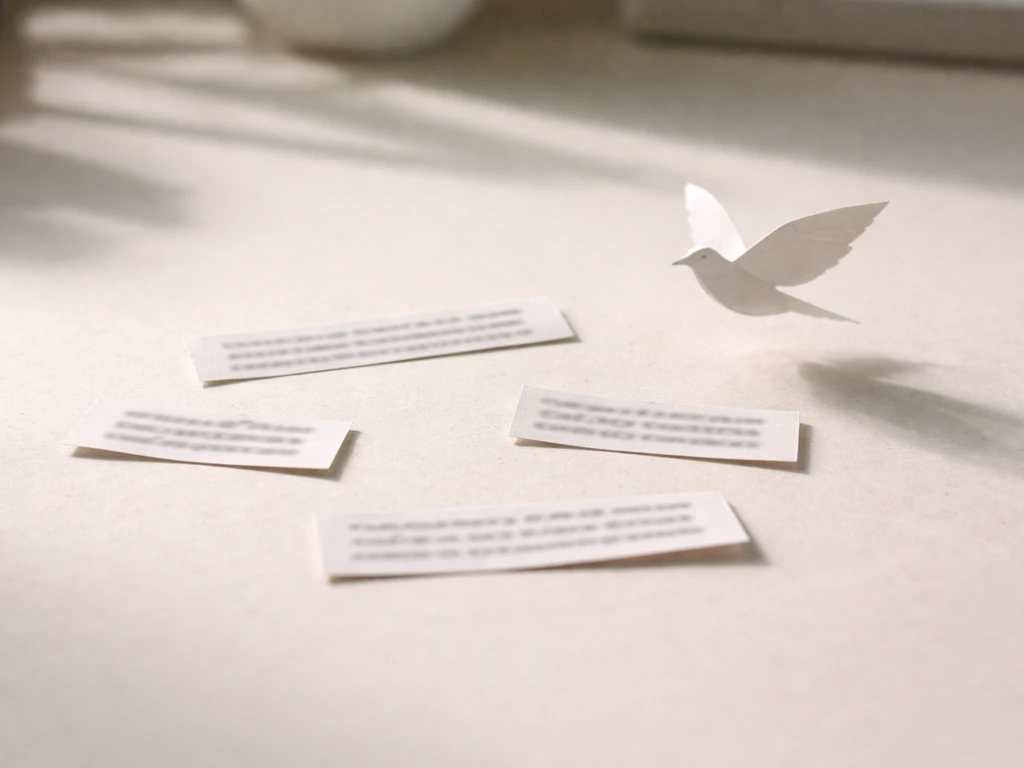
The fastest way to land on the right meaning is to look at the surrounding context and ask a handful of targeted questions. Here is a practical framework for disambiguation.
- Is there a tutorial, instructions, or craft context nearby? If the phrase appears next to words like 'fold,' 'crease,' 'take & make,' or 'step-by-step,' you are looking at the literal craft meaning.
- Is the word 'send,' 'message,' 'write,' or 'letter' close by? That points strongly to the message/communication symbolism.
- Is there grief, loss, a memorial, or peace mentioned? That signals the senbazuru/tribute interpretation.
- Is the tone poetic, abstract, or emotional? Fragile hope or transformation symbolism is almost certainly what is meant.
- Is the context a game, story, or fan community? Look for the magical message-carrier meaning.
- Is there cultural specificity (Japan, Hiroshima, cranes, wishes)? That locks in the origami tradition and its associated meanings of resilience, peace, and healing.
| Context clue | Most likely meaning | Quick example |
|---|---|---|
| Tutorial, instructions, craft activity | Literal folded paper model | 'Here are the steps to make a paper bird.' |
| Message, letter, sending, writing | Communication or wish being carried | 'She released a paper bird carrying her hopes.' |
| Memorial, peace, Hiroshima, thousand cranes | Tribute, resilience, anti-war hope | 'The children folded paper birds for the memorial.' |
| Poetry, emotion, fragility, impermanence | Temporary or fragile hope/intention | 'His promises were just paper birds.' |
| Game, fiction, fandom, D&D | Magical message-delivery object | 'Send a paper bird to the guild hall.' |
| Wedding, new home, decoration | Luck, blessing, folk omen | 'Paper birds hung from the ceiling for good luck.' |
One shortcut worth keeping in mind: if the paper bird is being made, it is usually about the craft or the act of transformation. If the paper bird is being released, sent, or described as already gone, it is almost certainly symbolic, pointing to a message, a wish, or a memorial.
How to use or interpret 'paper bird' with confidence
If you are interpreting someone else's use of 'paper bird,' in a poem, an Instagram caption, a song lyric, or a conversation, run it through the quick checklist above first. Nine times out of ten, the context signals which layer is active. If you are still uncertain, the safest default is the hope-and-message reading, because that is the figurative meaning with the broadest cultural recognition across Western and East Asian contexts. If you are specifically wondering about the sorrow bird meaning, it helps to compare how the phrase is used in context and what kind of bird or symbolism it refers to.
If you want to use 'paper bird' in your own writing or conversation, it is worth knowing which meaning you are reaching for so your audience follows you. Using it as a metaphor for fragile hope ('that plan is just a paper bird') works well in English-speaking contexts where the impermanence of paper is immediately understood. In that sense, the fragile bird meaning is about hope or a message that can be easily lost but still carries real intention fragile hope. Using it in a memorial or wishing context will land most powerfully with audiences who know the thousand cranes tradition, so a brief nod to that context (a word like 'crane' or 'fold a wish') helps signal the right layer.
If you are working with art or poetry that features paper birds alongside other fragile or diminished bird images, it is worth comparing what those other images are doing. A paper bird sits in interesting company next to ideas like a fragile bird (something delicate and vulnerable), a broken bird (something damaged but still present), or a lost bird (something searching or untethered). In that context, a broken bird meaning is usually about something damaged yet still emotionally present, often pointing to loss, struggle, or healing. Each of those images does slightly different emotional work, and understanding the paper bird's specific angle, fragility combined with intentionality, human-made rather than born, helps you read the contrast the artist or writer is probably building.
For origami specifically, if you encounter 'paper bird' in a symbolic or spiritual post and want to go deeper, the distinction between a generic paper bird and an origami crane matters. The crane carries centuries of specific cultural meaning around wishes, health, and peace. A generic paper bird (dove, sparrow, any folded shape) carries softer, more general symbolism. Knowing which bird is folded sharpens your interpretation considerably.
The bottom line is this: 'paper bird' is a phrase that rewards the few seconds it takes to read the surrounding context. Literal or symbolic, craft or message, memorial or metaphor, the meaning is almost always clear once you know what signals to look for. For more on the “paper bird” symbolism behind cranes and other folds, see the origami bird meaning guide. And when it is used well, in a poem, a tribute, or a wishing practice, it carries more weight than almost any other two-word bird phrase you will encounter.
FAQ
If someone says “paper bird” but I only see a photo of a folded crane, what meaning should I assume?
Assume symbolism unless the post clearly frames it as a craft activity (instructions, materials, or a “make and take” packet). A photo alone often signals the message layer, especially if the caption includes words like wish, hope, healing, or memory.
How can I tell the difference between a “wish bird” and a “message bird” when the phrase is vague?
Look for verbs and time language. Wish language uses future-tense cues (hopes, prayers, “I want,” “may you”). Message language uses delivery cues (send, mail, pass along, instructions) and often mentions what the bird carries (a note, letter, request).
Does “paper bird” ever mean something negative, like an insult or manipulation?
Yes, in some online slang or story contexts a “paper bird” can imply something that looks meaningful but is flimsy or disposable (a cheap promise, a manipulative gesture, or empty reassurance). If the surrounding text emphasizes disappointment or deception, interpret it as fragile-but-false rather than heartfelt hope.
What if the paper bird is a dove instead of a crane, do I read it the same way?
Not exactly. A dove model often leans toward peace, weddings, or gentleness, while a crane (tsuru) tends to evoke the specific thousand-cranes wish and resilience tradition. The bird type is a major disambiguator even when the phrase “paper bird” is generic.
Is there a difference in meaning if the paper bird is being burned or released into water or fire?
Yes. Burning or intentional destruction usually points to an offering or symbolic sending, not a preserved message. Releasing into water can suggest letting go or sending a wish away, and the emotional focus is typically closure rather than retention.
Can “paper bird” mean a real bird made of paper, or does it always have symbolism?
It can be literal. If the context is a classroom, party activity, tutorial, or DIY packet, the phrase usually means the physical craft itself (origami or cut-and-fold decoration). Symbolism becomes likely when the context mentions intention, remembrance, or “what it represents.”
How should I interpret “trash bird meaning” if I’m not sure whether it’s a joke?
Treat it as figurative by default, especially if “trash” is contrasted with value, hope, or a “wished for” outcome. If the text also references disposal literally (throwing away a craft, a school worksheet), then it is likely a literal joke, not a thematic symbol.
What are common mistakes people make when interpreting paper bird meaning?
The biggest mistakes are (1) assuming every paper bird refers to the thousand-crane story, and (2) ignoring the surrounding action. Bird type (crane vs dove vs generic bird) and action (making vs sending vs releasing) usually determine the correct layer.
If I want to use “paper bird” in writing, how do I make the intended meaning clear?
Anchor it with one specific signal word. Use “crane” and “fold a wish” for the wish-and-hope layer, or use “send,” “note,” or “letter” for the message-delivery layer. Without one of those cues, readers may default to the literal craft sense.
Does the meaning change depending on whether the paper bird is handmade by someone vs mass-produced?
Often, yes. Handmade birds (especially folded by the person who also expresses intention) lean more symbolic and personal. Mass-produced decorations typically read as literal or decorative unless the text emphasizes prayer, memory, or a written wish placed into it.
Fragile Bird Meaning: Literal and Symbolic Uses Explained
Find the meaning of fragile bird in context, literal and symbolic uses, and what to do if a real bird needs help.