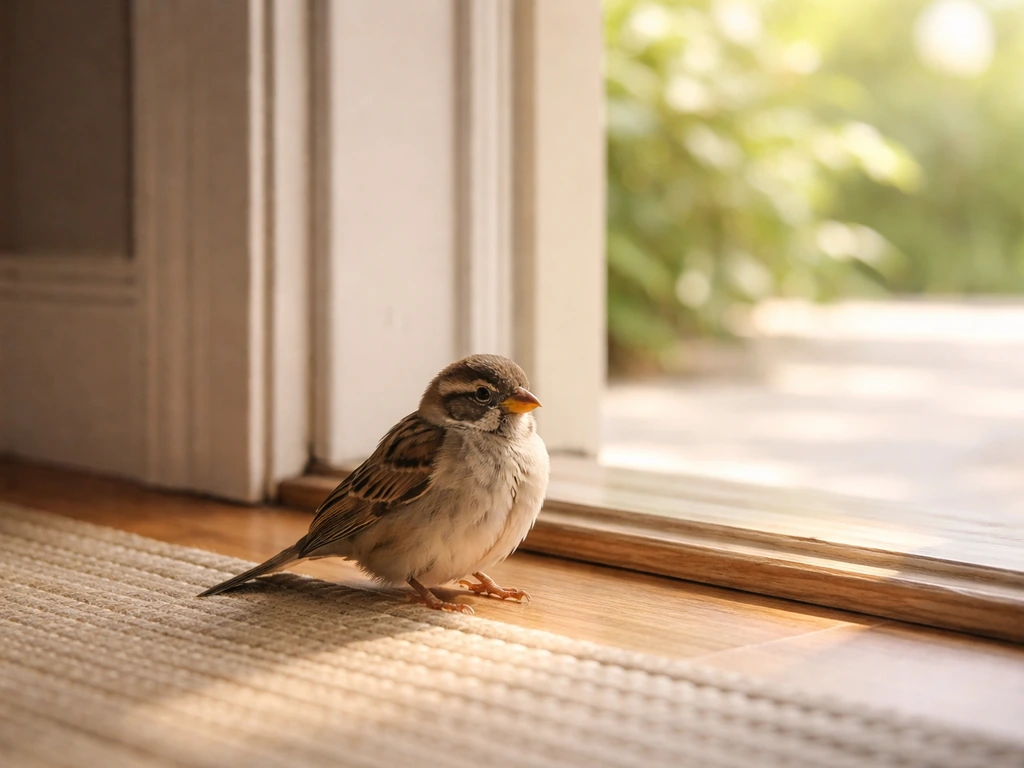
When someone calls a person a 'trash bird,' they're essentially saying that person is worthless, annoying, or beneath notice. It's a dismissal, not a compliment. The phrase borrows from birding slang, where 'trash bird' has been used for decades to describe species so common and ubiquitous that serious birders stop paying attention to them entirely. Applied to a person, it carries that same energy: you're not even interesting enough to be worth disliking properly. You're just... noise.
Trash Bird Meaning: What It Says and How to Respond

Marcus Winters
18 Jun 2026
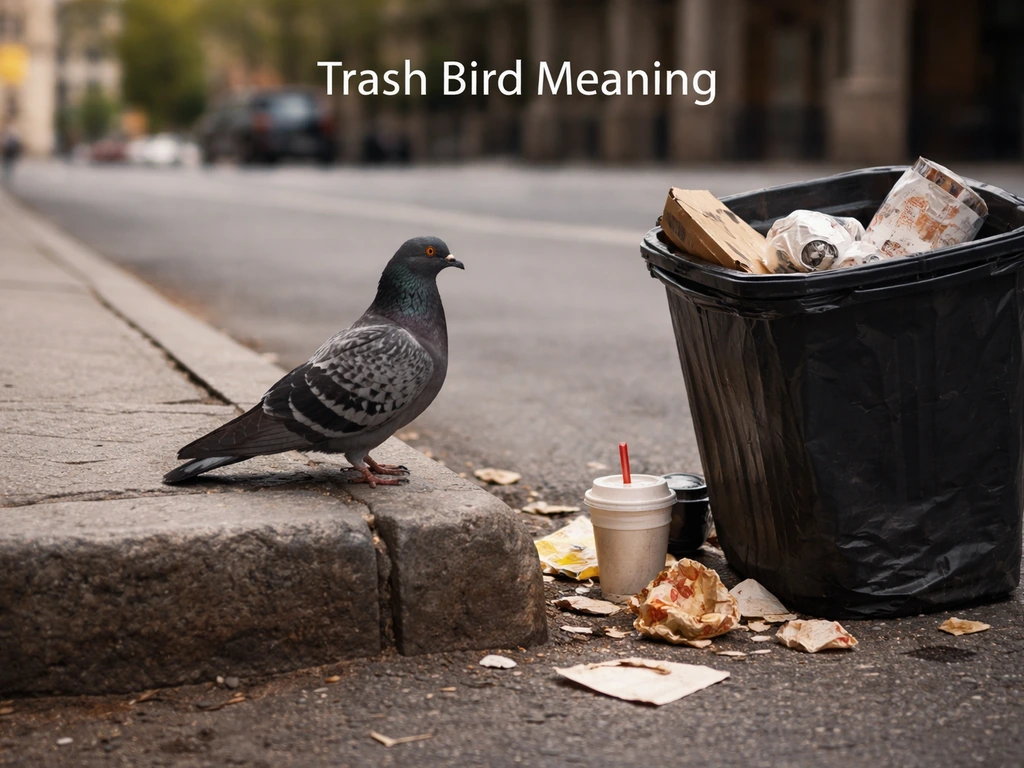
What 'trash bird' actually means
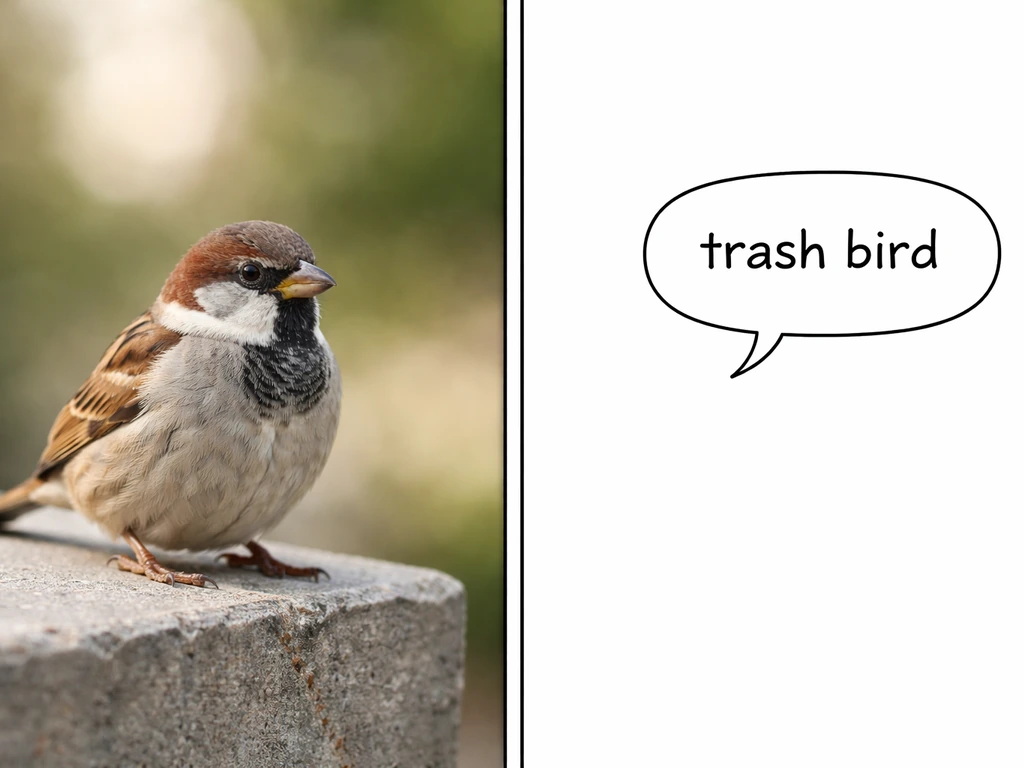
The phrase has two distinct lives running in parallel. In birding communities, 'trash bird' is well-established lingo for a species that's so common it becomes irritating. Think of pigeons raiding a park, or starlings taking over a feeder. These are birds that surpass merely 'unremarkable' and tip into actively annoying territory. The Nature Conservancy has framed the underlying sentiment bluntly: 'This bird is worthless.' Audubon's Kenn Kaufman even fielded a reader question about why some birders call Bald Eagles trash birds, which tells you the label can stick to almost anything once a birder sees it too often.
The person-insult version follows exactly the same logic. You're calling someone a nuisance, someone who shows up everywhere and adds nothing. Urban Dictionary entries for 'Trashbird' document it as a way to describe a person who is looked down on, with example uses like 'Dude's a total trashbird.' It's not the most vicious insult in the lexicon, but it's deliberately diminishing. The goal is to communicate that the target is low-status, irritating, and not worth serious attention.
There's also a third, entirely harmless use: the internet meme. 'Trash Dove' (a close cousin) was a viral Facebook sticker featuring a headbanging pigeon that spread across social media in early 2017. That meme got repurposed, photoshopped, and parodied constantly, so 'trash bird' in some online contexts is just meme vocabulary with no real-world target at all. And on Reddit communities like r/ACPocketCamp, 'trash bird' is a running in-joke about an in-game character, used affectionately as a punchline. Context is everything here.
Where you'll run into this phrase
Birding spaces, both online and in person, are where the phrase has the longest history. Birding blogs, community forums, and sites like 10000birds.com use 'trash bird' as a contrast tool: a 'trash bird' sighting is the opposite of a 'mega rarity.' If someone in a birding thread calls a species a trash bird, they almost certainly mean it in this technical-community sense, not as a personal attack. The Chicago Bird Alliance even references 'Trash Bird vs. Mega Rarity' as a framework for evaluating sightings.
On social media platforms, the phrase migrates into casual insults and banter. Twitter/X, Reddit, and TikTok comment sections are where it shows up as a label for people or groups someone finds annoying. A Reddit BirdingMemes discussion explicitly ties the “trash bird” label to anti-bird language, including how it is used in bird-enthusiast banter blank" rel="noopener noreferrer">Twitter/X, Reddit, and TikTok comment sections. Sometimes it's playful ribbing between friends. Sometimes it's genuinely hostile, especially when paired with other insults or used in a pile-on context. And occasionally you'll see it in completely literal image captions, like a photo of a seagull rummaging through garbage titled simply 'Seagull Trash Bird,' which is just descriptive and not slang at all.
The tone and what it implies
The connotation of 'trash bird' when aimed at a person is dismissive more than it is aggressive. It's designed to communicate low status rather than raw hatred. Calling someone a trash bird says: you're common, you're irritating, you're everywhere, and you don't deserve real engagement. That's different from a purely angry insult. It has a certain cold condescension to it.
The 10000birds community has noted that 'trash bird' is genuinely controversial even in birding circles, because it frames perfectly real birds as worthless based purely on how often humans see them. That same controversy applies when it's aimed at people: it reduces someone's value to a question of novelty and convenience. Whether it stings depends a lot on delivery. In casual banter between people who know each other, it can land as a joke. In a hostile online thread directed at a stranger, it reads as targeted contempt.
How 'trash bird' compares to other bird-based insults

Bird metaphors for people are surprisingly common across language, and they don't all mean the same thing. It's worth knowing how 'trash bird' sits in that landscape. Some people also search for the sorrow bird meaning, where the phrase is treated more like a symbolic term than a direct insult.
| Term | What it implies about the person | Tone |
|---|---|---|
| Trash bird | Annoying, worthless, beneath notice | Dismissive, contemptuous |
| Broken bird | Emotionally fragile or damaged, often after trauma | Sympathetic or clinical, rarely hostile |
| Odd bird / strange bird | Quirky or eccentric, but not necessarily negative | Neutral to affectionate |
| Jailbird | Someone with a criminal record | Negative, factual |
| Early bird | Someone punctual or proactive | Positive |
| Rare bird | Exceptional, unusual in a good way | Admiring |
The contrast with 'broken bird' is particularly interesting. A broken bird label, as documented in Wiktionary's figurative sense, describes someone emotionally fragile or damaged, often after trauma. It carries sympathy, or at least acknowledgment of suffering. 'Trash bird' carries none of that. Where 'broken bird' implies someone worth helping or understanding, 'trash bird' implies someone not worth thinking about at all. They're both bird-person metaphors, but they land in completely different emotional registers.
How to respond if someone calls you (or someone else) a trash bird
First, check the context. If it's a birder talking about a House Sparrow, a friend making a punchline, or a gamer complaining about an Animal Crossing character, there's nothing to respond to. paper bird meaning is another related way people try to decode bird-related slang. It's not about you. If it is directed at you personally, the following actually works. X’s “abusive behavior” policy explicitly treats harassment as including calls to target people with abuse or harassment online and behavior encouraging offline physical harassment, and it emphasizes blank" rel="noopener noreferrer">de-escalation and boundaries when insults escalate into targeting.
- Don't respond immediately in anger. The insult is designed to get a reaction. Not providing one removes the reward.
- Decide whether it's a pattern or a one-off. A single 'trash bird' comment in a casual conversation is very different from repeated targeted insults. Reddit's harassment guidance notes that patterns of targeting are what turn insults into harassment worth reporting.
- If you want to address it directly, keep it short and factual. Something like 'That's a pretty dismissive way to talk to someone' is harder to argue with than a heated response.
- On platforms like X (Twitter) or Reddit, use the reporting tools if the insult escalates or is part of a coordinated pile-on. X's abusive behavior policy covers targeted harassment, and Reddit's harassment policy applies to repeated patterns of directed hostility.
- Set a boundary if it keeps happening. 'I'm not going to keep engaging if you talk to me like that' is a complete sentence.
- If the exchange is draining you, disengaging entirely is a legitimate move. You don't owe anyone a debate about whether you're a trash bird.
One thing to watch for: the Trash Dove meme is a useful reminder that online symbols and phrases can be repurposed in ways that shift their meaning drastically. What started as an innocent headbanging pigeon sticker was briefly co-opted by white nationalist groups on 4chan as a coded symbol. This doesn't mean every 'trash bird' reference is ideologically loaded, but it's worth being alert to context. If someone is using it alongside other targeted or hateful language, that changes the read significantly.
Why birds keep showing up in our insults and metaphors
Birds have been shorthand for human identity and behavior across virtually every culture for thousands of years. They're visible, they have recognizable behaviors, and they occupy every level of the social pecking order, which is itself a bird metaphor. Eagles mean nobility. Vultures mean opportunism. Owls mean wisdom. Crows mean cunning. The vocabulary is already there, so it's natural that slang reaches for it. The fragile bird meaning can differ by context, but it’s often used to suggest vulnerability or delicate feelings.
The 'trash bird' metaphor works because it draws on something birders genuinely feel: there are birds so common they stop being interesting. If you meant the literal phrase “lost bird meaning,” it refers to a bird that has gone missing and the significance people attach to that situation. That emotional reality, the annoyance at something ubiquitous and mundane, maps directly onto how people sometimes feel about other people. The phrase takes that specific birding frustration and weaponizes it as a social label. It's efficient, which is part of why slang sticks.
This pattern runs through a lot of bird-linked expressions. A 'worry bird,' a 'sorrow bird,' a 'fragile bird,' a 'lost bird': these all use the same device of attaching a bird label to a human emotional state or social identity. Birds are used this way because they feel both free and vulnerable at the same time. That tension, between flight and fragility, makes them an endlessly flexible metaphor for the human condition. 'Trash bird' just happens to be the less flattering end of that spectrum. The origami bird meaning is different, but it also comes down to symbolism and how people interpret it trash bird.
FAQ
What’s the quickest way to tell whether “trash bird” is just birding slang or a personal insult?
Check who is speaking and what they mean by “bird.” If they’re discussing a species, feeders, sightings, or “mega rarity vs common,” it’s almost certainly birding lingo. If they pair it with “you,” a name, or a direct social complaint about a specific person, it’s being used as a diminishment, not a hobby reference.
If someone calls me a “trash bird,” should I argue about the definition?
Usually no. The word is doing social work (status-reduction), not information work. A better move is to ask what they want in the moment (for example, “What did I do?” or “Are you trying to be insulting or joking?”) so you force a clarification without debating dictionary meaning.
How can I respond if it was meant as a joke between friends but still felt mean?
Name the impact, not the slang. You can say something like, “I know you meant it as a joke, but that one lands as disrespectful for me.” This keeps the tone safe while setting a boundary, especially if they’re the type who doesn’t realize the phrase is cutting.
When “trash bird” appears in a comment thread, how do I tell if it’s safe banter or pile-on hostility?
Look at escalation signals: multiple replies targeting the same account, added slurs or extra insults, demands to “report” or “block,” and mocking repetition. If the phrase is paired with other demeaning labels or used to dogpile a stranger, treat it as harassment rather than harmless slang.
Could “trash bird” ever be tied to hate symbolism online?
It’s not inherently hateful, but online symbols can be repurposed. If it shows up alongside other coded references, coordinated propaganda, or specific group identifiers, then it may be serving a different role than the birding or meme meaning. In that case, document context and consider disengaging or reporting.
What’s the difference between “trash bird” and “broken bird” in terms of intent?
“Trash bird” is meant to reduce worth and attention, it frames the target as nuisance or low value. “Broken bird” generally points toward emotional damage and vulnerability, often implying sympathy or at least recognition of suffering. That difference matters for how you respond, if you choose empathy versus boundary-setting.
What should I say if “trash bird” is aimed at a group, not just one person?
Assume broader intent when it’s plural and policy relevant. If someone says a “group is trash birds” or uses it to generalize identities, respond by redirecting to behavior and requesting specifics (for example, “Which behavior are you calling out?”). If they won’t, it’s a red flag for dehumanizing rhetoric.
Is it ever appropriate to use “trash bird” yourself, or is it always rude?
Context determines whether it’s tolerable. It’s generally safer as hobby jargon in birding circles (talking about common species) than as a descriptor for people. If you don’t have a close relationship and shared humor, using it for individuals is likely to read as contempt.
Next Article
Lost Bird Meaning: Literal and Figurative Uses and What to Do
Meaning of lost bird in real life or as an idiom, plus steps to search, secure a bird, or spot metaphor