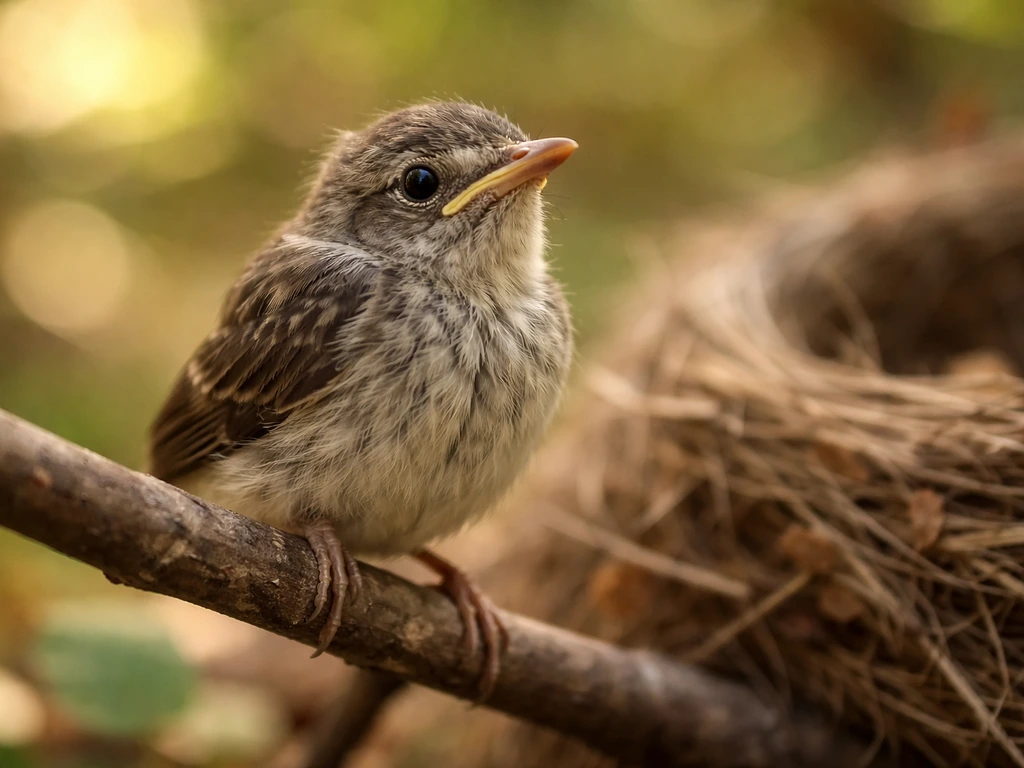
An imprinted bird is a bird that has formed a powerful, early-life attachment to a specific individual, species, or object, treating it as its parent, flock, or identity anchor. In the most common literal sense, this is a biological process called filial imprinting, where a newly hatched bird bonds to whatever it sees and follows during a narrow time window right after birth. In a figurative or symbolic sense, calling a bird 'imprinted' suggests it carries the mark of an early bond, a guiding force, or a formative experience, making it a rich metaphor in spirituality and storytelling. Which meaning applies to you depends almost entirely on context, and this guide will help you figure that out quickly.
Imprinted Bird Meaning: Literal Bird Imprinting and Figurative Uses

Marcus Winters
15 Jun 2026
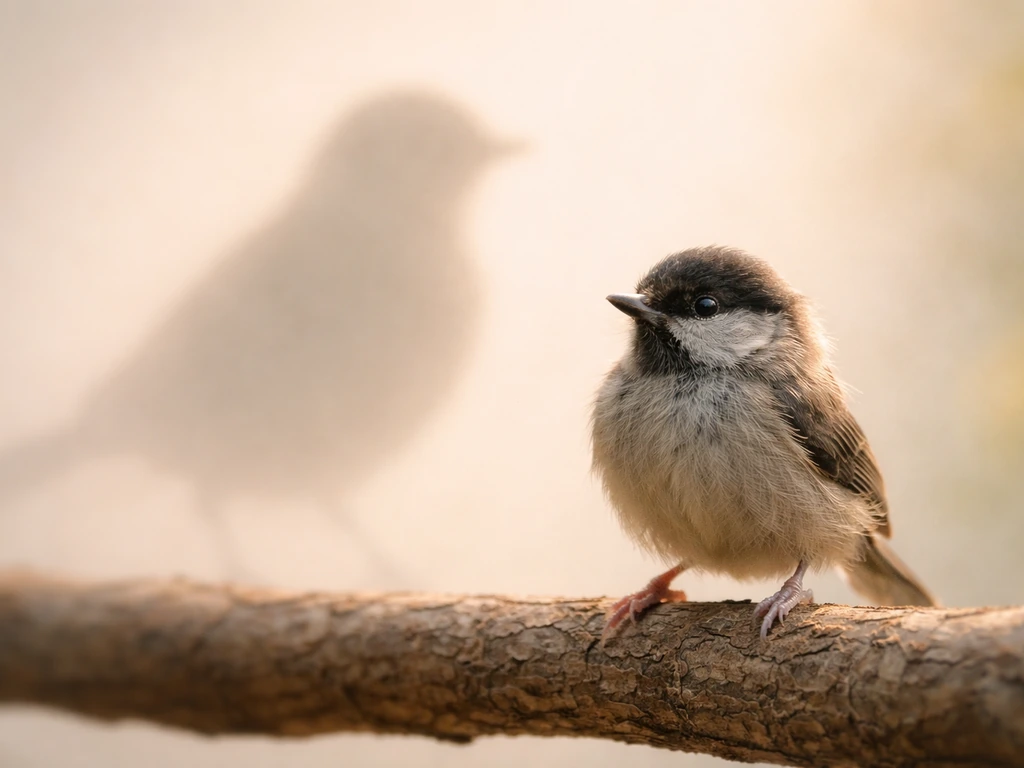
"Imprinted bird" means different things in different contexts
Before going deeper, it helps to know that people search for 'imprinted bird meaning' from very different starting points. Some have found a baby bird or are working in wildlife rehabilitation. Some read the phrase in a spiritual or dream interpretation post. Others encountered it in a novel, a quote, or a social media caption. Each of those situations points to a different meaning.
| Context where you saw it | What 'imprinted bird' likely means | Where to focus |
|---|---|---|
| Wildlife, bird care, rehabilitation | A bird that biologically bonded to a human or wrong species during its sensitive period | Literal/biological meaning |
| Dream, spiritual reading, or symbolism post | A bird 'marked' by an early guide or carrying a deep-rooted soul-level message | Figurative/symbolic meaning |
| Novel, poem, or film | Metaphor for being shaped by formative experience or bound to a guide/identity | Figurative/storytelling meaning |
| Science article or nature documentary | Ethological imprinting, filial bonding in ducklings, geese, or precocial birds | Literal/biological meaning |
| Unsure or mixed | Read the disambiguation section below, then decide | Both, then narrow down |
One easy shortcut: if the phrase appears alongside words like 'hatching,' 'hand-raised,' 'release,' or 'wildlife rehab,' you're almost certainly in the biological territory. If it shows up alongside words like 'soul,' 'spirit,' 'dream,' 'guide,' or 'mark,' you're in symbolic territory. There's also a third possibility worth mentioning quickly: 'imprinted bird' occasionally refers to merchandise or art (a bird printed or stamped onto fabric or paper). That's a literal use of the word 'imprint' in a craft or product sense, and it's unrelated to either meaning covered here.
What bird imprinting actually is and how it happens
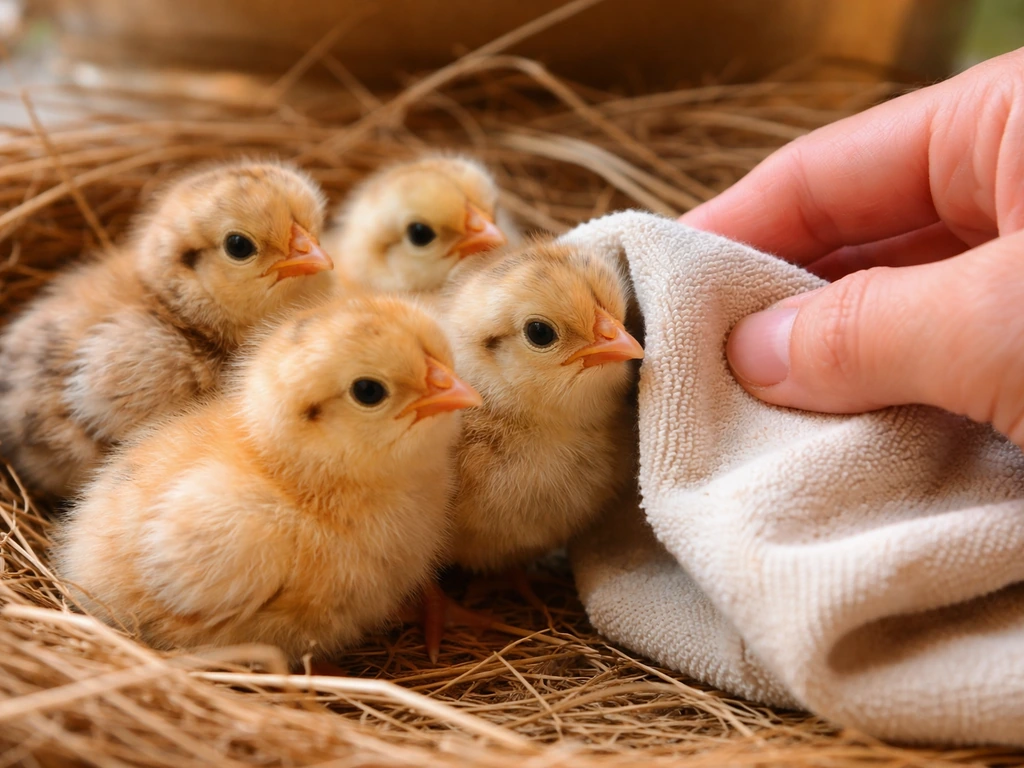
Filial imprinting is one of the most well-documented phenomena in animal behavior, and it's fascinating precisely because it happens so fast. Right after hatching, a young bird enters what researchers call a sensitive period, a narrow window of time during which its brain is primed to form a social attachment to whatever it sees moving. Bird hatching meaning often refers to the same idea of a brief, critical window right after birth when early experiences shape behavior. In ducklings, experiments have shown this window peaks between roughly 13 and 40 hours after hatching. Miss that window, and imprinting either doesn't happen or happens much more weakly. The research on this goes back to Konrad Lorenz, whose work with newly hatched geese famously showed that goslings would follow him as if he were their mother, simply because he was the first moving thing they consistently saw after hatching.
Imprinting is most clearly observed in precocial birds, meaning species that hatch already mobile and alert, like ducks, geese, quail, and shorebirds. These birds need to start following a parent almost immediately, so their brains are wired to lock onto a 'parent figure' very early. Altricial birds, the kind that hatch helpless in a nest (think songbirds), go through a softer version of this process over a longer developmental period, which is why the term 'imprinting' is most often applied to waterfowl and similar species in textbook discussions.
A critical detail that distinguishes imprinting from regular learning or socialization is that imprinting is largely irreversible once it occurs. Once a duckling imprints on a human, for instance, it typically cannot simply be 'retrained' to identify with its own species later. This is also what separates imprinting from hand-rearing or adoption. A hand-reared bird is raised by humans but may not be fully imprinted if proper precautions are taken. An imprinted bird has specifically locked in a social identity during that sensitive window. This distinction matters enormously in wildlife rehabilitation, where caregivers work hard to avoid triggering imprinting on humans.
What 'imprinted' means for how a bird actually behaves
If a bird is described as imprinted, especially human-imprinted, that shapes almost everything about how it interacts with the world. The behavioral consequences are lasting and run deep.
- Following behavior: An imprinted bird will follow the imprinted object (human, wrong species, or even an inanimate object in some experiments) the way a normal bird follows its parent.
- Social direction: The bird directs its social cues, calls, displays, and bonding attempts toward the imprinted subject rather than toward its own species.
- Territorial and mating behavior: A human-imprinted bird may direct courtship or territorial aggression toward humans rather than other birds of its kind.
- Poor survival prospects: A bird that identifies with humans rather than its species often cannot be released successfully into the wild because it lacks species-appropriate fear, foraging social cues, and mate recognition.
- Inappropriate habitat behavior: Human-imprinted birds may approach humans or human-populated areas voluntarily, which is dangerous for the bird and a concern in rehabilitation settings.
In wildlife rehabilitation, a bird that is fully human-imprinted is considered 'non-releasable' in most regulatory frameworks. Washington state regulations, for example, treat mal-imprinting, which means a bird imprinting on the wrong species entirely, as a condition that prevents return to the wild. This is why rehabilitation centers use hand puppets, bird costumes, and audio recordings of wild conspecifics to feed and raise orphaned birds without triggering imprinting. The goal is always to keep the bird's social identity pointing toward its own species. This connects to related concepts like hand-rearing and what it means to raise a bird from a nestling or fledgling stage, since those early life phases are exactly when imprinting vulnerability is highest. If you meant it in a developmental sense, fledgling bird meaning refers to a young bird that has left the nest but is not fully independent yet fledgling stage.
The figurative and symbolic side: what an 'imprinted' bird means in culture and spirituality
Outside of biology, 'imprinted' is a powerful metaphor, and when it's applied to birds in symbolic or spiritual language, it draws directly on the biological reality to create meaning. Birds already carry enormous symbolic weight in folklore, spirituality, and storytelling across virtually every culture: they represent freedom, messages from the divine, the soul's journey, transformation, and connection between worlds. Layering the concept of imprinting onto that creates a specific kind of symbolism.
In spiritual and metaphysical writing, an 'imprinted bird' or a bird that has been 'imprinted upon' often symbolizes a soul or spirit that has been marked by a formative bond. This could mean a person who carries the deep influence of an early mentor, a spiritual guide, or a transformative experience. The bird in this context is a vehicle for the idea that some bonds are made during a sensitive, open window in life, and once made, they define the direction of the whole journey. The image is evocative precisely because of what we know about literal bird imprinting: it happens fast, it runs deep, and it lasts.
In storytelling and literature, an imprinted bird often appears as a symbol of loyalty that transcends logic, a creature that follows not out of habit but out of a bond formed at the very origin of its conscious life. You'll find this imagery in fantasy fiction, poetry, and even in dream interpretation traditions where a bird following you closely, refusing to leave, or behaving as if bonded to you specifically is read as a sign of a protective spirit, ancestral guide, or soul memory that has attached itself to your path.
In dreams specifically, an imprinted bird most commonly represents one of three things: an early-life bond or formative relationship that still shapes your behavior; a guide or messenger that has chosen you rather than being chosen by you; or the idea that something in your nature was set early and runs deep, making it both a strength and a constraint. If you're asking about the heirloom bird meaning specifically, look at how the bird type and the early bond it symbolizes fit your context. Dream traditions across many cultures treat birds as soul-messengers, so an imprinted bird in a dream often signals that the message being carried is personal and old, not a general omen but something specific to your origin story.
How to figure out which meaning applies to your situation
Here's a practical decision guide you can run through in about 30 seconds to nail down which version of 'imprinted bird' you're dealing with. In discussions of imprinting versus other early-learning processes, the International Wildlife Rehabilitation Council notes that imprinting is time-limited, while socialization can happen differently and later Thoughts on Imprinting vs Socialization.
- Where did you see the phrase? Science article, nature video, bird care forum, or rehabilitation context = biological. Dream journal, spiritual blog, poem, or social media caption with symbolic language = figurative.
- Are there other science or behavior words nearby? Words like 'hatching,' 'sensitive period,' 'release,' 'hand-raised,' 'duckling,' or 'species-appropriate' confirm the biological meaning.
- Are there other symbolic or emotional words nearby? Words like 'soul,' 'bond,' 'guide,' 'mark,' 'destiny,' 'spirit animal,' or 'ancestral' confirm the figurative meaning.
- Is someone describing a specific bird's behavior toward a human? That's almost certainly the biological/rehabilitation context, where the bird literally follows or is bonded to people.
- Is the phrase used as a descriptor of a person or abstract experience, with a bird as metaphor? That's the figurative/symbolic meaning, borrowing the biology as a way to describe human experience.
- Still unsure? Default to asking what problem the writer is solving. Biological imprinting answers 'why does this bird act this way?' Figurative imprinting answers 'what does this experience or symbol mean?'
Practical next steps: what to do from here
If you're dealing with a real bird
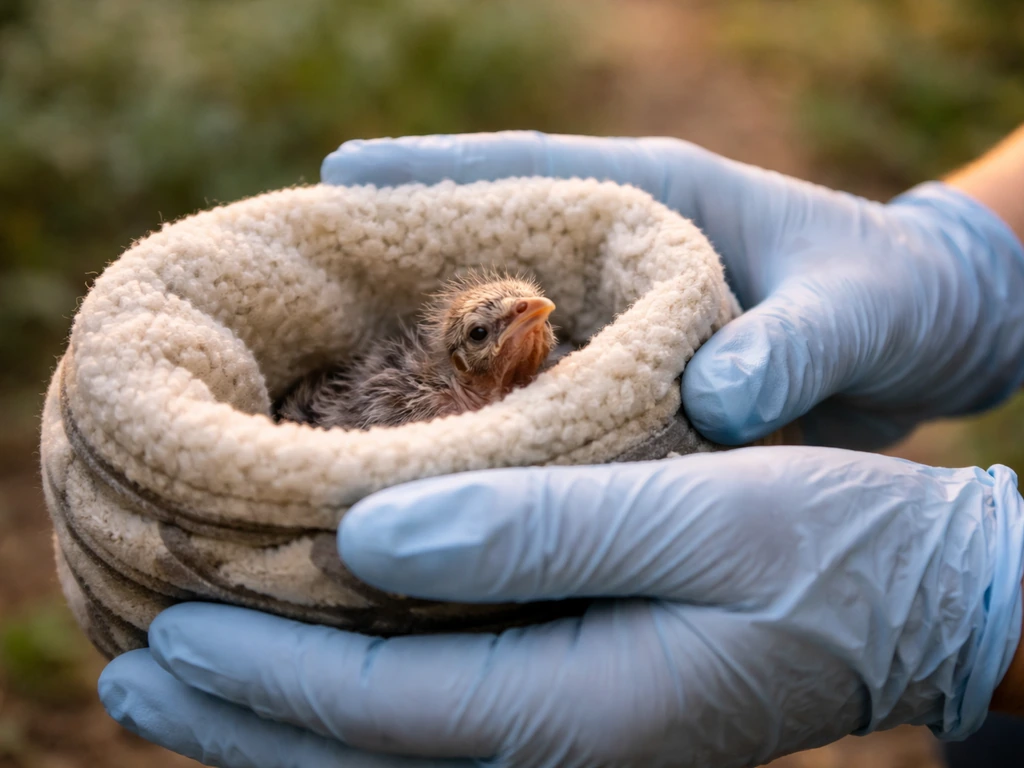
If you found a baby bird or are raising one and are worried about imprinting, contact a licensed wildlife rehabilitator immediately. The sensitive period for imprinting is measured in hours for some species, so time matters. Do not try to raise a wild bird yourself without professional guidance. The goal of proper rehabilitation is always to prevent human imprinting so the bird can be returned to the wild with the right species identity intact. Search for your local wildlife rehabilitation center and mention the species and the bird's approximate age if you know it.
If you're interpreting a quote, dream, or symbolic reference
Think about what kind of 'early bond' or 'formative mark' is relevant to the context. Some people also use the phrase nestling bird meaning when discussing what a baby bird symbolizes in a reading or dream. Symbolic uses of imprinted birds are almost always pointing to something that was set in place early and has lasting directional influence. Ask: what was the bird bonded to? What does that thing represent? The bird's species often adds a second layer of meaning on top of the imprinting concept, so a hawk imprinted to a human means something different symbolically than a dove imprinted to a human.
Common misconceptions to clear up
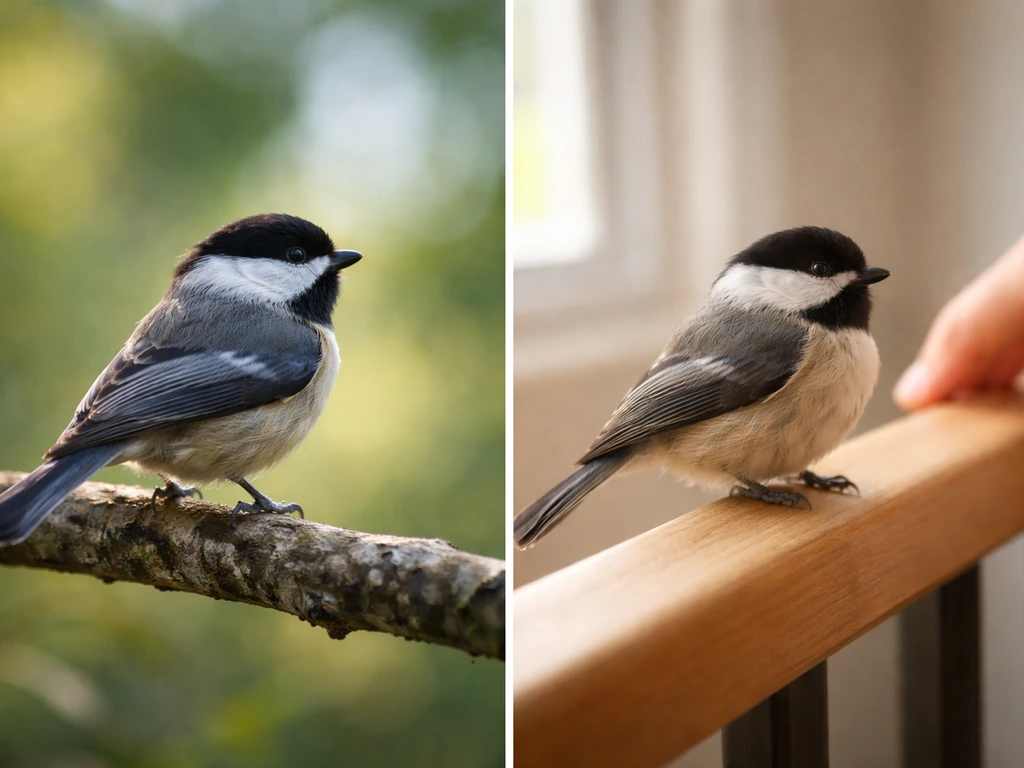
- Imprinting is not the same as taming. A tamed bird has learned to tolerate or enjoy human contact through repeated positive experience. An imprinted bird literally believes humans are its species.
- Imprinting is not the same as hand-rearing. Hand-rearing describes the method of care (feeding and raising by hand). Imprinting describes the outcome if proper precautions are not taken during that care.
- Not all birds imprint the same way. Precocial birds like ducks and geese are most discussed in imprinting research because their sensitive period is acute and early. Songbirds go through related but different early social learning processes.
- Imprinting cannot simply be reversed with training. Once the sensitive period has closed and a bond has formed, it is largely permanent. This is what makes it categorically different from most other animal learning.
- In symbolic use, 'imprinted' does not mean 'trapped.' It means 'marked' or 'oriented.' The connotation can be positive (deep loyalty, early grace, a guiding bond) or bittersweet (unable to fully leave an early identity behind), depending on the context.
If you're exploring related terms, concepts like fledgling, nestling, juvenile bird, or hand-reared bird all connect to this same territory of early bird development, and understanding where imprinting fits among those stages can sharpen your interpretation. The imprinting window sits right at the earliest phase, during or just after hatching, making it one of the most foundational moments in a bird's entire life. Whether you're reading about it in a biology paper or a dream symbol guide, that's the core truth the phrase 'imprinted bird' is always pointing back to: something essential was set in place at the very beginning.
FAQ
How can I tell if “imprinted bird” in a post is biological imprinting or just metaphor?
Look for technical anchors, if you see “sensitive period,” “hatching window,” “release,” or “rehabilitation,” it is likely literal. If the wording centers on “soul,” “guide,” “message,” “marks,” or “dream,” it is using the imprinting idea symbolically. If it is about “printed” or “stamped” birds on paper or fabric, it is a separate craft or product meaning.
What does “human-imprinted” usually imply in wildlife rehab, and is it always permanent?
It generally implies the bird has bonded to people in a way that reduces its ability to function normally with its own species after release, which is why many jurisdictions classify certain cases as non-releasable. While “imprinting is largely irreversible” is a common rule of thumb, outcomes depend on species, age, and how the bird was raised, so rehab staff assess case-by-case.
What is the most common mistake people make when they find a baby bird and try to help?
They assume handling it and feeding it themselves is “help,” but frequent human contact can trigger bonding at the very stage when imprinting risk is highest. The safer approach is to keep the bird warm and contained, avoid prolonged interaction, and contact a licensed rehabilitator quickly with the species and approximate age.
Can you “un-imprint” a bird if it bonds to a human?
In typical cases, you cannot reliably reverse imprinting after the sensitive window passes. Rehabilitation strategies focus on preventing or minimizing human-bonding rather than undoing it, which is why programs may use puppets, costumes, and species-consistent audio when appropriate.
Does imprinting only happen in ducks and geese, or can other birds be “imprinted”?
The classic research is in precocial species like ducks, geese, and other mobile hatchlings, but the concept applies broadly as “early attachment formed during a sensitive period.” For altricial songbirds, bonding dynamics are more extended and may be less described as the same sharp event, so the exact wording in sources matters.
If a dream includes an “imprinted bird,” should I interpret it as a literal sign or a psychological message?
Most dream traditions treat birds as messengers or symbols, so an “imprinted” bird usually points to an old bond pattern that still shapes behavior. A practical method is to ask what the bird is doing in the dream (following, refusing to leave, delivering something), then connect that action to an early relationship or formative influence you recognize.
What factors in the bird species change the “imprinted bird meaning” in symbolic interpretation?
Species often shifts the symbolic layer, for example, a hawk-like bird may suggest focus, protection, or pursuit, while a dove-like bird may suggest peace, guidance, or healing. In practice, pair the species symbolism with the imprinting concept (something set early, running deep) to avoid a generic interpretation.
Is “hatching meaning” always tied to imprinting?
Not always. “Hatching” can refer to early beginnings in a metaphorical way, but when “imprinted bird” appears alongside timing words like “hours after hatching” or “sensitive window,” it is specifically invoking the biological mechanism. If timing is vague and the language is spiritual, it is probably symbolic rather than about the literal hours.
Next Article
Young Bird Meaning: Literal and Symbolic Interpretations
Literal vs symbolic young bird meaning: fledgling terms, common metaphors for growth and hope, and how to confirm contex