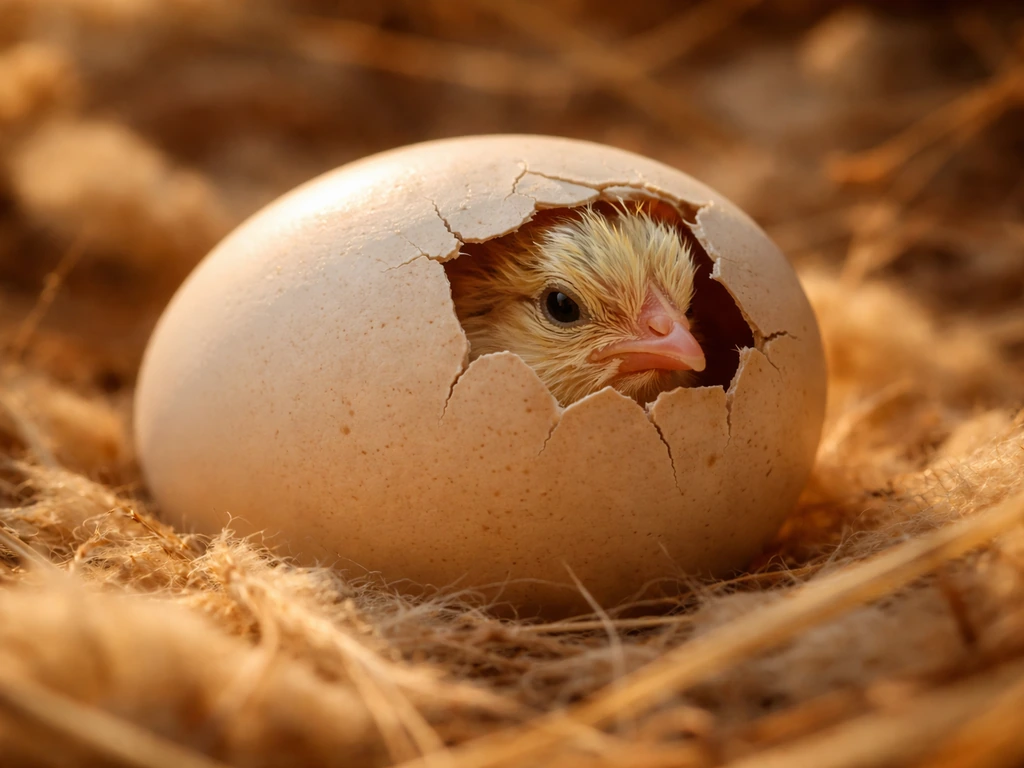
When someone searches 'young bird meaning,' they're usually asking one of two very different questions: what's the correct term for a baby bird at a specific life stage, or what does a young bird symbolize in folklore, spirituality, dreams, or everyday speech. The context almost always tells you which one applies. A wildlife post or a question about a bird found on the ground? That's the literal side. A dream journal, a quote, a spiritual reading, or a life metaphor? That's the symbolic side. Both meanings are worth knowing, and this guide walks through both clearly.
Young Bird Meaning: Literal and Symbolic Interpretations

Marcus Winters
30 May 2026
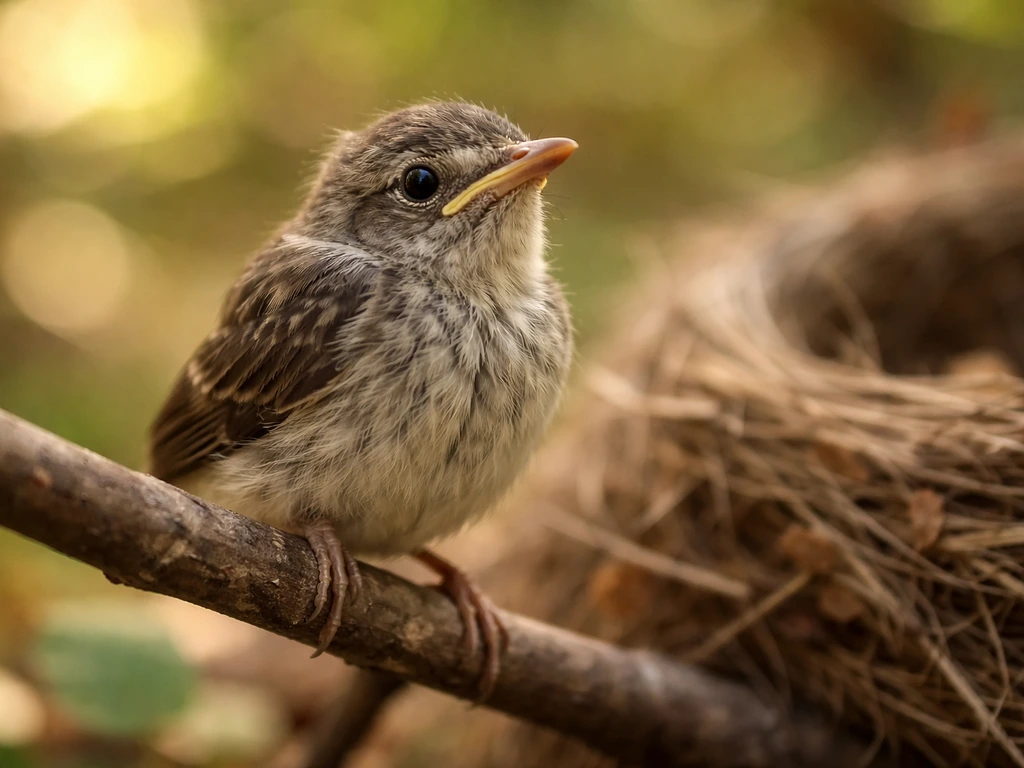
What 'Young Bird' Actually Means in Everyday Language
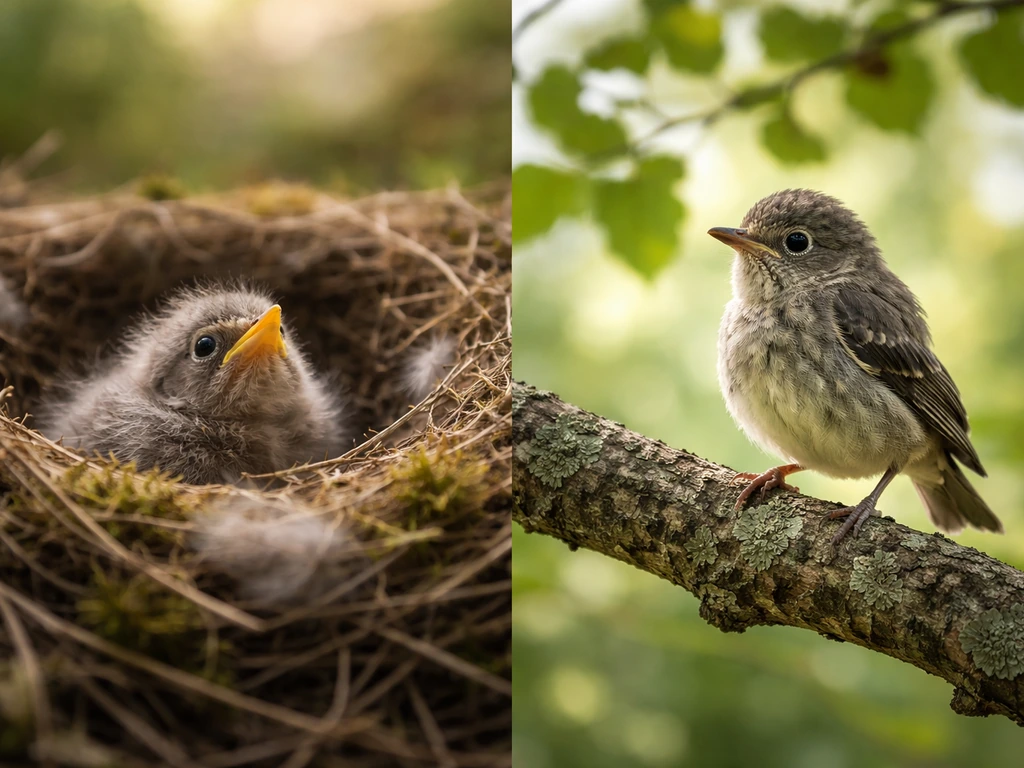
In plain biological terms, a 'young bird' is any bird that hasn't yet reached full adult maturity. But within that broad definition, there's a whole vocabulary that people use to be more precise, and the distinctions matter a lot if you're trying to help a bird you've found or understand a wildlife article.
The three terms you'll encounter most often are nestling, fledgling, and juvenile. [A nestling is a young bird not yet able to fly or leave the nest. ](https://www. britannica.
com/dictionary/nestling) It's typically underdeveloped, with sparse or absent feathers, and fully dependent on its parents. A fledgling, on the other hand, is a young bird that has just become capable of flight. Britannica Dictionary defines “fledgling” (in everyday wildlife wording) as “[a young bird that has just become able to fly](https://www. britannica.
com/dictionary/fledgling). ”. According to wildlife guidance from Tufts Cummings School of Veterinary Medicine, a fledgling is roughly 13 to 14 days old or older, is well-feathered, has a short tail, and can walk, flap its wings, and even flutter for a short distance. A juvenile is further along still, essentially a young bird that looks almost adult but may still have some immature plumage or behavior patterns.
In practice, if someone says 'young bird' without further specification, they likely mean any bird that's not fully adult. But if you need to narrow it down, look for those age-stage clues. A bird on the ground outside its nest, hopping around and mostly feathered, is almost certainly a fledgling. A pink, barely-feathered bird that clearly fell from a nest is a nestling. Getting that right matters because what you should do next is completely different in each case. Fledglings are usually fine on their own and should be left alone. Nestlings typically need intervention.
Related terms like 'hand-reared bird' or 'imprinted bird' add another layer to what 'young bird' can mean in certain contexts, particularly in the aviculture or pet bird world, where young birds raised by humans develop a different kind of relationship with people than wild-raised birds do.
Young Bird Symbolism Across Cultures and Folklore
Across almost every culture that has a bird mythology tradition, the young bird carries a consistent symbolic weight: it represents potential, not yet realized. It's the seed before the flower. Ancient Egyptian and Greek traditions both used birds as messengers between the earthly and divine, and the young bird specifically was seen as a creature still straddling the threshold between two worlds. It hasn't yet taken full flight, so it exists in a liminal space, between earth and sky, between what it is and what it will become.
In Celtic folklore, birds of all kinds were seen as soul-carriers, and young birds were especially significant because they were thought to carry fresh messages from the spirit world, uncorrupted by long life. Native American traditions vary widely by nation, but many share the idea that young birds symbolize the beginning of a new cycle, new teachings, or a fresh start in a person's spiritual journey. In Chinese symbolism, a young bird, particularly a young phoenix, represents rebirth and the early stages of transformation.
European folklore also gave young birds a protective role. Seeing a nest of young birds near your home was widely considered a good omen, a sign that blessings or new beginnings were coming to the household. This is why disturbing a bird's nest was considered deeply unlucky in many traditions: you were disrupting the incoming fortune. The young birds in the nest were the fortune itself, waiting to hatch and fly into your life. In dream and omen interpretation, people often connect these fresh stages with bird hatching meaning, as the idea of a life emerging can carry a strong message of renewal.
Spiritual Meanings: Growth, Innocence, and Messages
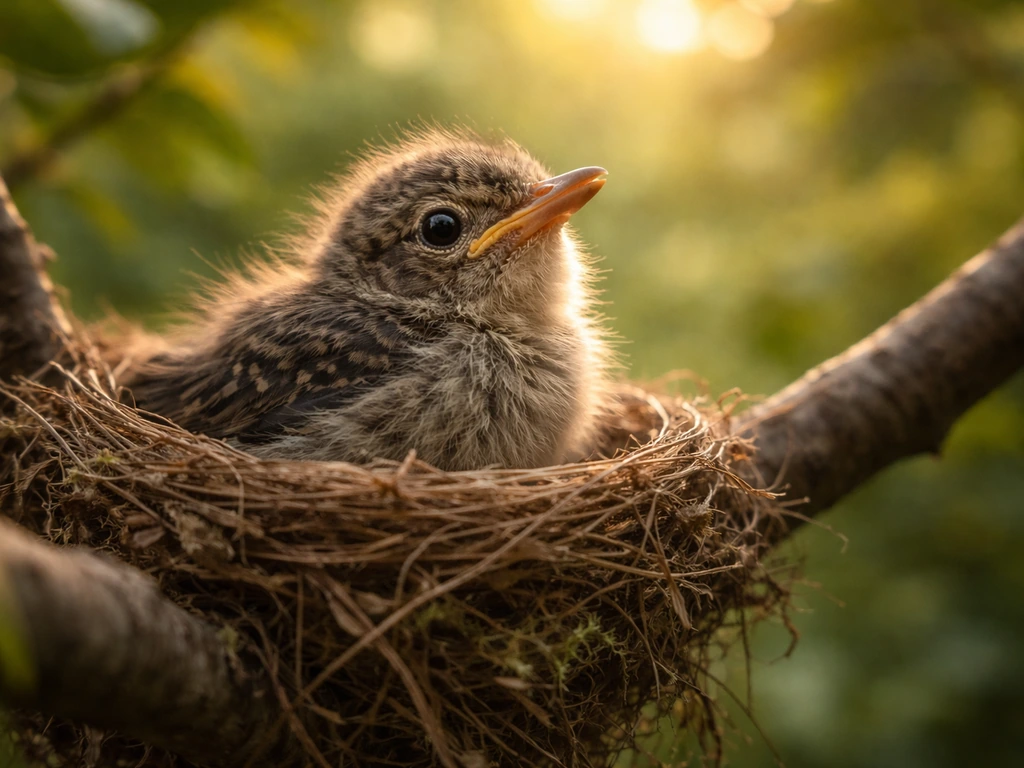
In spiritual contexts, a young bird almost universally points to themes of growth, innocence, vulnerability, and hope. If you encounter a young bird as a spiritual symbol, whether in a reading, a recurring image, or an unexpected encounter in nature, the message is usually about something new and tender in your own life that needs care and patience.
The innocence angle is particularly strong. A young bird hasn't yet learned fear, hasn't developed the cautious survival instincts of an adult bird. In spiritual readings, this quality of innocence is often interpreted as a prompt to approach a situation with openness rather than defensiveness. It's a nudge to trust the process, even when you feel exposed or uncertain.
Growth is the other major thread. Because a young bird is visibly in transition, moving from helpless to capable, from earthbound to airborne, it's a natural symbol for any personal growth phase. Many spiritual traditions, particularly those that use animal symbolism or totemism, see encountering a young bird as a sign that you're in an important developmental period. You may not feel ready to 'fly' yet, but the capacity is there and building.
There's also a messenger dimension worth noting. Birds in general are seen across many traditions as carriers of divine messages, and a young bird showing up unexpectedly, especially during a time of personal change or decision, is often interpreted as a gentle signal: something new is beginning, pay attention to it, nurture it. The fragility of a young bird is part of the message. New beginnings are fragile. They need to be treated carefully.
Idioms, Sayings, and 'Young Bird' in Everyday Speech
You don't see the phrase 'young bird' in idioms quite as often as you see 'fledgling,' which has taken on a life of its own in figurative speech. When someone calls a business a 'fledgling startup' or describes a new politician as a 'fledgling leader,' they're pulling directly from the young bird metaphor. Fledgling in figurative use means new, inexperienced, and still developing, which maps perfectly onto its literal bird meaning.
The proverb 'little by little the bird makes its nest' is one of the more interesting sayings in this space because it captures the young bird's reality perfectly. Nest-building, raising young, the slow and patient accumulation of effort. It's a reminder that growth, whether in a literal nest or a human endeavor, happens incrementally. The young bird in the nest is the result of that patience.
Expressions like 'leave the nest,' 'fly the nest,' and 'empty nest' all carry the young bird's lifecycle as their underlying metaphor. They're almost always used to describe young people becoming independent and leaving home, with the parent household being the 'nest.' These phrases are so embedded in everyday speech that most people don't consciously register the bird reference anymore. But it's there, rooted in the imagery of a fledgling taking its first real flight.
In slang, 'bird' on its own carries various meanings depending on region and context, particularly in British English where it can refer to a person (especially a woman) or in some circles to a prison sentence. A 'young bird' in slang doesn't have a strongly fixed meaning, so if you encounter it in casual speech or lyrics, you'll want to look at the surrounding context to figure out whether it's a literal reference, a term of endearment, or a metaphor for someone young and inexperienced.
Common Contexts: Pets, Birds in Hand, and Bird Slang
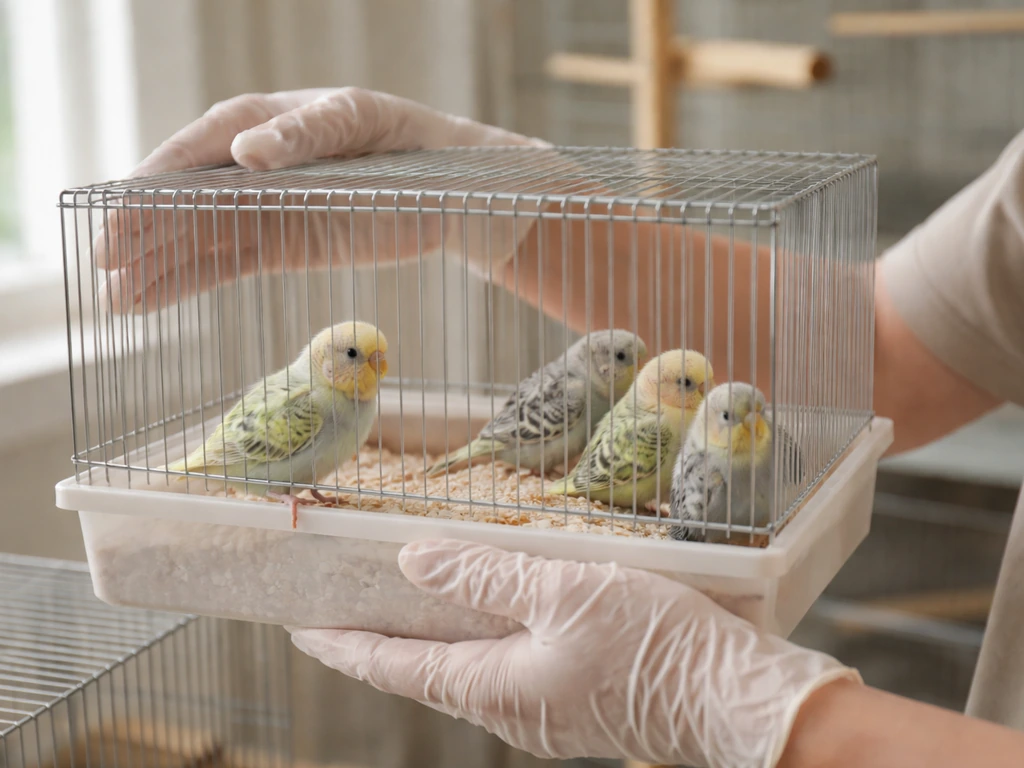
In the pet bird world, 'young bird' is an important practical term. Breeders and aviculturists use it to describe birds that are still in early development and haven't yet been weaned or fully socialized. A young bird in this context is often a bird that's still being hand-fed, learning to eat on its own, or in the process of being trained.
If you are reading a listing or advice that uses the term hand reared bird, it specifically refers to a bird that humans feed and raise from a very young age what does hand reared bird mean. If you're buying a pet parrot or cockatiel and the seller describes it as a 'young bird,' they typically mean it's not yet fully independent and may still need supplemental feeding or intensive socialization.
The phrase 'a bird in the hand is worth two in the bush' is one of the most well-known bird idioms in the English language, and while it doesn't specify a young bird, the 'bird in hand' imagery connects to the whole tradition of young birds being caught, tamed, or kept as proof of possession. Historically, young birds were far easier to capture and train than adult birds, so 'a bird in hand' often literally did mean a young bird.
In social media and pop culture slang, 'bird' is used loosely to describe a person, sometimes affectionately and sometimes dismissively. Calling someone a 'young bird' in this register is usually just a way of saying they're young and inexperienced, which circles back neatly to the symbolic meaning. The figurative and literal senses reinforce each other here, both pointing to someone or something in an early, developing stage.
How to Interpret 'Young Bird' When It Appears in a Dream, Quote, or Omen
The source of the phrase is the single most reliable clue to which meaning is intended. Here's a practical framework for figuring it out quickly.
| Where You Encountered It | Most Likely Meaning | What to Look For Next |
|---|---|---|
| Wildlife article, bird rescue post, nature guide | Literal: a baby/juvenile bird at a specific life stage | Look for terms like nestling, fledgling, or juvenile to narrow down the age stage |
| Dream journal, spiritual reading, tarot or oracle card | Symbolic: growth, new beginnings, innocence, a message about a developing situation | Note the condition of the bird in the dream and your emotional response to it |
| Proverb, poem, literary quote | Metaphorical: vulnerability, potential, or the early stage of something | Read the surrounding lines for what the 'young bird' is being compared to |
| Pet bird forum, breeder listing, aviculture context | Practical: a bird still in early development, possibly unweaned or in training | Check for details about age in weeks, weaning status, or hand-feeding |
| Casual conversation or slang | Figurative: a young or inexperienced person | Context of the conversation will clarify if it's affectionate, dismissive, or neutral |
| Folklore, cultural story, omen description | Symbolic: a sign of new cycles, blessings incoming, or a transition period | Look at the broader story for what outcome the young bird predicts or accompanies |
In dreams specifically, the condition of the young bird tends to carry extra meaning. A healthy young bird learning to fly usually points to a positive growth phase, something new in your life that's gaining strength. An injured or fallen young bird often reflects anxiety about a new beginning, a worry that something fragile won't survive. A young bird being cared for can reflect nurturing energy, either something you're giving to others or something you need for yourself.
For spiritual omens, the timing and setting matter most. A young bird appearing during a major life transition, a new job, a move, the start of a relationship, is almost universally read as a positive sign across traditions. It's the universe underscoring what's already happening: something new is taking wing. If the encounter felt significant to you, that instinct is worth following. Spiritual symbolism tends to land hardest when it echoes something already on your mind.
If you're trying to verify the intended meaning in a specific source, the most reliable method is to look at what surrounds the phrase. A 'young bird' in a poem about grief means something different from a 'young bird' in a children's story about courage. A quote from a naturalist means something different from a quote from a mystic. The phrase itself is the starting point, not the answer. Let the context finish the sentence for you.
Putting It All Together
'Young bird' is one of those phrases that feels simple until you actually need to know exactly what it means. Literally, it describes a bird in any pre-adult life stage, with fledgling and nestling being the most precise sub-terms you'll need to know. Symbolically, it consistently points to growth, innocence, new beginnings, and the vulnerability that comes with anything still in its early stages.
The two meanings aren't really separate: the symbolic weight of a young bird comes directly from its literal reality. A bird that hasn't yet learned to fly fully, that's still finding its wings, is genuinely fragile and full of potential. That's exactly why it became such a durable metaphor across so many cultures and traditions.
FAQ
What does “young bird” mean if I find one in my yard, is it always a fledgling or nestling?
Not always. “Young bird” is a broad phrase, so confirm by behavior, not just size. A nestling usually cannot stand or hop normally, has bare or mostly sparse feathers, and may cry or gape. A fledgling can walk, use its wings, and often looks fully feathered but still cannot fly strongly. If it is actively feathered and making short hops or flutters, it is more likely a fledgling, and you should typically keep people and pets away rather than moving it.
Should I feed a young bird I found, even if it seems hungry?
Usually no. Feeding the wrong diet or amount is a common cause of harm. For wild birds, the safest next step is to contact a local wildlife rehabilitator and follow their instructions. If the bird is a fledgling, many “hunger” calls are normal while it learns. If it is a nestling that needs help, professionals can provide species-specific feeding methods, timing, and safe hydration.
How can I tell the difference between a fledgling and a nestling at a glance?
Use three quick checks: mobility (can it hop or stand steadily?), feathering (is it mostly covered in feathers or mostly bare?), and flight readiness (does it flap and flutter, even if it cannot fly far?). A fledgling is typically covered in feathers and able to move around. A nestling is usually helpless on the ground and looks underdeveloped. If any doubt remains, treat it like a nestling and seek guidance before handling.
What should I do if the young bird is injured or appears sick?
Do not assume it will recover on its own, especially if it is unable to stand, has visible bleeding, or seems chilled. Place it in a ventilated box lined with a soft cloth, keep it warm but not overheated, and contact wildlife rehab. Avoid giving water or food by hand, because aspiration (getting liquid into the lungs) can quickly become fatal for small birds.
What if the nest looks abandoned, should I put the young bird back?
Only if you are confident the nest was the bird’s and the adults are not clearly gone. In many cases, fledglings are meant to be on the ground temporarily, and putting them back can cause more stress or separation. For nestlings, replacing them into a nearby original nest may be appropriate, but the safest guidance is to call a rehabilitator, especially if you cannot easily locate the nest or identify the species.
Does “young bird meaning” change in dream interpretations if the bird is dead or missing?
Yes. A healthy bird learning to fly often points to growth underway, while a dead, missing, or abandoned young bird usually shifts the symbolism toward fear of loss, disruption of progress, or anxiety about something fragile. Context matters, for example whether you feel relief, grief, or urgency in the dream, because those emotions often indicate whether the message is about protecting something new or accepting an ending.
In symbolism, can a young bird mean something negative, like fear or immaturity?
It can, even though the common theme is hope and potential. If the young bird is struggling, falling, or being harmed, the symbolism often highlights vulnerability, instability, or uncertainty around a new beginning. If you are the one caring for it, it may reflect responsibility you are taking on too quickly, or the need for boundaries while you nurture your goals.
What does “fledgling” mean compared with “young bird” in figurative speech?
“Fledgling” is usually more specific in tone. It implies early-stage capability, inexperience, and development, often with the idea of “not fully ready yet.” “Young bird” can be broad and may include helplessness (nestling-like) or independence-in-training (fledgling-like), so figurative writing that says “fledgling” is typically emphasizing growth with limitations.
Is “young bird” a fixed phrase in slang, or can it vary by country?
It varies. In casual speech, “young bird” is often a generic way to refer to someone young and inexperienced, but in some places “bird” can also be slang for other meanings depending on context. If it appears in lyrics or dialogue, focus on surrounding words (tone, relationship, and whether it sounds affectionate or dismissive) rather than treating it as a single standardized idiom.
If a pet seller says “hand-reared” or “imprinted,” how is that different from “young bird”?
“Young bird” describes age stage in general, while “hand-reared” and “imprinted” describe how the bird was raised and socialized. Hand-reared typically means human feeding and early care. Imprinted often implies the bird formed a stronger attachment to humans than to other birds, which can affect bonding, handling, and long-term behavior. If you are considering adoption, ask what species, exact age, and current feeding method are used.
Next Article
Bird Hatching Meaning: Literal, Symbolic, and Sign Interpretations
Understand bird hatching meaning: literal emergence, symbolic new beginnings, dream and spiritual sign interpretations,